
Following instructions Geometry Worksheets for 6-Year-Olds
4 filtered results
Difficulty Level
Grade
Age
-
From - To
Subject
Activity
Standards
Our "Following Instructions Geometry Worksheets for 6-Year-Olds" are engaging tools designed to enhance your child's understanding of geometric concepts while fostering essential listening and comprehension skills. Perfect for young learners, these worksheets guide children through various activities that require them to follow clear directions, ensuring they explore shapes, sizes, and spatial relationships in a fun and interactive way. As children complete each task, they’ll develop critical thinking abilities and improve their academic readiness. Explore to inspire curiosity and creativity in geometry while reinforcing the importance of following instructions. Perfect for home or classroom use, your little ones are sure to enjoy these fun-filled activities!
Favorites
With answer key
Interactive
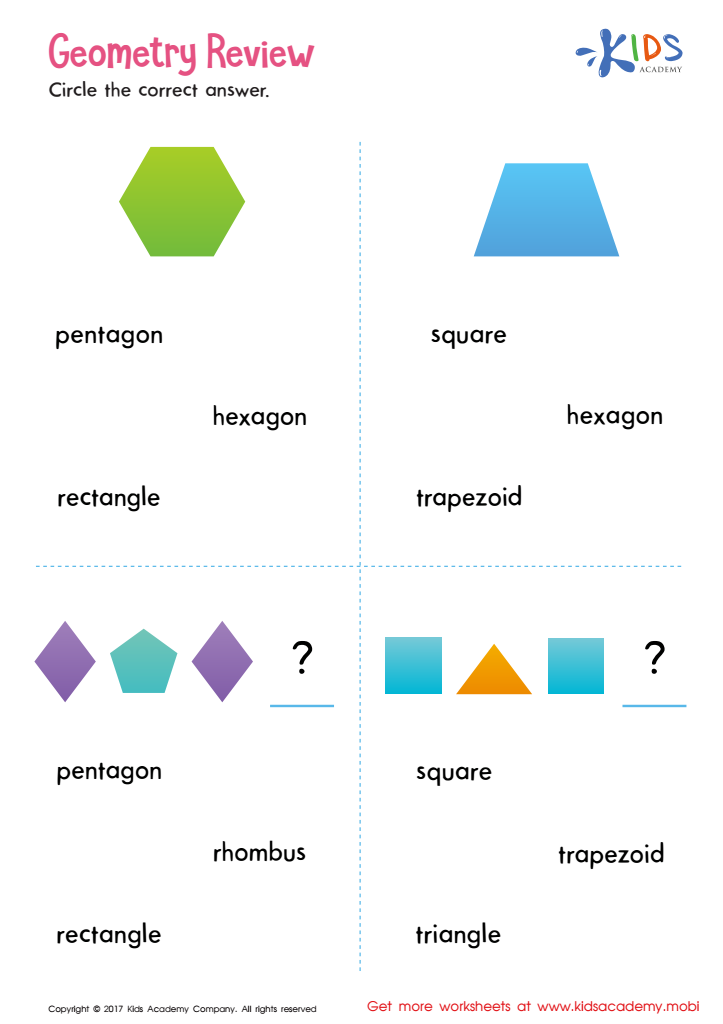
Geometry Review Printable
Repetition is key to success; give your child the practice they need with this geometry worksheet.
Geometry Review Printable
Worksheet











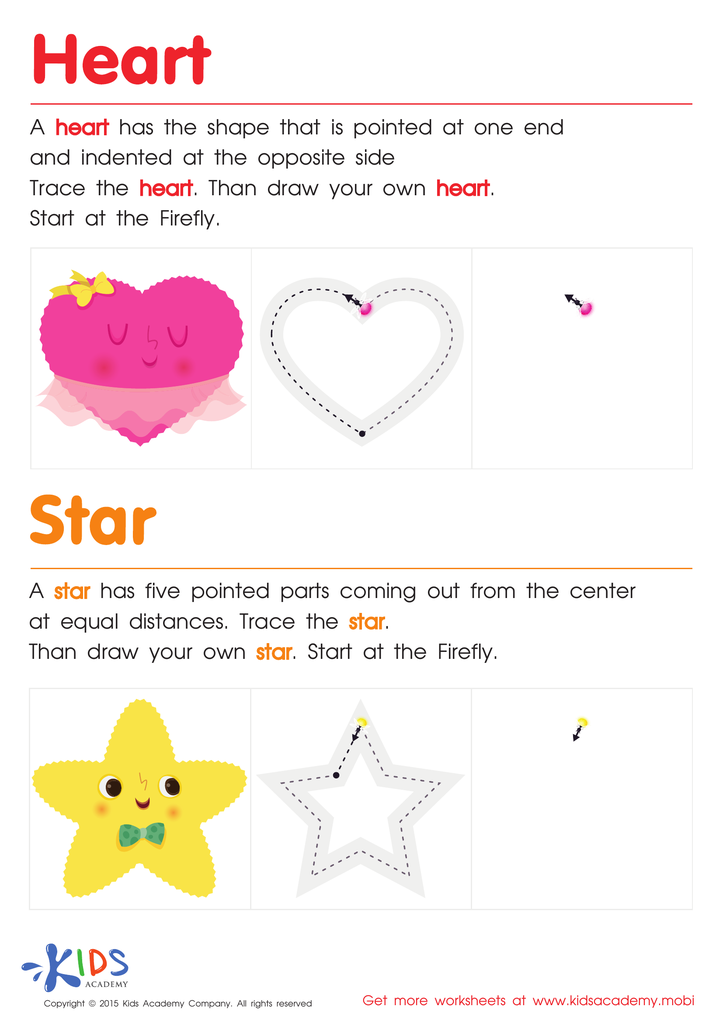
Let's Learn to Draw Hearts And Stars Printable
Trace and draw hearts and stars, learn their names and use them in your drawings. Start with the firefly and be creative!
Let's Learn to Draw Hearts And Stars Printable
Worksheet
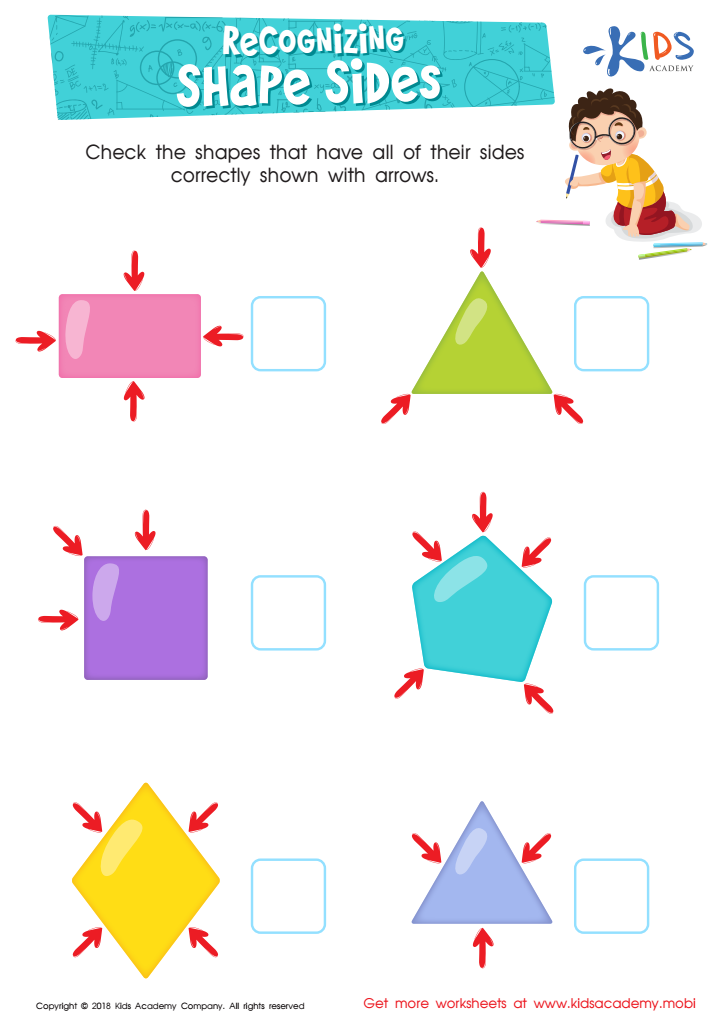
Recognizing Shape Sides Worksheet
This exercise will help your child recognize shape sides. Go over the difference between sides and angles first, then have them check the shapes with arrows to show the sides. They'll quickly get the hang of it and find it much easier after completing the colorful worksheet.
Recognizing Shape Sides Worksheet
Worksheet
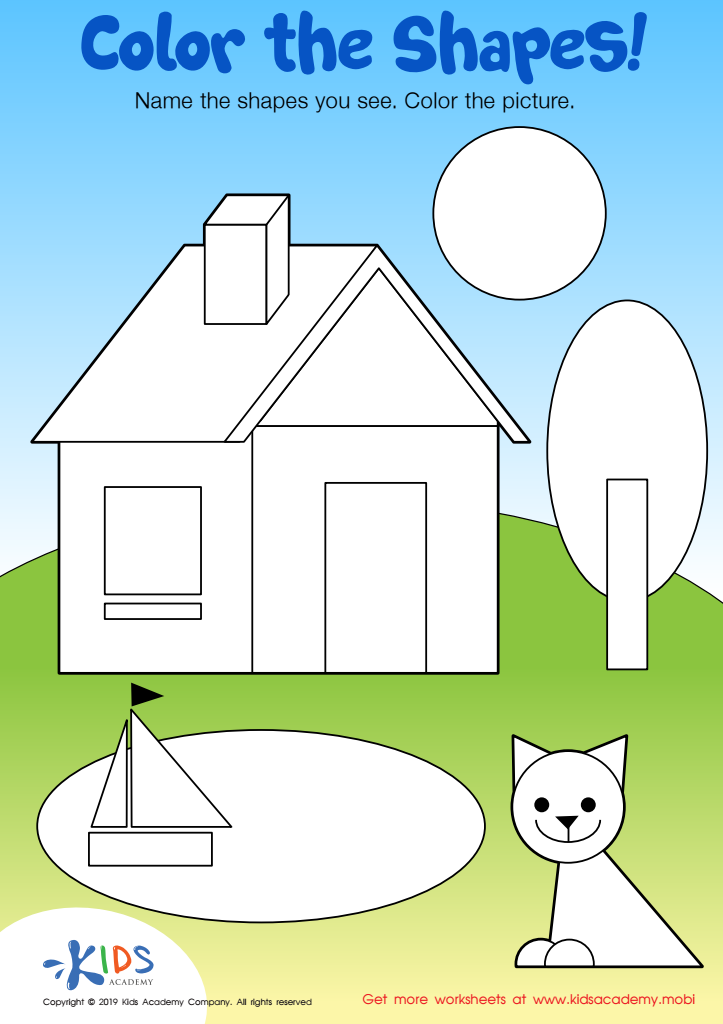
Color the Shapes Worksheet
Help your student master shape identification with this fun worksheet. Ask them to name the shapes in the picture, then color it! Ask questions like "How many squares do you see?" and "How many triangles?" to extend the learning. Identify squares, circles, triangles and rectangles with this enjoyable coloring page.
Download (PDF)
 Assign to My Students
Assign to My Students
Color the Shapes Worksheet
Worksheet
Join Kids Academy for Free
Who is primarily going to use this learning content?








Teaching 6-year-olds to follow instructions in geometry is essential for their overall development and understanding of mathematics. At this age, children are excited to explore and discover the world around them, and geometry helps facilitate this exploration in a structured way.
Firstly, following instructions in geometry cultivates critical thinking and problem-solving skills. When children learn how to draw shapes, identify angles, or compare sizes, they naturally engage in logical reasoning, which lays the groundwork for more complex math concepts in the future.
Secondly, understanding geometric concepts enhances spatial awareness, which is crucial in everyday life. From navigating their environment to forming and organizing ideas, spatial skills influence their ability to comprehend directions, maps, and layouts.
Moreover, following instructions helps develop important executive functioning skills such as attention, focus, and sequencing. These skills are vital for success not only in math but across all academic subjects.
Lastly, engaging with geometry through structured instruction allows for creativity and exploration. Children learn to appreciate aesthetics in shapes and designs, potentially sparking interests in art, architecture, and design fields.
Overall, prioritizing geometry instruction fosters a love for learning and builds a strong foundation for future academic success.








