Numeracy skills Math Worksheets for 6-Year-Olds
3 filtered results
-
From - To
Discover engaging and educational Numeracy Skills Math Worksheets for 6-year-olds, designed to enhance foundational math concepts! Our carefully crafted worksheets cover essential topics, including counting, addition, subtraction, and number recognition, ensuring that young learners develop a strong grasp of numeracy skills. Featuring colorful visuals and interactive activities, these worksheets make learning math enjoyable and accessible. Perfect for use at home or in the classroom, they encourage critical thinking and problem-solving in a fun, hands-on way. Empower your child with the confidence they need in mathematics while laying the groundwork for future academic success. Start exploring our worksheets today!
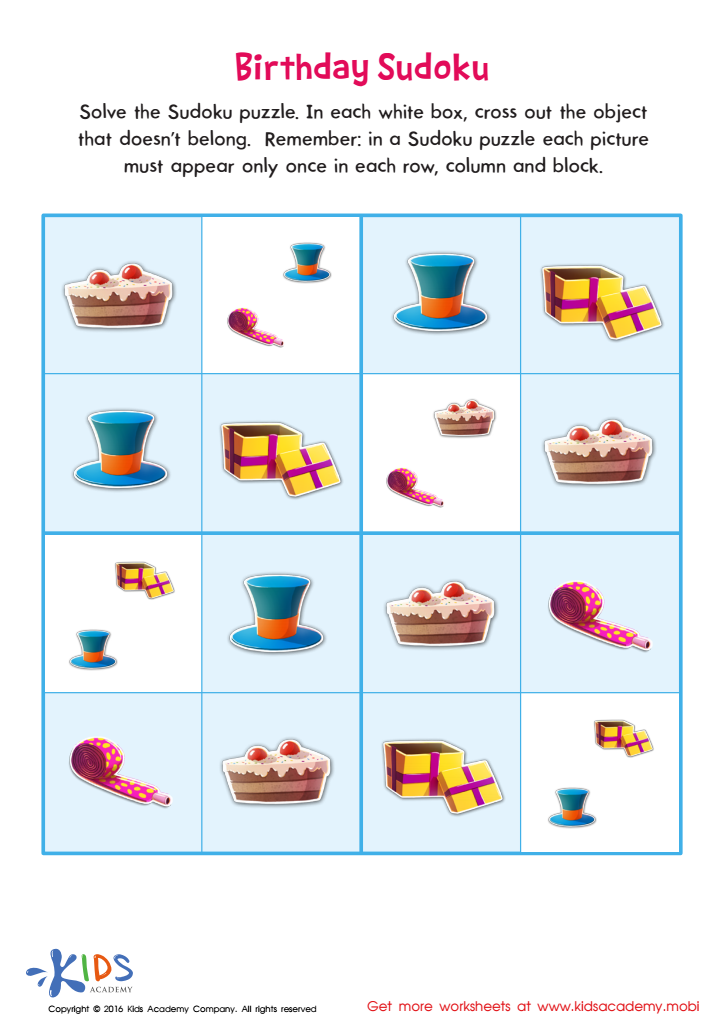
Birthday Sudoku Sorting Worksheet
 Assign to My Students
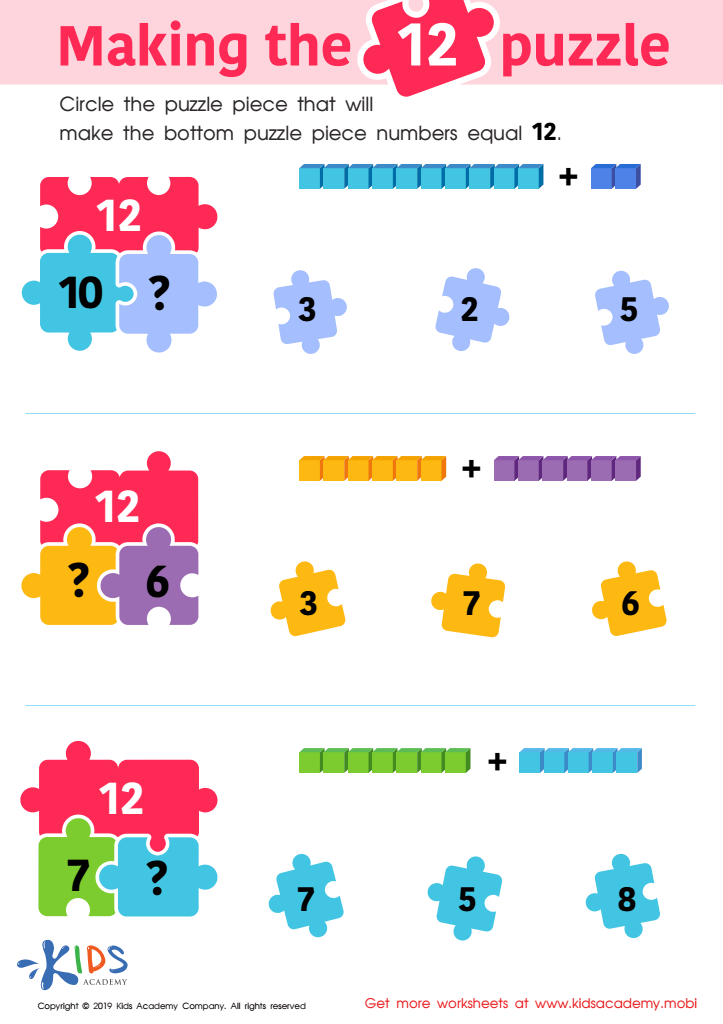
Making the 12 Puzzle Worksheet
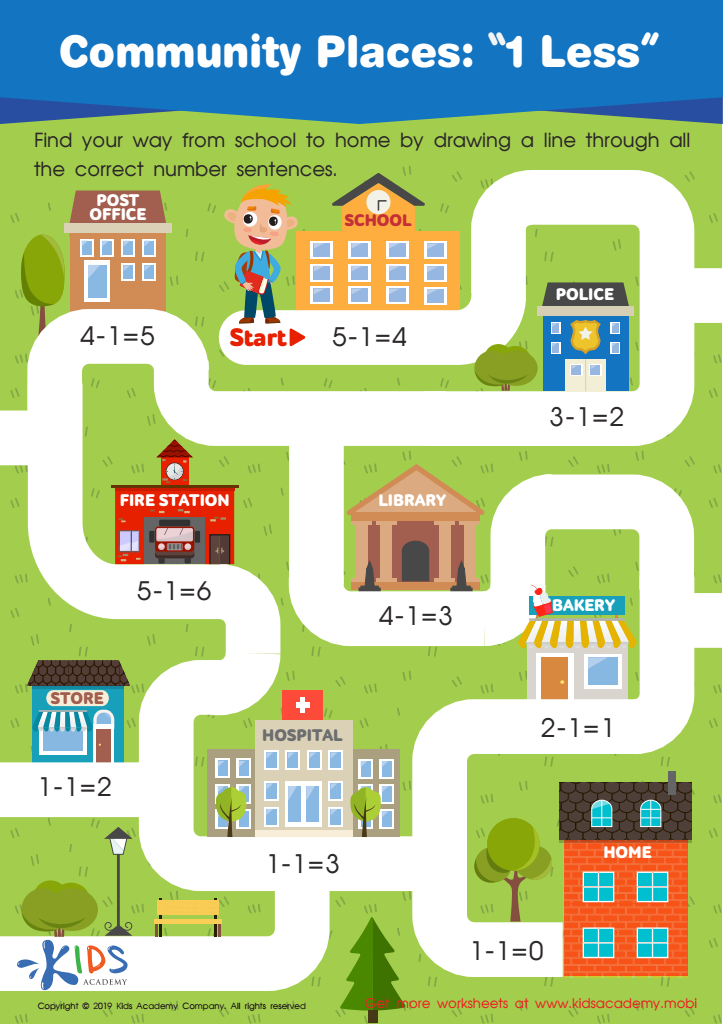
Community Places: 1 Less Worksheet



.jpg)




Numeracy skills are foundational to a child's overall academic success and development, particularly for 6-year-olds who are at a crucial stage of cognitive growth. At this age, children begin to grasp basic mathematical concepts such as counting, addition, subtraction, and patterns, which are vital not only for math but are integrated into everyday life experiences. Parents and teachers should care about developing these skills because numeracy enhances critical thinking and problem-solving abilities.
Strong numeracy skills provide children with the tools they need to tackle more complex mathematics in later grades and are linked to greater confidence and enjoyment in learning. Furthermore, early math skills can significantly predict future academic achievement—children with a solid mathematical foundation are more likely to excel in school.
Additionally, numeracy fosters logical reasoning. Simple activities like measuring ingredients while cooking or counting objects can engage children and deepen their understanding. Encouraging a positive attitude towards math can combat common stereotypes that math is difficult or unapproachable. Therefore, by nurturing numeracy skills, parents and teachers equip children with essential life skills, promoting both academic success and a lifelong appreciation for learning.








