Categorizing objects Science Worksheets for 6-Year-Olds
4 filtered results
-
From - To
Discover our engaging "Categorizing Objects Science Worksheets" designed specifically for 6-year-olds! These interactive worksheets help young learners explore the properties of various objects while developing their critical thinking skills. By sorting items based on color, shape, size, and function, children gain a foundational understanding of scientific concepts. Our worksheets are colorful, fun, and easy to use, making learning enjoyable. Perfect for classroom activities or at-home practice, these resources cater to diverse learning styles and encourage active participation. Help your child build their categorization skills today and make science exploration a delightful adventure! Explore our collection now!
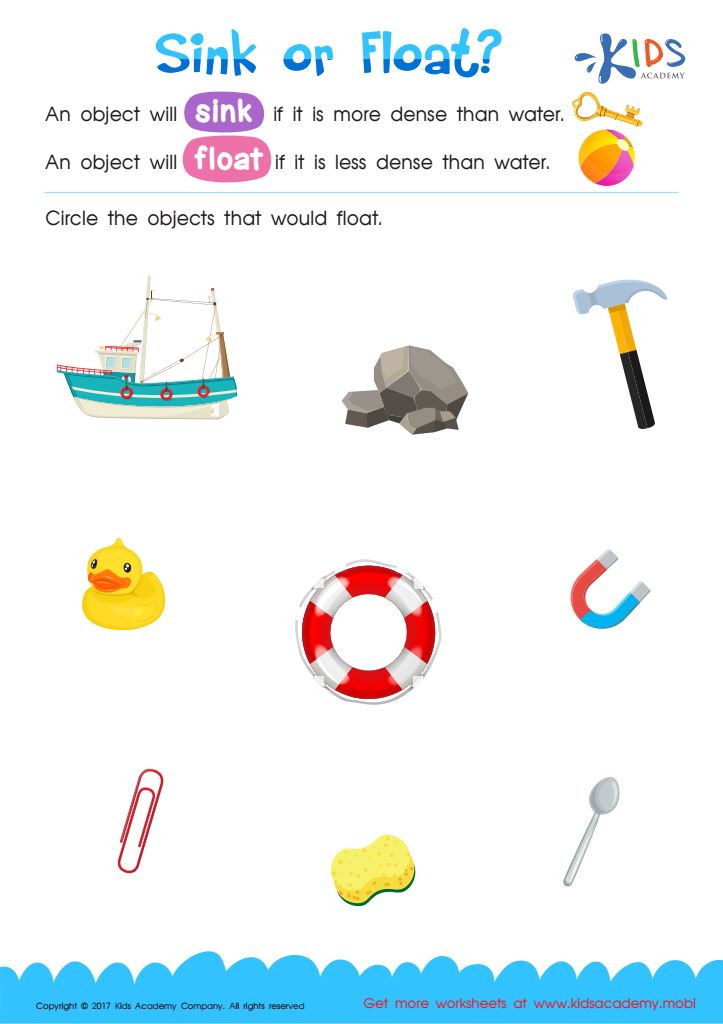
Sink or Float Printable
 Assign to My Students
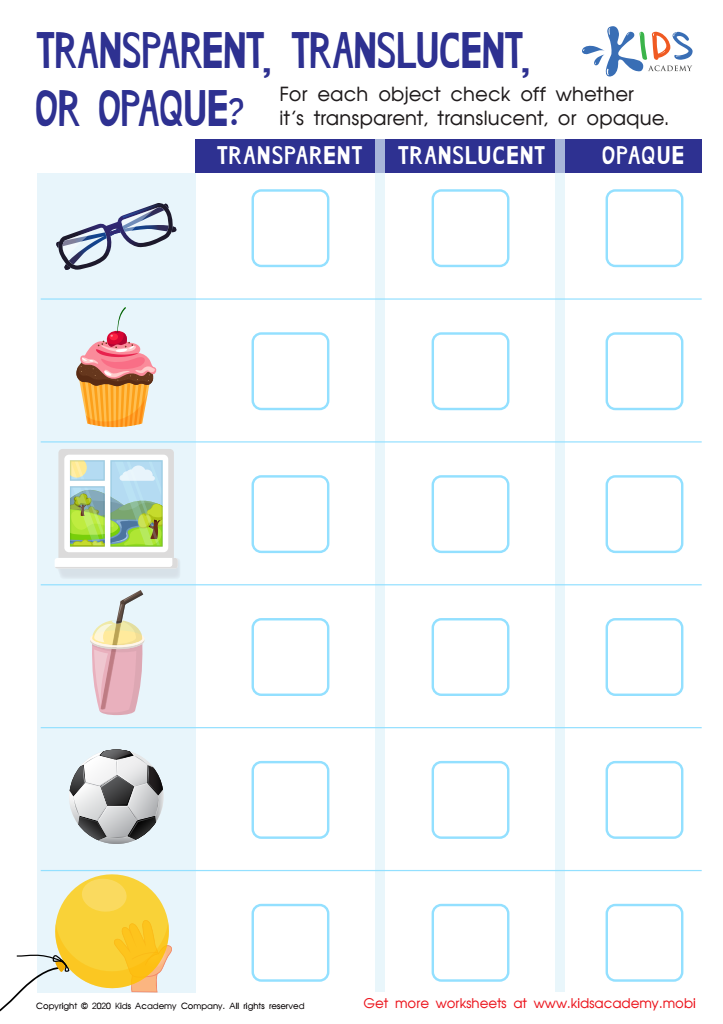
Transparent, Translucent, or Opaque Worksheet
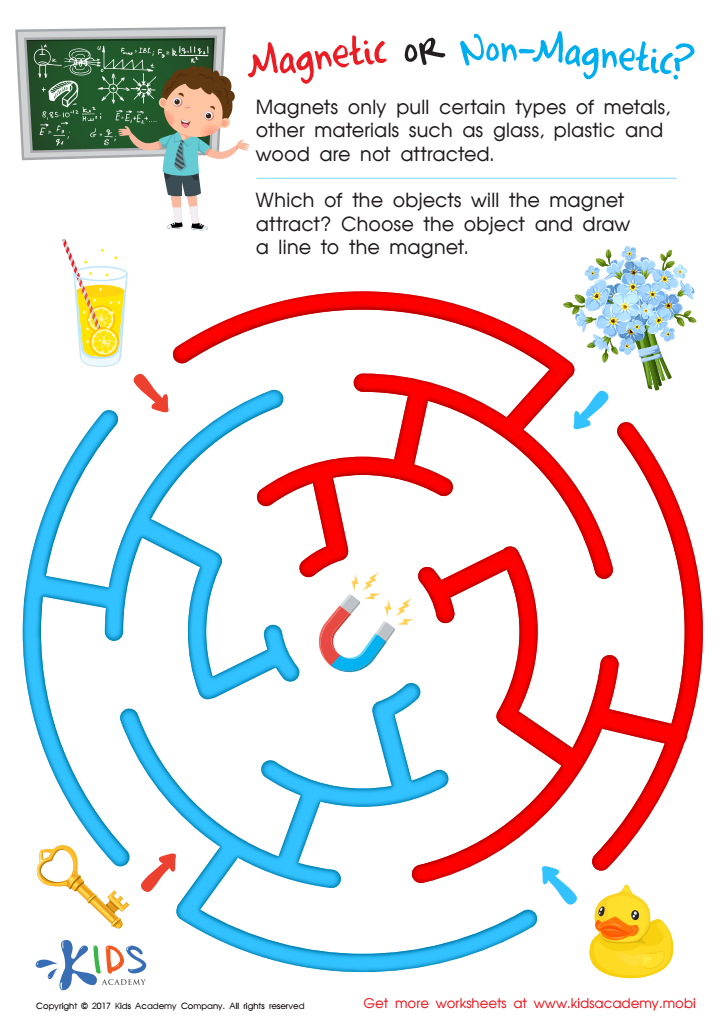
Magnetic or Non–Magnetic Worksheet
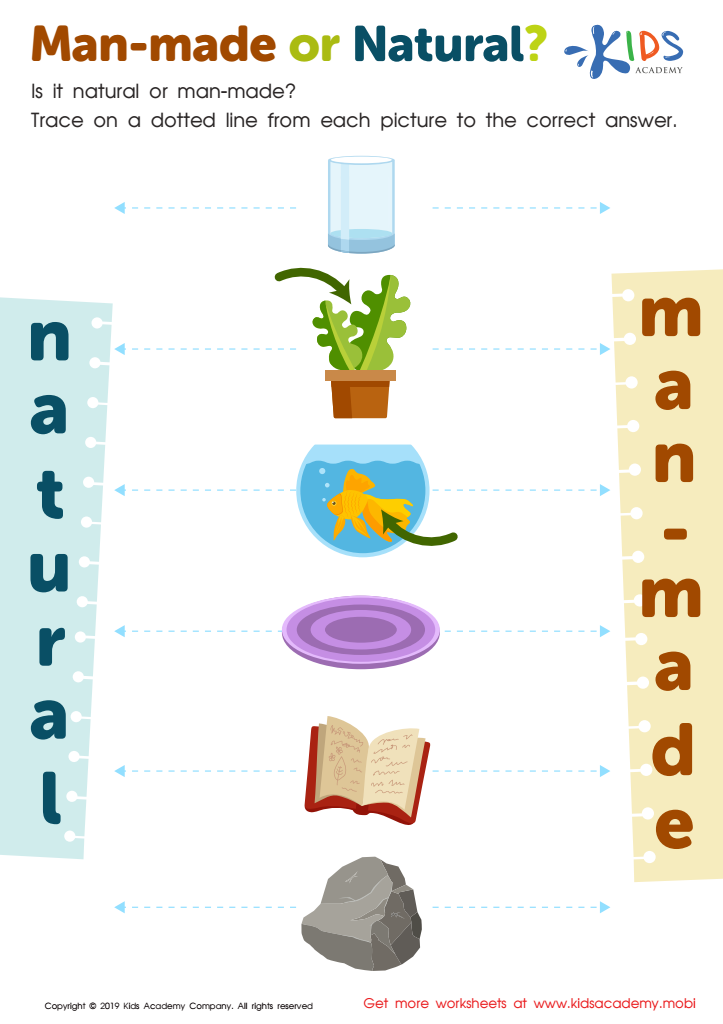
Man-Made or Natural? Worksheet







Categorizing objects is a fundamental science skill that young children, especially 6-year-olds, can master. For parents and teachers, fostering this ability is crucial for several reasons. First, categorization helps develop critical thinking and problem-solving skills. By grouping objects based on shared characteristics, children learn to observe, compare, and analyze the world around them, laying the groundwork for scientific inquiry.
Moreover, categorizing nurtures their language development. As children verbalize their thought processes, they enrich their vocabulary with descriptive words related to attributes such as size, shape, color, and function. This not only enhances their communication skills but also helps them articulate their thoughts clearly.
Additionally, categorization introduces young learners to basic organizational skills, vital for their academic journey. It teaches them to make order out of chaos, a fundamental concept in both science and everyday life.
Finally, the process of categorizing makes learning more engaging and fun. Children love sorting and grouping items, whether it’s toys or natural objects, turning learning into a hands-on experience that fosters curiosity and enthusiasm for exploration. In essence, teaching children to categorize not only enhances their scientific thinking but also contributes to their overall cognitive development.







