
Analytical skills Science Worksheets for Ages 7-8
6 filtered results
Difficulty Level
Grade
Age
-
From - To
Subject
Activity
Standards
Boost your child's cognitive development with our engaging Analytical Skills Science Worksheets designed specifically for ages 7-8. These interactive worksheets foster critical thinking, problem-solving, and analytical reasoning through exciting science-related activities. Kids will have the opportunity to explore various scientific concepts while honing their ability to analyze information, draw conclusions, and make informed decisions. Our carefully curated materials not only enhance academic performance but also inspire curiosity about the natural world. Perfect for homeschooling or classroom use, these worksheets offer a fun way for young learners to strengthen their analytical skills while diving into the wonders of science. Start exploring today!
Favorites
With answer key
Interactive
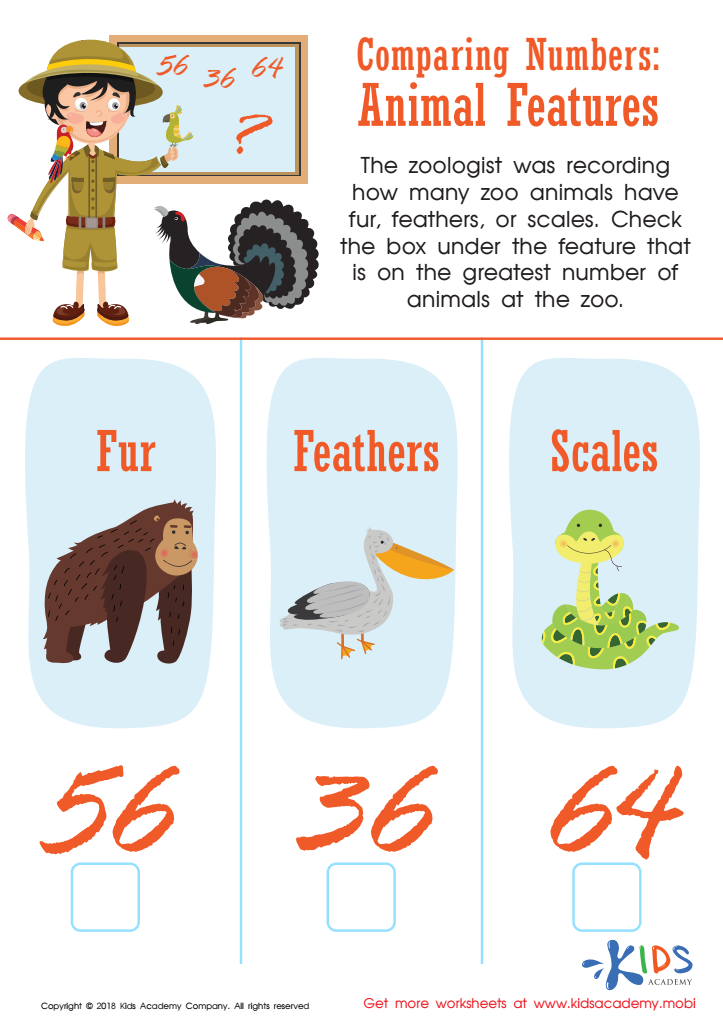
Animal Features Worksheet
Let your kids join a budding zoologist! They can count zoo animals' fur, feathers or scales, then use numbers and comparison to check the box with the most friends. The PDF will captivate them and help them understand how the value of '6' changes based on its position.
 Assign to My Students
Animal Features Worksheet
Worksheet
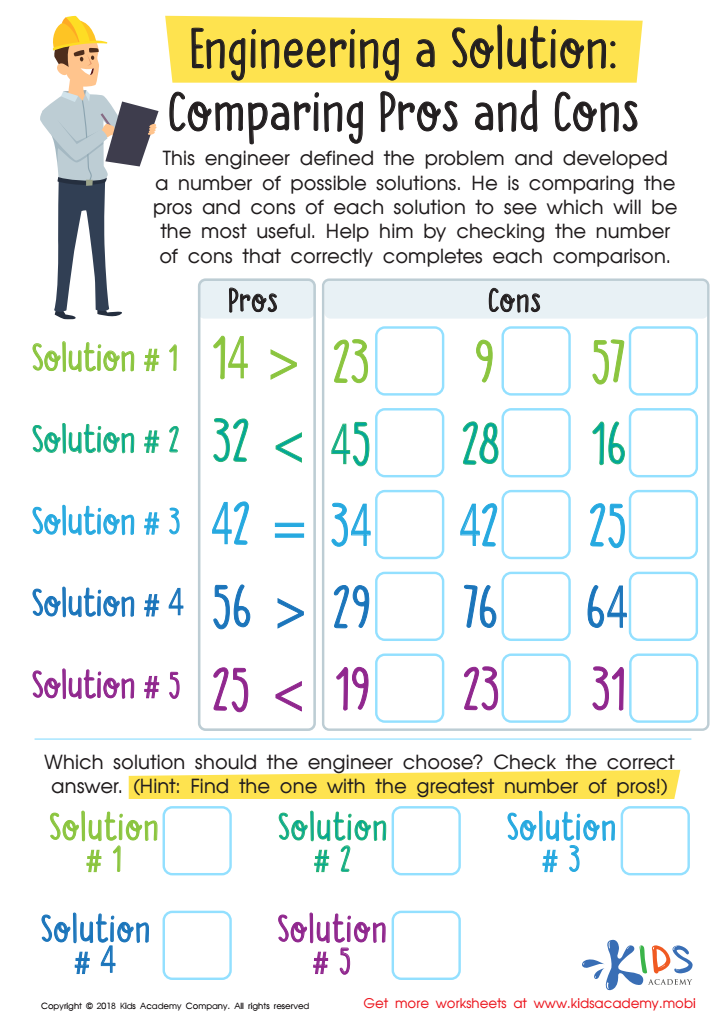
Engineering a Solution: Comparing Pros and Cons Worksheet
Help our little engineers assist the engineer in making a decision! They will solve the equations using greater than, less than, and equal to, and then decide the best solution for the problem using the pros and cons of each.
Engineering a Solution: Comparing Pros and Cons Worksheet
Worksheet
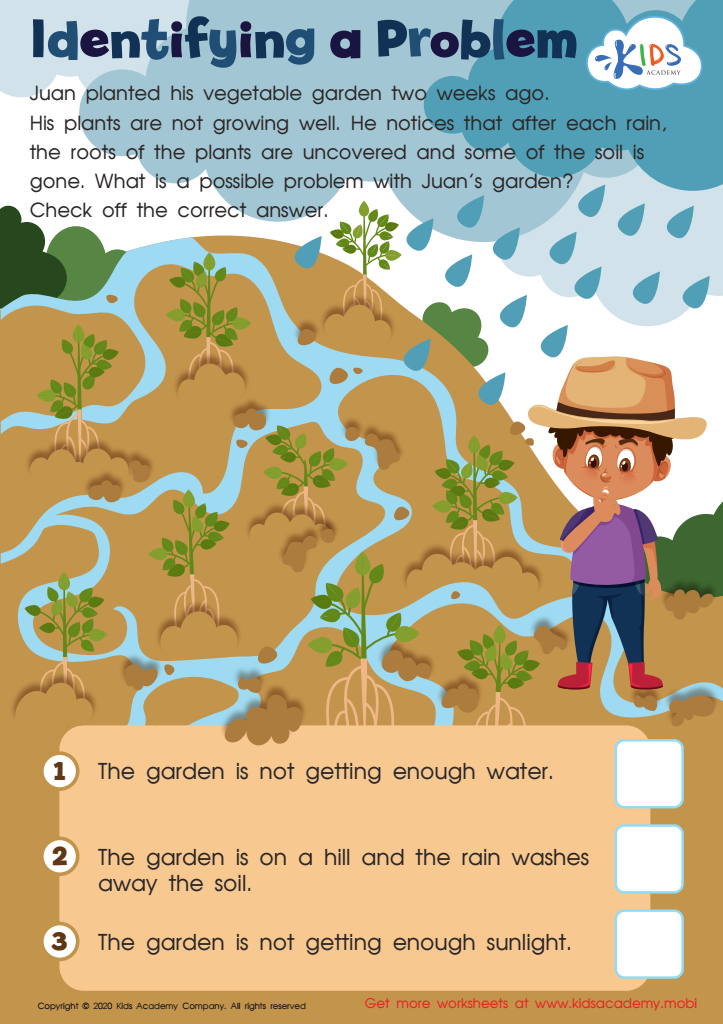
Identifying a Problem Worksheet
Help Juan figure out why his vegetable garden isn't doing well! Print this PDF science worksheet. Read the explanation and observe the scene. What could be causing the problem? Check off the correct answer to complete the challenge. Weather or soil conditions may be the cause – analyze to find out!
Identifying a Problem Worksheet
Worksheet
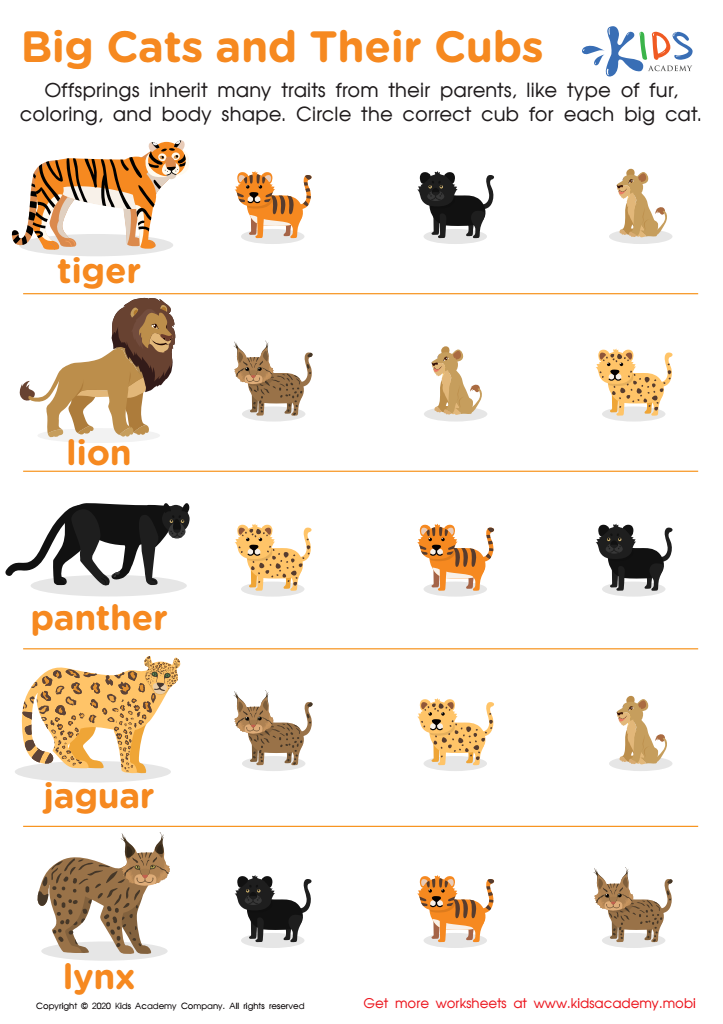
Big Cats and Their Cubs Worksheet
Kids are often like their parents, and the same is true for big cats and their cubs. Introduce your young scientists to genetics with this fun printable worksheet from Kids Academy! Observe the big cats and their cubs, then circle the right cub to complete! It's a great way to teach an early lesson in genetics.
Big Cats and Their Cubs Worksheet
Worksheet
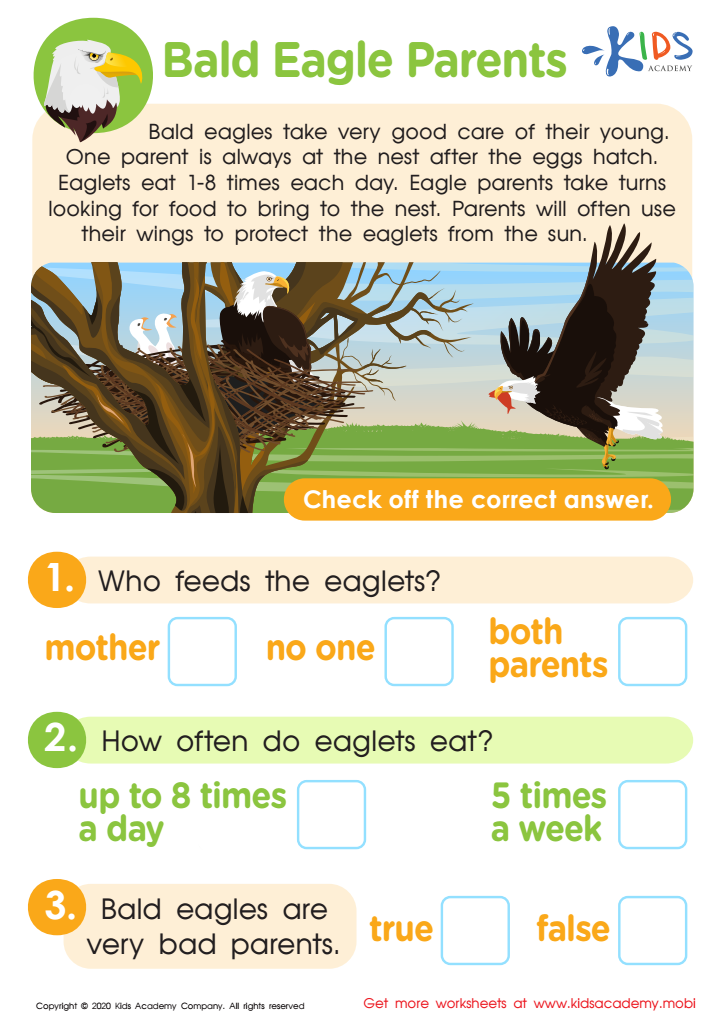
Bald Eagle Parents Worksheet
Teach your child about bald eagle parenting with this science worksheet! Read the passage and answer the questions to learn how these majestic birds protect their young from predators. Eaglets need protection, and the bald eagle parents are masters of providing it!
Bald Eagle Parents Worksheet
Worksheet
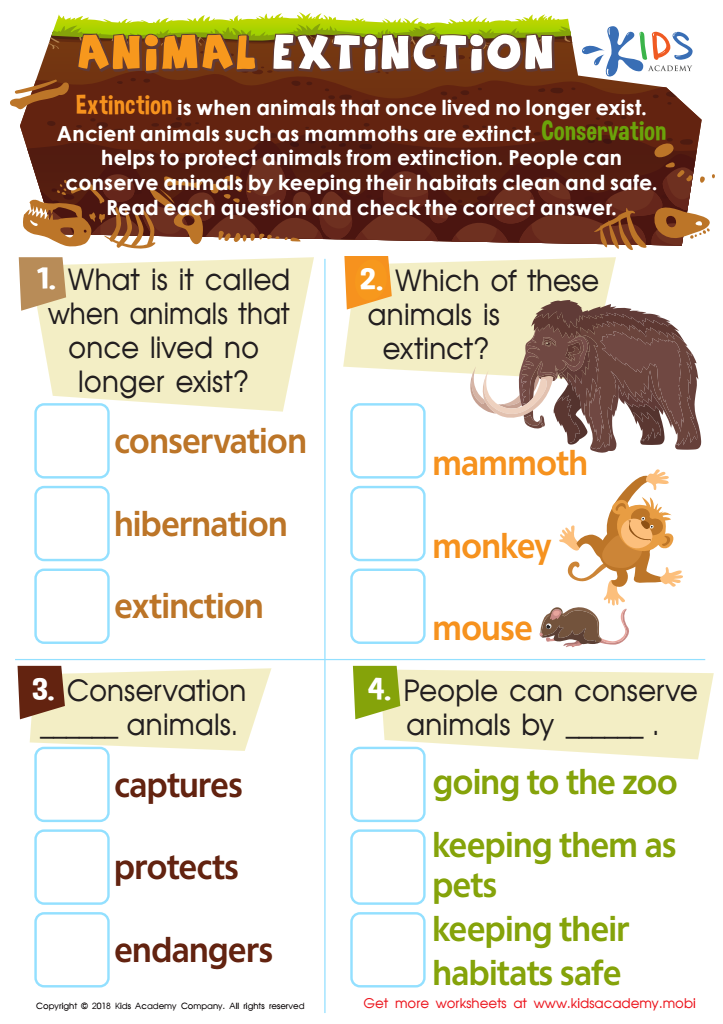
Animal Extinction Worksheet
Children can learn how their actions can help endangered animals with this free PDF worksheet. It explains extinction, looks at the mammoth as an example, and poses questions about conservation. Keeping habitats clean and safe is key to protecting animals and keeping them abundant. Learning about this now can make a huge difference for future generations.
Animal Extinction Worksheet
Worksheet
Join Kids Academy for Free
Who is primarily going to use this learning content?






Analytical skills are crucial for children aged 7-8, especially in the realm of science. At this developmental stage, children are beginning to form more complex thinking patterns, making it essential for parents and teachers to nurture these abilities. Strong analytical skills help children break down information, evaluate evidence, and draw logical conclusions, which are vital components of scientific inquiry.
In science, children learn to observe, ask questions, and interpret data. By fostering analytical skills, adults empower them to make sense of their experiences and the world around them. For instance, a child who can analyze information is better equipped to conduct experiments, assess outcomes, and understand cause-and-effect relationships.
Moreover, these skills promote critical thinking and problem-solving, which are transferable to all areas of life. As they learn to approach challenges systematically, they become more confident learners. Encouraging analytical skills also lays the foundation for future academic success, particularly in STEM fields, which are ever-evolving and high-demand areas.
Ultimately, investing in a child's analytical skills in science leads to well-rounded education, helping them not only grasp scientific concepts but also thrive as inquisitive, resourceful adults in a rapidly changing world.







