Vocabulary enhancement Writing Worksheets for Ages 7-8 - Page 3
58 filtered results
-
From - To
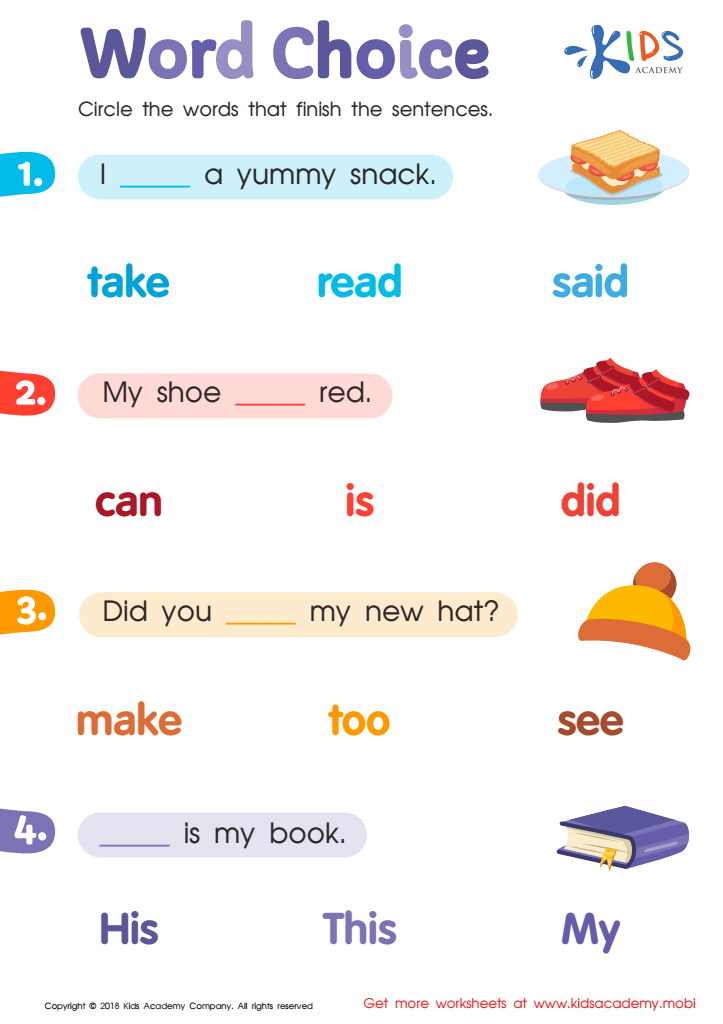
Word Choice Worksheet
 Assign to My Students
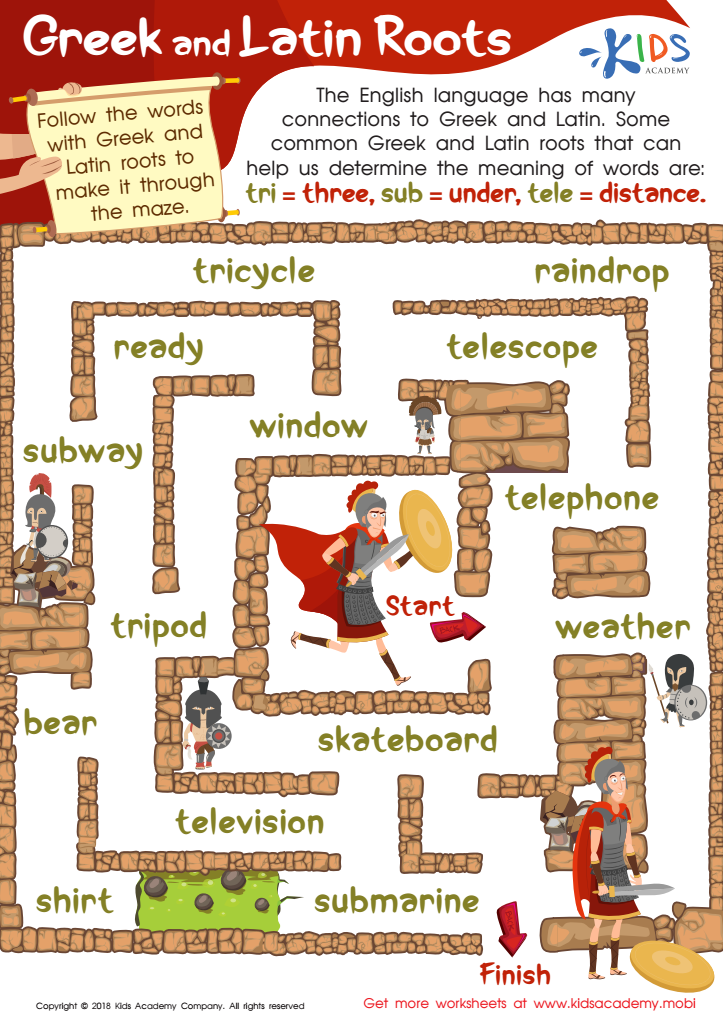
Greek and Latin Roots Worksheet
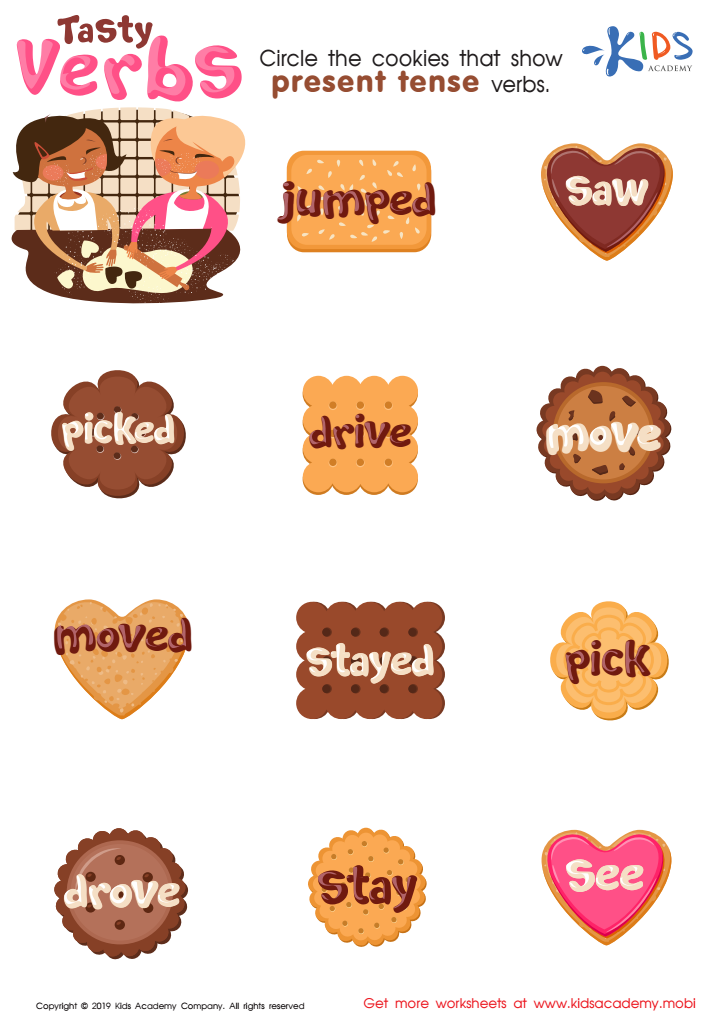
Tasty Verbs Worksheet
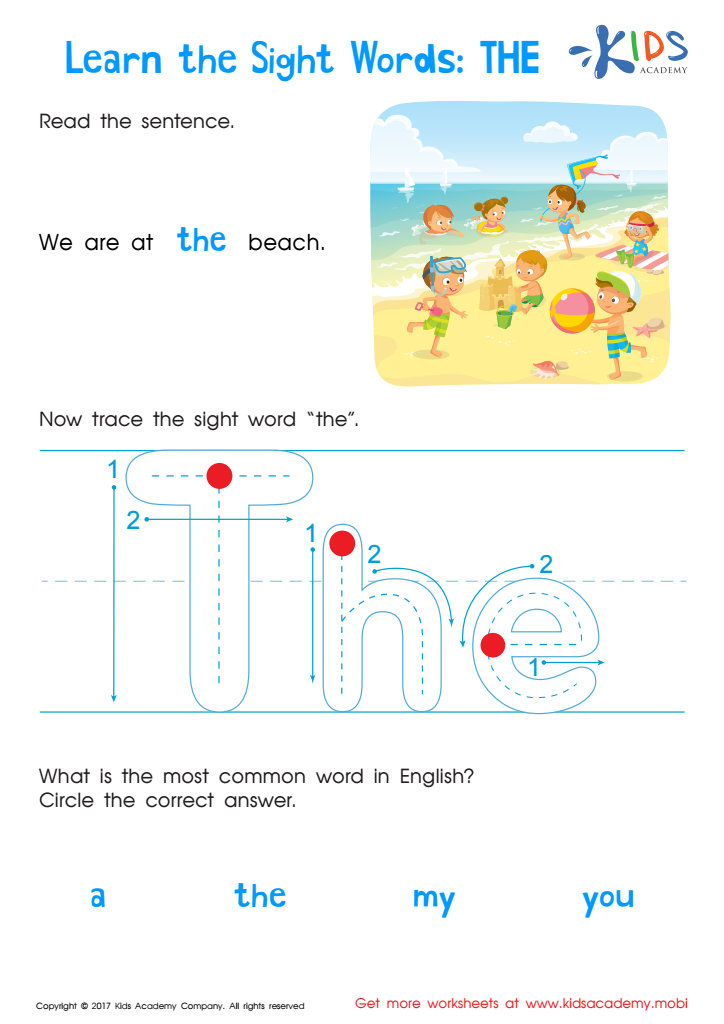
Sight Words: The Worksheet
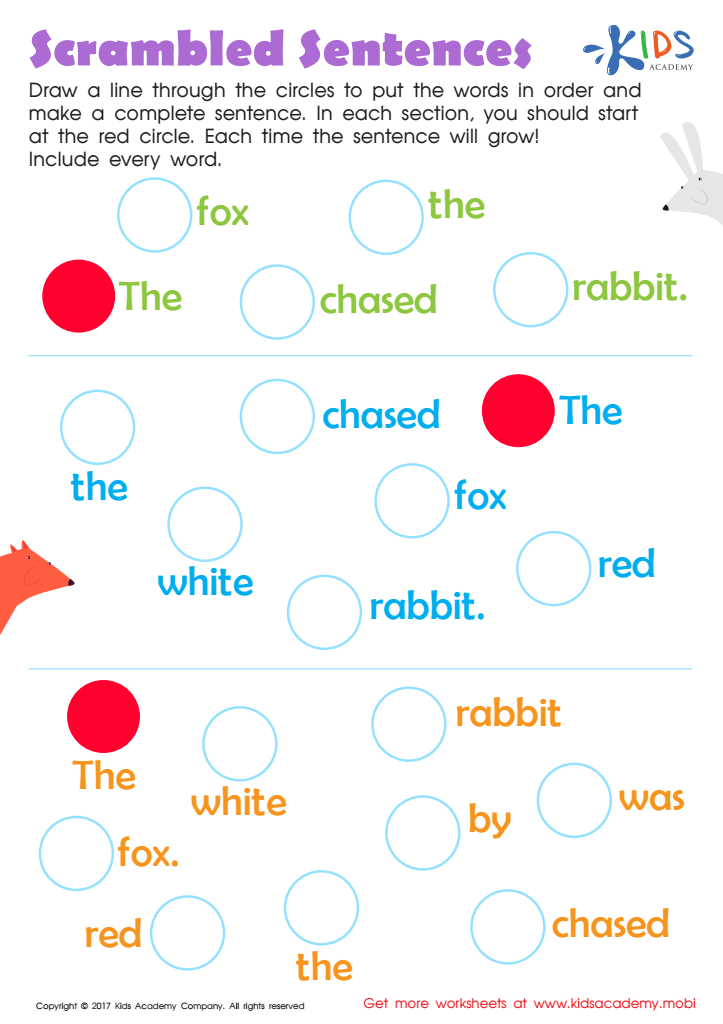
Scrambled Sentences Worksheet
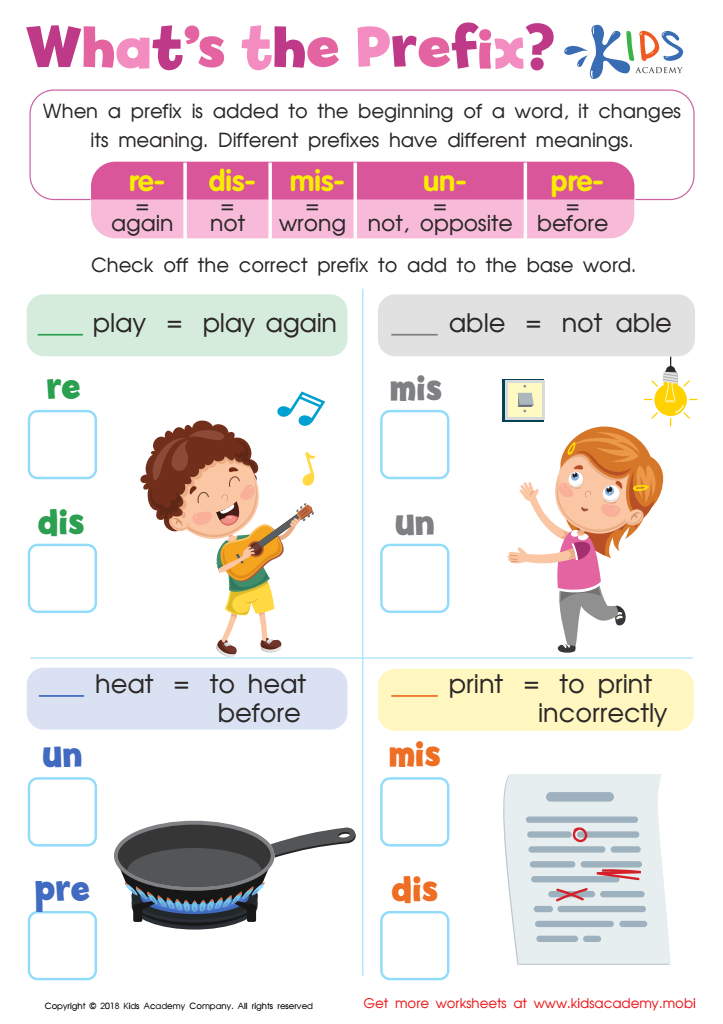
Reading: What Is the Prefix Worksheet
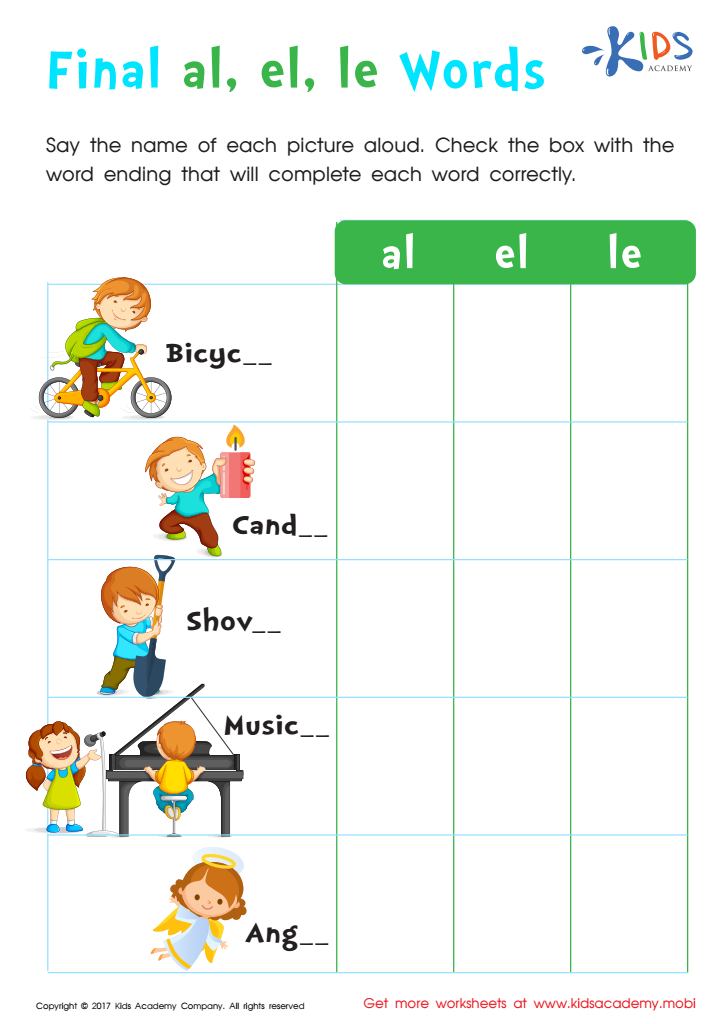
Spelling Words Ending with –le, –el and –al Worksheet
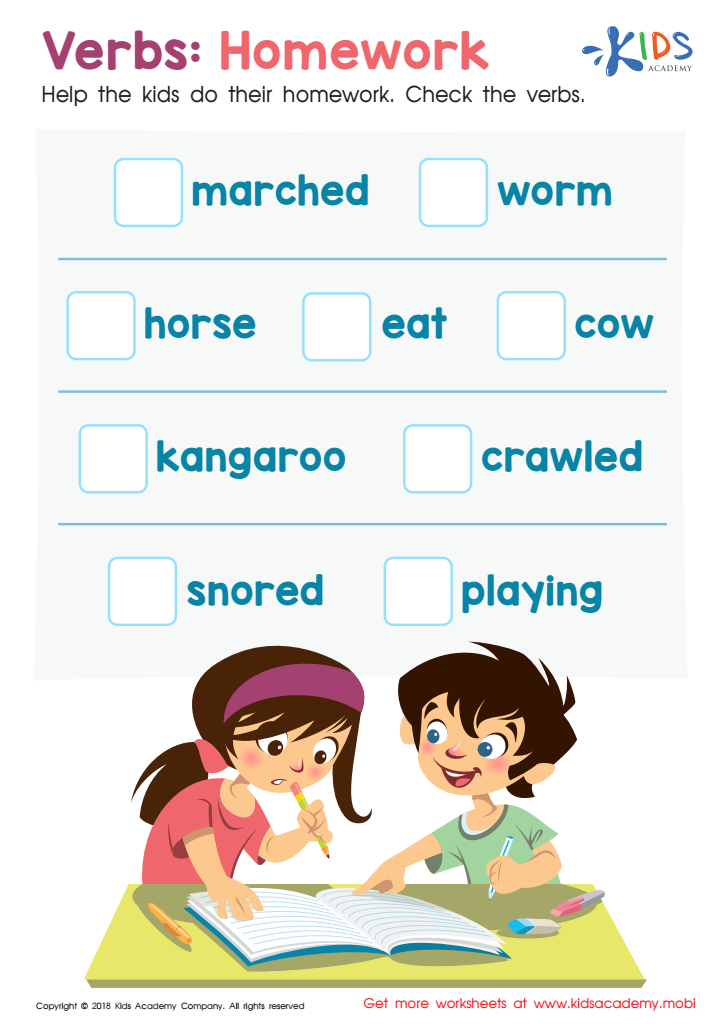
Verbs Homework Worksheet
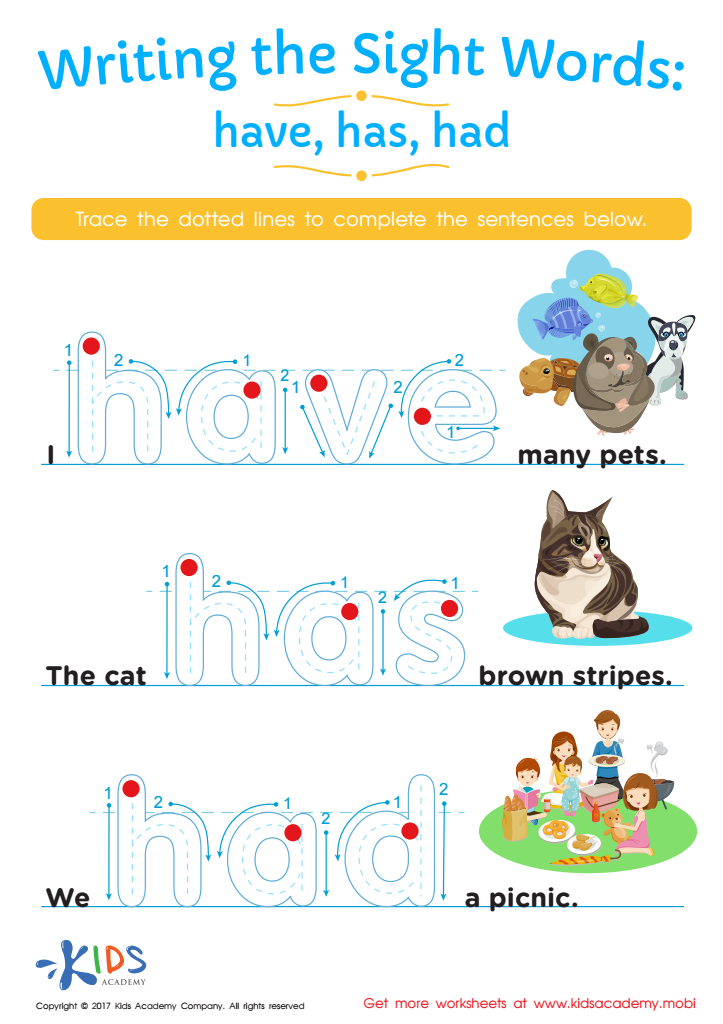
Have, Has, Had Worksheet Sight Words Worksheet
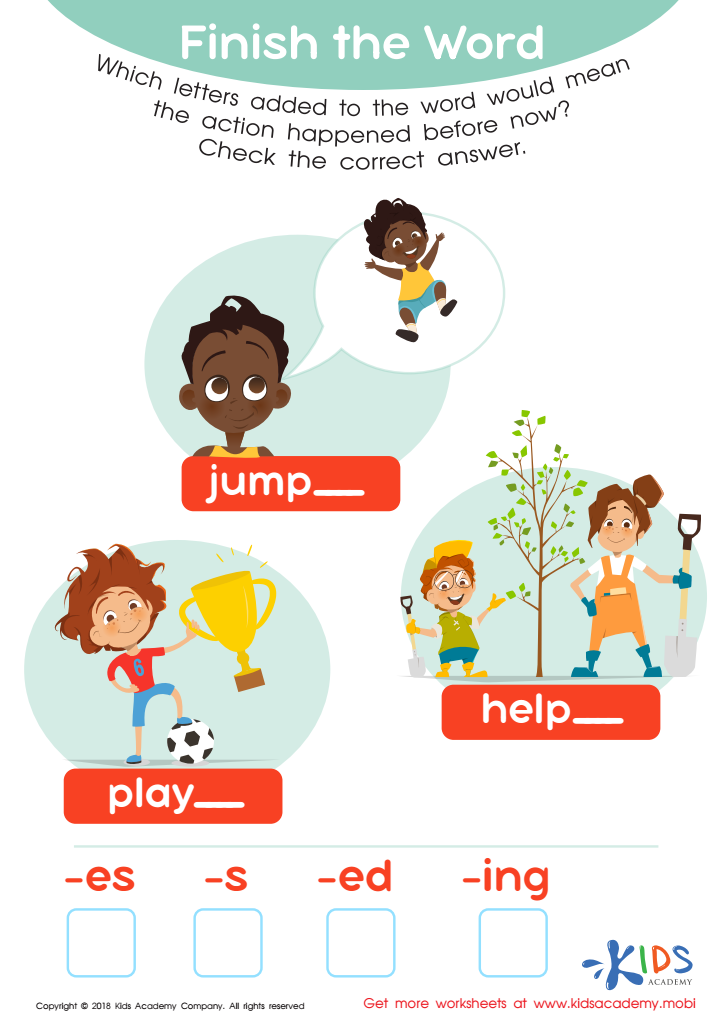
Finish the Word Worksheet








Parents and teachers should prioritize vocabulary enhancement in writing for children aged 7-8 because this foundational skill significantly shapes their overall language development and academic success. At this age, children's cognitive abilities are rapidly evolving, making them particularly receptive to new words and language structures. A rich vocabulary equips them to express thoughts clearly, understand complex ideas, and engage more effectively in both written and verbal communication.
Improving vocabulary at a young age fosters confidence in writing, enabling children to articulate their ideas with precision and creativity. This skill not only enhances their academic performances in subjects such as reading and language arts but also supports critical thinking and comprehension across various disciplines.
Additionally, individuals with a strong vocabulary are better prepared for future educational challenges, as they can grasp more sophisticated concepts and are often more adept at problem-solving. Furthermore, a diverse vocabulary promotes a love for reading, as children encounter varied words in books, which enhances their overall literacy experience.
By fostering vocabulary enhancement during these formative years, parents and teachers lay the groundwork for lifelong communication skills, empowering children to thrive academically and socially. Investing in this aspect of writing pays dividends well beyond primary education.








