Filters

124 filtered results

Clear all filters
Favorites
With answer key
Interactive

124 filtered results

Difficulty Level

Grade


Check out this FREE Trial Lesson on Addition & Subtraction for age 7-9!

Use Mental Strategies -Counting

Favorites
With answer key
Interactive
  • 7-9
  • Counting skills
  • Addition & Subtraction
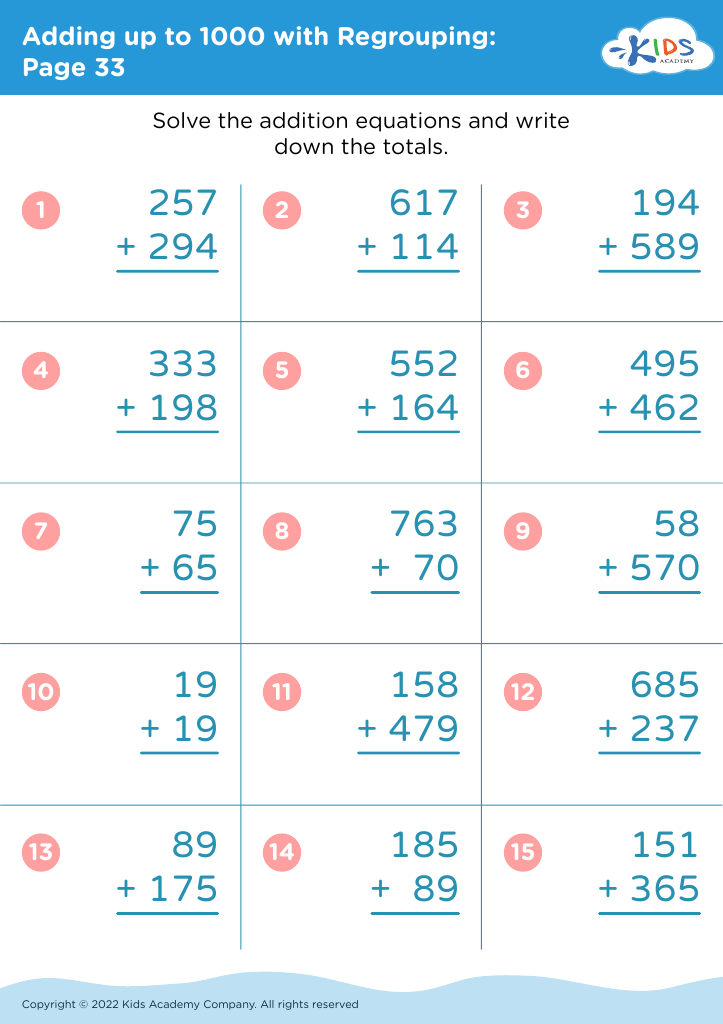
Adding up to 1000 with Regrouping: Page 33
Worksheet
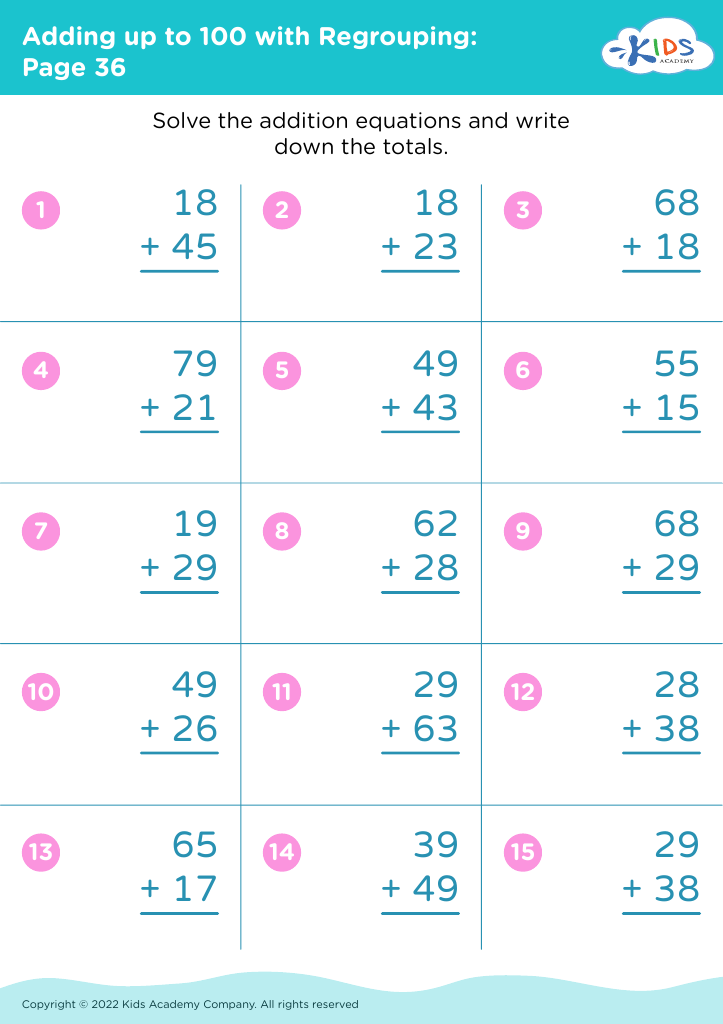
Adding up to 100 with Regrouping: Page 36
Worksheet
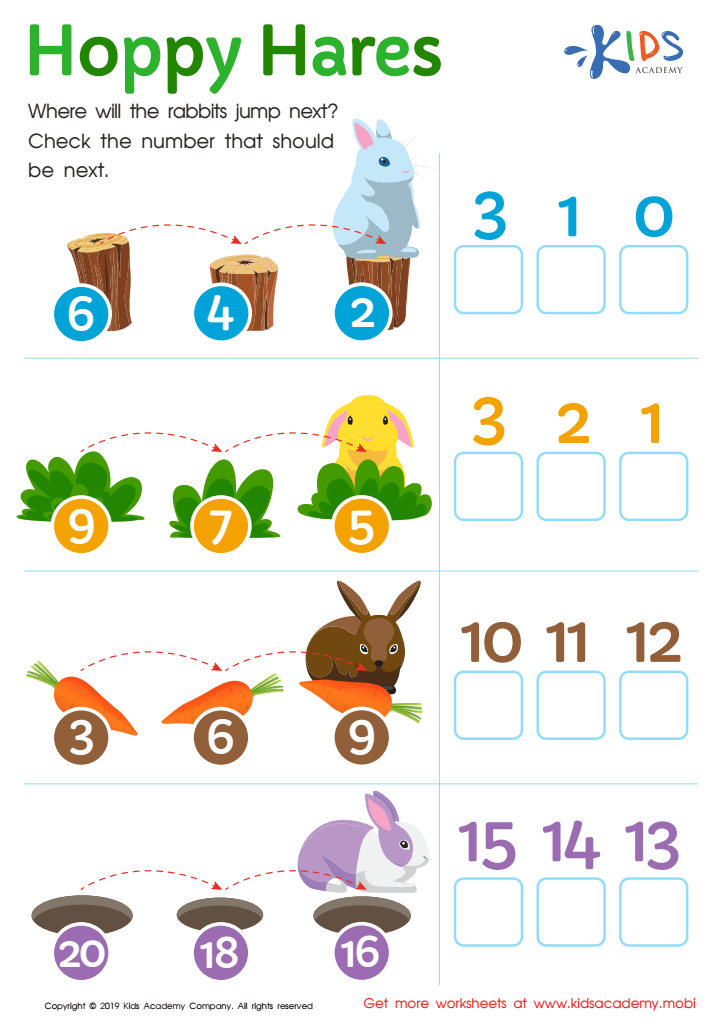
Hoppy Hares Worksheet

Hoppy Hares Worksheet

Ask your kids if they can identify the rabbits in the picture, then help them solve the math problems. The rabbits need to hop from place to place, so look at the numbers and help your kids figure out the next one. These cute and friendly little animals make great pets. Have fun solving this worksheet together!
Hoppy Hares Worksheet
Worksheet
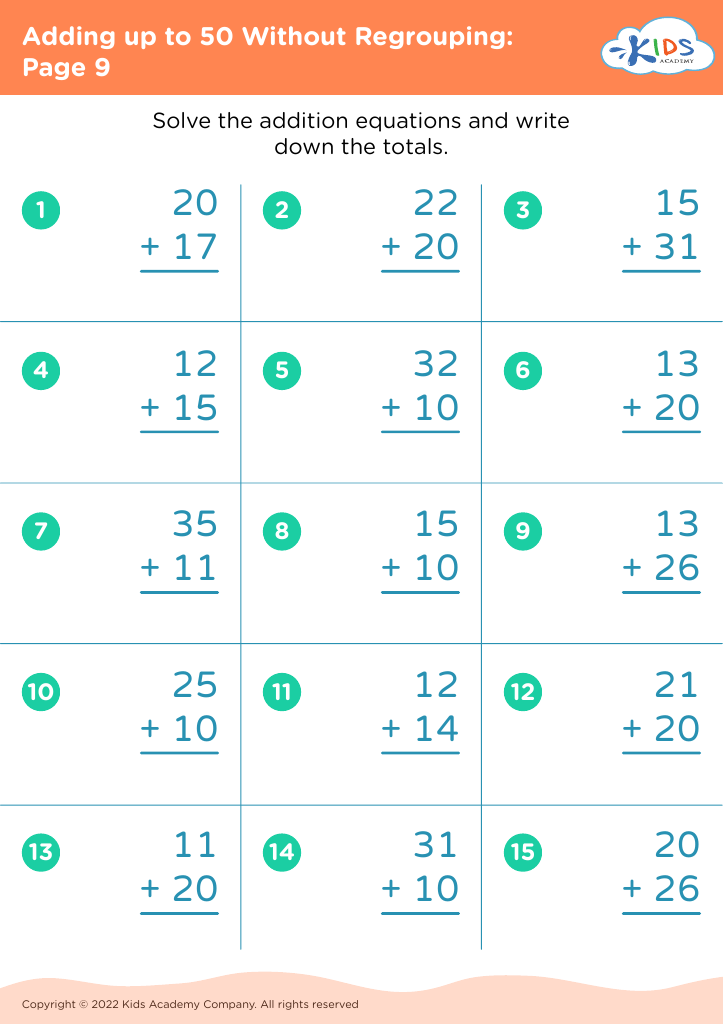
Adding up to 50 Without Regrouping: Page 9
Worksheet
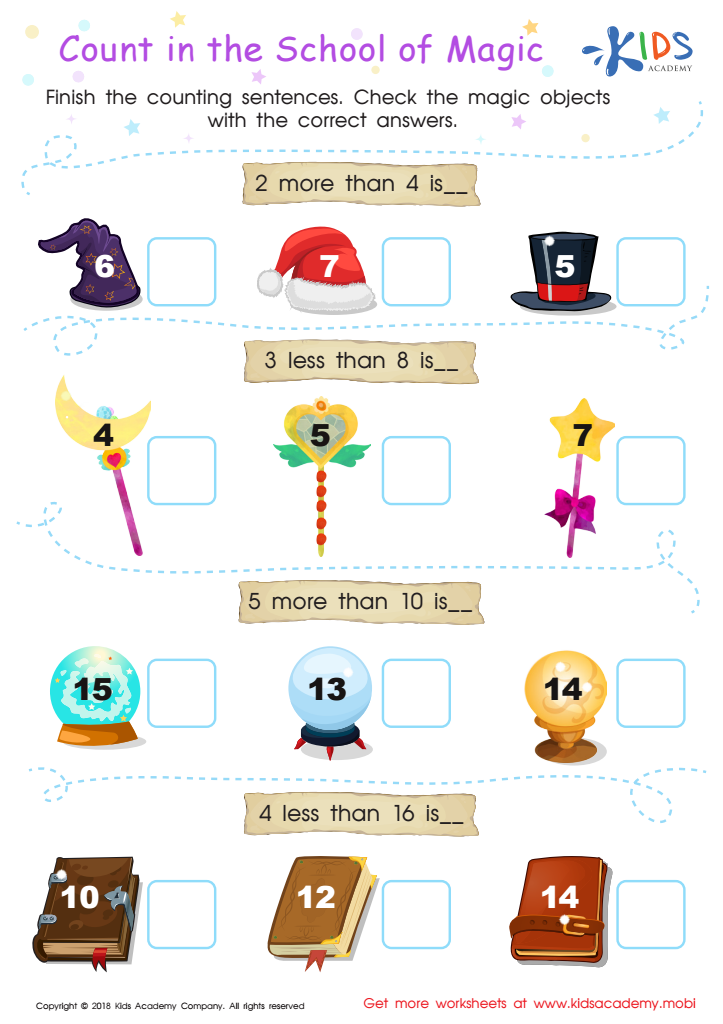
Count in the School of Magic Worksheet
Count in the School of Magic Worksheet

Your math learners can explore the School of Magic with this worksheet. They'll read equations with addition and subtraction numbers under 20, count back and forth to find the answer, then complete the counting sentences. Fun pictures and easy accuracy make it an enjoyable and successful learning experience.
Count in the School of Magic Worksheet
Worksheet
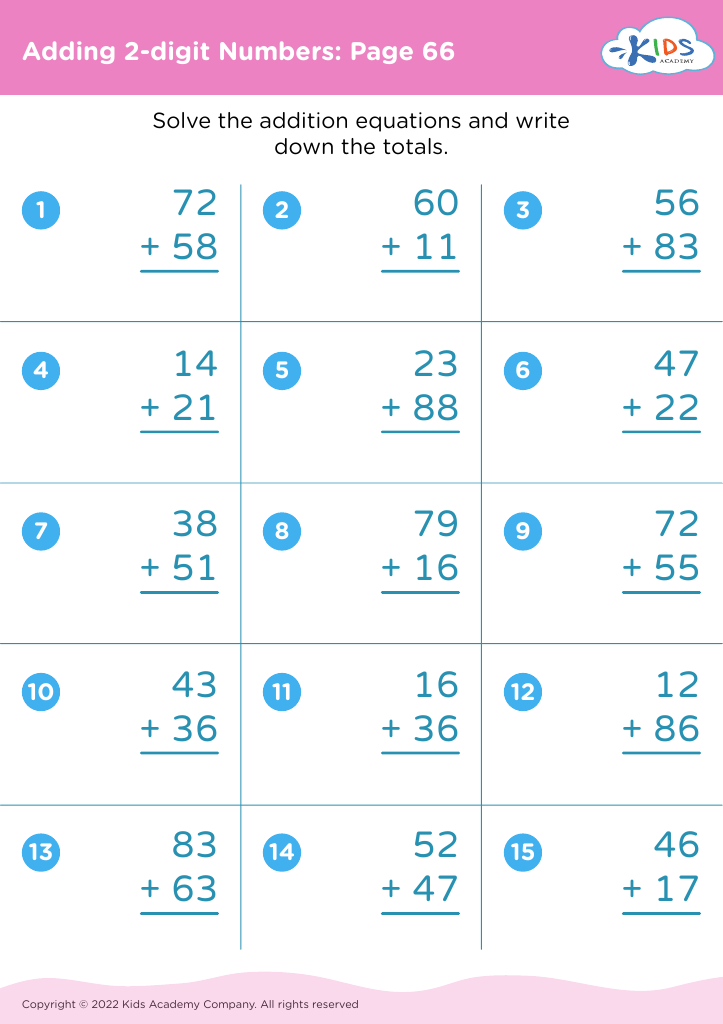
Adding 2-digit Numbers: Page 66

Adding 2-digit Numbers: Page 66

Adding 2-digit Numbers: Page 66
Worksheet
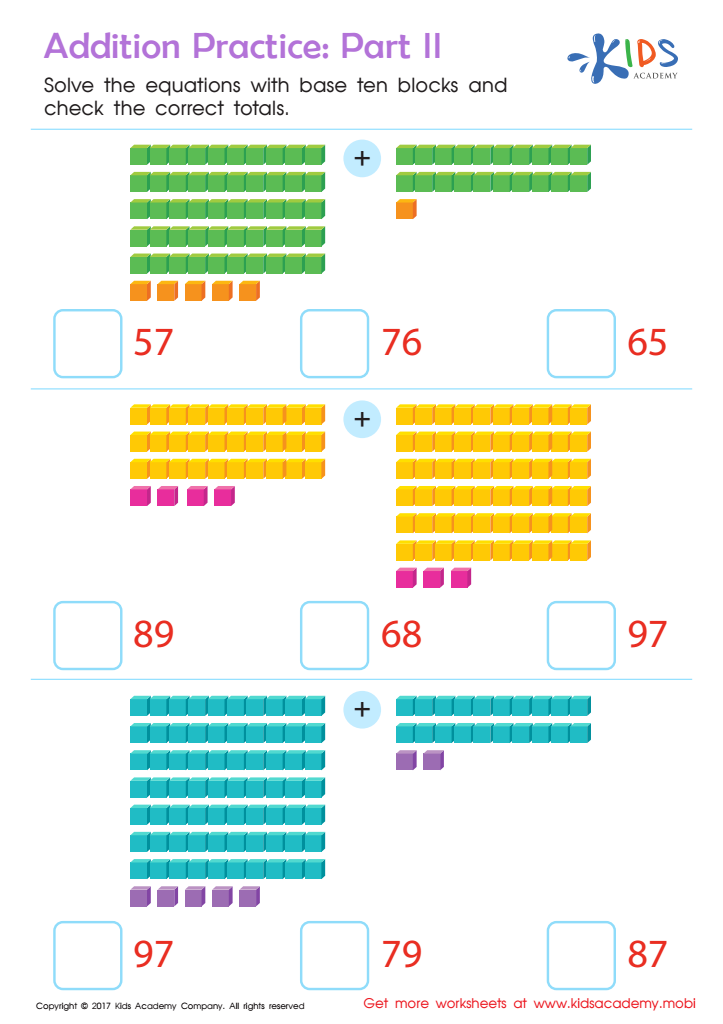
Addition Practice Sheet: Part 2

Addition Practice Sheet: Part 2

Make sure your kids understand place value before introducing two/three-digit addition. To help, use Kids Academy's colorful cube worksheet. It provides all the manipulatives needed to solve the problem and find totals. A great way to explain the concept behind the addition!
Addition Practice Sheet: Part 2
Worksheet
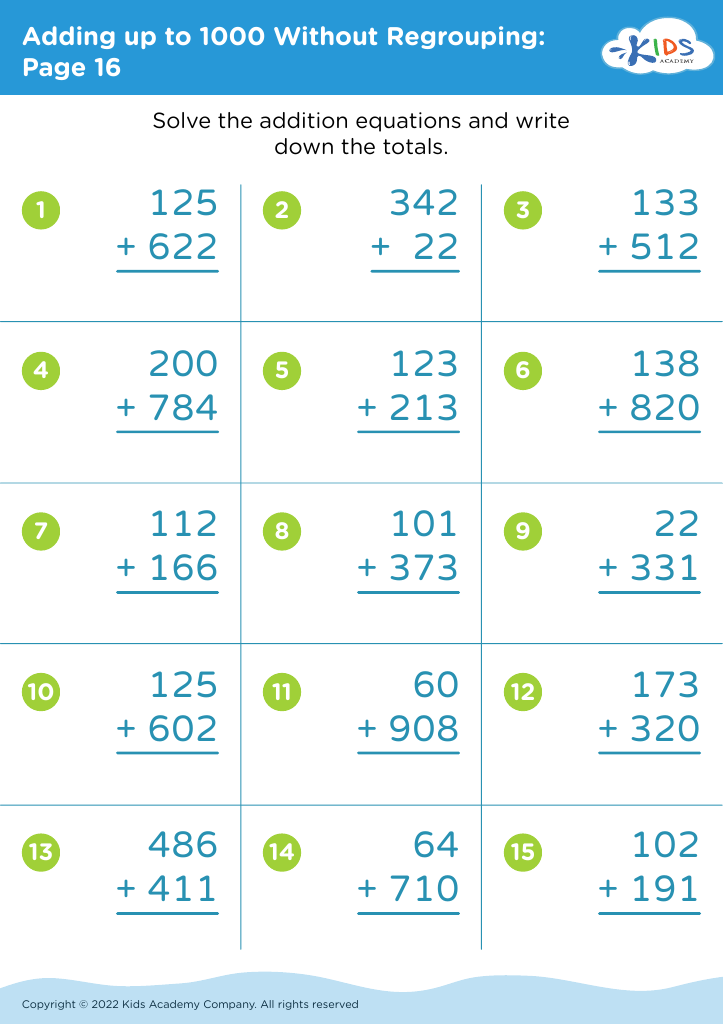
Adding up to 1000 Without Regrouping: Page 16
Worksheet
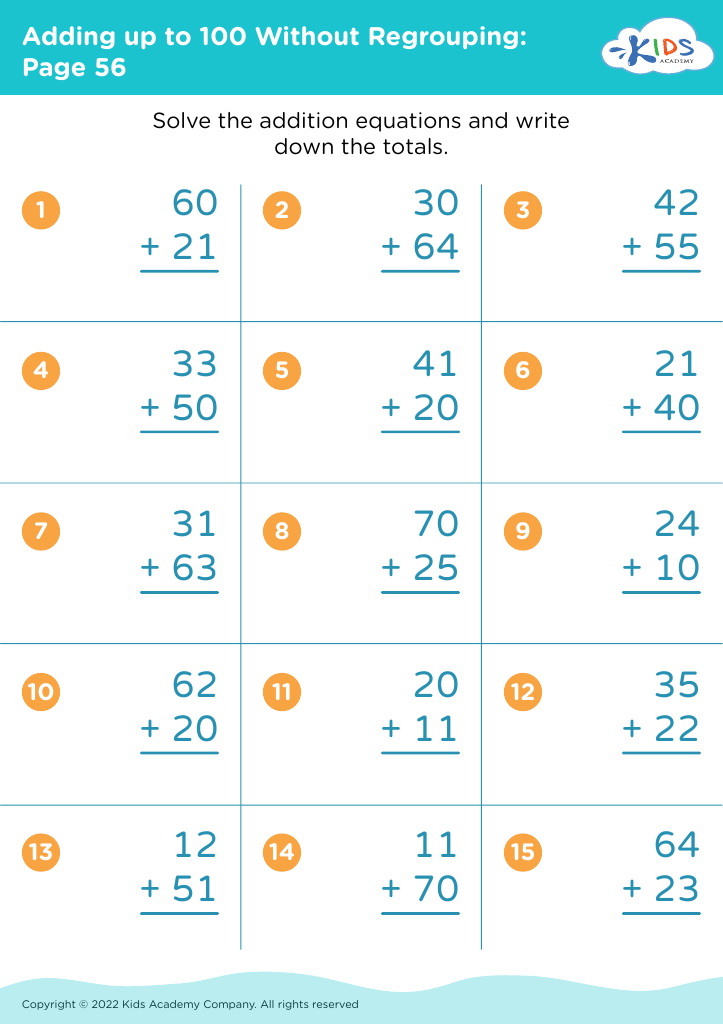
Adding up to 100 Without Regrouping: Page 56
Worksheet
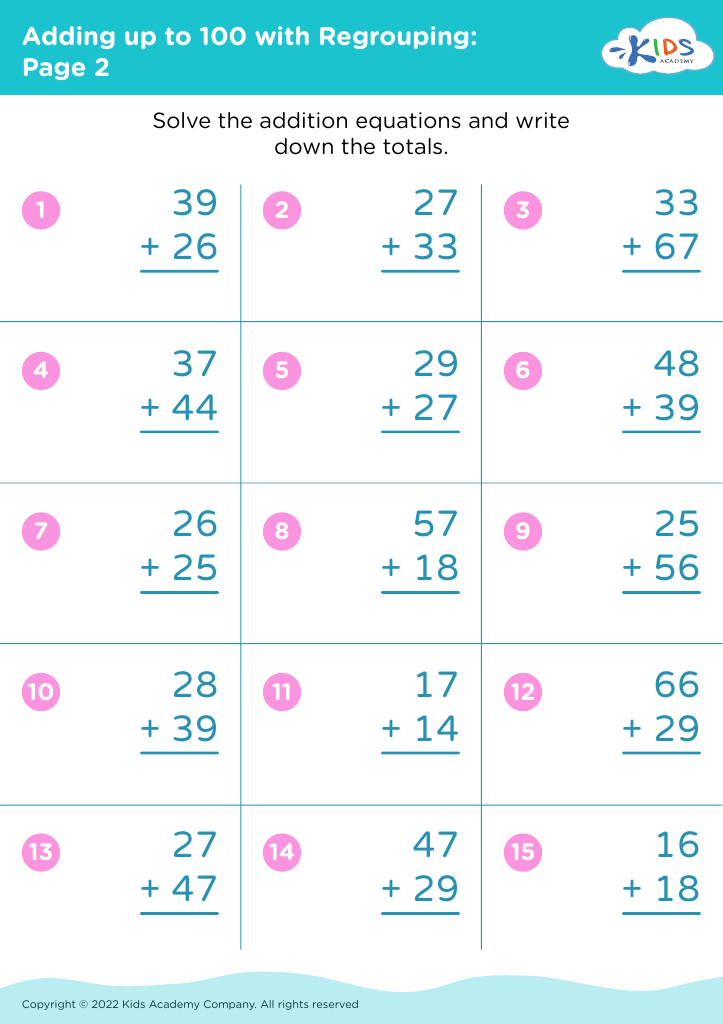
Adding up to 100 with Regrouping: Page 2
Worksheet
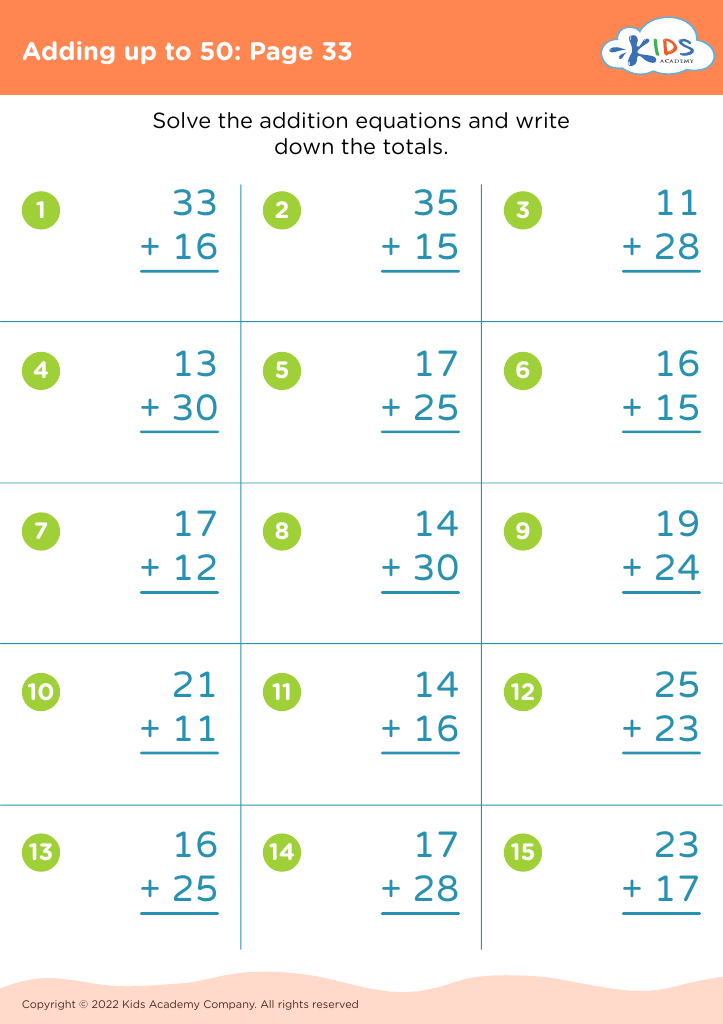
Adding up to 50: Page 33

Adding up to 50: Page 33

Adding up to 50: Page 33
Worksheet
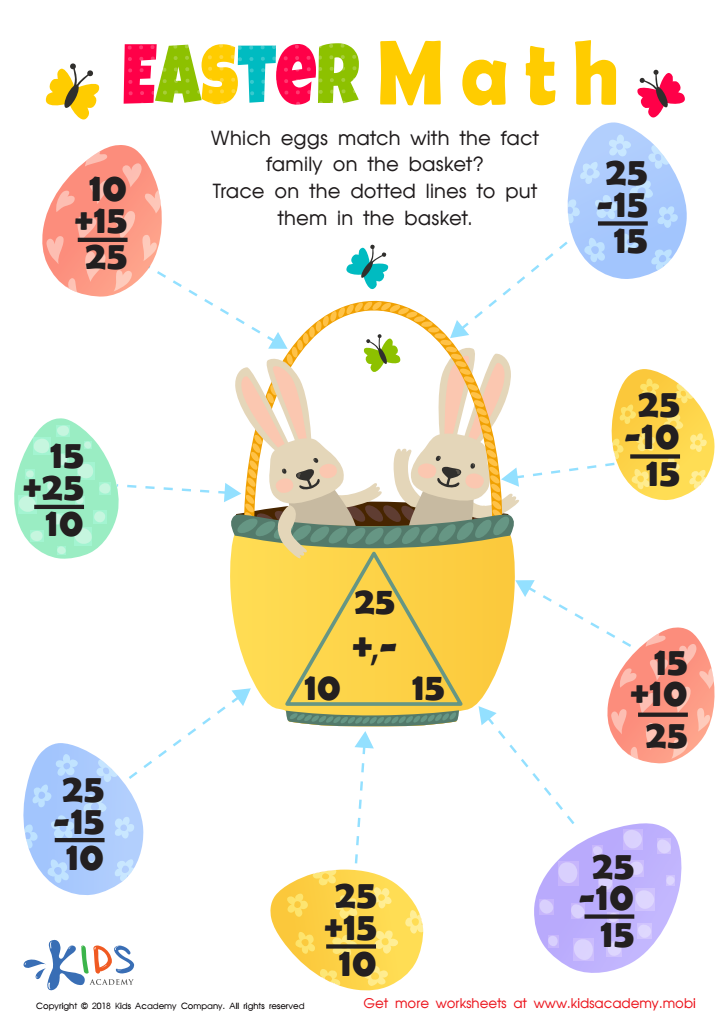
Fact Families: Easter Math Worksheet
Fact Families: Easter Math Worksheet
Kids will love this vibrant PDF packed with Easter math fun! Match facts with the colorful eggs, add and subtract multiples of five to boost automaticity, and have a blast with the bunny friends!
Fact Families: Easter Math Worksheet
Worksheet
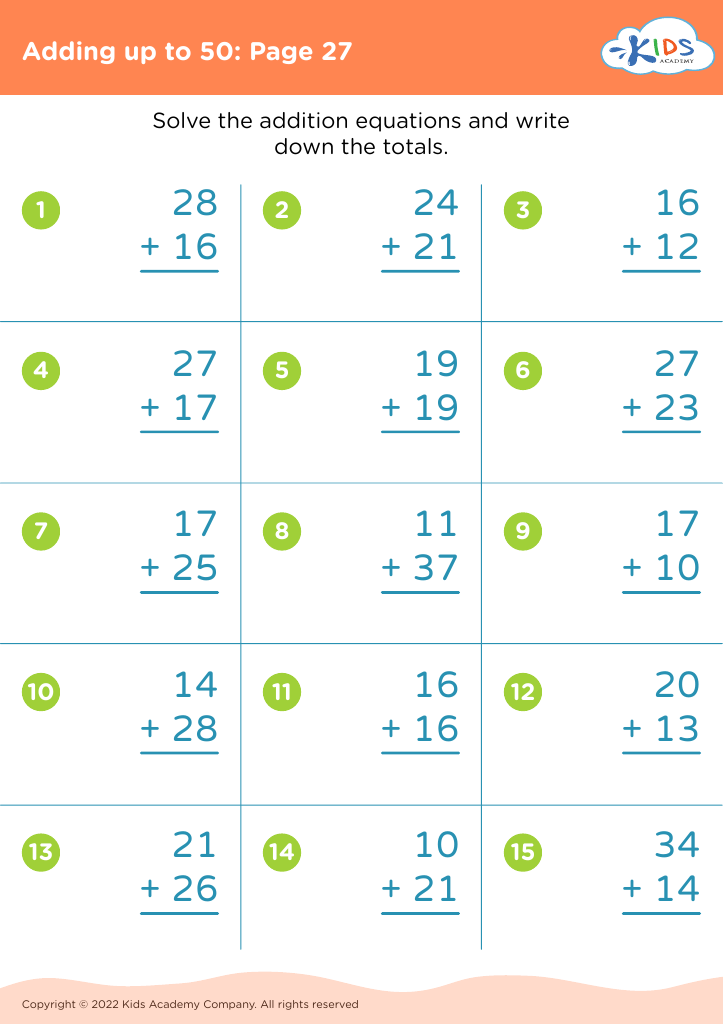
Adding up to 50: Page 27

Adding up to 50: Page 27

Adding up to 50: Page 27
Worksheet
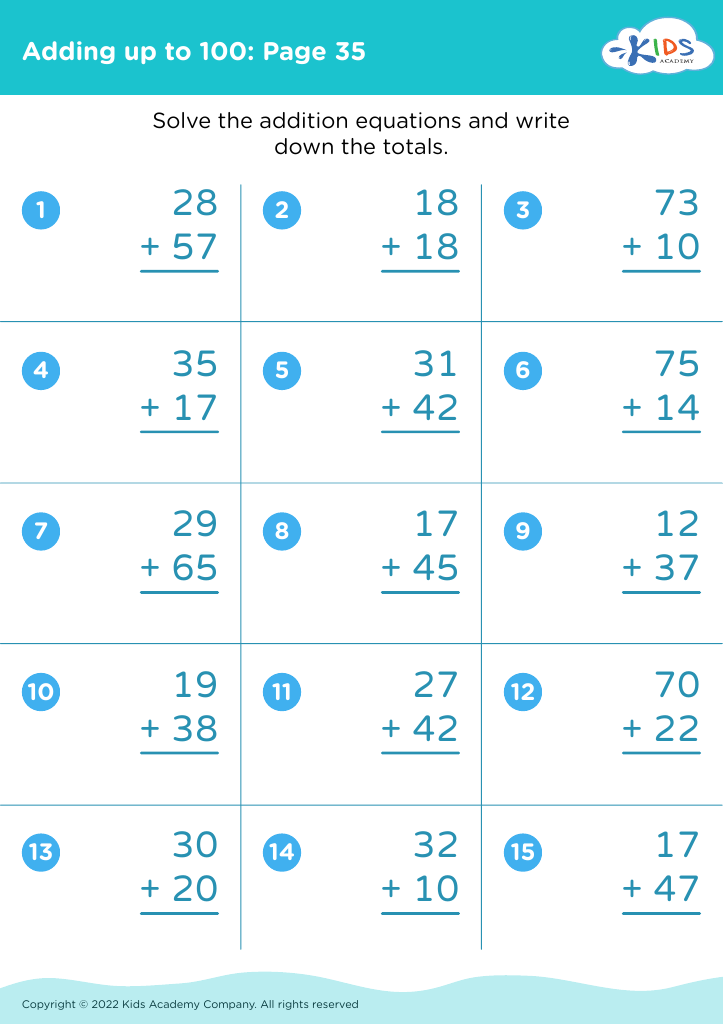
Adding up to 100: Page 35

Adding up to 100: Page 35

Adding up to 100: Page 35
Worksheet
Addition Facts: Double Dice Worksheet

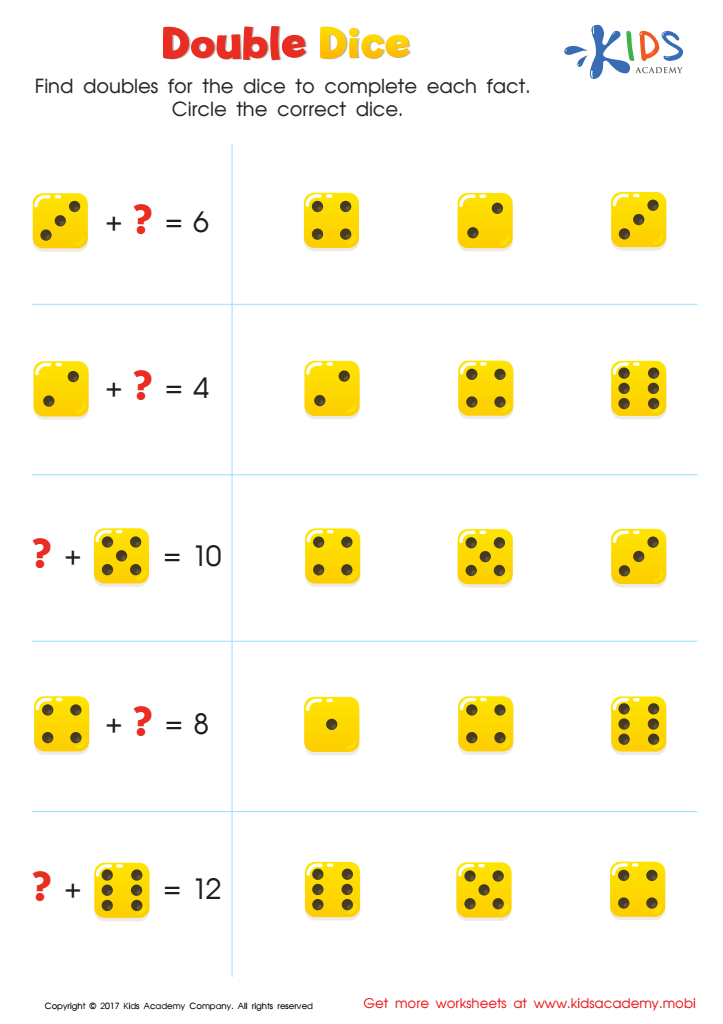
Addition Facts: Double Dice Worksheet

Are you looking for ways to make maths more engaging for kids? Maths can be a bore, but by teaching kids from an early age that it can be fun, they won't struggle with it. This worksheet is a great way to start: your child needs to identify the number on the left dice and find its double on the right. The sum of the two dice is also given.
Addition Facts: Double Dice Worksheet
Worksheet
Australian Animal Subtraction Worksheet
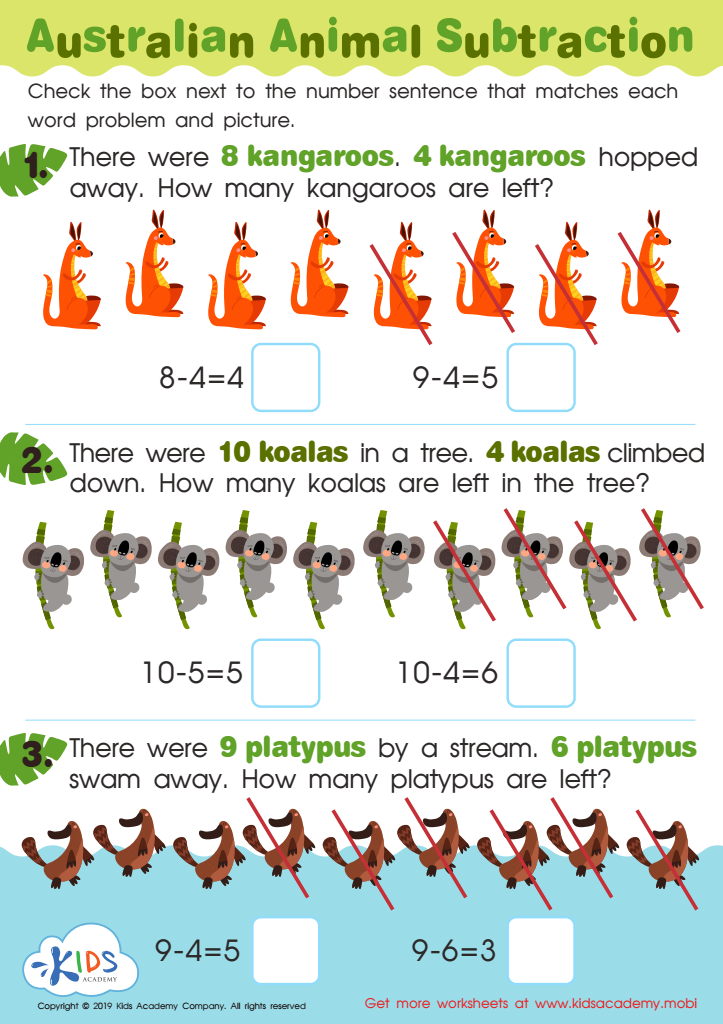
Australian Animal Subtraction Worksheet
Test your child's wildlife knowledge. Ask them to name animals indigenous to Australia or other countries. Show them the animals in this worksheet and have them match each word problem and picture with the correct number sentence.
Australian Animal Subtraction Worksheet
Worksheet
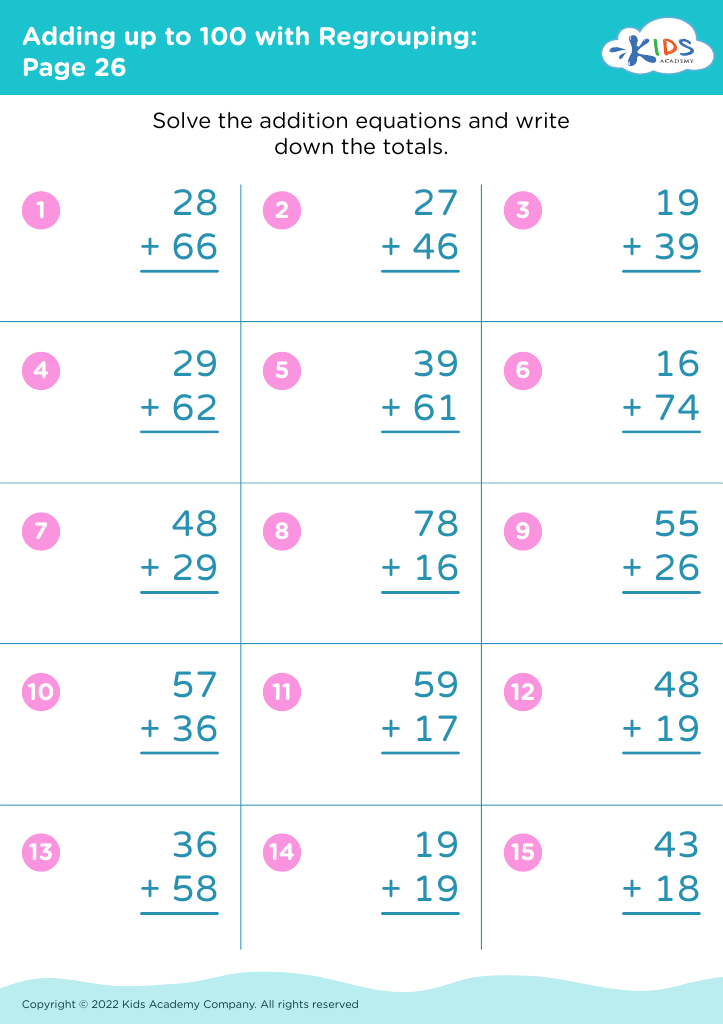
Adding up to 100 with Regrouping: Page 26
Worksheet
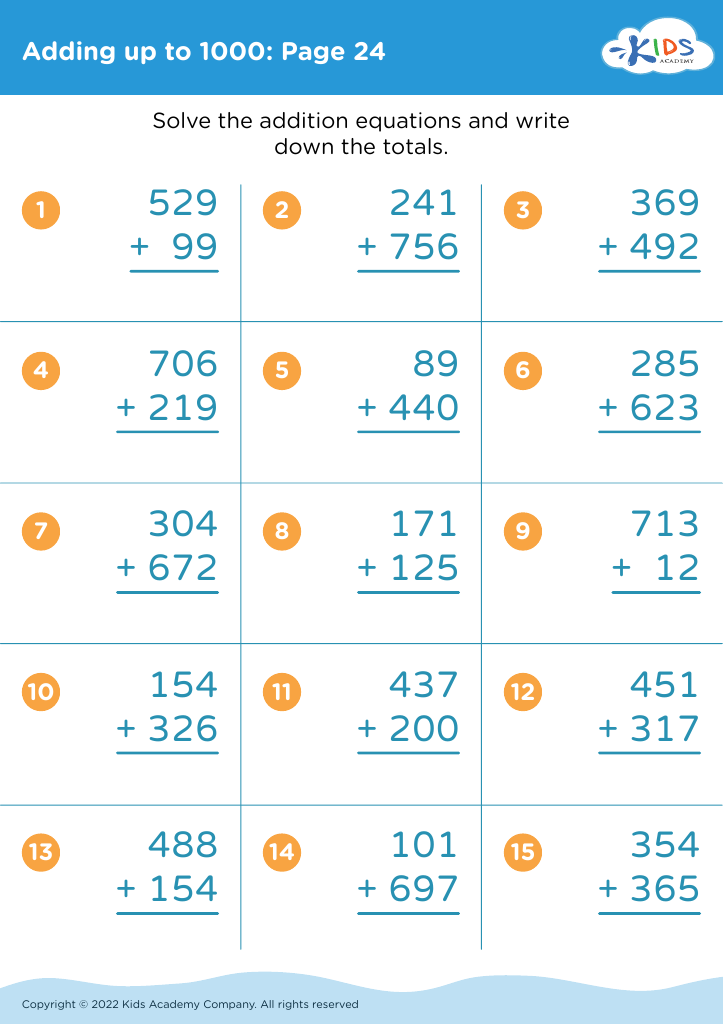
Adding up to 1000: Page 24

Adding up to 1000: Page 24

Adding up to 1000: Page 24
Worksheet
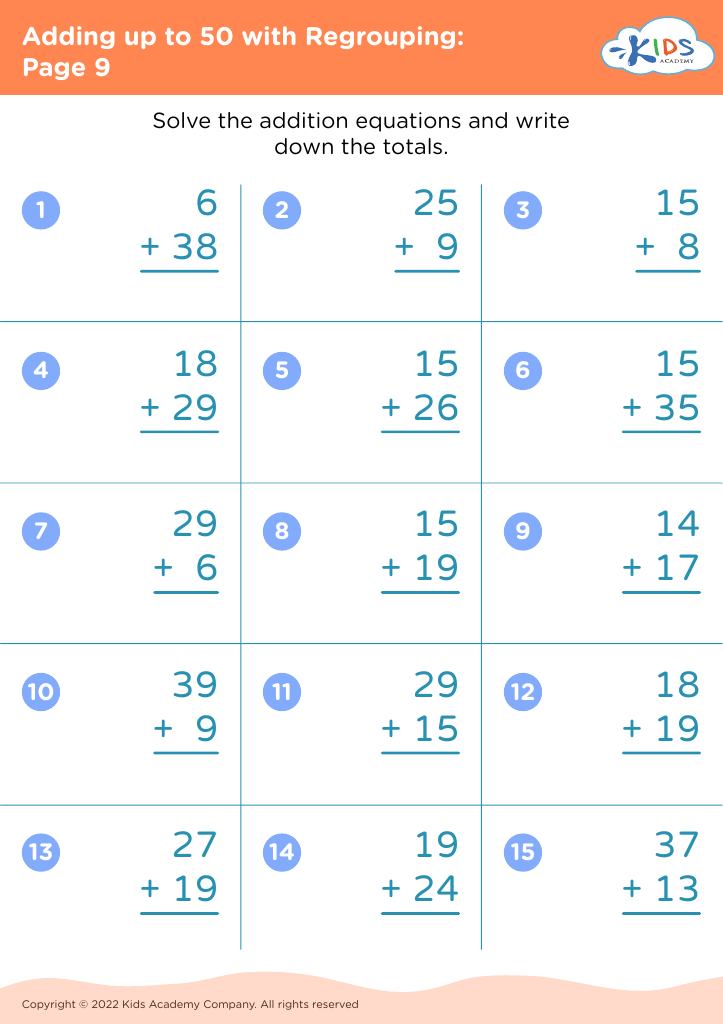
Adding up to 50 with Regrouping: Page 9
Worksheet
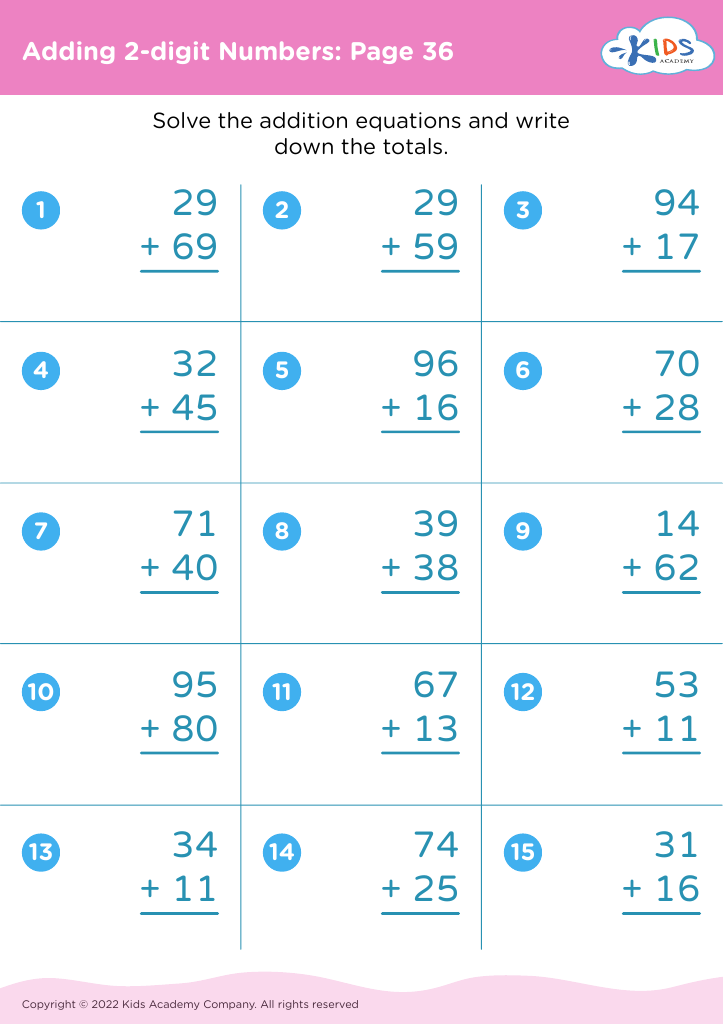
Adding 2-digit Numbers: Page 36

Adding 2-digit Numbers: Page 36

Adding 2-digit Numbers: Page 36
Worksheet
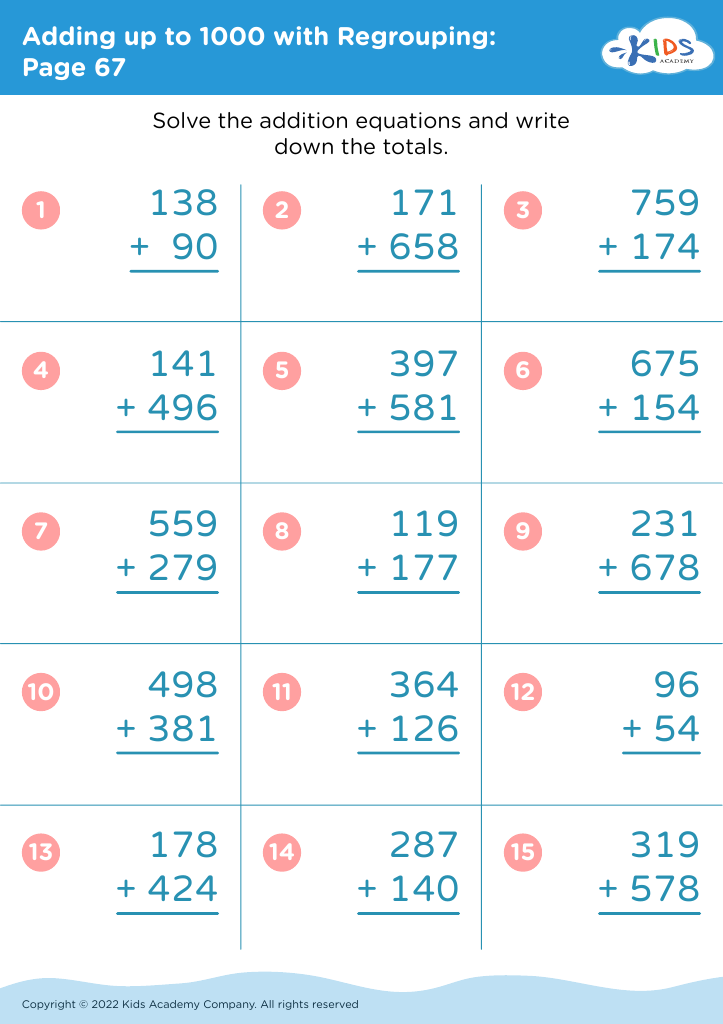
Adding up to 1000 with Regrouping: Page 67
Worksheet
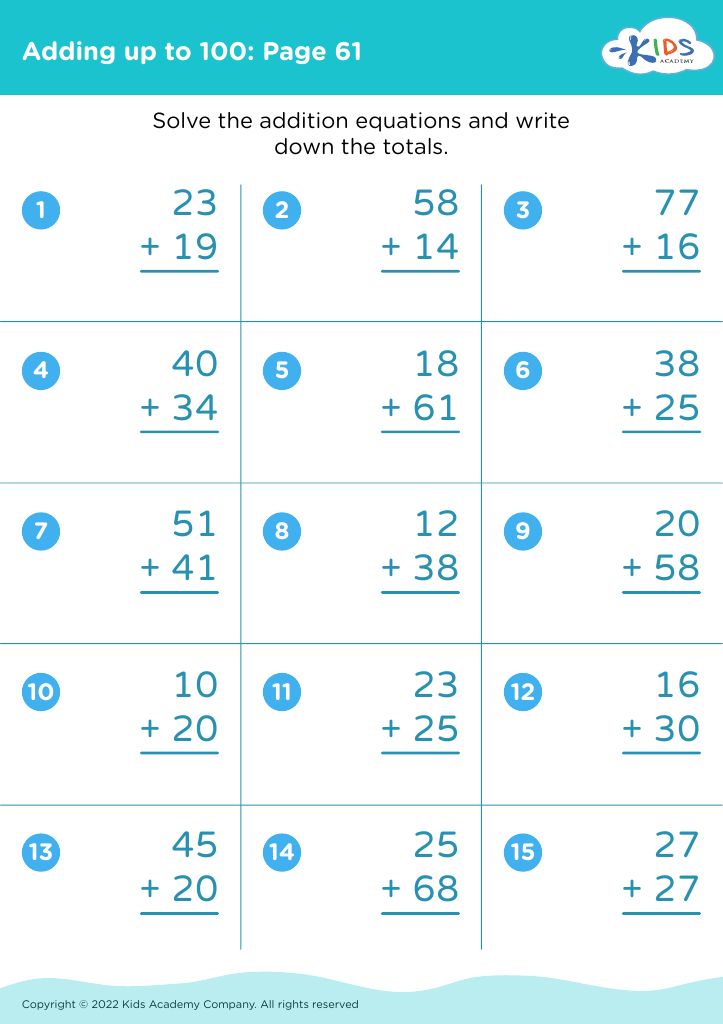
Adding up to 100: Page 61

Adding up to 100: Page 61

Adding up to 100: Page 61
Worksheet
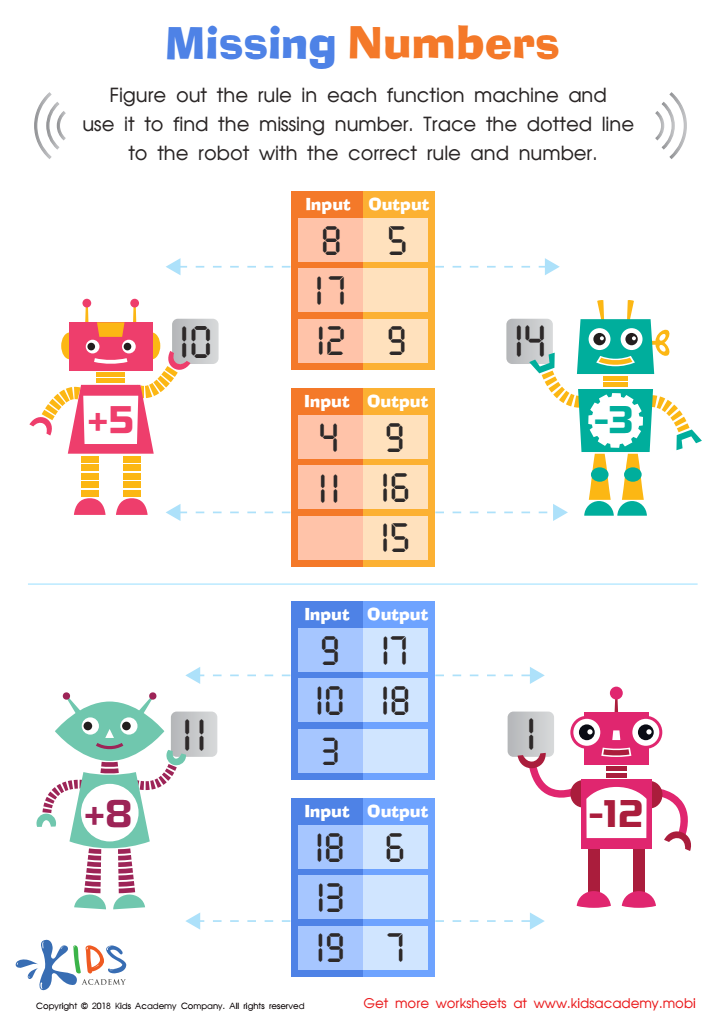
Missing Numbers Worksheet

Missing Numbers Worksheet

Elementary students can learn the important pre-algebra skill of solving for missing numbers! Our robots guide them along with number-filled bellies and missing answers in their hands. Kids can examine the other numbers in each graph, use the rule to solve the missing number, and check their work with the missing number to ensure correctness.
Missing Numbers Worksheet
Worksheet
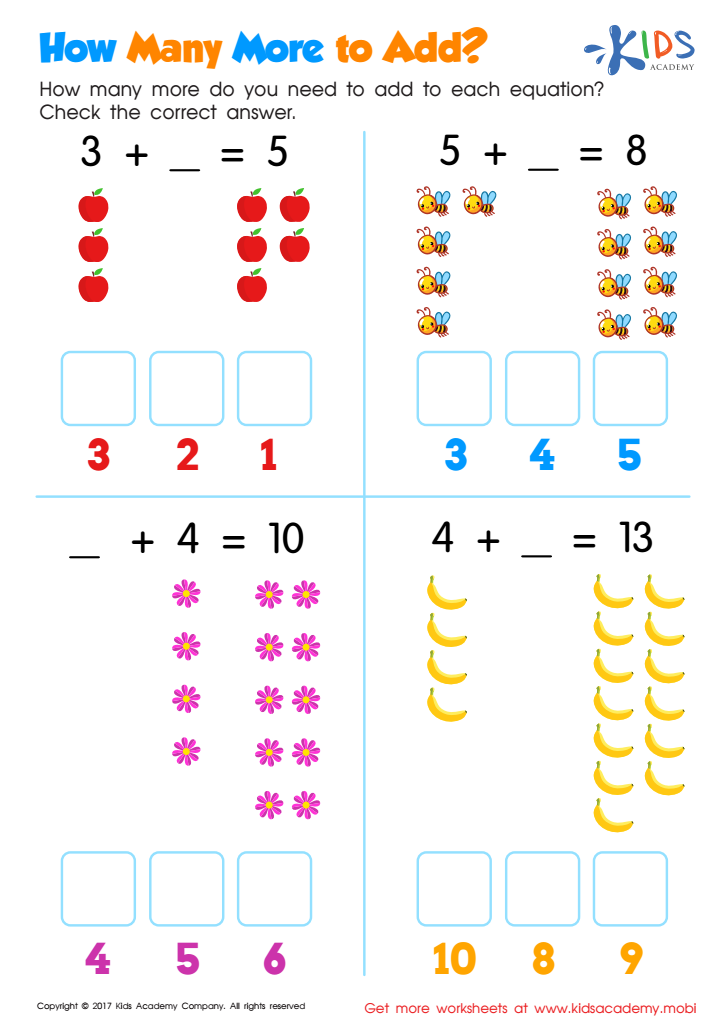
How Many More to Add Worksheet


How Many More to Add Worksheet

Sharpen your child's math skills with this pdf worksheet. Help them figure out how many apples, bees, flowers and bananas are needed to reach the answer given. The possible answers are provided at the bottom of the boxes. Have some fun doing some addition and subtraction magic together and get those math skills sharpened!
How Many More to Add Worksheet

Worksheet


Parents and teachers should prioritize developing counting skills, addition, and subtraction for children aged 7-9 because these foundational arithmetic skills set the stage for advanced math concepts and everyday practical problem-solving. At this critical developmental stage, children begin to transition from concrete operational thinking to more abstract reasoning. Mastery of basic counting not only helps in number recognition but also enhances their ability to sequence events and understand patterns.

Addition and subtraction are crucial as they form the basis for more complex mathematical operations such as multiplication, division, and fractions. These skills boost cognitive development and logical thinking, allowing children to tackle various challenges in and out of the classroom setting. For example, counting money, measuring ingredients in cooking, or determining the time it takes to travel certain distances are everyday activities where these skills are applied.

Furthermore, fostering a strong math foundation at an early age boosts children’s confidence and interest in the subject, reducing math anxiety and setting a positive trajectory for future learning. Engaging and supporting children through interactive experiences, games, and practical examples make learning math fun and relevant, ensuring they develop a strong, lasting affinity for the subject.