Basic Math Skills Geometry Worksheets for Ages 7-9
15 filtered results
-
From - To
Enhance your child's understanding of geometry with our Basic Math Skills Geometry Worksheets, designed for ages 7-9. Covering foundational concepts like shapes, angles, and spatial reasoning, these worksheets make learning engaging and fun. Perfect for both classroom and home use, our expertly crafted activities help children develop critical thinking and problem-solving skills. With a variety of exercises tailored to various learning styles, your child will gain confidence in geometry while preparing for more advanced math concepts. Empower your young learner with these essential tools for their academic journey. Visit our website to download and start practicing today!
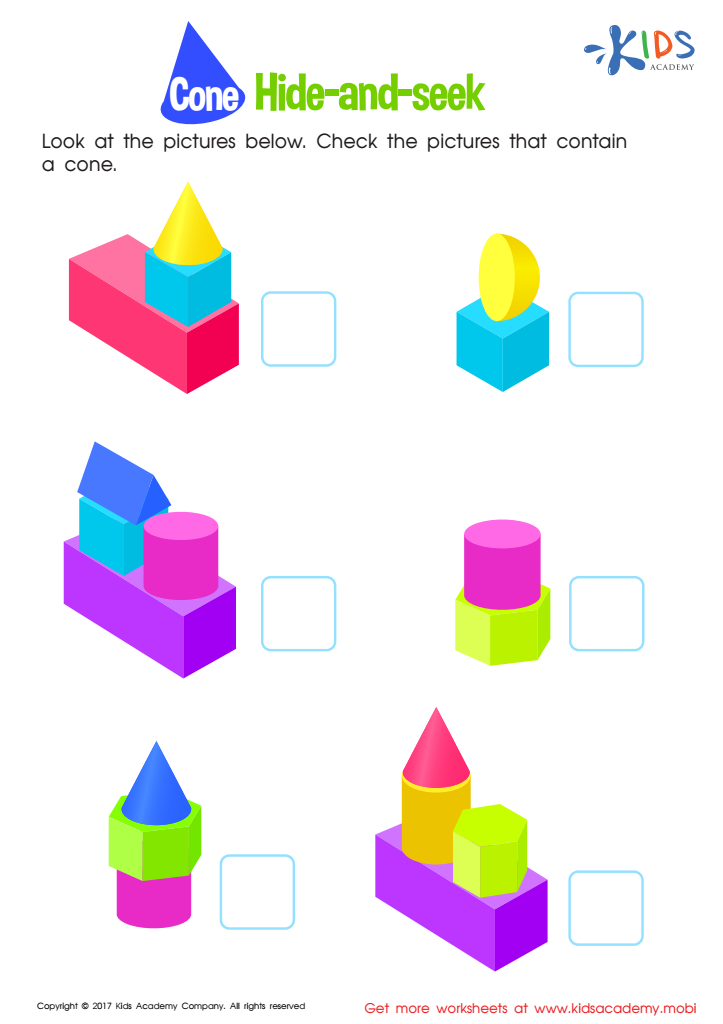
Cone Hide-and-Seek Worksheet
 Assign to My Students











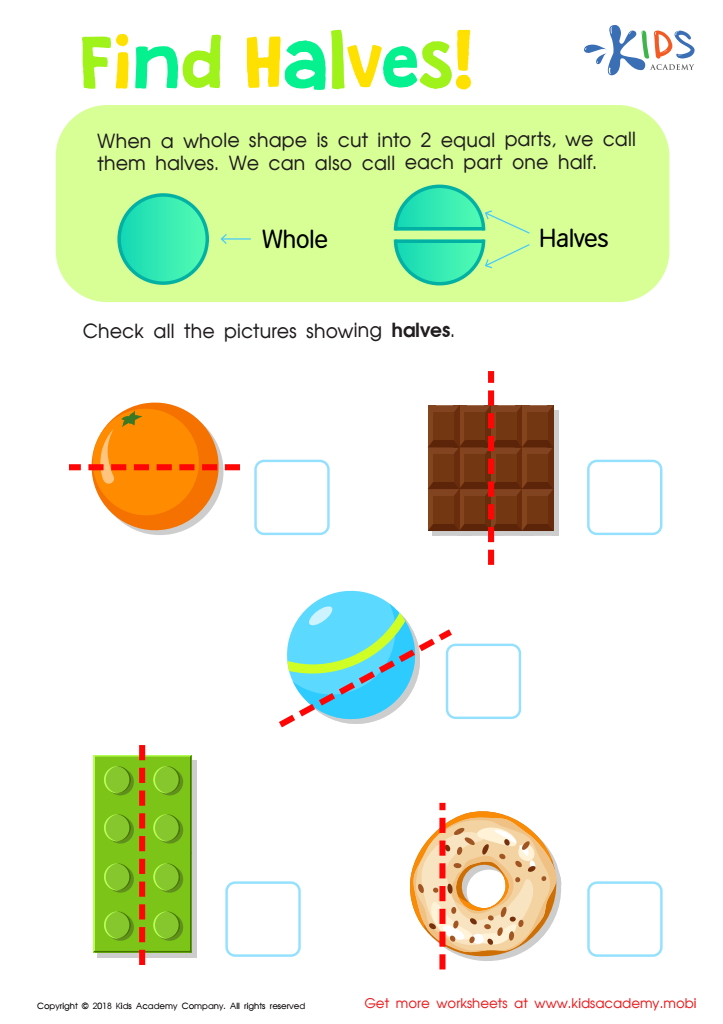
Find Halves Worksheet
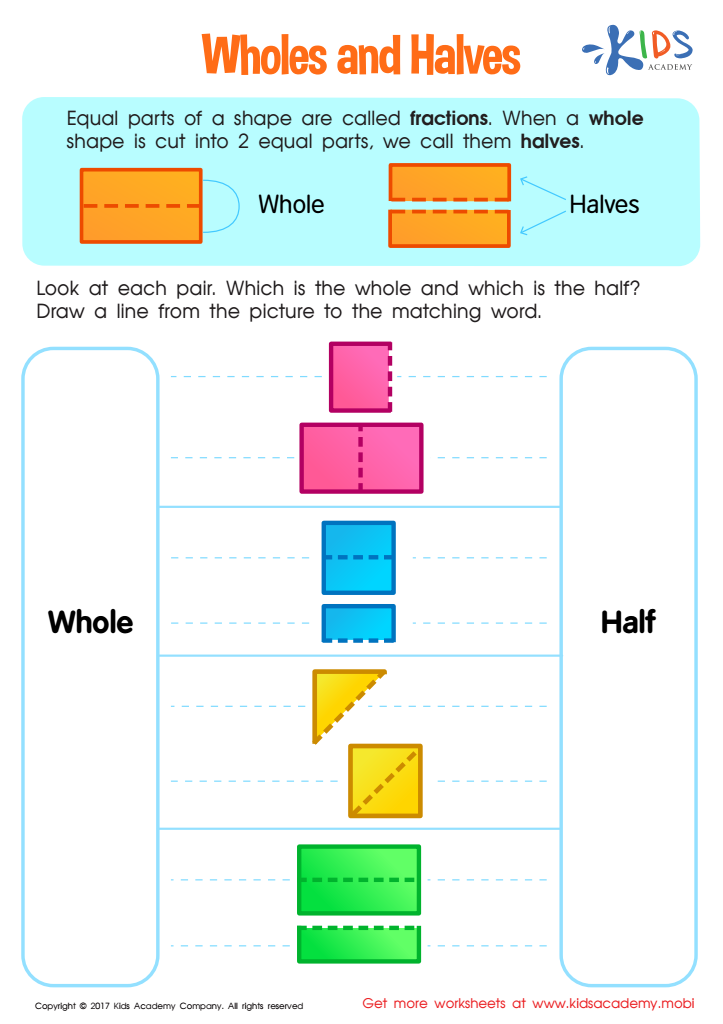
Wholes and Halves Worksheet
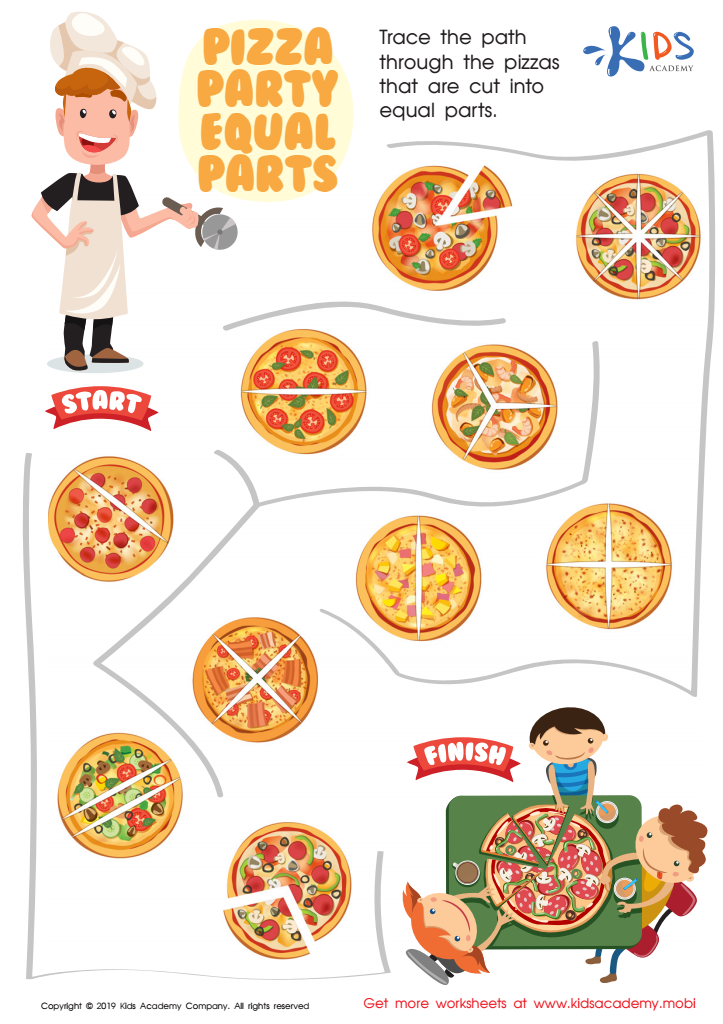
Pizza Party Equal Parts Worksheet
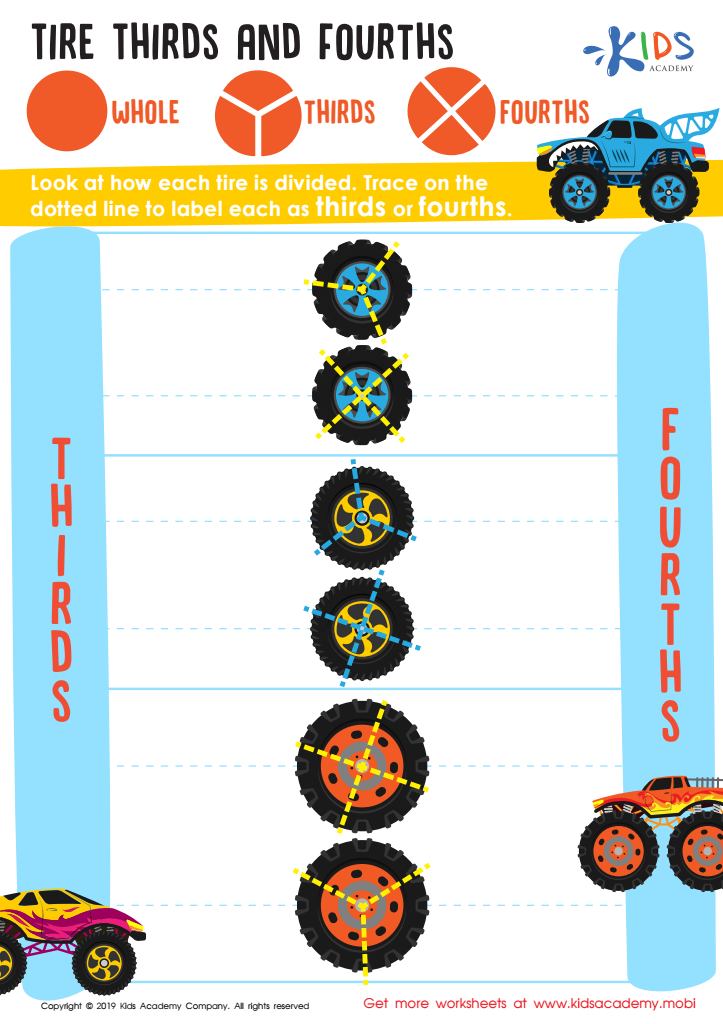
Tire Thirds and Fourths Worksheet
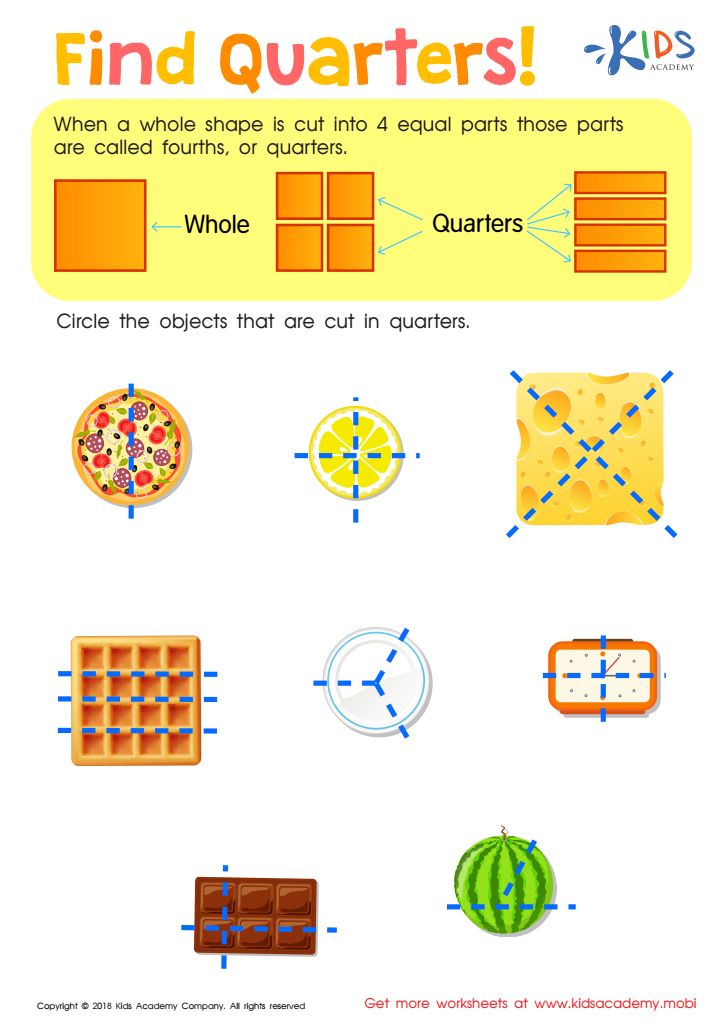
Find Quarters Worksheet
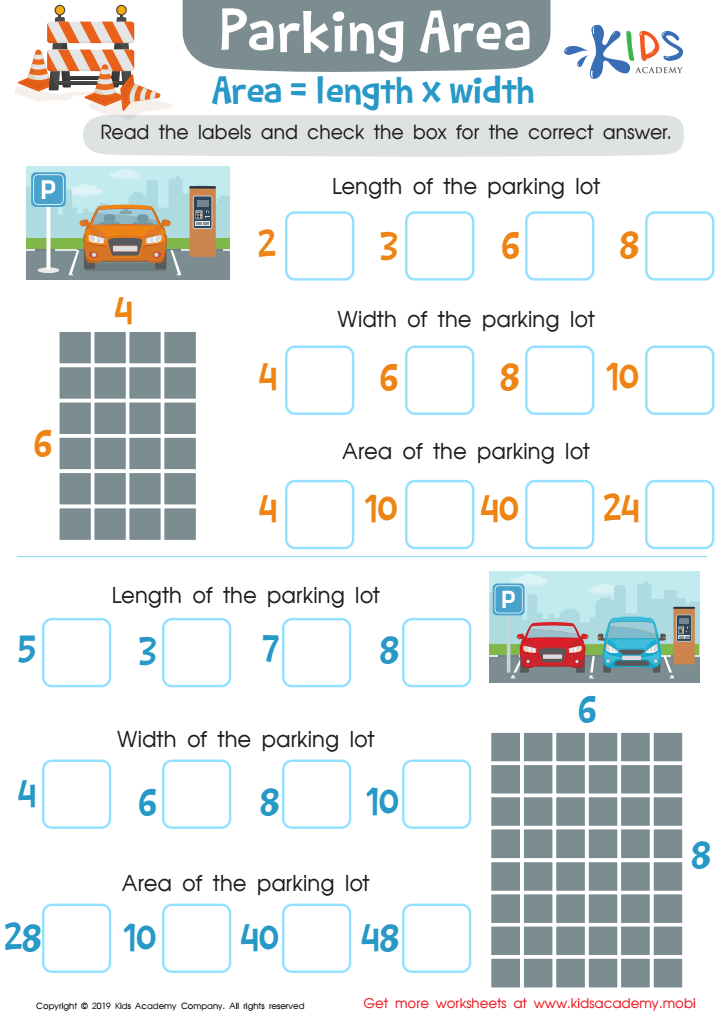
Parking Area Worksheet
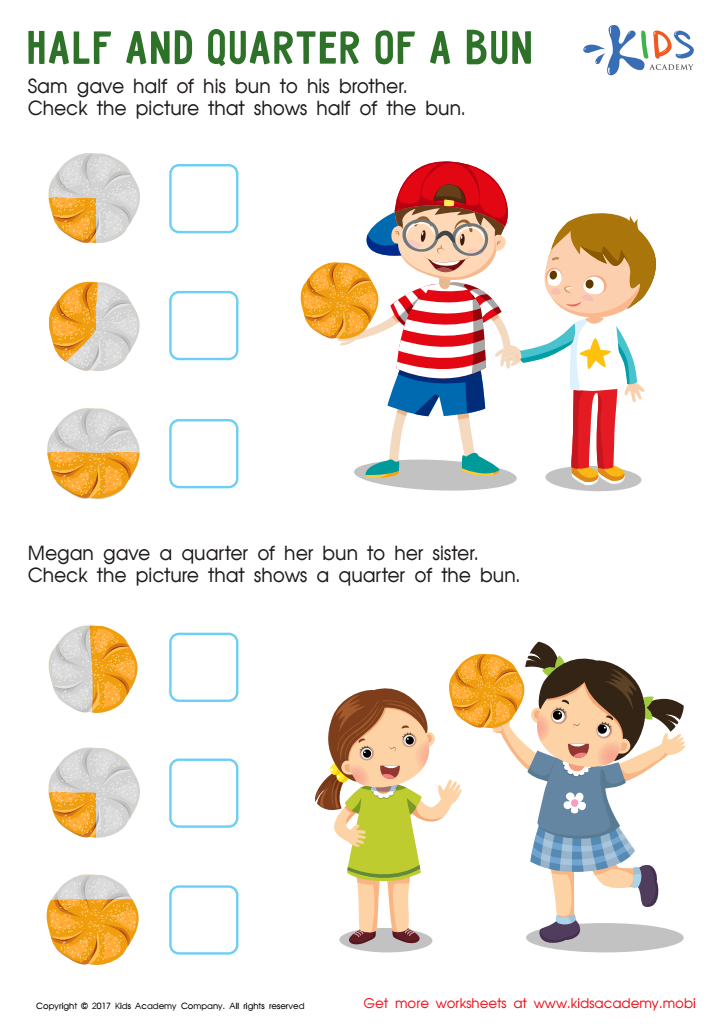
Half and Quarter of a Bun Worksheet
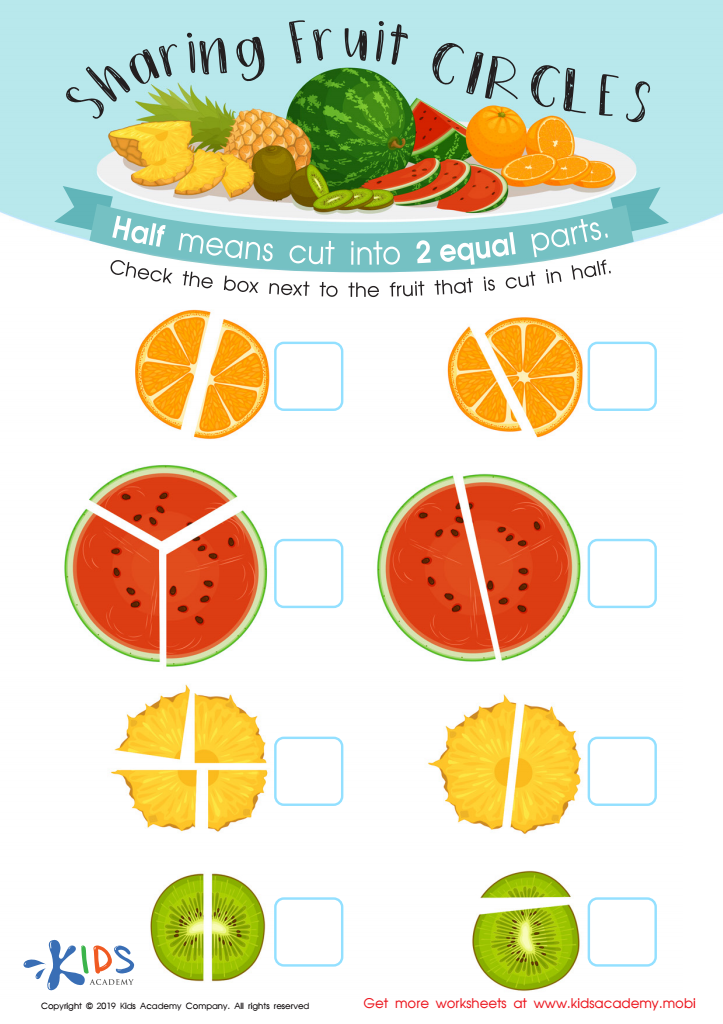
Sharing Fruit Circles Worksheet
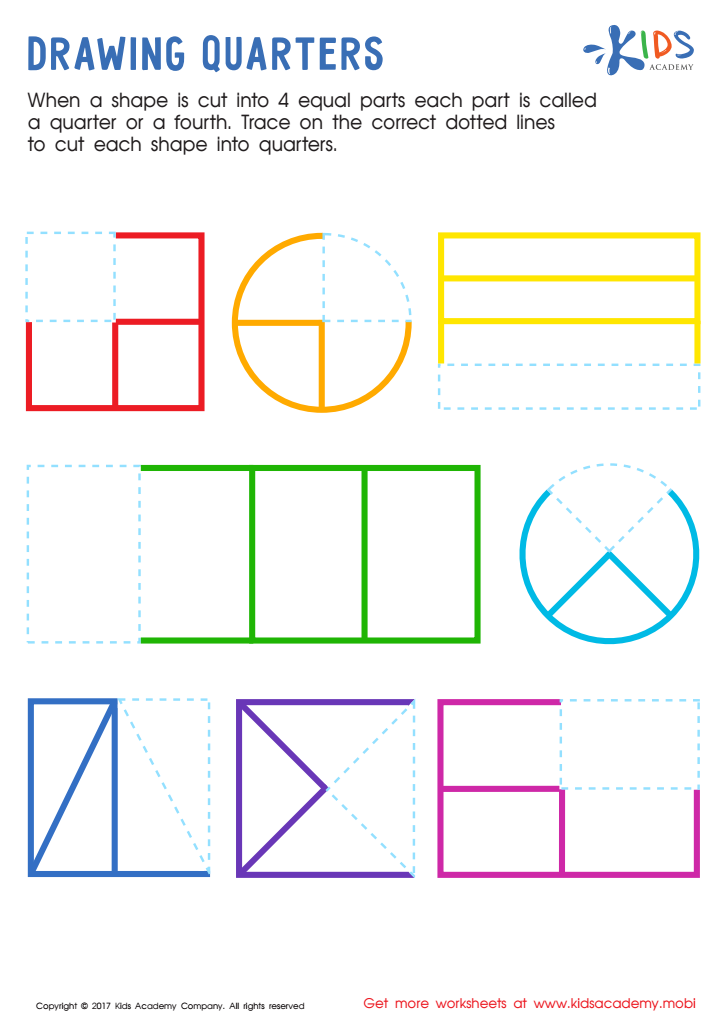
Drawing Quarters Worksheet
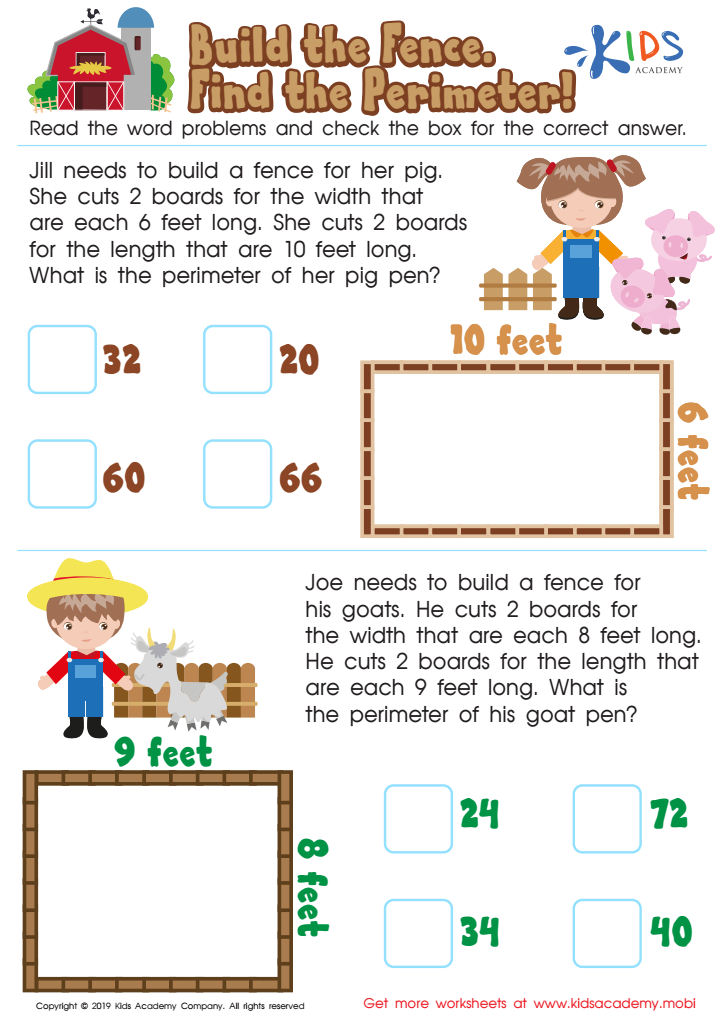
Build the Fence, Find the Perimeter Worksheet
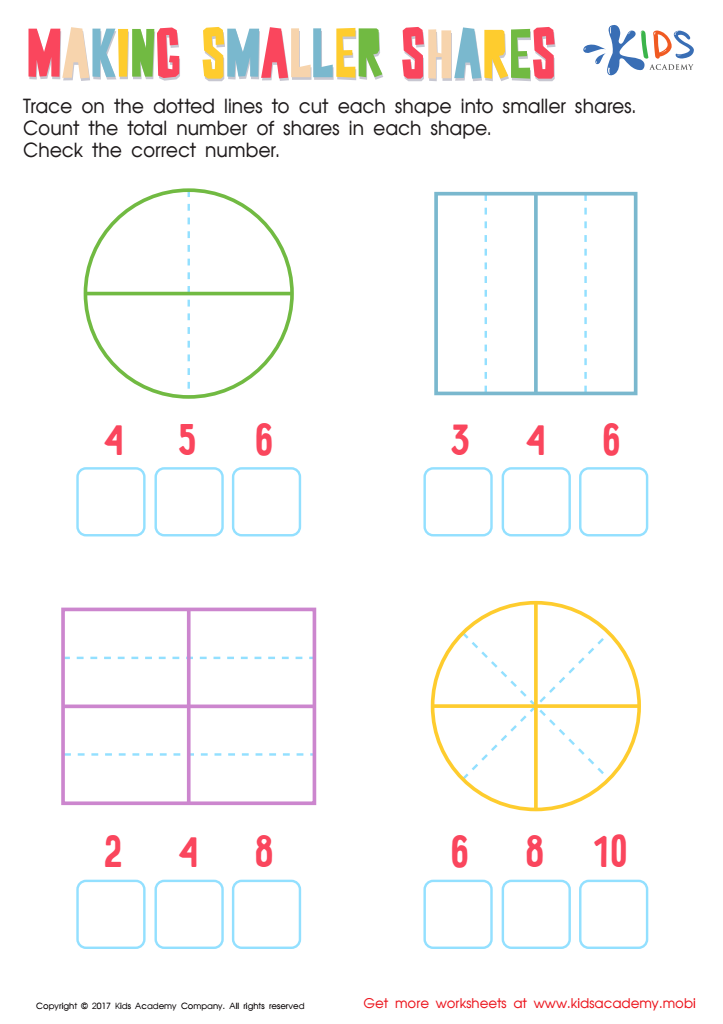
Making Smaller Shares Worksheet
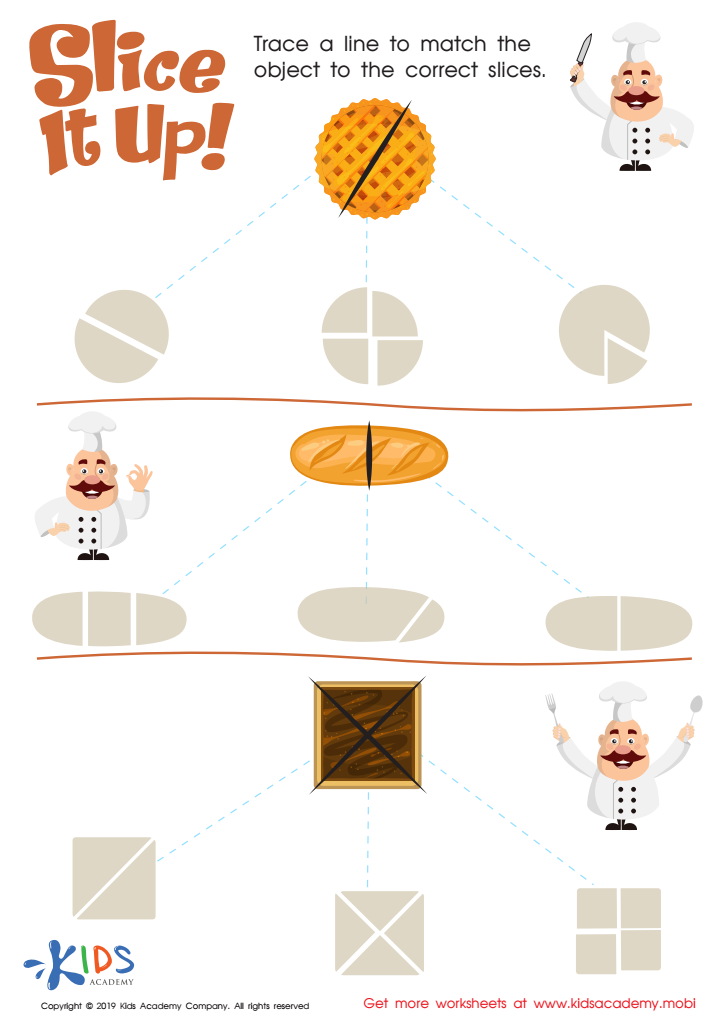
Slice It Up Worksheet
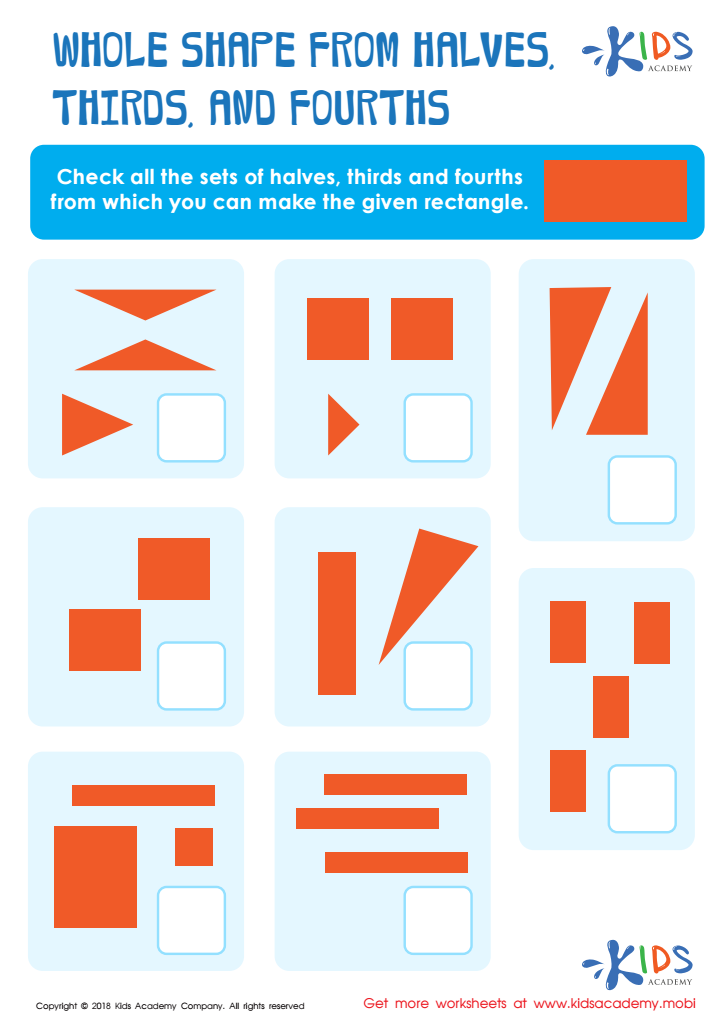
Whole Shape from Halves, Thirds and Fourths Worksheet
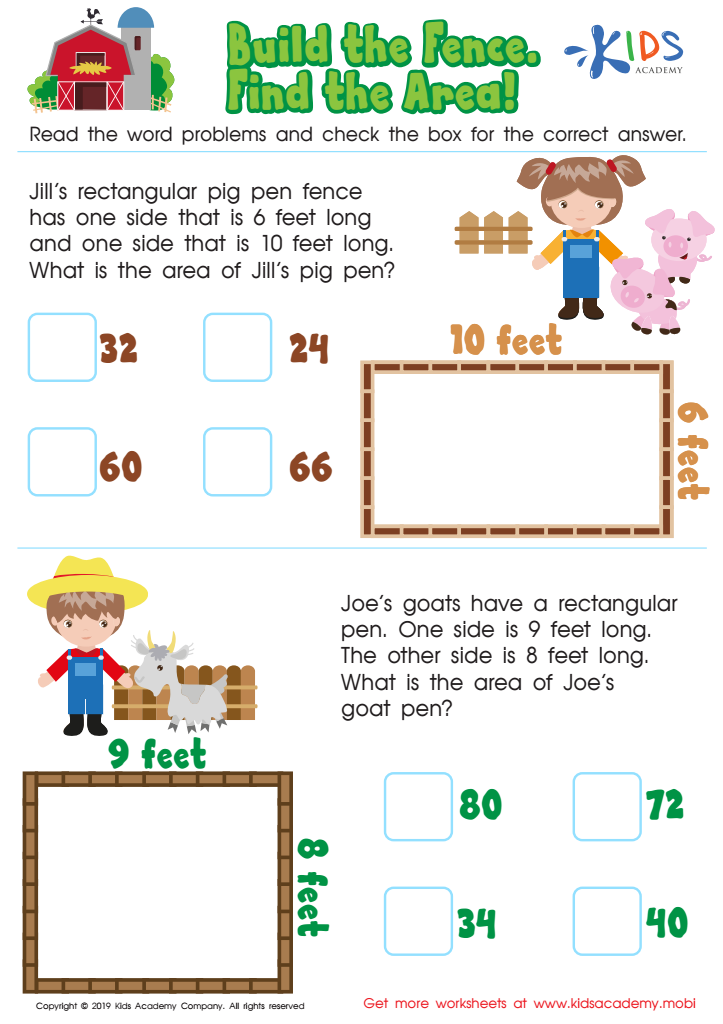
Build the Fence, Find the Area Worksheet








Basic Math Skills, including geometry, are crucial for young learners aged 7-9 because they lay the foundation for more advanced mathematical concepts and everyday problem-solving. At this age, children are at a developmental stage where they are highly receptive to visual and spatial learning, making geometry particularly effective in nurturing critical thinking and reasoning skills.
Geometry helps children understand shapes and spatial relationships, which are essential not only in higher-level math but also in real-world situations. For instance, recognizing patterns, symmetry, and the properties of different shapes helps children in activities ranging from simple puzzle solving to understanding maps. This foundational understanding fosters their ability to navigate through more complex topics such as fractions, area, and volume later on.
Moreover, engaging with geometry encourages creativity and curiosity. When children explore geometric concepts through hands-on activities, they develop a sense of visualization and spatial awareness. These skills are tied to critical thinking and problem-solving abilities, which are valuable beyond the classroom.
For parents and teachers, emphasizing geometry within the basic math curriculum can also highlight a child’s strengths and areas needing support, thereby tailoring instruction to individual needs. Ultimately, strengthened basic math skills provide children with the confidence and competence to tackle a broad spectrum of academic and life challenges.








