Understanding food chains Science Worksheets for Ages 7-9
3 filtered results
-
From - To
Explore the fascinating world of food chains with our engaging science worksheets designed specifically for children aged 7 to 9. These interactive resources help young learners grasp the essential concepts of ecosystems, food producers, consumers, and decomposers. Each worksheet contains fun activities, such as drawing food chains, matching animals with their habitats, and answering thought-provoking questions. Our playful approach encourages curiosity and critical thinking, making science both educational and enjoyable. With colorful visuals and easy-to-follow instructions, these worksheets are perfect for classroom use or at-home learning. Instill a love for nature and science in your child today!
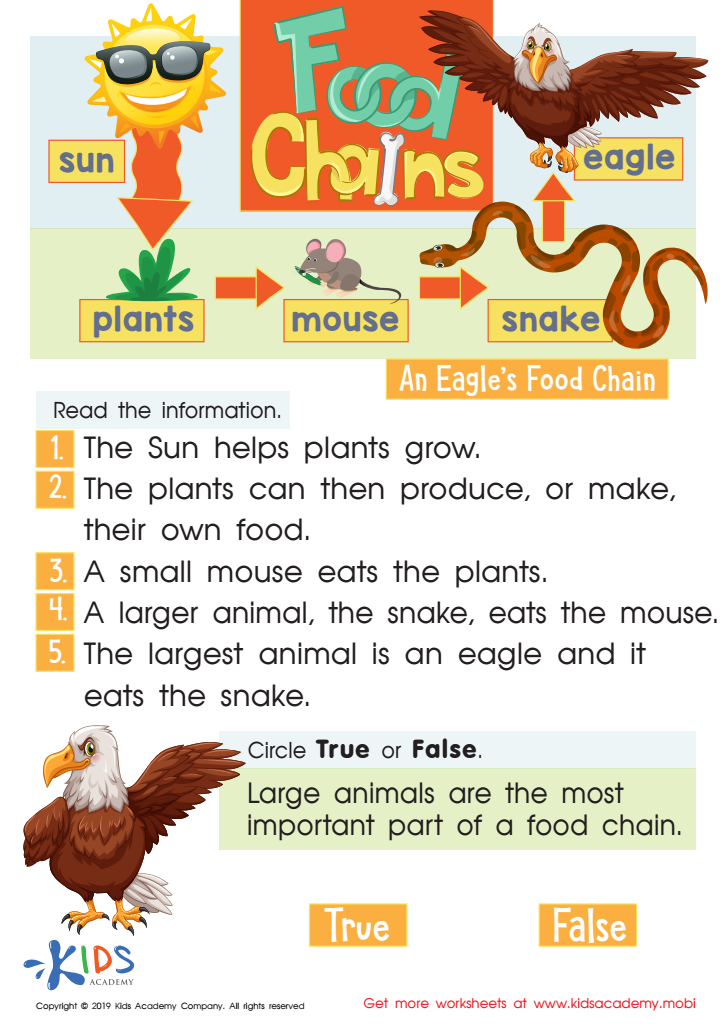
Food Chains Worksheet
 Assign to My Students
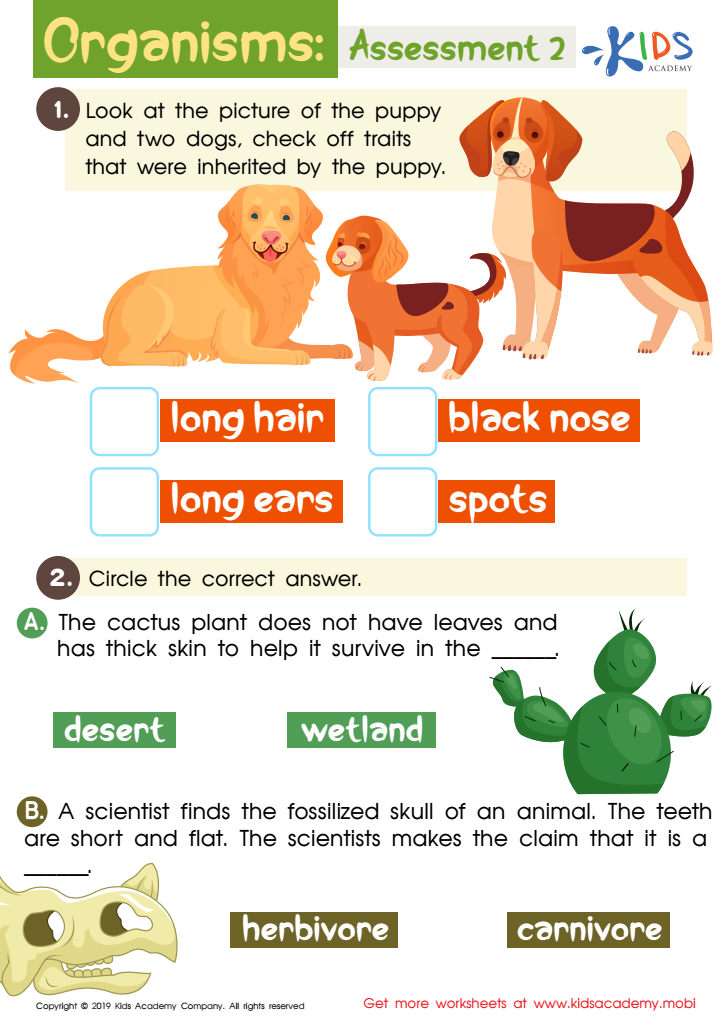
Organisms: Assessment 2 Worksheet
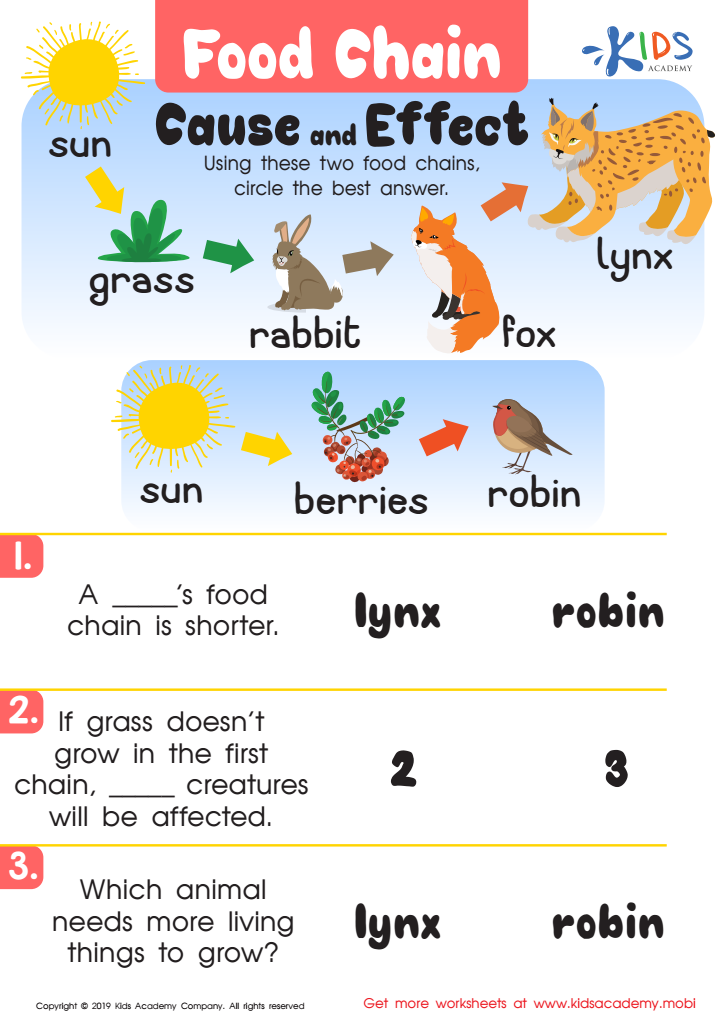
Food Chain Cause Worksheet





%20(1).jpg)

Understanding food chains is crucial for parents and teachers of children aged 7-9 because it lays the foundation for ecological literacy and fosters an appreciation for the natural world. At this developmental stage, children are curious and eager to learn, making it an ideal time to introduce concepts about how living organisms interact within their environments.
Food chains illustrate the relationships between producers, consumers, and decomposers, highlighting the interconnectedness of ecosystems. Educators can use this knowledge to teach children the importance of biodiversity and theRole of each species in maintaining ecological balance. By helping children recognize how plants and animals rely on one another for survival, we encourage them to develop a sense of responsibility toward the environment and an understanding of sustainability.
Furthermore, incorporating food chains into the curriculum can enhance critical thinking and observational skills. Students learn to categorize organisms, understand food web complexity, and consider the impacts of human actions on ecosystems. Simple, engaging activities such as creating posters or conducting nature walks can make learning about food chains fun. Ultimately, nurturing this knowledge fosters a generation of environmentally conscious individuals who are more equipped to tackle future challenges related to ecology and conservation.







