Understanding patterns Science Worksheets for Ages 7-9
4 filtered results
-
From - To
Explore our "Understanding Patterns Science Worksheets for Ages 7-9," designed to engage young learners in discovering the fascinating world of patterns in nature and daily life. These comprehensive worksheets provide exciting exercises that encourage critical thinking, enhance observation skills, and foster a solid foundation in scientific concepts. Children will explore visual, auditory, and numerical patterns through interactive activities that promote hands-on learning. Ideal for classrooms or home education, these worksheets support the development of essential skills while making science fun and accessible. Help your child uncover the rhythm of the universe with our thoughtfully crafted worksheets and ignite their curiosity today!
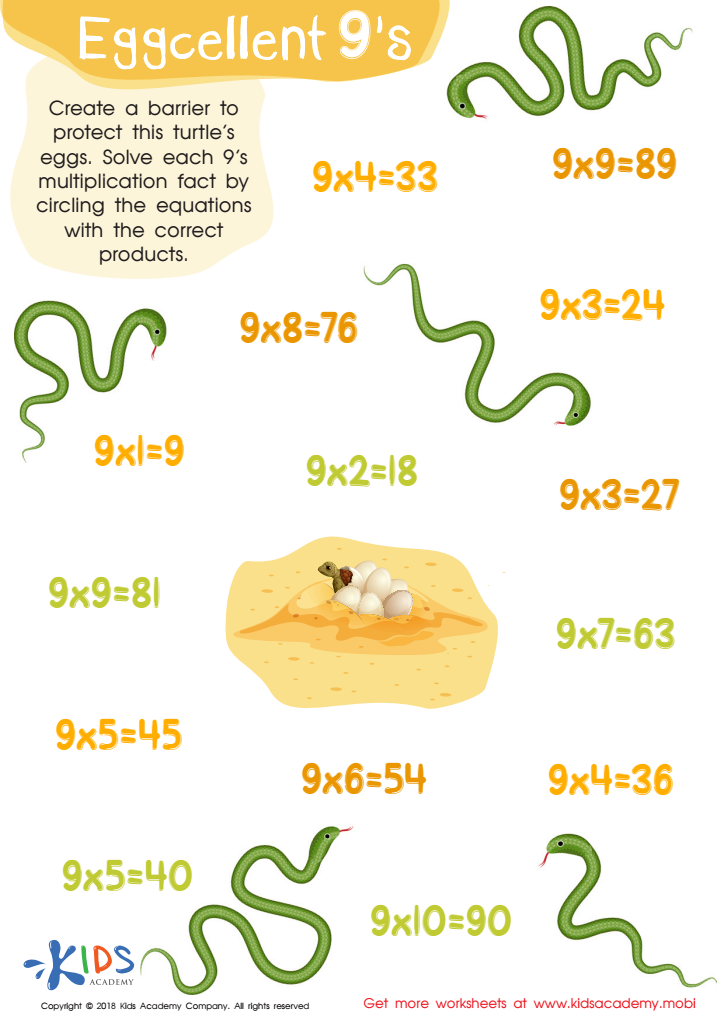
Eggcellent 9’s Worksheet
 Assign to My Students
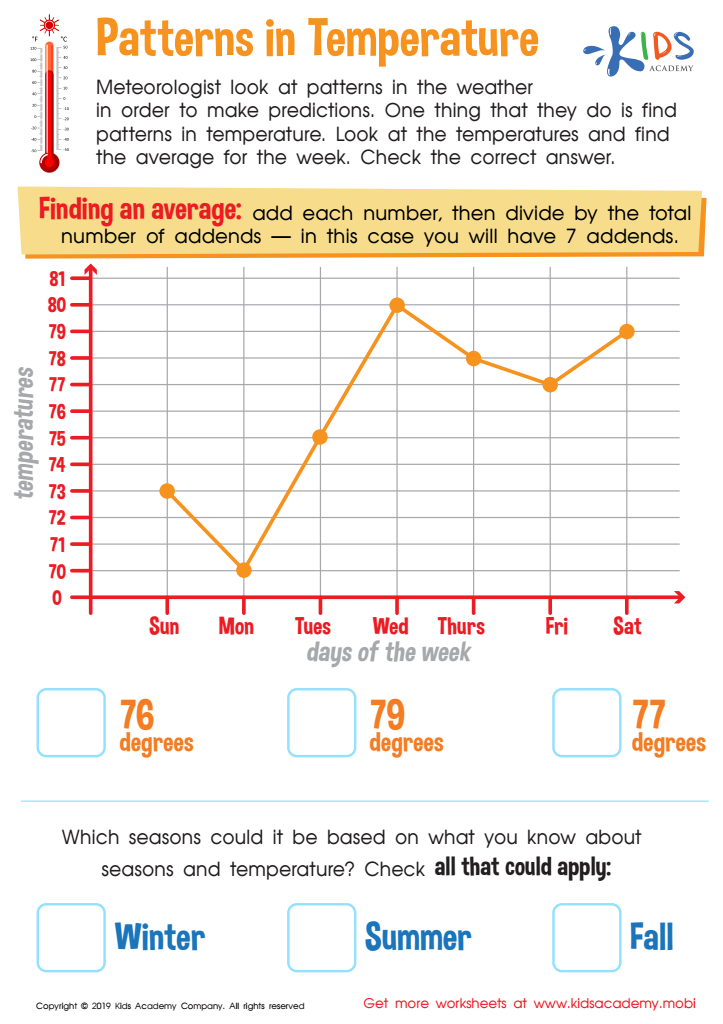
Patterns in Temperature Worksheet
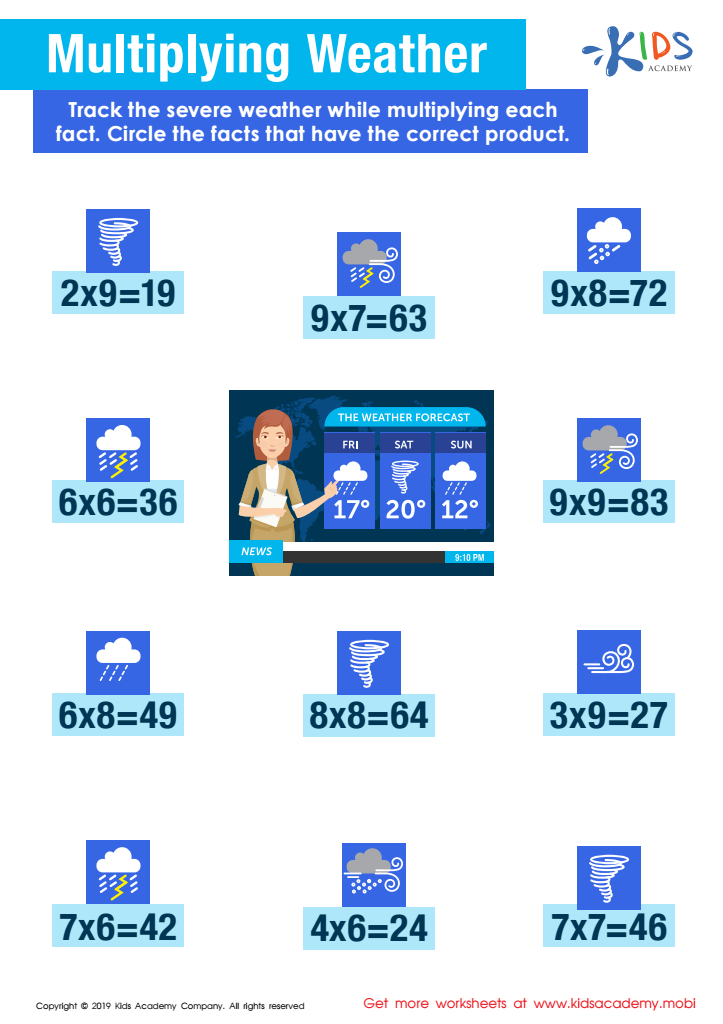
Multiplying Weather Worksheet
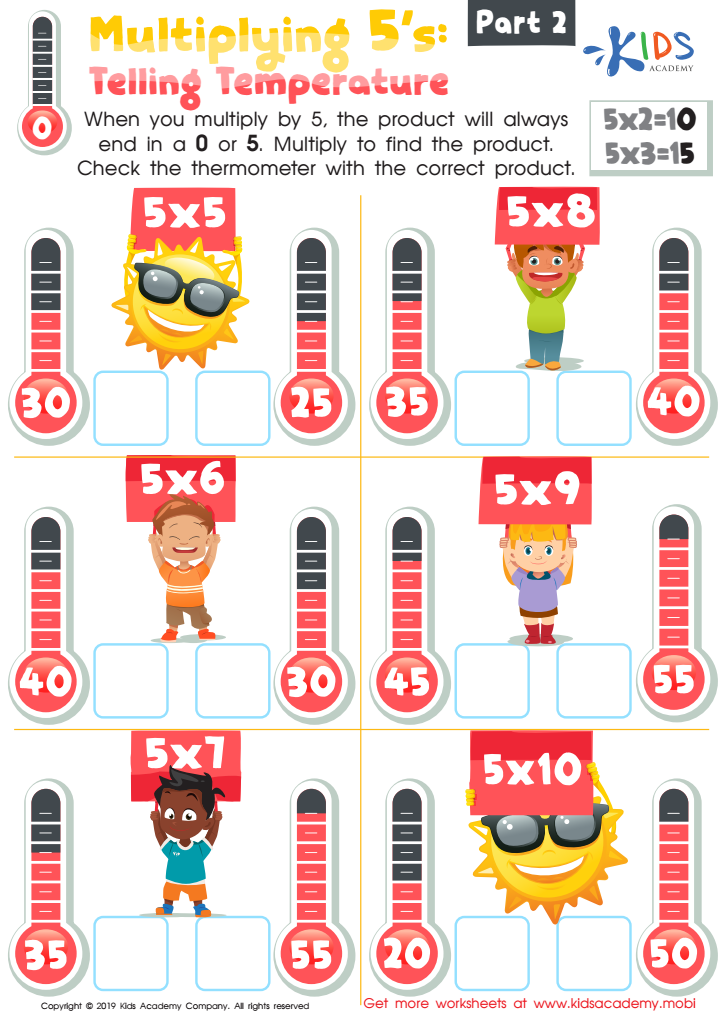
Multiplying 5’s: Telling Temperature Part 2 Worksheet







.jpg)
Understanding patterns in science is crucial for children aged 7-9 as it lays the foundation for critical thinking and problem-solving skills essential in everyday life. At this stage, kids are naturally curious, and teaching them about patterns helps harness that curiosity by enabling them to recognize relationships, make predictions, and understand the world around them.
Identifying patterns nurtures cognitive development and enhances analytical abilities, guiding children in various scientific concepts, such as ecosystems, weather phenomena, and even mathematics. For instance, recognizing a weather pattern could help them predict that spring follows winter. This connection not only enriches their knowledge but also empowers them to think logically about various situations.
Moreover, understanding patterns promotes creativity, encouraging children to explore and think outside the box when faced with challenges. Teachers and parents play a vital role in facilitating this process through engaging activities and real-life examples that relate to their experiences.
Ultimately, fostering a comprehension of patterns contributes to academic success and supports invaluable life skills—enabling children to become inquisitive, informed, and innovative adults who can tackle complex problems in the future. Therefore, encouraging this understanding should be a priority for educators and parents alike.







