Cursive Writing Worksheets for Ages 7-9 - Page 2
26 filtered results
-
From - To
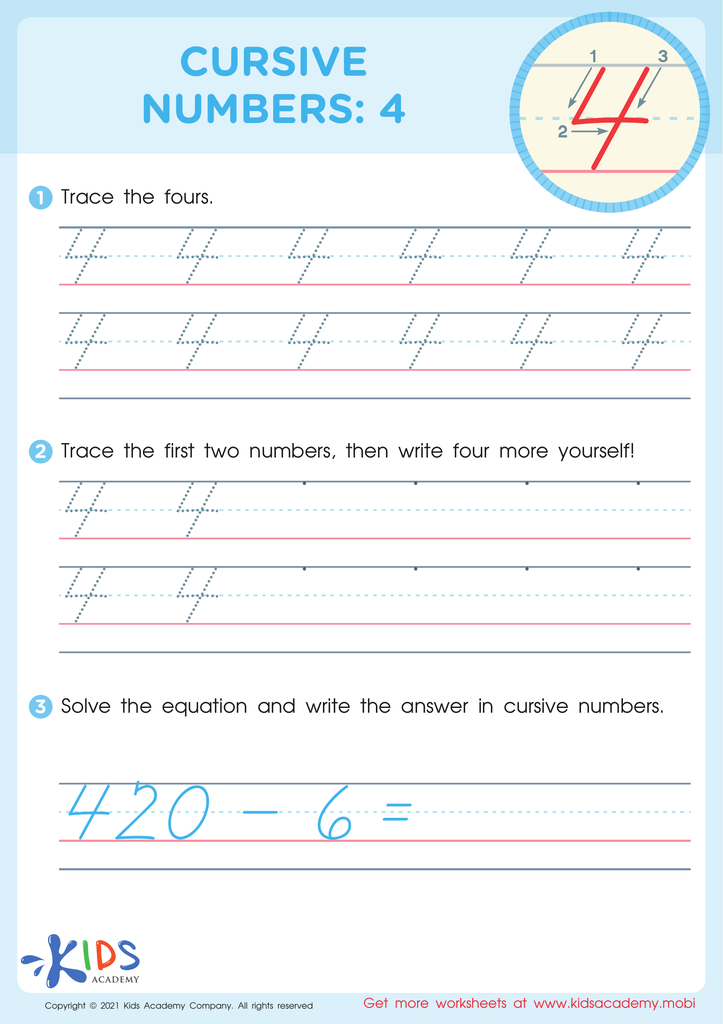
Cursive Numbers: 4 Worksheet
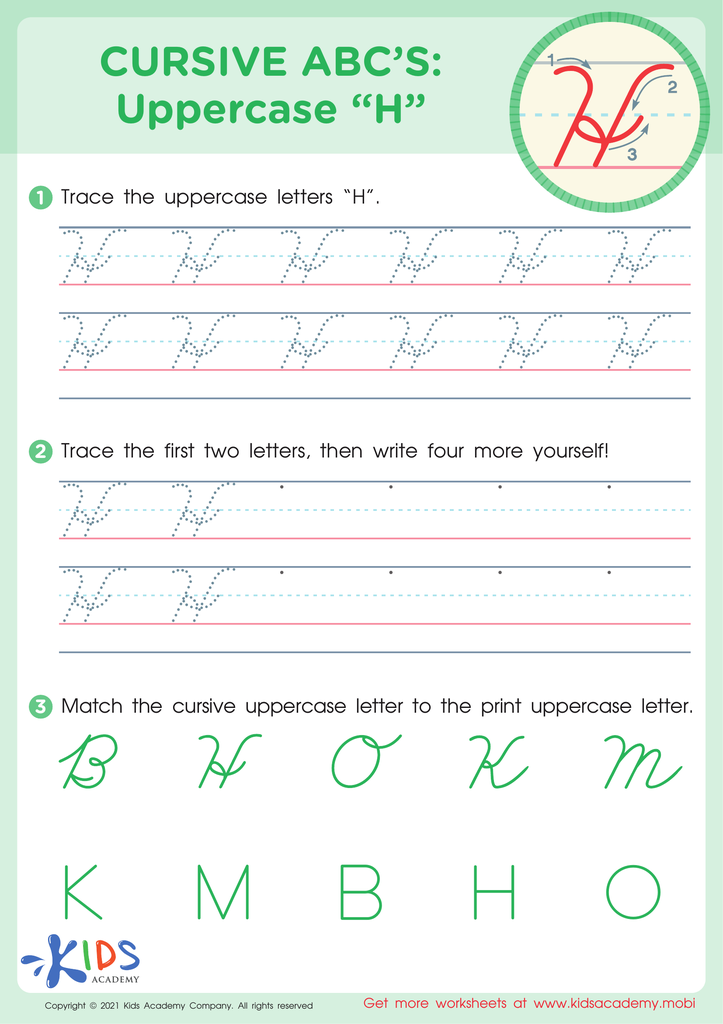
Cursive ABCs: Uppercase H






Cursive writing plays a crucial role in the development of children aged 7-9, making it important for parents and teachers to support its instruction. Firstly, learning cursive enhances fine motor skills, which are essential for overall coordination and dexterity. As children learn to form letters fluidly, they not only strengthen their hand muscles but also improve their control over writing tools. This can lead to better handwriting and increased confidence in written communication.
Moreover, cursive writing is associated with cognitive benefits. Studies have shown that the process of forming letters in cursive can aid memory retention and comprehension, fostering deeper learning as children engage with their writing tasks. Additionally, cursive writing has a unique advantage in connecting letters, promoting a more efficient and quicker writing style, which can be especially beneficial during timed assessments or note-taking.
Finally, understanding cursive allows children to read historical documents or personal communications from family members, fostering a connection to heritage and encouraging a love for literature. As technology dominates communication, embracing cursive helps balance modern skills and traditional literacy, contributing to well-rounded, capable young learners. Thus, encouraging cursive writing is essential for developing both practical skills and cognitive abilities in children.








