
Understanding multiplication Worksheets for 7-Year-Olds
27 filtered results
Difficulty Level
Grade
Age
-
From - To
Subject
Activity
Standards
Kickstart your child's mathematics journey with our "Understanding Multiplication Worksheets for 7-Year-Olds." Designed to make learning fun and engaging, these worksheets introduce basic multiplication concepts through interactive activities and colorful visuals. Your child will master multiplication with ease, helping to build their confidence and enhance problem-solving skills. Perfect for both classroom and at-home learning, these worksheets align with common core standards, ensuring your child gets the best educational foundation. Dive into a world of numbers and make math enjoyable with these professionally crafted resources. Unlock your child’s potential and let the learning adventure begin!
Favorites
With answer key
Interactive
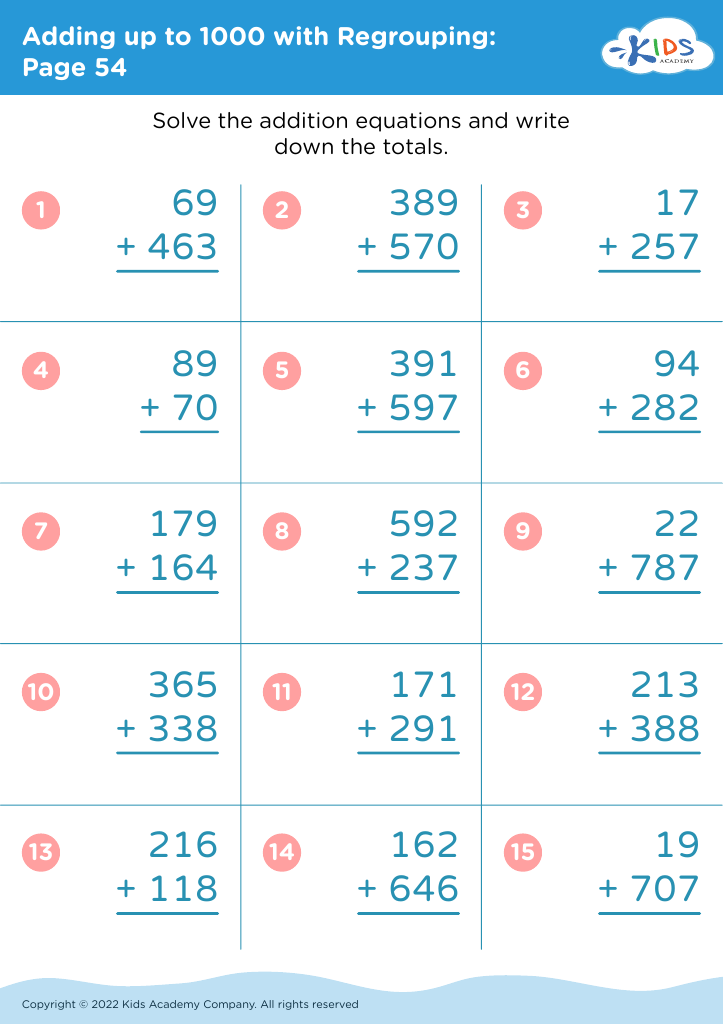
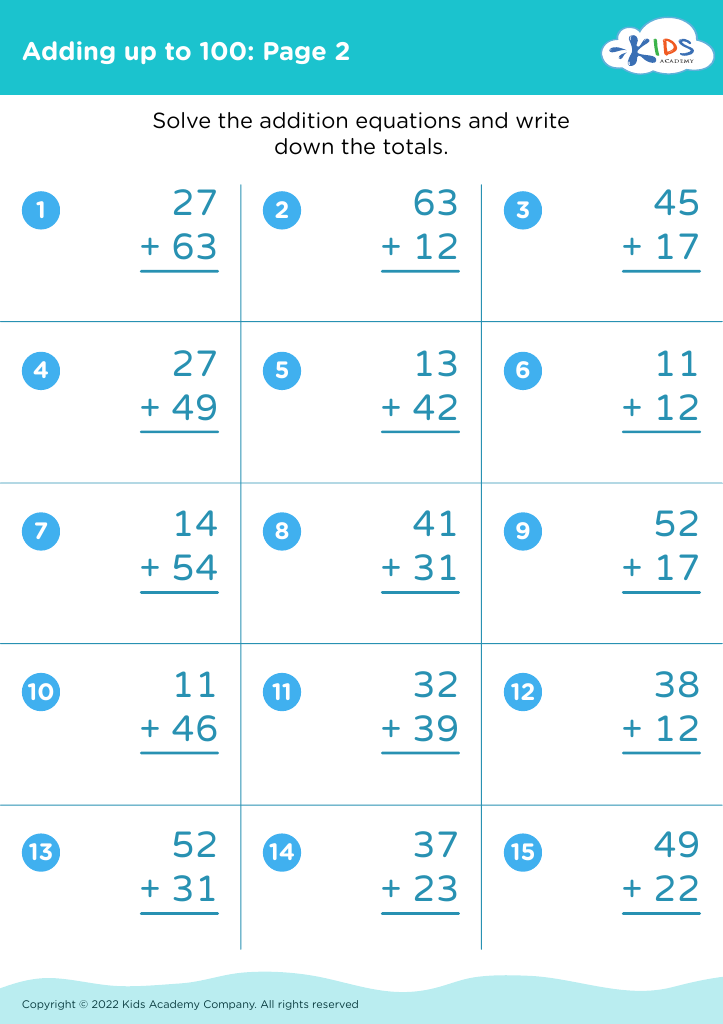
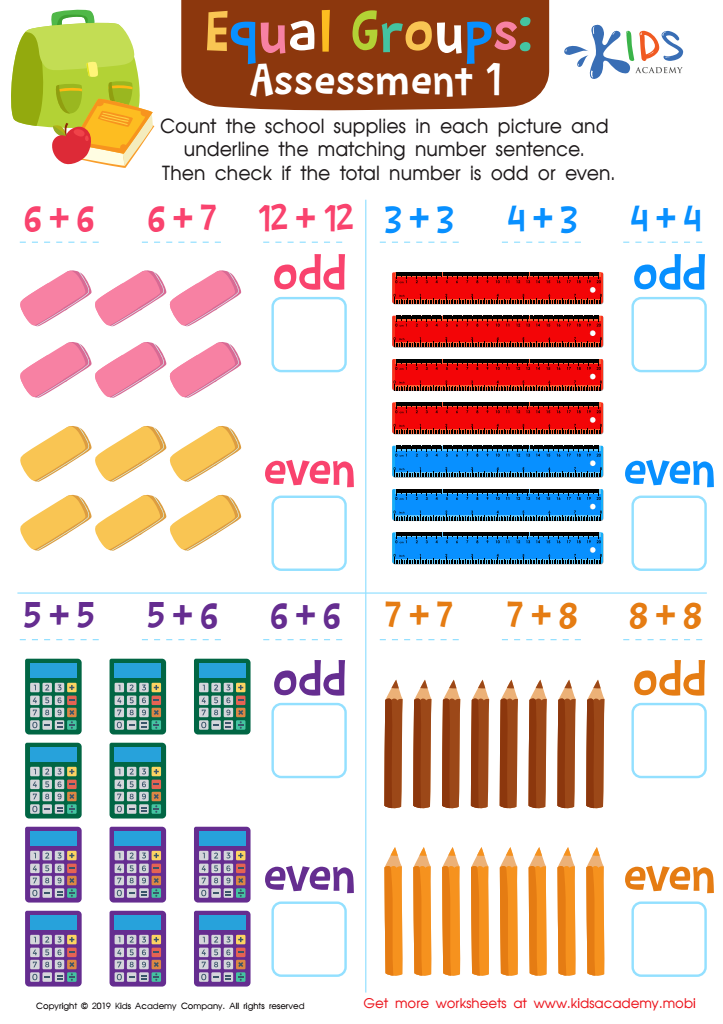
Equal Groups: Assessment 1 Worksheet
Have your students count the school supplies in each picture. Underline the number sentence that matches. Ask them if the total number is odd or even. Help your eager little preschoolers explore their classroom, which is full of pencils, chairs, desks, a blackboard and the teacher's desk.
 Assign to My Students
Equal Groups: Assessment 1 Worksheet
Worksheet
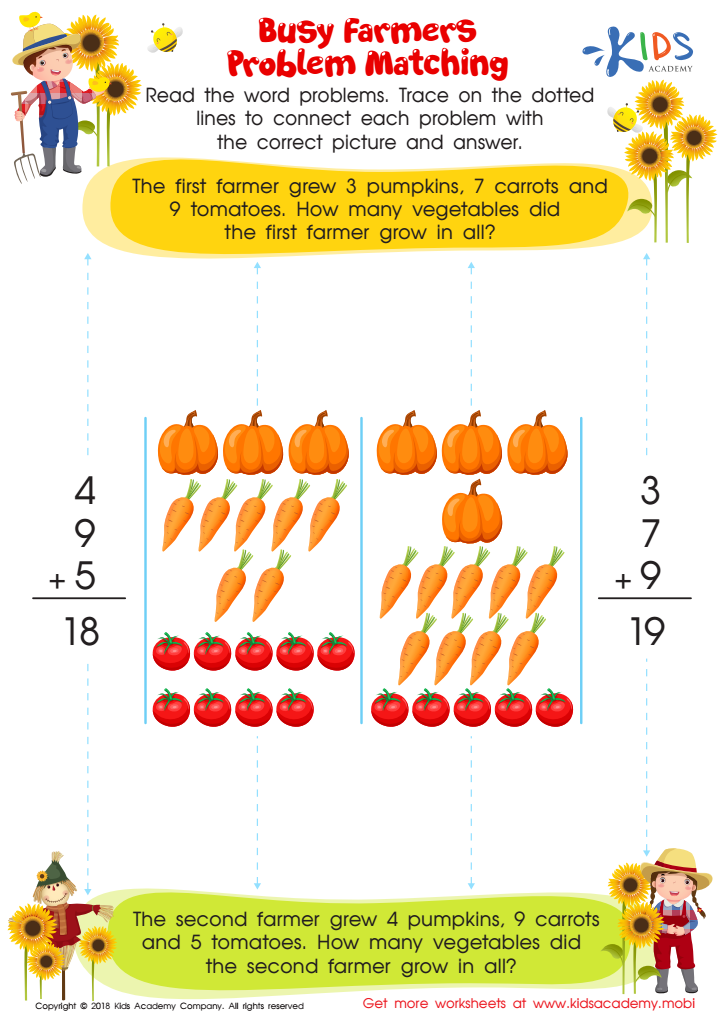
Busy Farmers: Problem Matching Worksheet
Farming is tough, so help your mathematician out with this fun and stimulating worksheet! They'll read word problems and connect each to its correct picture, using traceable lines. They'll practice addition with three addends, and use the harvest veg pictures to ensure accuracy.
Busy Farmers: Problem Matching Worksheet
Worksheet
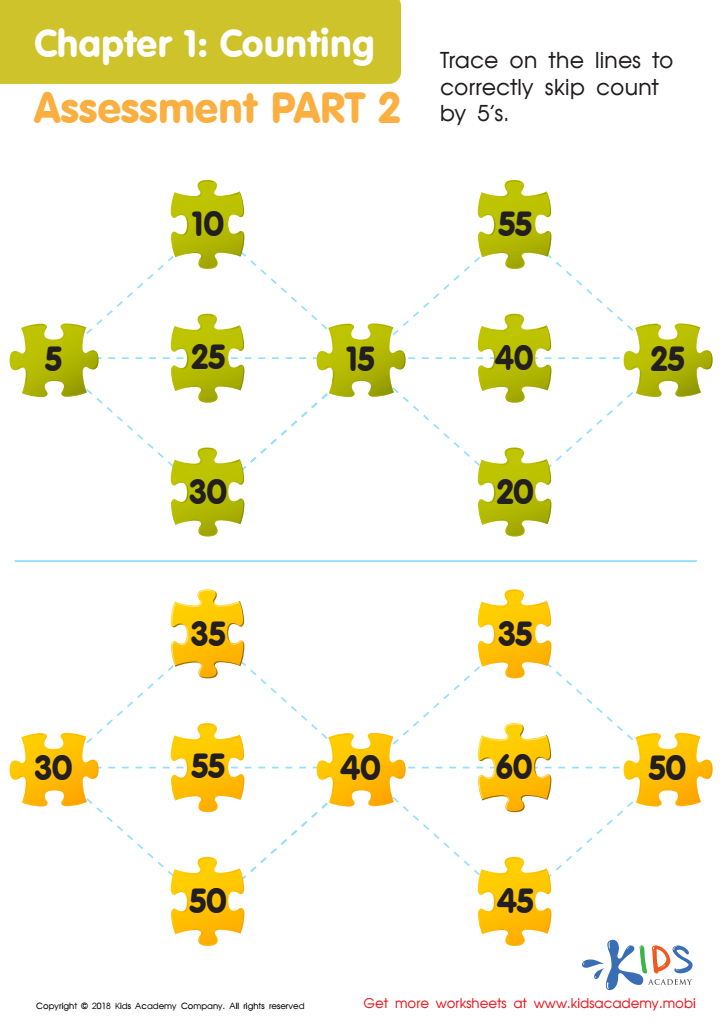
Counting: Assessment 2 Worksheet
By now, your child should be able to count up to the hundreds. If they're still learning the tens, that's okay - as long as they're going at their own pace. This worksheet will be easy if they can count to ten. Ask them to trace the lines and skip count by 5's.
Counting: Assessment 2 Worksheet
Worksheet
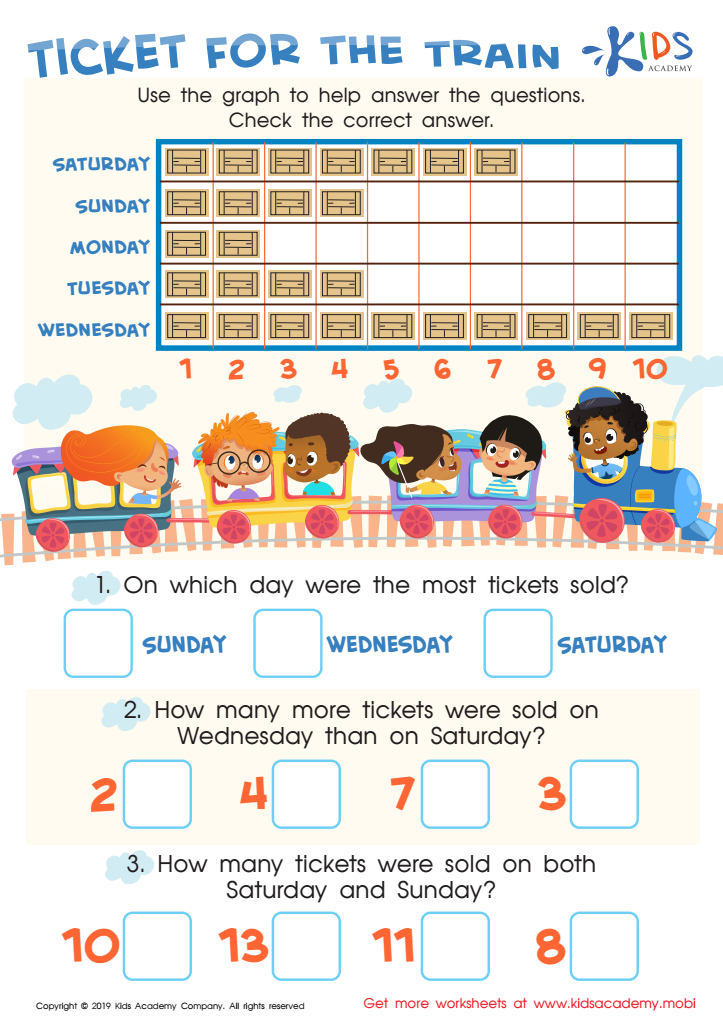
Ticket for the Train Worksheet
It's important to use fun scenarios with familiar objects when teaching kids. Try discussing train rides and the accompanying picture graph. Ask questions about it, then help kids check the correct answers. Let them enjoy the learning process!
Ticket for the Train Worksheet
Worksheet
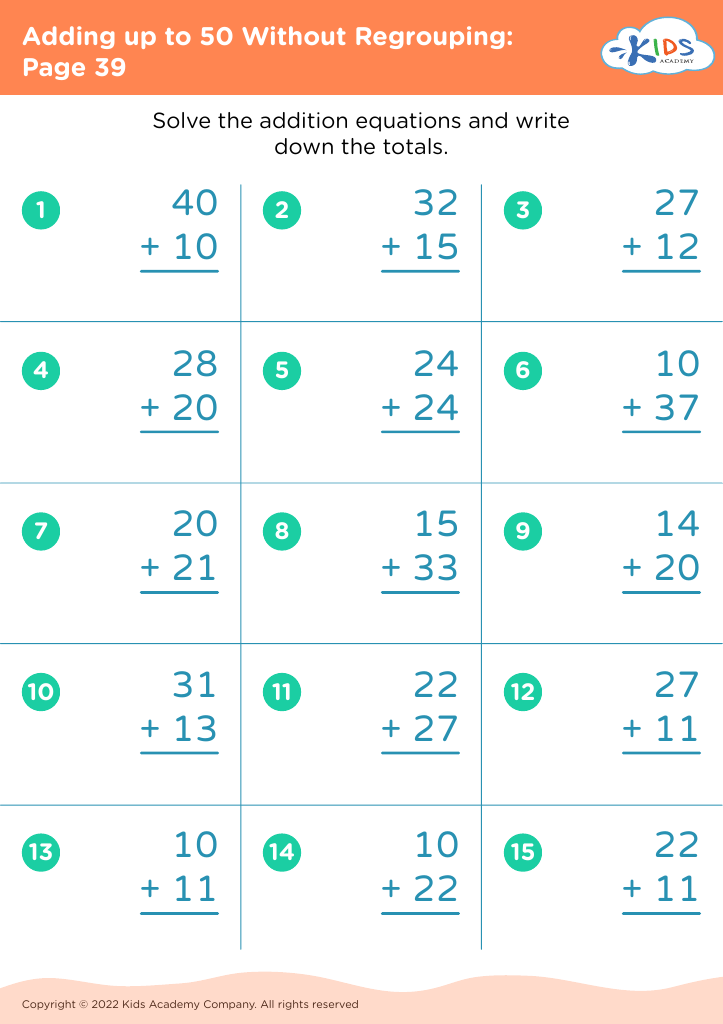
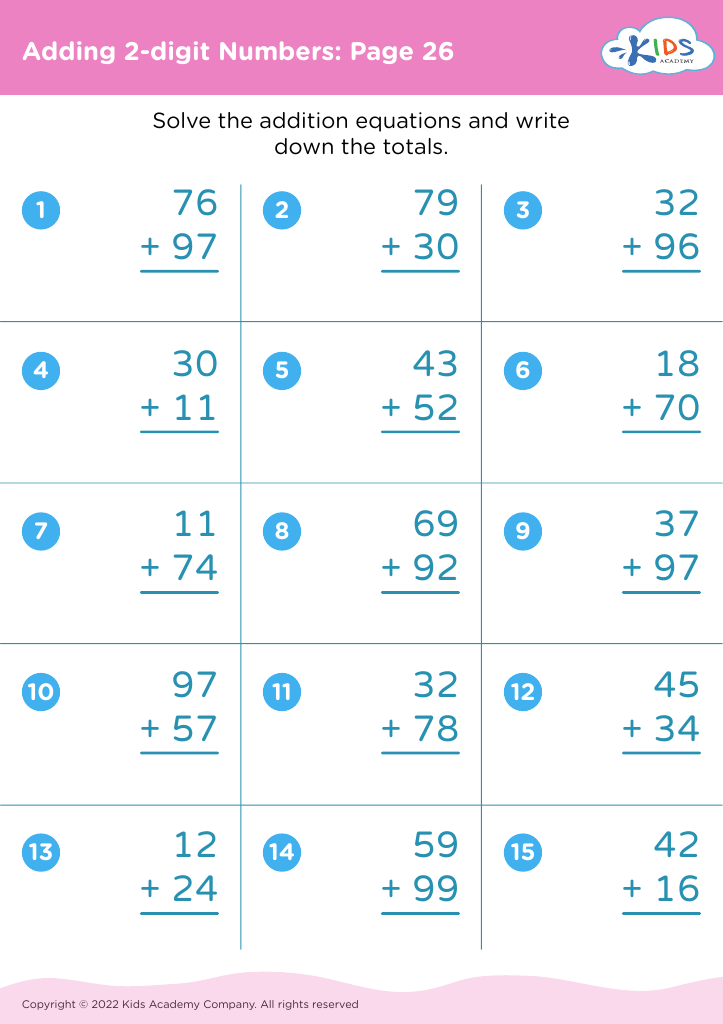
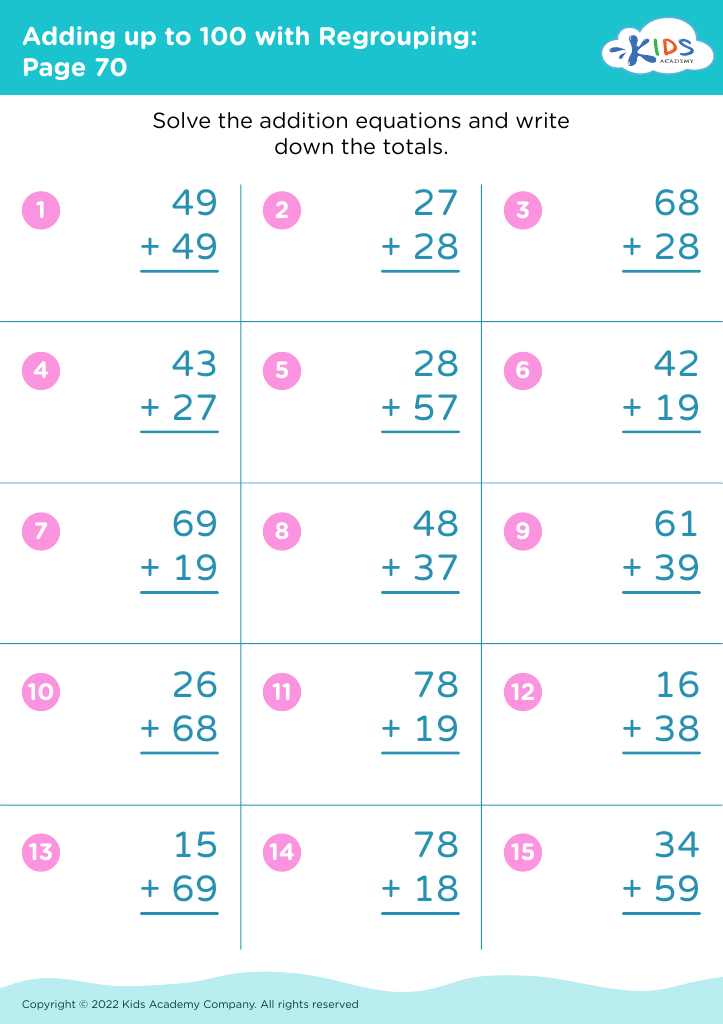
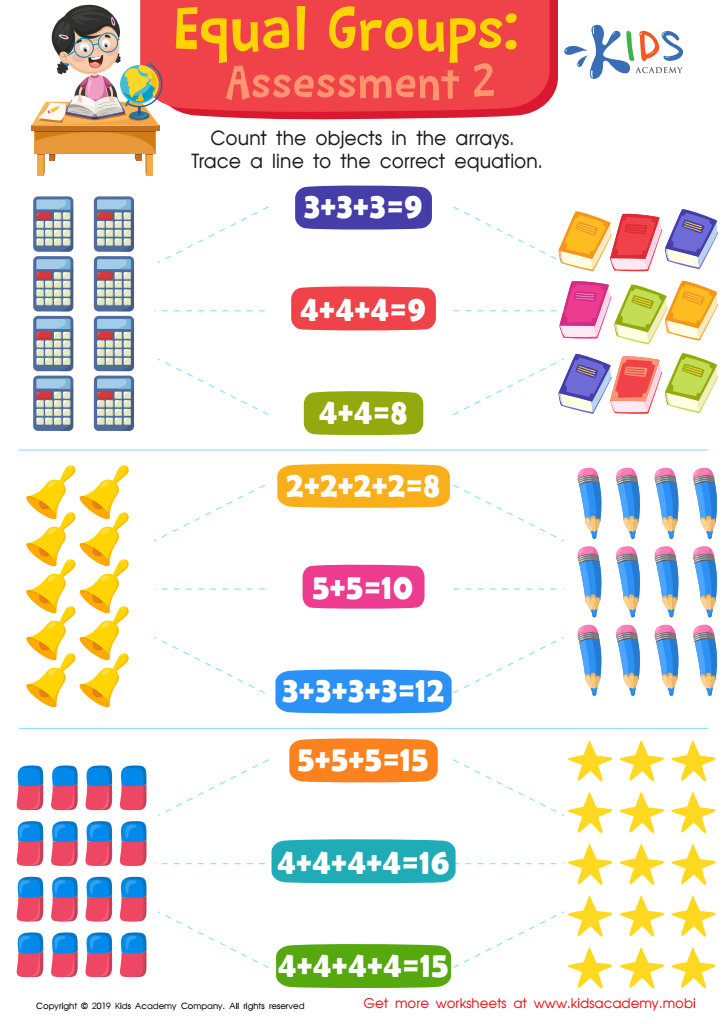
Equal Groups: Assessment 2 Worksheet
Get your kids to pay attention to learning with familiar objects, bright colors, and this worksheet. It has six arrays - ask kids to identify them and count the objects. Then, help them trace a line to the correct equation.
Equal Groups: Assessment 2 Worksheet
Worksheet
Join Kids Academy for Free
Who is primarily going to use this learning content?





Understanding multiplication is foundational for 7-year-olds, as it plays a vital role in their mathematical development and everyday life skills. First, multiplication paves the way for more complex math concepts like division, fractions, and algebra. By grasping multiplication early, children build a solid mathematical foundation that will support future learning.
Second, mastering multiplication enhances problem-solving abilities. It teaches kids to think critically and approach problems methodically. When they see patterns, such as multiplying by 2 to get even numbers or by 5 for numbers ending in 0 or 5, they can apply these strategies in varied contexts, making them more adept at tackling different math problems.
Moreover, multiplication skills integrate into real-world scenarios—calculating totals for shopping, splitting items evenly, or following recipes. Having these skills readily available empowers children to handle daily tasks efficiently, boosting their confidence in practical situations.
Finally, engaging in multiplication activities promotes a growth mindset. Children learn that practice leads to improvement, fostering resilience and a willingness to tackle challenges. As they see progress through effort, they develop a positive attitude toward learning in general.
Thus, prioritizing multiplication understanding for 7-year-olds equips them not only for academic success but also for practical, real-life applications, instilling lifelong skills and attitudes.








