Understanding natural resources Science Worksheets for 7-Year-Olds
4 filtered results
-
From - To
Discover engaging and educational "Understanding Natural Resources" science worksheets designed for 7-year-olds! Our carefully crafted materials introduce young learners to the essential concepts of natural resources, including their types, uses, and importance for our planet. Through interactive activities, kids explore renewable and non-renewable resources, and learn how to promote sustainability. These worksheets not only foster curiosity and scientific inquiry but also align with educational standards to support classroom learning. Perfect for students, teachers, and homeschooling parents looking to enrich their science curriculum, these worksheets make understanding natural resources fun and accessible for young minds.
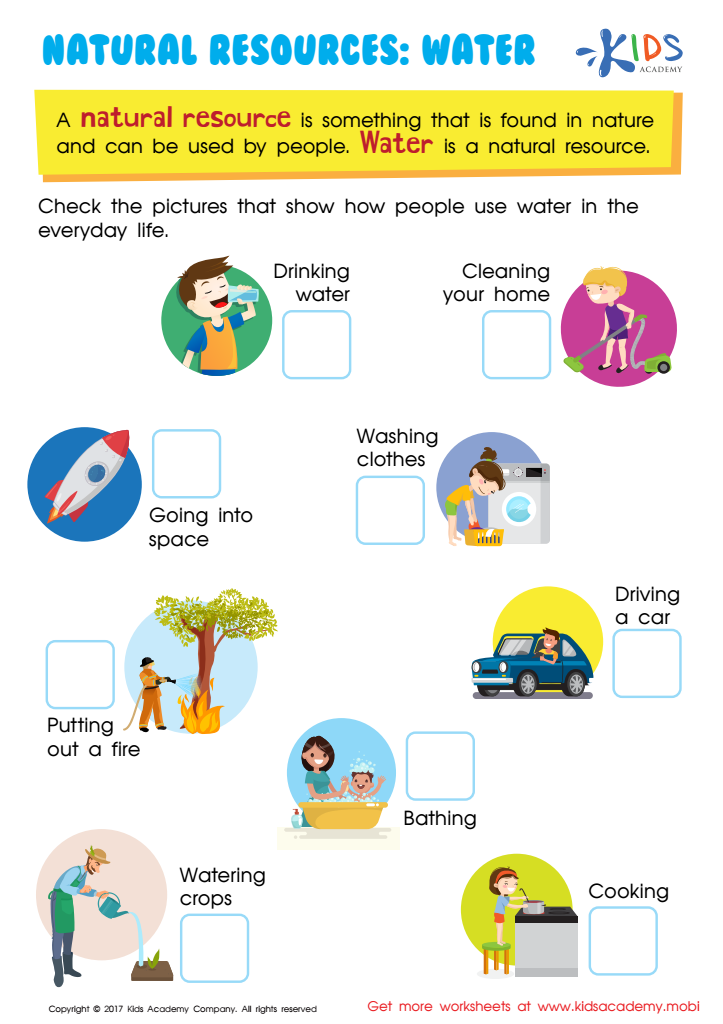
Natural Resources: Water Worksheet
 Assign to My Students
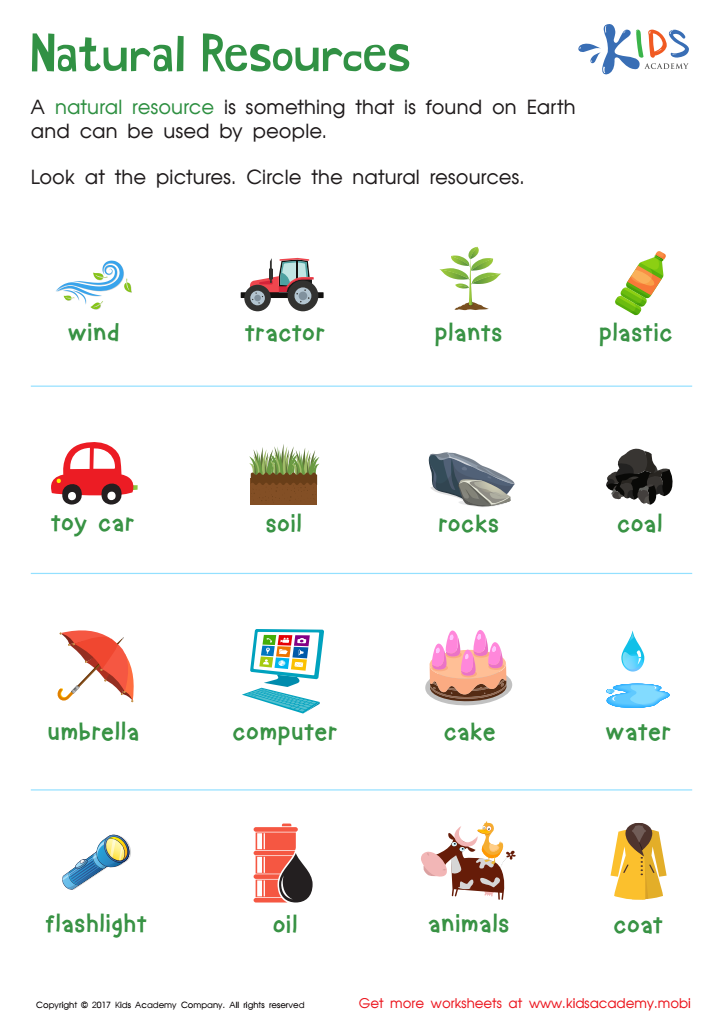
Natural Resources Worksheet
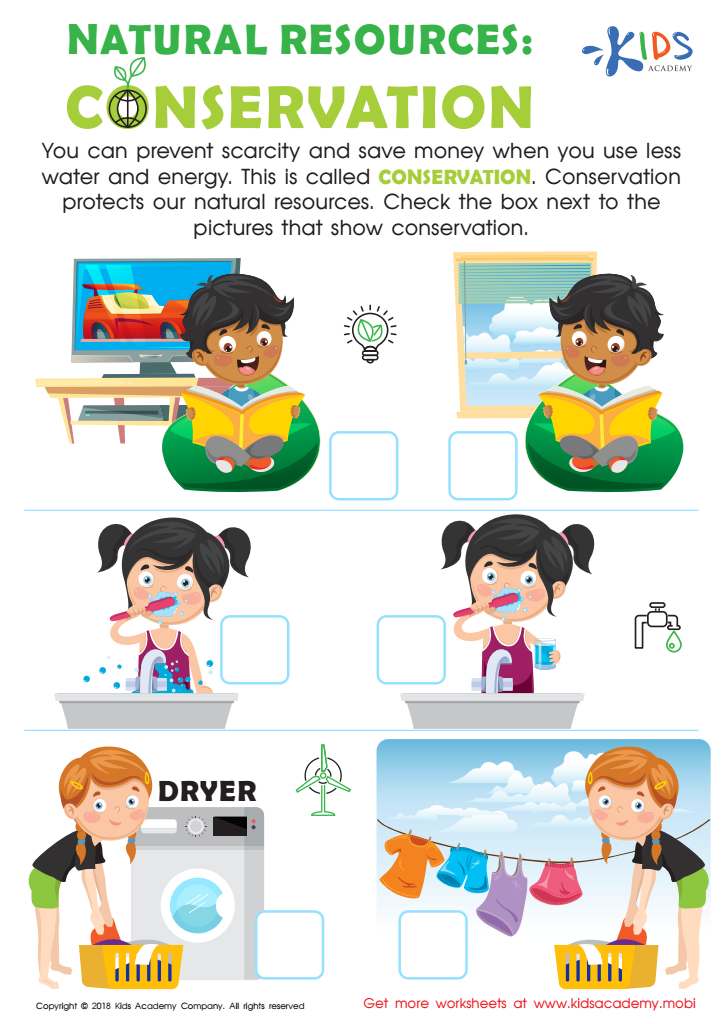
Natural Resources: Conservation Worksheet
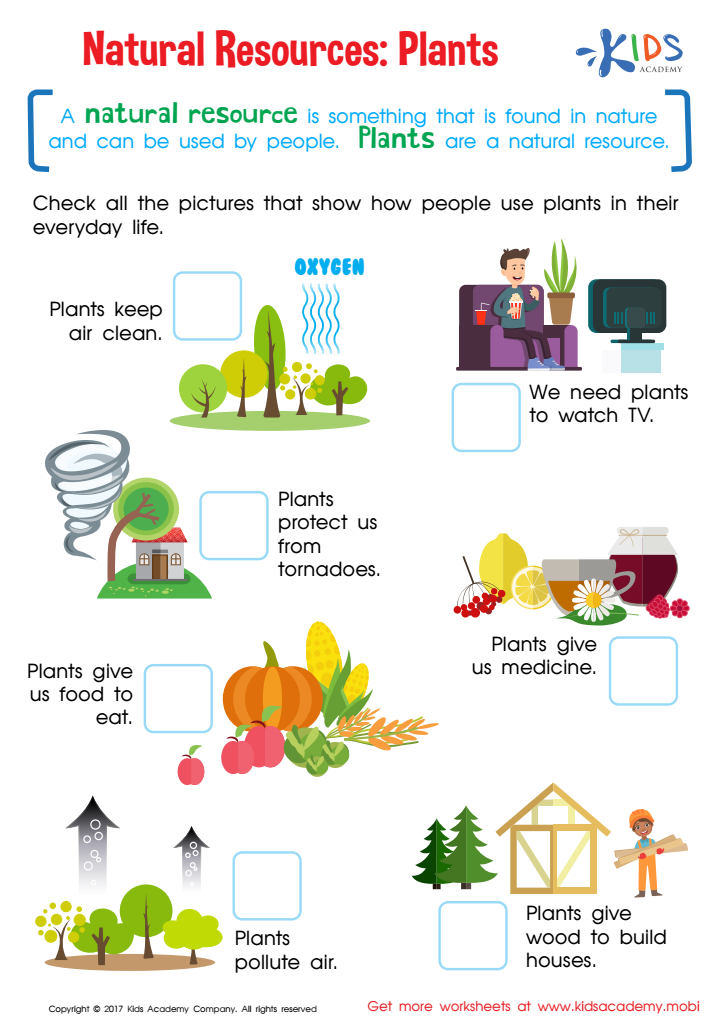
Natural Resources: Plants Worksheet






Understanding natural resources is crucial for 7-year-olds, and parents and teachers play significant roles in this learning process. At this impressionable age, children form ideas and habits that often last a lifetime. Teaching them about natural resources fosters environmental awareness and responsibility early on.
Firstly, understanding natural resources—such as water, trees, oil, and minerals—helps young children appreciate the planet's finite resources. When children learn that these resources can run out if not used sustainably, they develop an awareness of conservation. Simple habits like turning off the tap while brushing teeth or recycling paper can make a big difference if they are learned young.
Secondly, integrating lessons on natural resources into science education nurtures critical thinking and problem-solving skills. Kids learn to ask questions like "Where does our food come from?" or "Why should we save energy?" Such questions encourage exploration and curiosity, essential components of scientific thinking.
Furthermore, understanding natural resources ties into many other subjects, including geography, economy, and ethics. It provides a well-rounded knowledge base that improves overall academic performance. Children learn the interconnectedness of life, society, and the planet, cultivating a sense of global citizenship.
For both parents and teachers, introducing these fundamental concepts empowers children to become informed, conscientious stewards of the earth, benefitting future generations.







