Filters

2298 filtered results

Clear all filters
Favorites
With answer key
Interactive

2298 filtered results

Difficulty Level

Grade


Check out this FREE Trial Lesson for age 8-9!

Correctly use Frequently used Homophones and Antonyms

Favorites
With answer key
Interactive
  • 8-9
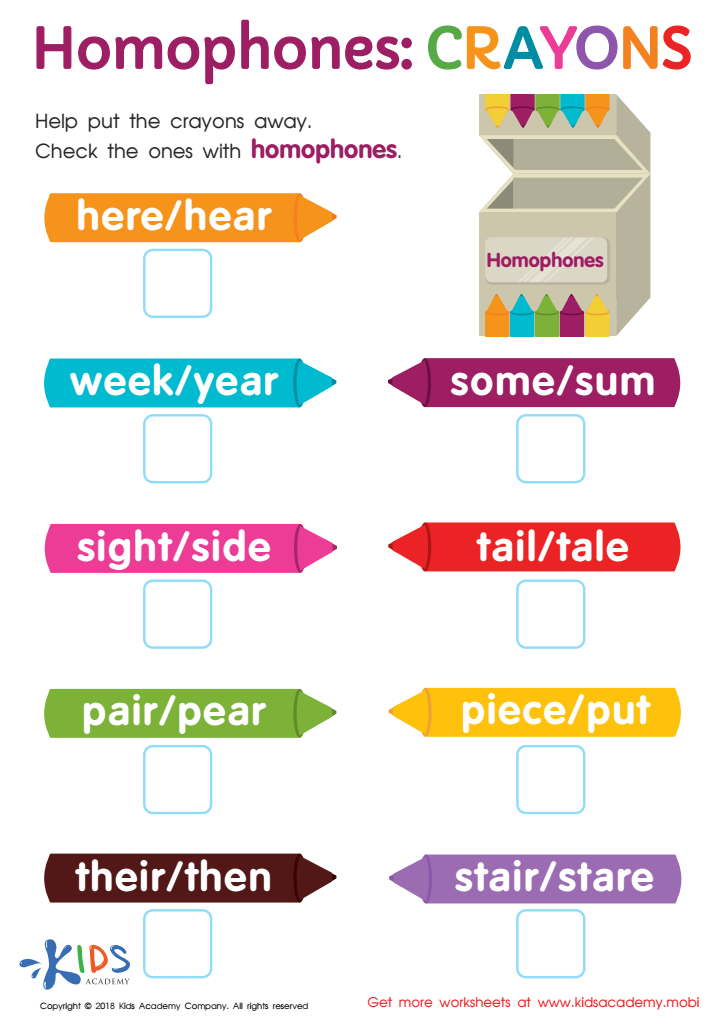
Homophones: Crayons Worksheet
Homophones: Crayons Worksheet

Ask your kids: "What are homophones?" Explain that homophones are words that sound alike but have different meanings, like 'dare' and 'deer'. Ask them to identify homophones by putting the crayons in this printout away according to the words.
Homophones: Crayons Worksheet
Worksheet
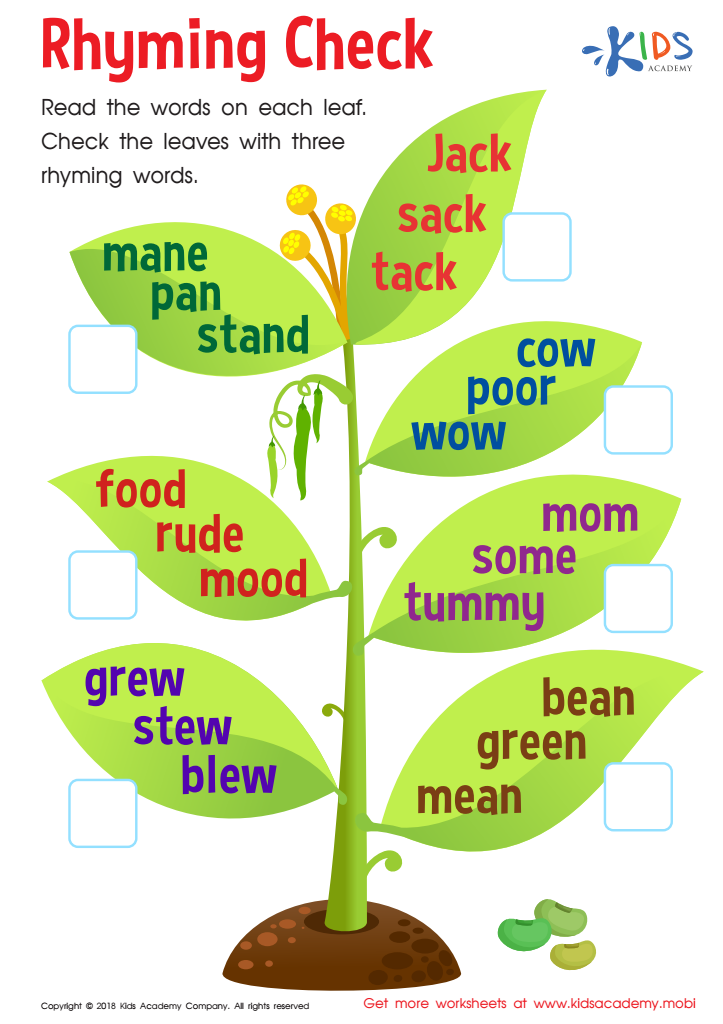
Rhyming Check Worksheet

Rhyming Check Worksheet

Help your child read the words on each leaf of a worksheet. Make sure they know that spellings can be misleading and tricky. When finished, ask them to identify the leaves with three rhyming words. This exercise helps their pronunciation skills and encourages critical thinking.
Rhyming Check Worksheet
Worksheet
Nursery rhyme match-up worksheet

Nursery Rhyme Match–Up Worksheet
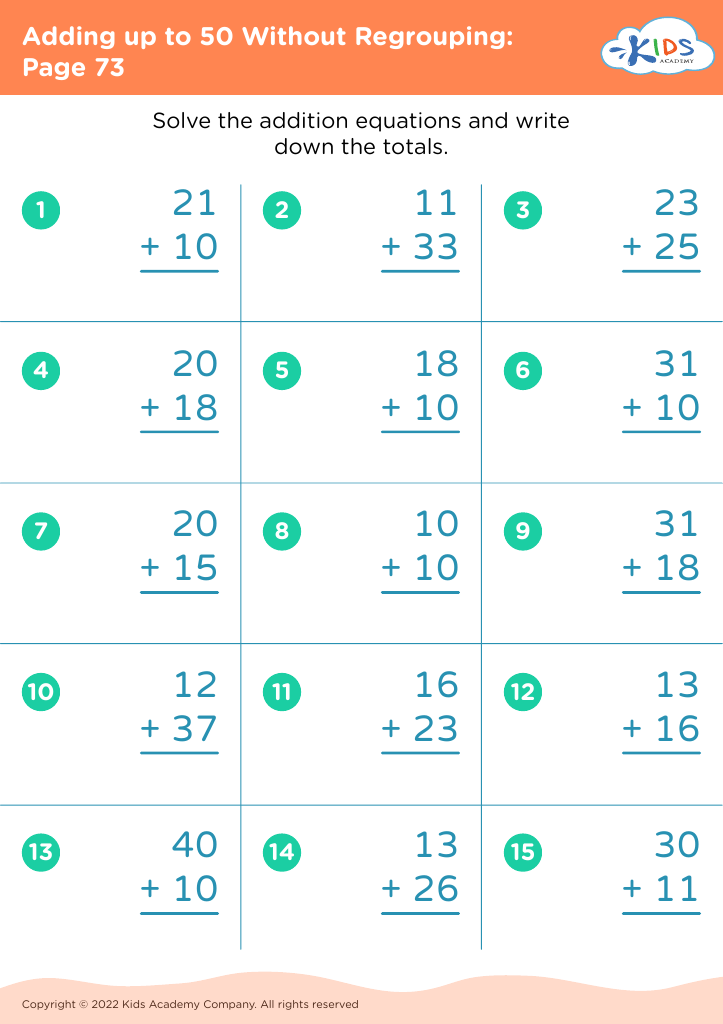
This worksheet helps kids build pre-reading skills using stories they know and love! By connecting with prior knowledge, kids can develop ideas about characters and set the stage for reading strategies.
Nursery Rhyme Match–Up Worksheet
Worksheet
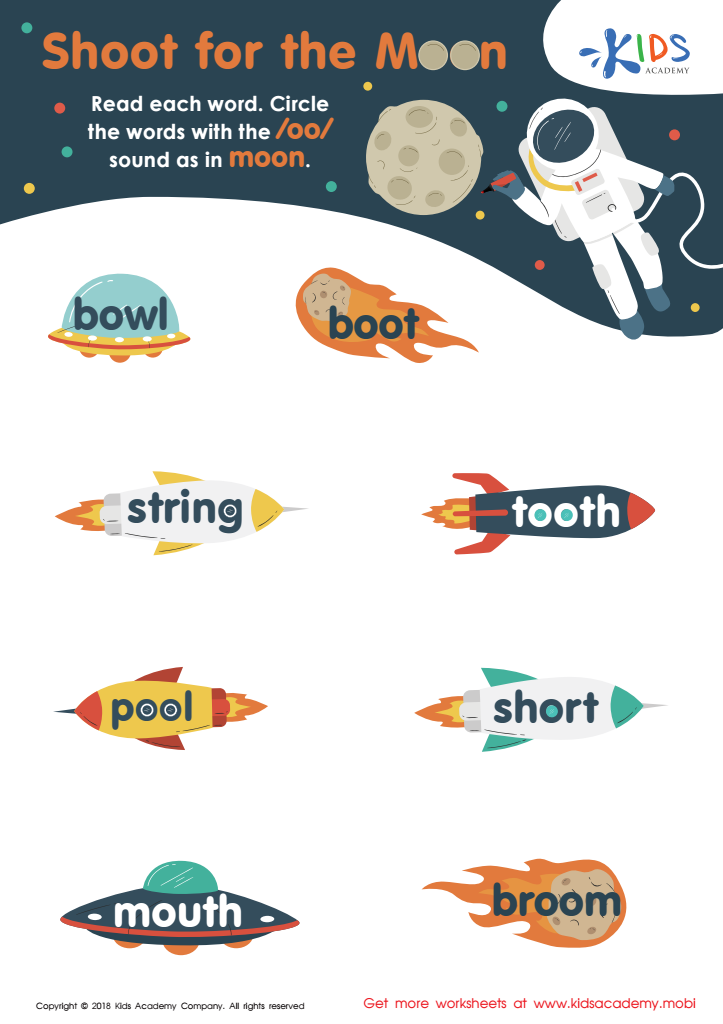
Reading: Shoot for the Moon Worksheet

Reading: Shoot for the Moon Worksheet

Ask your kids if they can name any common words with the /oo/ sound. Read each word with them and help them pronounce it. Then, have them circle the words that have the /oo/ sound as in moon.
Reading: Shoot for the Moon Worksheet
Worksheet
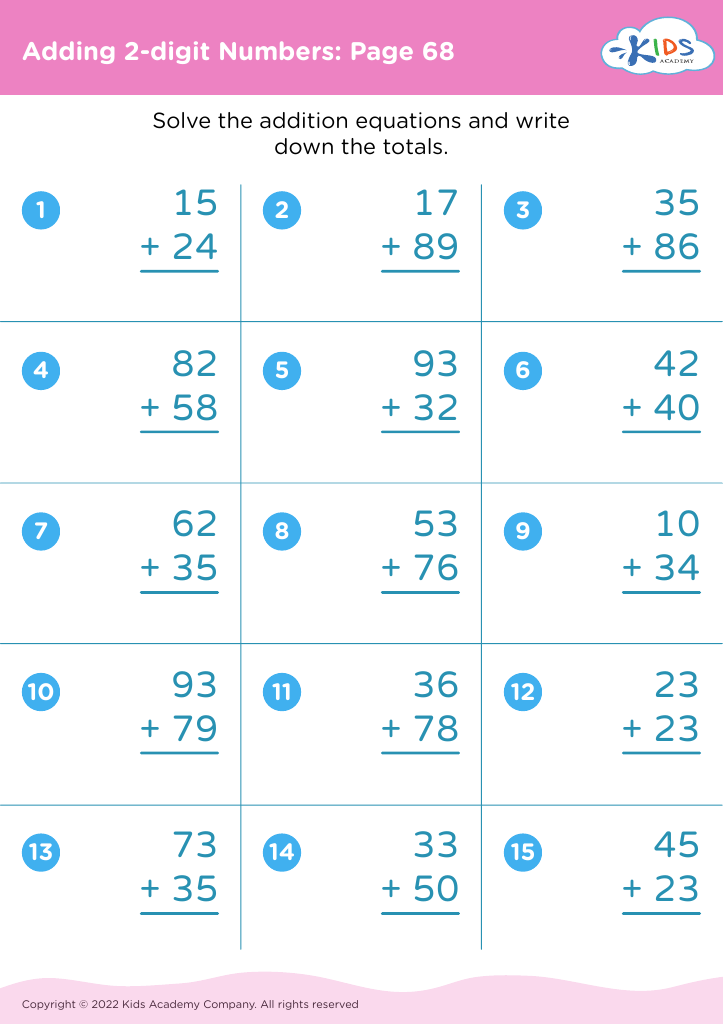
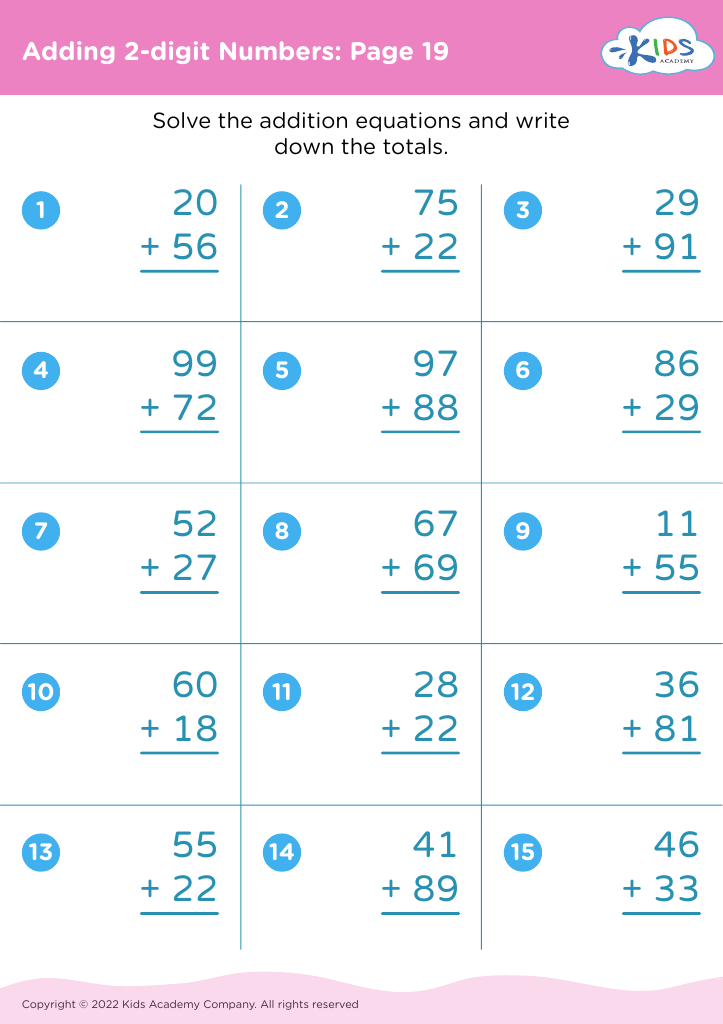
Adding 2-digit Numbers: Page 19

Adding 2-digit Numbers: Page 19

Adding 2-digit Numbers: Page 19
Worksheet
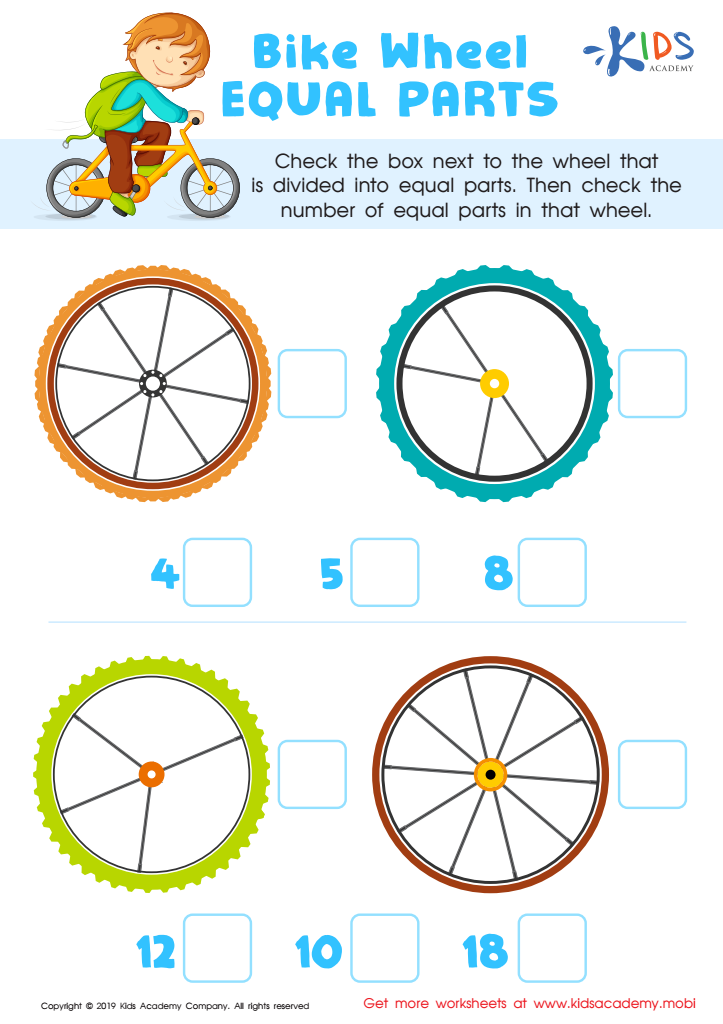
Bike Wheel Equal Parts Worksheet

Bike Wheel Equal Parts Worksheet

Help your kids have fun while they learn! Ask them to identify the object in the picture with four wheels. Guide them to count the spokes, then check the box on the wheel with equal parts. Lastly, check how many equal parts the wheel is divided into.
Bike Wheel Equal Parts Worksheet
Worksheet
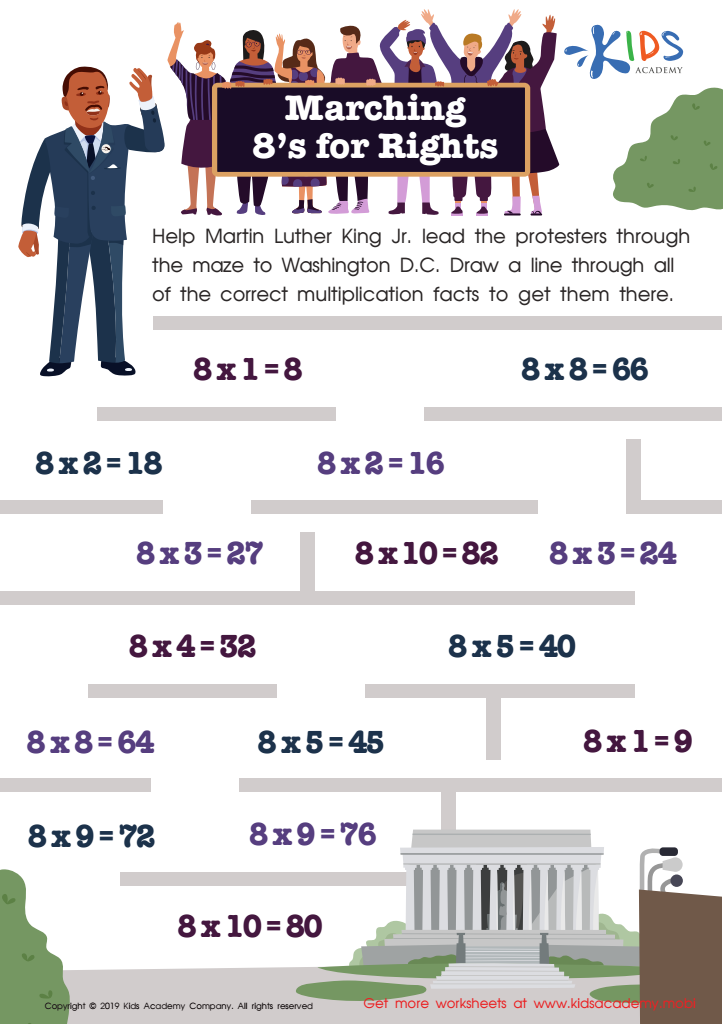
Marching 8’s for Rights Worksheet
Marching 8’s for Rights Worksheet

Encourage your students to explore MLK's history! This worksheet provides the perfect opportunity. Help them understand his contributions by having them "march" MLK from the starting point to Washington D.C. Have them draw a line through the correct multiplication facts to get there. It's an enjoyable way for kindergartners to learn about a key part of history.
Marching 8’s for Rights Worksheet
Worksheet
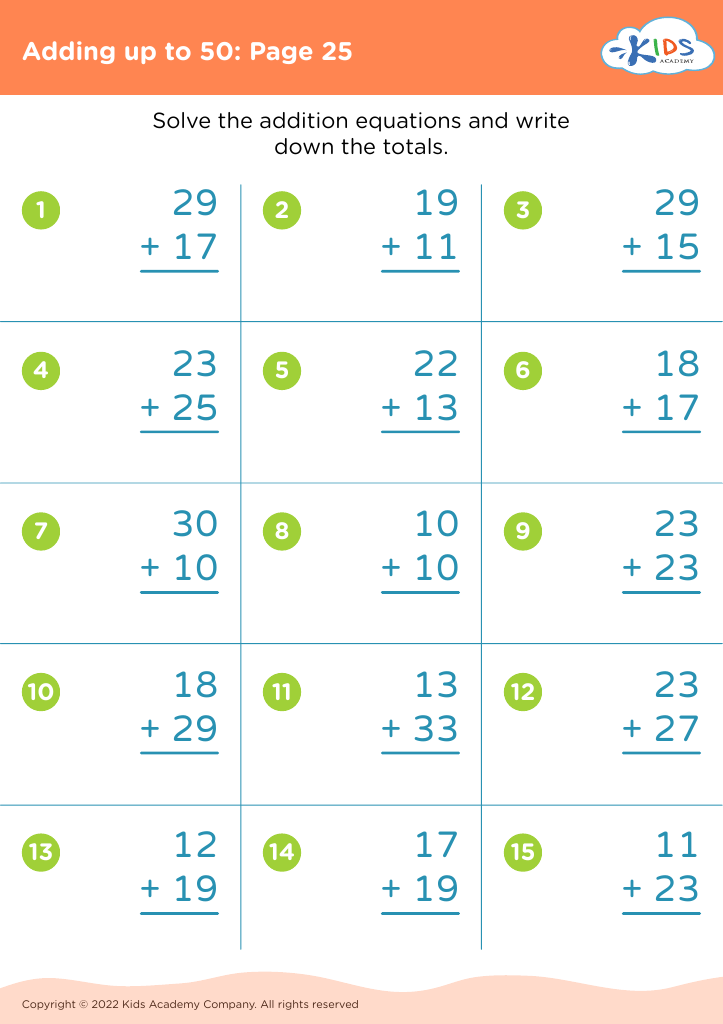
Adding up to 50 Without Regrouping: Page 31
Worksheet
Tennis Ball Syllables Worksheet

Tennis Ball Syllables Worksheet

To help your kids become fluent speakers, they need to learn syllables. A word can have one to seven syllables, with longer words having more. For this level, they will be working with one or two syllables. Assist them as they circle the words with closed syllables in this worksheet.
Tennis Ball Syllables Worksheet
Worksheet
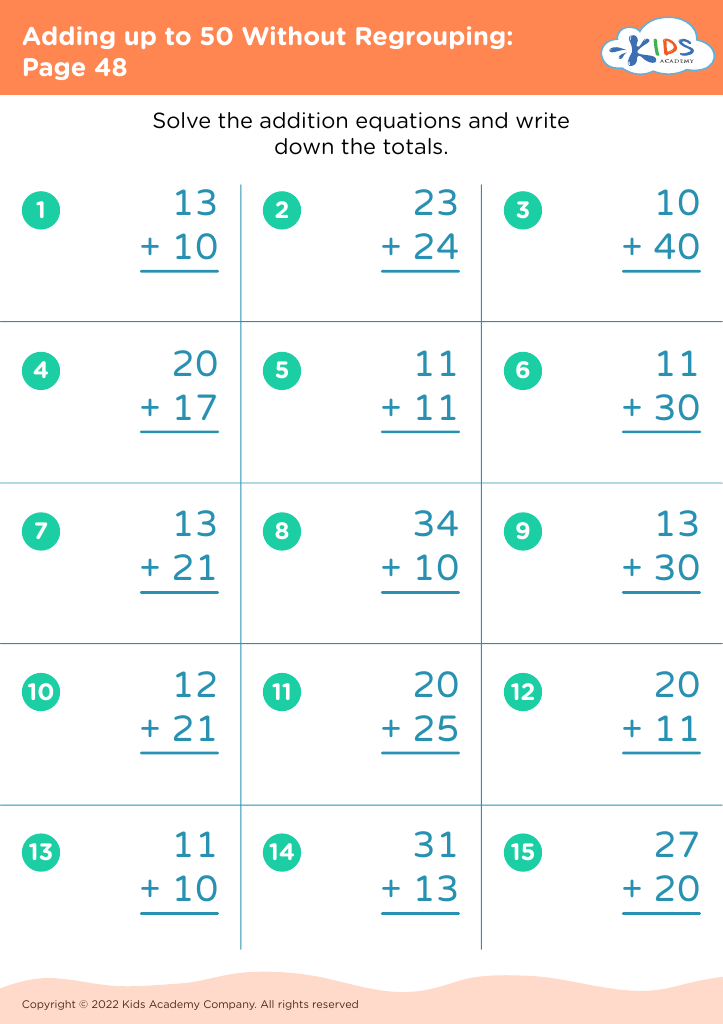
Adding up to 50 Without Regrouping: Page 48
Worksheet
How to Draw a Smiley Face Worksheet

How to Draw a Smiley Face Worksheet

Can your students draw a smiley face? Simplify the process with this worksheet, which provides step-by-step instructions. Ask them to follow the directions, then check True or False for each sentence at the bottom of the page. A great way to teach kids how to easily draw a smiley face!
How to Draw a Smiley Face Worksheet
Worksheet
Adding up to 100 with Regrouping: Page 69
Worksheet
Adding up to 100 with Regrouping: Page 18
Worksheet
2nd grade sight words worksheet- there, those, these

There, Those and These Sight Words Worksheet

Help teach your child to read and use tricky demonstrative pronouns. Use this 2nd grade sight words worksheet: there, those, these. Have them read each sentence and choose the right pronoun by looking at the pictures.
There, Those and These Sight Words Worksheet
Worksheet
Ben Franklin’s Invention Arrays Worksheet

Ben Franklin’s Invention Arrays Worksheet

Have your child guess some of the inventors of the popular items we use today. For instance, the light bulb was invented by Thomas Edison. Look at Ben Franklin's inventions and help your kids match the arrays to the correct multiplication fact. Check the box and circle the product.
Ben Franklin’s Invention Arrays Worksheet
Worksheet
Castling No–no's: Part 1 Worksheet

Castling No–no's: Part 1 Worksheet

Help your child learn how to play chess by using this worksheet. Ask them to circle the king and rook that can castle in the picture. Explain that a king cannot castle if the king or rook has moved, or if there is any other piece between them. Knowing these rules will make playing a lot easier!
Castling No–no's: Part 1 Worksheet
Worksheet
The 5 W Questions: Robin Hood Worksheet

The 5 W Questions: Robin Hood Worksheet

Before embarking on this Robin Hood adventure, ensure your child reads and comprehends the 'Reading Folk Tales: Robin Hood' worksheet. Have them consider the story's lessons, and observe the details. Read the questions and help your kids select the correct answers.
The 5 W Questions: Robin Hood Worksheet
Worksheet
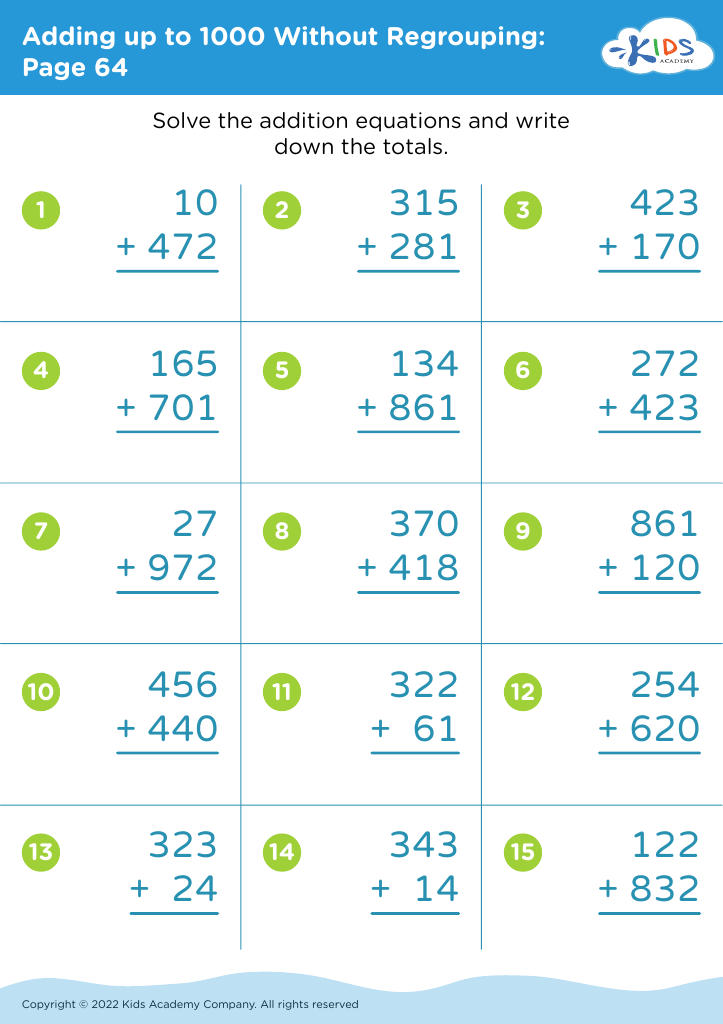
Adding up to 1000 with Regrouping: Page 59
Worksheet
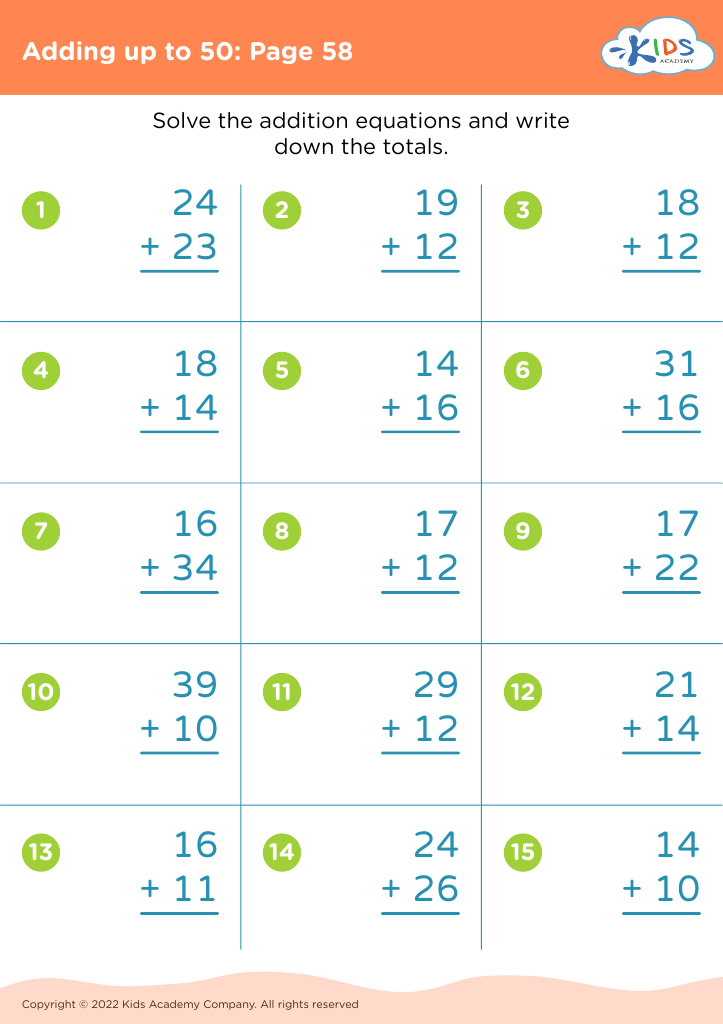
Adding up to 50 with Regrouping: Page 64
Worksheet
This structure of the earth worksheet

Structure of the Earth Worksheet

Discover the hidden structure of the Earth with this worksheet! Learn about the three main parts: crust, mantle and core. Help your little scientist increase their geological vocabulary and knowledge.
Structure of the Earth Worksheet
Worksheet
Charting Rainfall Worksheet

Charting Rainfall Worksheet

Kids need to learn how to graph info in order to understand the world. This rainfall worksheet gives them an opportunity to act as statisticians, charting the amount of rain each month. It also helps them practice data storage and analysis for future math concepts.
Charting Rainfall Worksheet
Worksheet
U.S. mountain ranges worksheet

US Mountain Ranges Worksheet

Introduce your little one to the U.S. with this Mountain Ranges worksheet! It'll help them recognize the major ranges and locate them on a map, sharpening their map skills.
US Mountain Ranges Worksheet
Worksheet
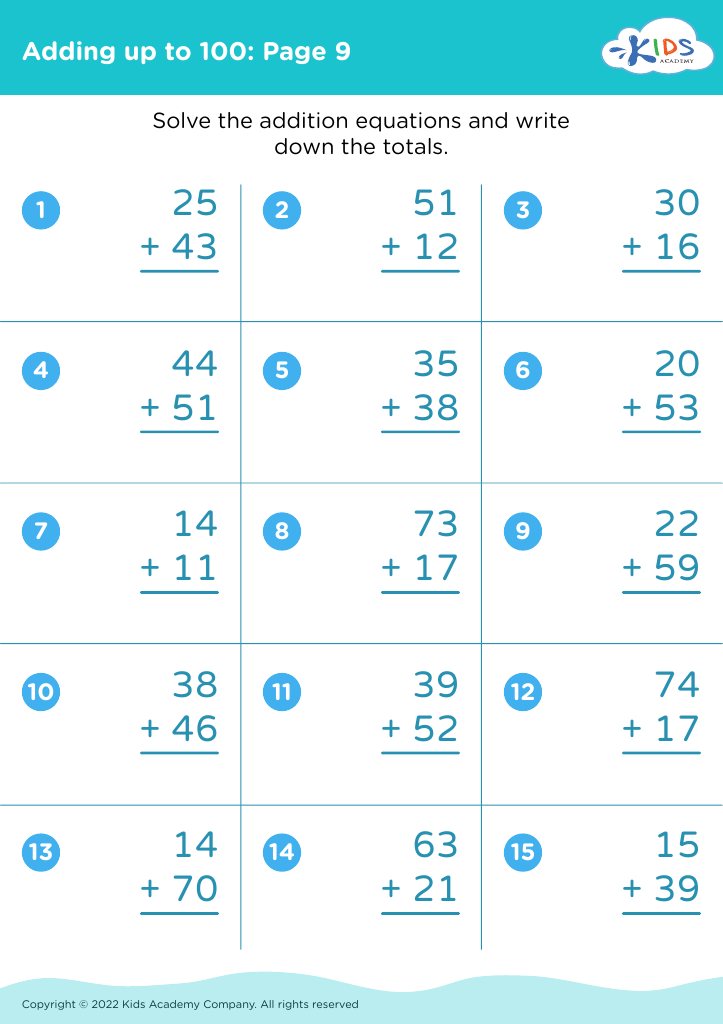
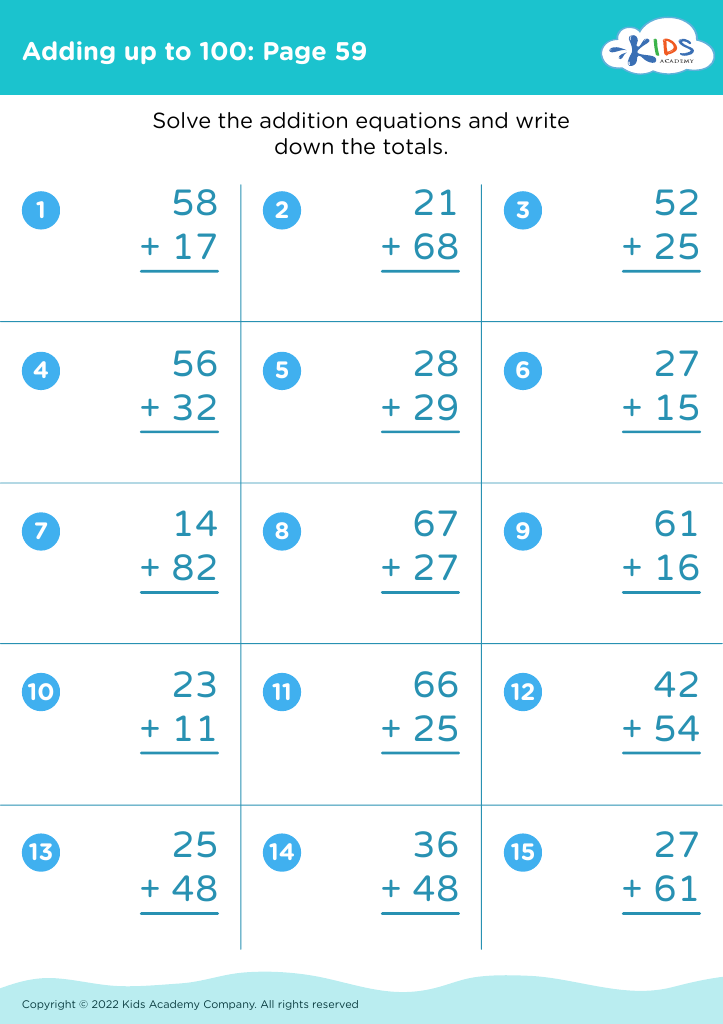
Adding up to 100: Page 1

Adding up to 100: Page 1

Adding up to 100: Page 1
Worksheet
Adding up to 100: Page 62

Adding up to 100: Page 62

Adding up to 100: Page 62
Worksheet


Worksheets specifically designed for Ages 8-9 play a pivotal role in children's educational journey, offering numerous benefits that cater to their specific developmental needs. At this crucial age, children are at a stage where they are transitioning from basic skills to more complex concepts in various subjects. Worksheets tailored for this age group provide the perfect balance of challenge and engagement, encouraging deeper understanding and retention of new information.

One of the primary reasons worksheets are so useful for Ages 8-9 is that they reinforce learning in a structured manner. Through repeated practice, children can consolidate their grasp on essential skills such as mathematics, reading comprehension, and writing. This repetition not only aids in mastering the given topics but also boosts children's confidence as they witness their own progress.

Additionally, these worksheets are designed with the cognitive and attention spans of 8 to 9-year-olds in mind. They often include a mix of activities that cater to different learning styles—visual, auditory, and kinesthetic—making learning more inclusive and effective. By engaging with various types of exercises, children develop critical thinking and problem-solving skills, which are vital for their future academic endeavors.

Furthermore, worksheets for Ages 8-9 offer the flexibility to be used both in the classroom and at home. This adaptability allows for a seamless integration of learning across different environments, enabling parents and teachers to collaborate more efficiently in supporting the child's educational growth.

In conclusion, worksheets for Ages 8-9 are invaluable tools that significantly contribute to children's learning. They not only enhance academic skills but also foster a love for learning, preparing children for more complex challenges ahead.