Fractions of Shapes Worksheets for Ages 8-9 - Page 2
31 filtered results
-
From - To
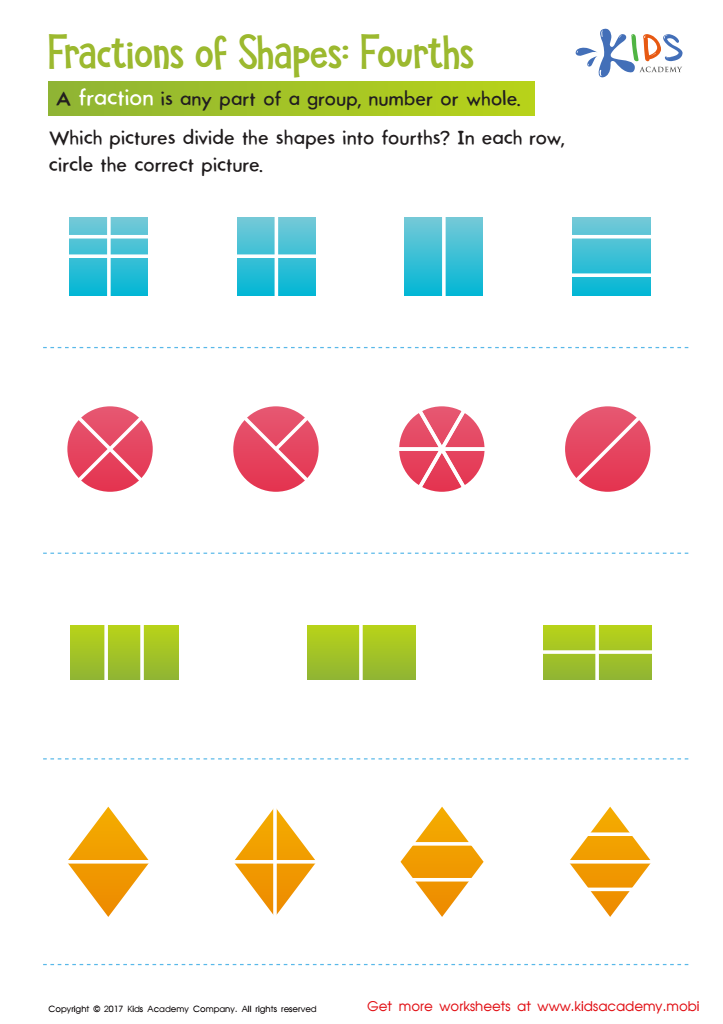
Fractions of Shapes Worksheet
 Assign to My Students
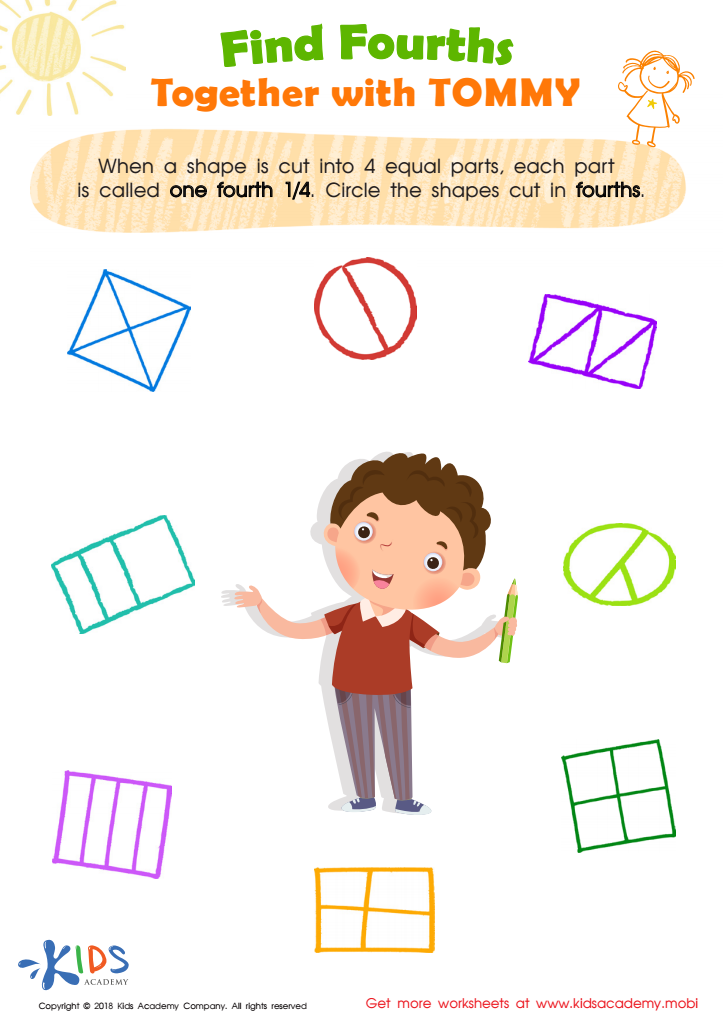
Find Fourths Together with Tommy Worksheet
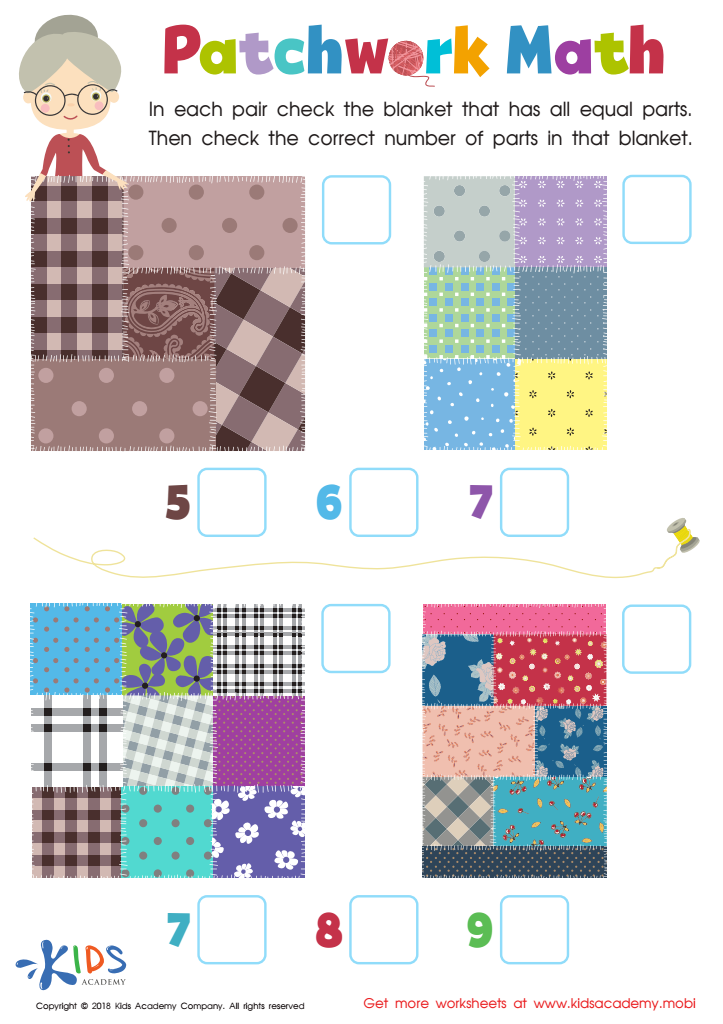
Patchwork Math Worksheet
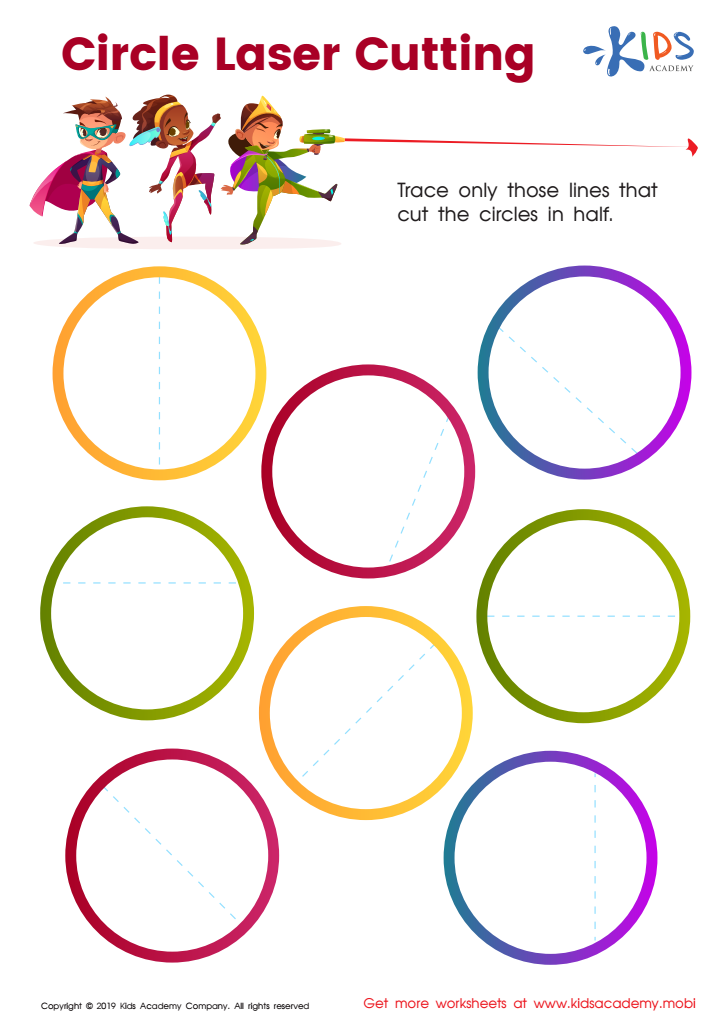
Circle Laser Cutting Worksheet
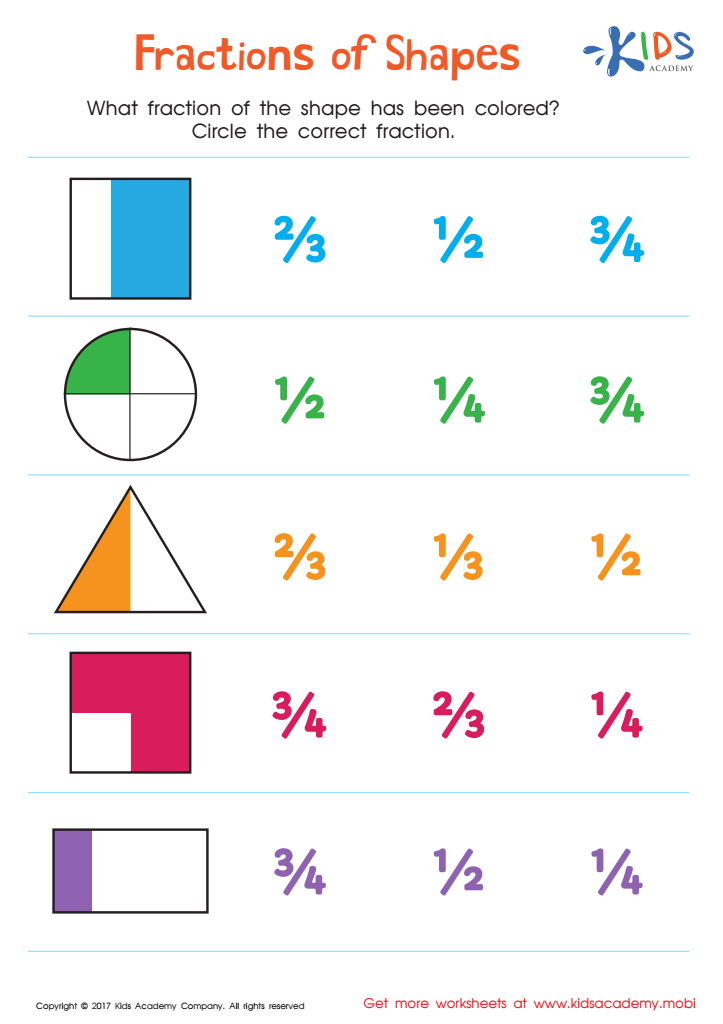
Fractions of Shapes: Math Concept Worksheet
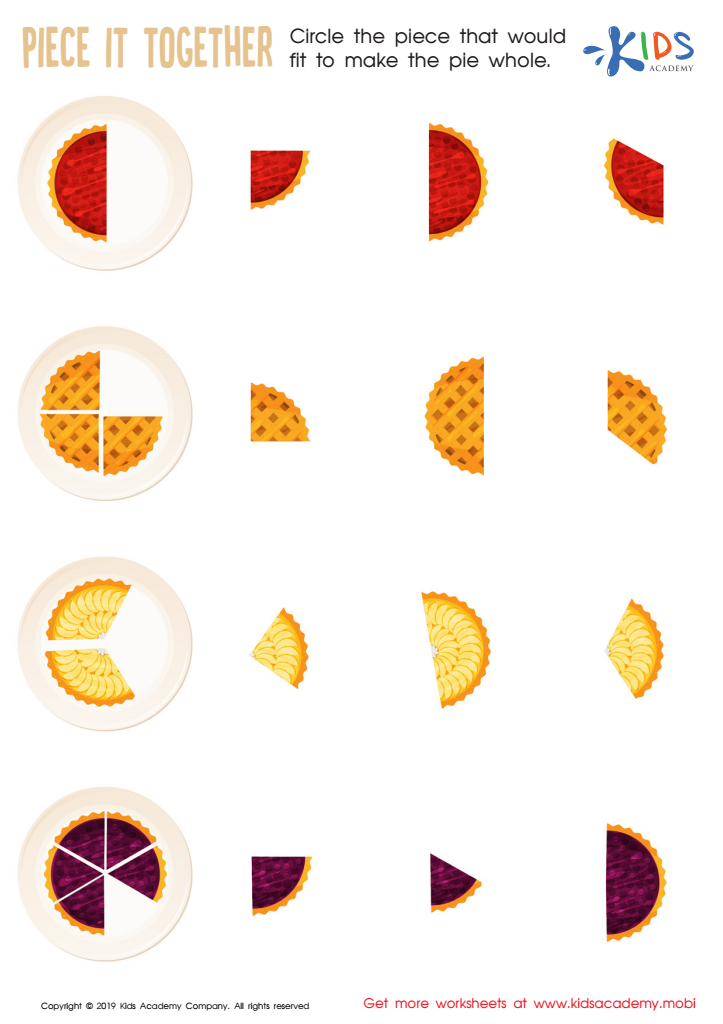
Piece it together Worksheet
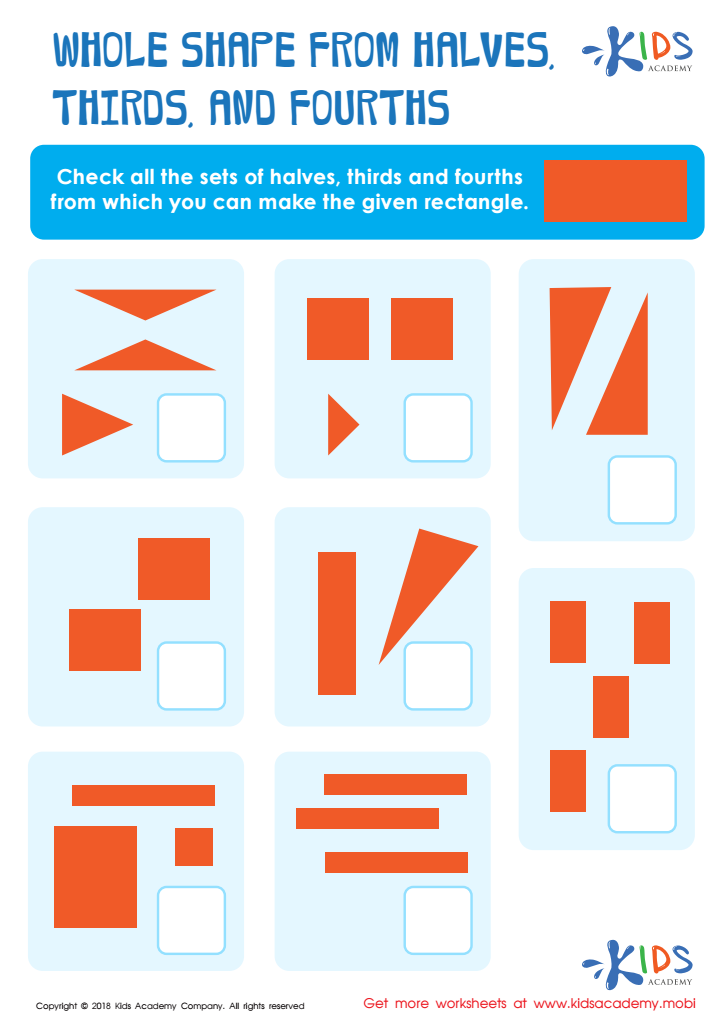
Whole Shape from Halves, Thirds and Fourths Worksheet








Understanding fractions of shapes is crucial for children aged 8-9 because it lays the foundation for a broad range of mathematical concepts and real-world applications. Fractions are not just numbers; they represent parts of a whole, which helps kids comprehend the idea of division and proportionality. When children grasp fractions of shapes, they develop visual-spatial intelligence, enabling them to see how parts fit together to form a whole, an essential skill in geometry and beyond.
Fostering a solid understanding of fractions also boosts problem-solving abilities. A child who can visualize fractions as parts of shapes is more likely to implement these concepts in diverse situations, like cutting recipes in the kitchen or distributing tasks fairly within a group setting. This hands-on, visual approach crucially links abstract math concepts to children’s everyday experiences, making learning more relatable and engaging.
Moreover, early exposure to fractions of shapes fosters a positive attitude toward math by making learning interactive and fun. By solving puzzles, building shapes, or coloring fractional parts, students build both confidence and competence. These activities support cognitive development by promoting logical thinking and spatial reasoning skills that are essential for later academic success.
Therefore, caring about fractions of shapes for this age group is an investment in children’s long-term mathematical literacy and practical life skills.