
Understanding patterns Science Worksheets for Ages 8-9
4 filtered results
Difficulty Level
Grade
Age
-
From - To
Subject
Activity
Standards
Discover the exciting world of patterns with our "Understanding Patterns" science worksheets designed for 8-9 year-olds! These engaging resources help young learners identify, analyze, and create various patterns found in nature and everyday life. With vibrant visuals and hands-on activities, children will develop critical thinking skills while exploring concepts like repetition, sequencing, and symmetry. Perfect for classroom use or at-home learning, these worksheets provide an interactive way to grasp science concepts through pattern recognition. Foster curiosity and a love for learning as your child connects knowledge across subjects, including math and art. Explore our collection today and enhance their educational journey!
Favorites
With answer key
Interactive
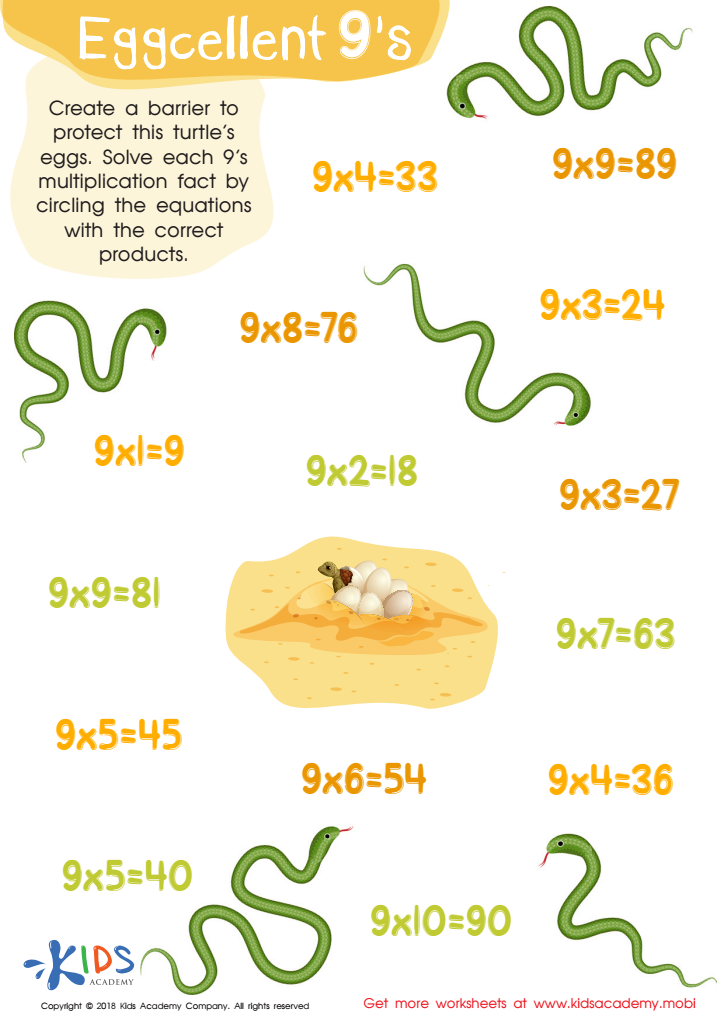
Eggcellent 9’s Worksheet
Help your kids save turtle eggs in this worksheet! Have them create a barrier by solving 9's multiplication facts, then circling the equations with the correct product. Finish up this exercise and show them how they can help protect turtle eggs from predators.
 Assign to My Students
Eggcellent 9’s Worksheet
Worksheet
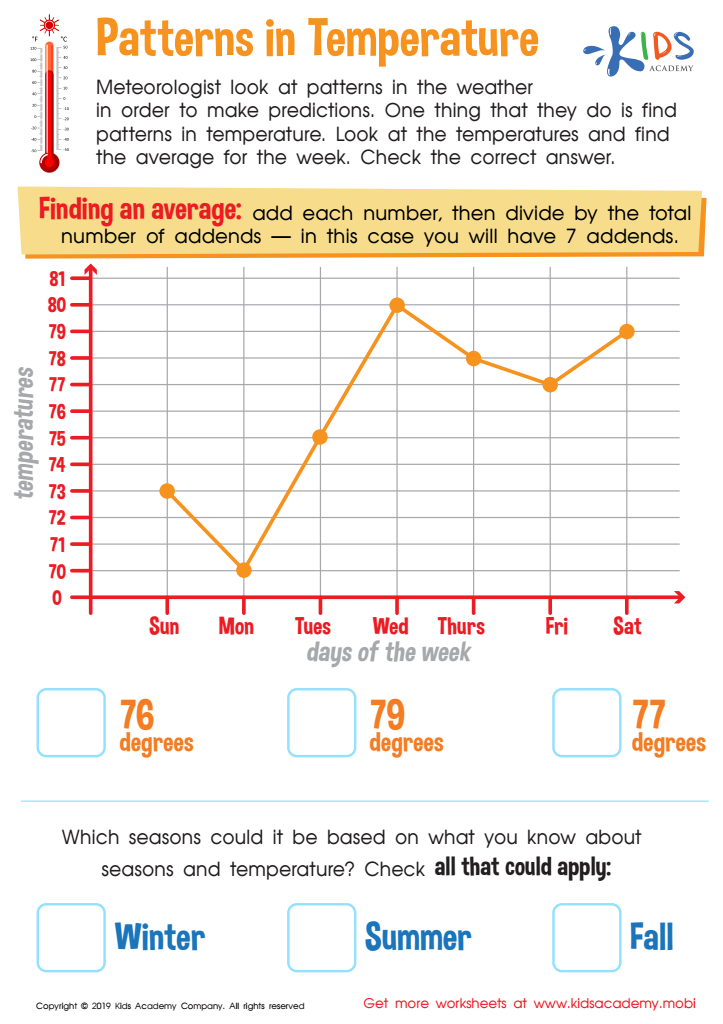
Patterns in Temperature Worksheet
Kids need to learn how to read and interpret data from graphs and charts. This free worksheet on temperature patterns helps them to do just that. They'll practice finding averages and answer questions in multiple-choice format. Plus, it provides a great learning experience!
Patterns in Temperature Worksheet
Worksheet
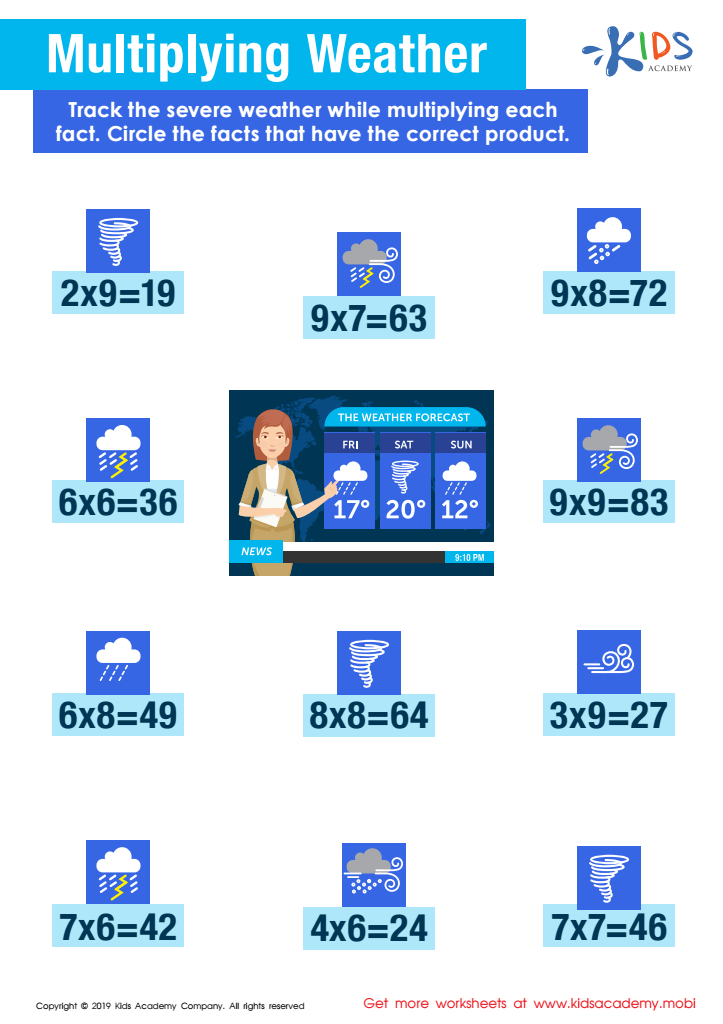
Multiplying Weather Worksheet
Most kids love playing outdoors, but weather can affect what we can do. Rain and snow can keep us from getting outside and even cancel school! Weather forecasters help us prepare for the day. In this worksheet, multiply facts to track severe weather and circle the ones with the right answer.
Multiplying Weather Worksheet
Worksheet
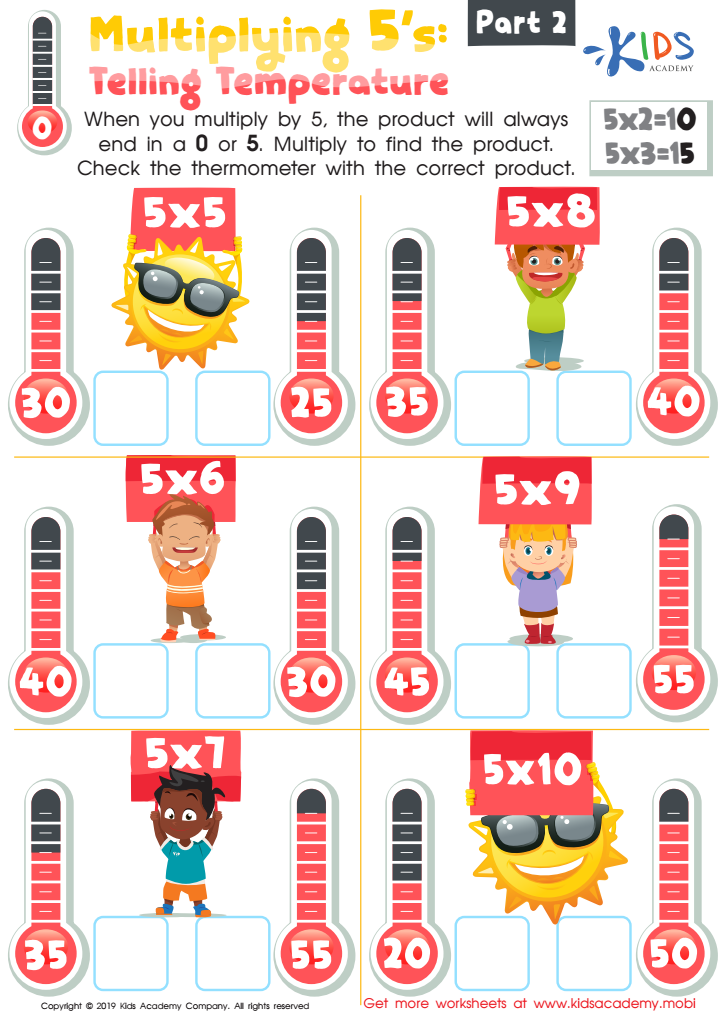
Multiplying 5’s: Telling Temperature Part 2 Worksheet
To help your child with multiplication, teach them some simple tricks. For example, when multiplying 10's the product always ends in a 0, and when multiplying by 5, the product will end in 0 or 5. Look at the problems in this worksheet and help your child find the product. Then, check the thermometer with the correct answer.
Multiplying 5’s: Telling Temperature Part 2 Worksheet
Worksheet
Join Kids Academy for Free
Who is primarily going to use this learning content?








Understanding patterns in science is essential for children aged 8-9 as it forms the foundation for critical thinking and problem-solving skills. Recognizing patterns helps young learners make connections between concepts, identify relationships, and predict outcomes, which are invaluable tools for scientific inquiry. For example, when students observe that certain plants grow in specific environments, they begin to grasp the interconnectedness of ecosystems and the variables that influence growth, fostering an interest in biology and environmental science.
Moreover, pattern recognition is not limited to science; it transfers to mathematics and daily life, enhancing overall cognitive abilities. Encouraging children to explore and describe patterns strengthens their analytical skills, preparing them for more complex concepts in future academic years. Teachers and parents play a crucial role in facilitating engaging activities that highlight patterns, such as measuring temperature changes, observing seasonal cycles, or identifying shapes in nature.
Furthermore, fostering an appreciation for patterns can ignite a passion for science and analytical thinking. This engagement can set the stage for lifelong learning, making it essential for both educators and parents to prioritize understanding patterns in science at this formative stage of development. Such foundational skills enable children to navigate both current and future challenges in a rapidly evolving world.







