Syllable identification Writing Worksheets for Ages 8-9
4 filtered results
Difficulty Level
Grade
Age
-
From - To
Subject
Activity
Standards
Boost your child's reading and writing skills with our Syllable Identification Writing Worksheets, designed for ages 8-9. These engaging, educational worksheets help young learners master the breakdown of words into syllables, improving pronunciation, spelling, and comprehension. Perfect for second and third graders, the activities combine fun with education, making learning an enjoyable experience. Created by experts, each worksheet provides ample practice, ensuring children grasp critical phonemic and phonological awareness. Ideal for classroom use or homeschooling, our worksheets support language development, preparing children for more advanced reading and writing tasks. Unlock the joy of learning with Kids Academy!
Favorites
With answer key
Interactive
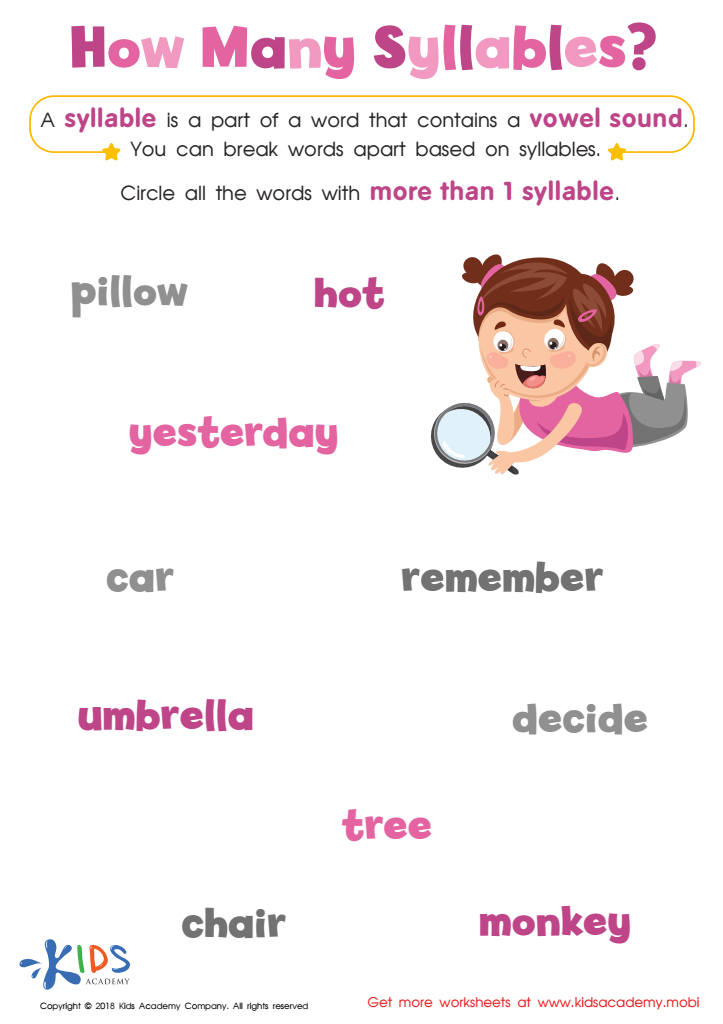
Reading: How Many Syllables Worksheet
This worksheet helps students practice counting syllables. They read each word, count the syllables, and circle single-syllable words. Mastering this skill helps with fluency and comprehension, so it's worth the effort! Use this printout to clear up any confusion.
 Assign to My Students
Reading: How Many Syllables Worksheet
Worksheet
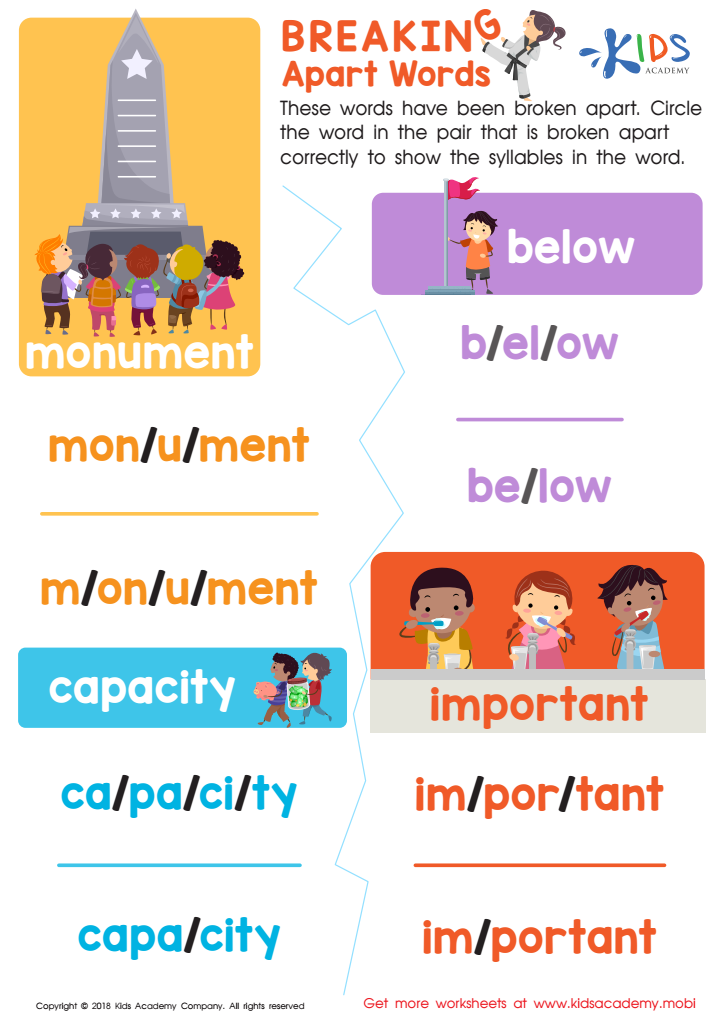
Breaking Apart Words Worksheet
Break words into syllables to make them easier to say correctly. Say each word carefully aloud and get kids to circle the correctly broken apart word in the pair to show the syllables. This worksheet has four words to practice with.
Breaking Apart Words Worksheet
Worksheet
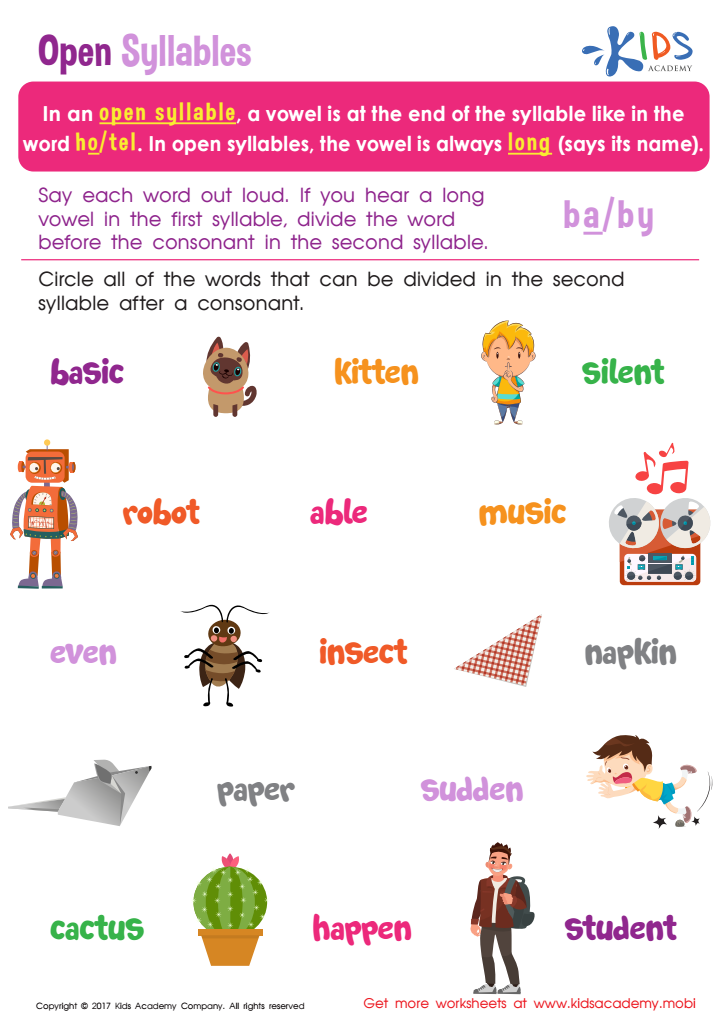
Open Syllable Printable Worksheet
Kids will have fun recognizing open syllables with this colorful worksheet. All they have to do is look for long vowel sounds and read each word aloud. With cute illustrations, they can easily discover the right answers!
Open Syllable Printable Worksheet
Worksheet
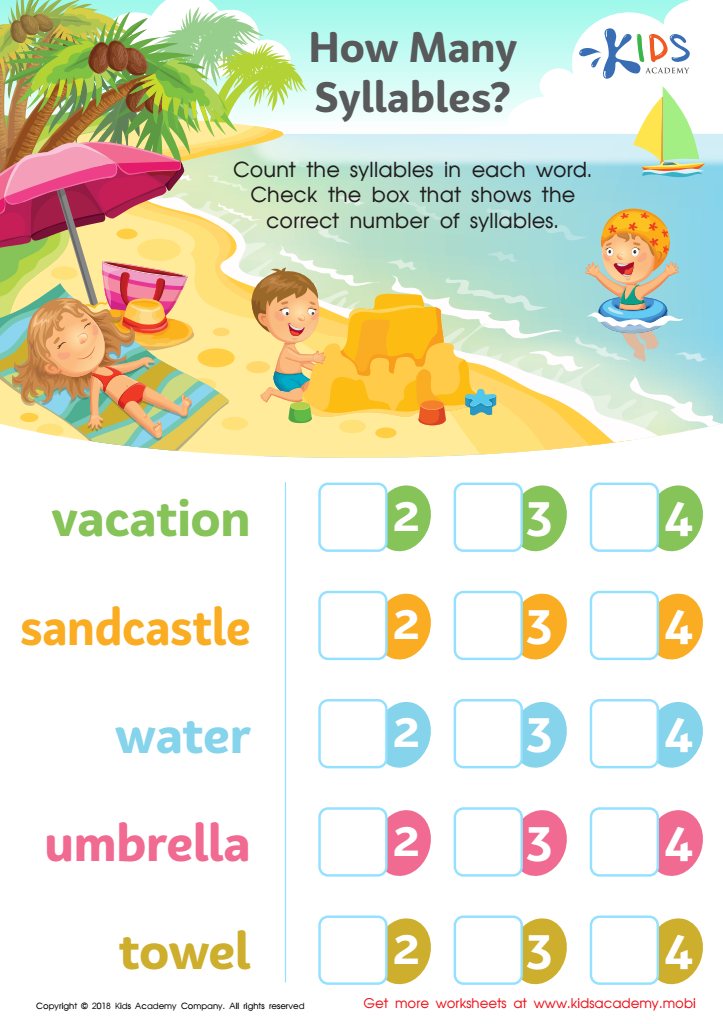
How Many Syllables Worksheet
Draw up memories of sunny beach days with your child. Ask them to tell you their favourite activities, objects seen. Read the words in the picture aloud and help them count the syllables. Then check the box with the right number of syllables.
How Many Syllables Worksheet
Worksheet
Join Kids Academy for Free
Who is primarily going to use this learning content?







Syllable identification is a cornerstone of language development for children aged 8-9 because it enhances reading, writing, and vocabulary skills. At this age, students transition from learning to read to reading to learn. Understanding syllables aids in decoding longer, unfamiliar words by breaking them into manageable parts. This skill is crucial for reading fluency, enabling children to comprehend texts more efficiently and fostering a love for reading.
Moreover, strong syllable awareness supports spelling accuracy. Children who can identify syllables are better equipped to segment words, which is helpful for both traditional spelling tasks and more creative writing exercises. This segmentation also promotes phonemic awareness, key for mastering phonics and recognizing patterns in the English language.
In math-related word problems and science texts that introduce technical vocabulary, the ability to parse words into syllables can aid comprehension and retention. It also nurtures effective communication skills. When children know how syllables work, they can articulate words clearly and improve their pronunciation and listening skills.
Ultimately, syllable identification lays a foundation for linguistic proficiency, enhancing academic performance across subjects. Parents and teachers who emphasize this skill help equip children with essential tools for lifelong learning and communication.