Fine Motor Skills Phonics Worksheets for 8-Year-Olds
3 filtered results
-
From - To
Enhance your 8-year-old's fine motor skills while making phonics fun with our engaging worksheets! Designed to develop hand-eye coordination and dexterity, these activities combine tracing, cutting, and coloring with phonetic learning. Each worksheet is tailored to reinforce letter sounds and enhance phonemic awareness through interactive tasks. Kids will love mastering phonics as they engage in hands-on learning experiences that cultivate their writing abilities. Our resources promote a comprehensive approach to literacy and fine motor development, ensuring your child enjoys every moment of learning. Start exploring our delightful collection of phonics worksheets today and support your child's academic journey!
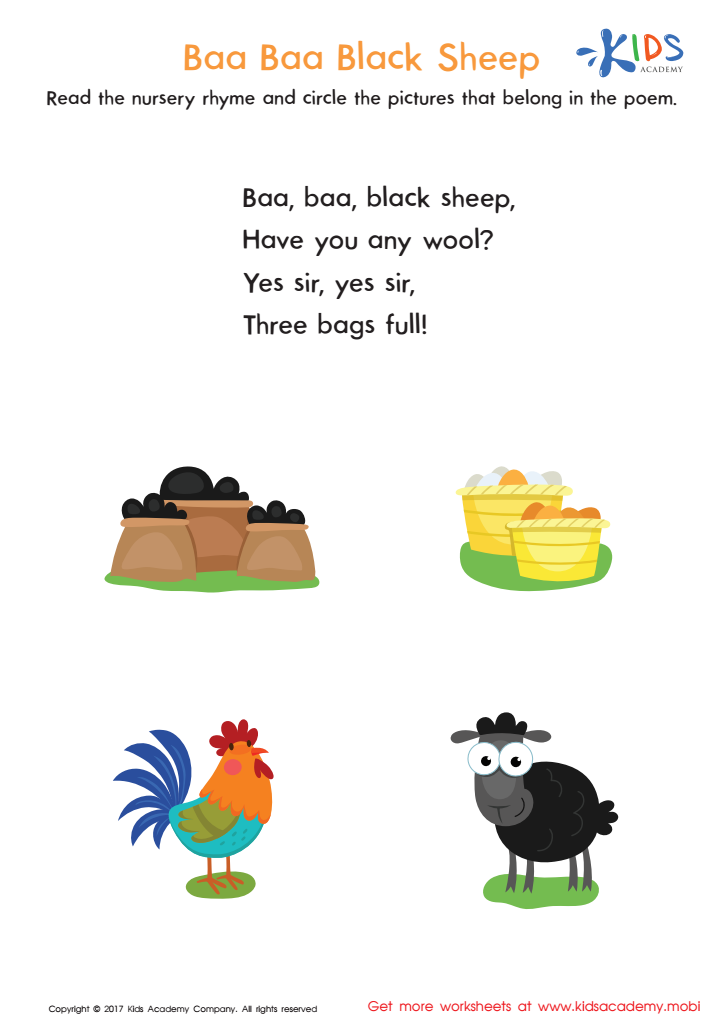
Baa Baa Black Sheep Printable
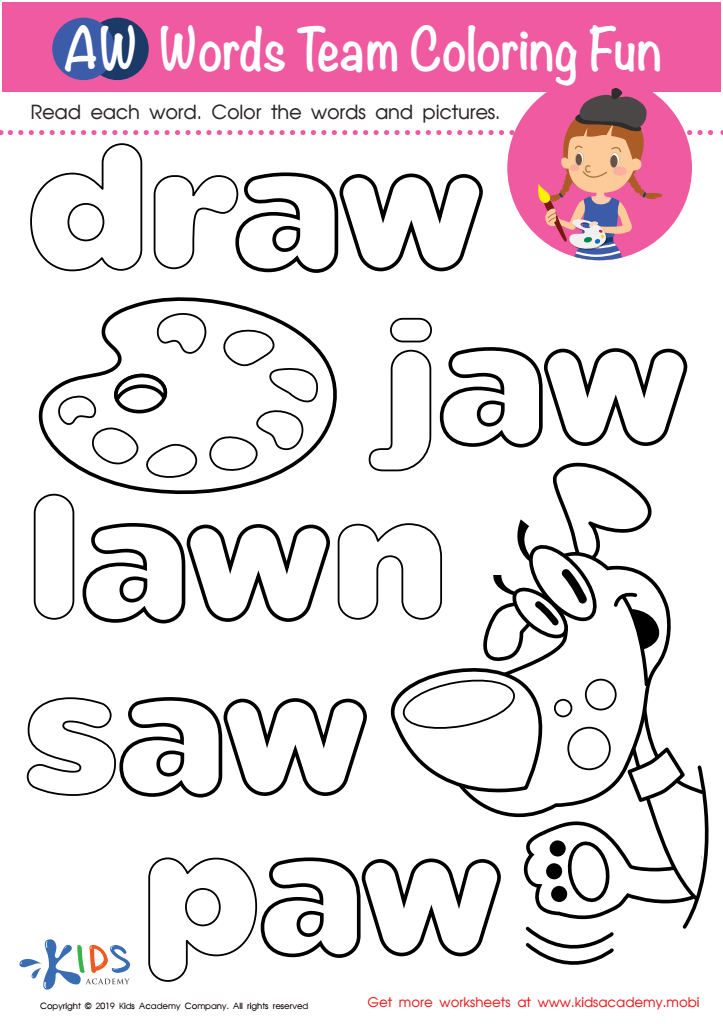
AW Words Team Coloring Fun Worksheet
 Assign to My Students
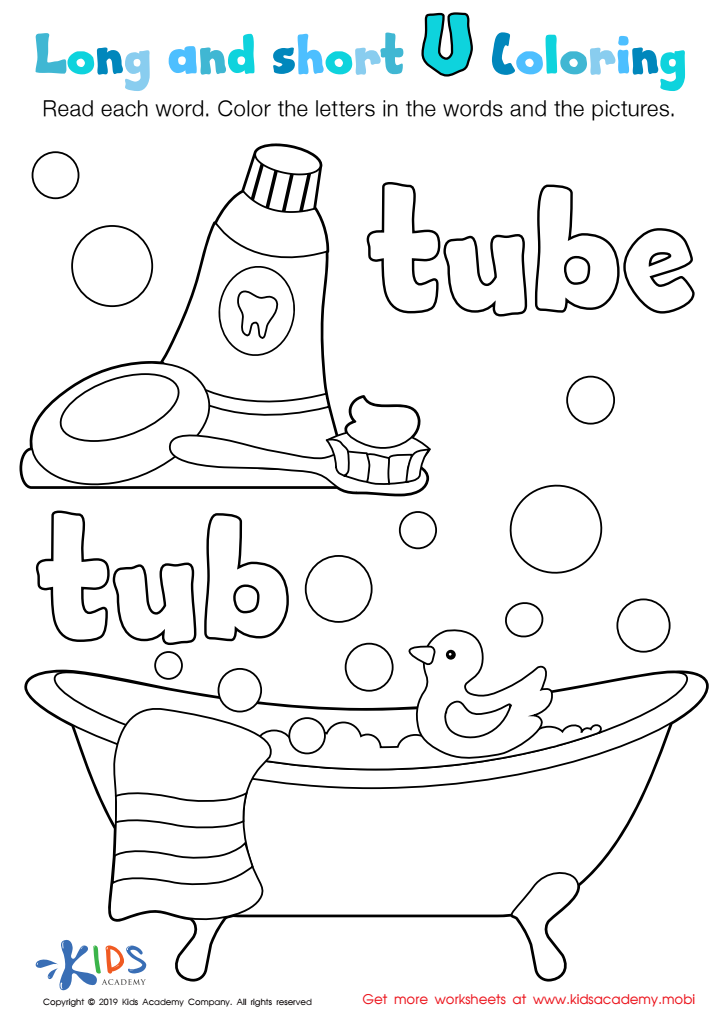
Long and Short U Worksheet
Assign to My Students








Fine motor skills are essential for children's development, particularly for 8-year-olds who are refining their writing and coordination abilities. Phonics, the relationship between sounds and letters, is crucial for reading and literacy development. When parents and teachers focus on fine motor skills in conjunction with phonics, they provide a holistic approach to learning.
Strong fine motor skills enable children to hold pencils properly, form letters neatly, and eventually write coherently, which is vital for their overall academic performance. If children struggle with fine motor tasks, they may avoid writing or feel frustrated, which can hinder their engagement in reading activities. By enhancing fine motor control alongside phonics instruction, students are better equipped to decode words and develop reading fluency.
Moreover, learning through hands-on activities, such as cutting, drawing, or manipulating small objects, can make phonics lessons more enjoyable and effective. Engaging in these activities fosters a positive learning environment, encouraging children to explore language in a tactile way.
Additionally, a strong foundation in fine motor skills and phonics prepares children for future educational challenges, instilling confidence in their abilities and setting the stage for lifelong learning. In essence, fostering these skills is crucial for academic success and emotional well-being.







