Discover our engaging Contextual Understanding Worksheets designed specifically for 8-year-olds! These interactive resources aid in developing critical reading comprehension skills by encouraging kids to analyze context clues and draw inferences. Each worksheet features age-appropriate texts and questions, making learning fun and effective. Perfect for enhancing vocabulary and boosting overall cognitive skills, our worksheets offer a lively blend of learning and exploration. Parents and educators can seamlessly integrate these worksheets into curriculum to support language development. Dive into captivating activities that will foster a love for reading while building essential comprehension abilities. Empower your child’s learning journey today!

Check out this FREE "Contextual understanding" Trial Lesson for age 8!

Determine the Meaning of Words with Common Prefixes

Favorites
With answer key
Interactive
  • 8
  • Contextual understanding
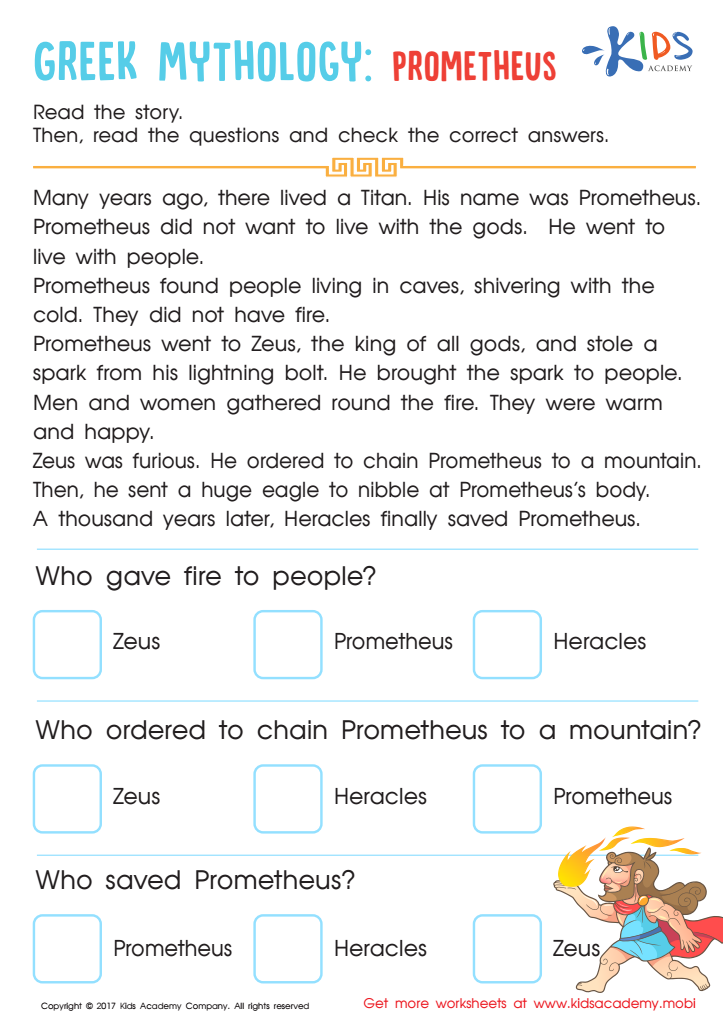
Prometheus story worksheet

Prometheus Story Worksheet

Help kids improve reading comprehension with this Prometheus story worksheet! Learn about this classic mythological tale and break down the plot into understandable parts. By doing so, children will understand the story each step of the way.
Prometheus Story Worksheet
Worksheet
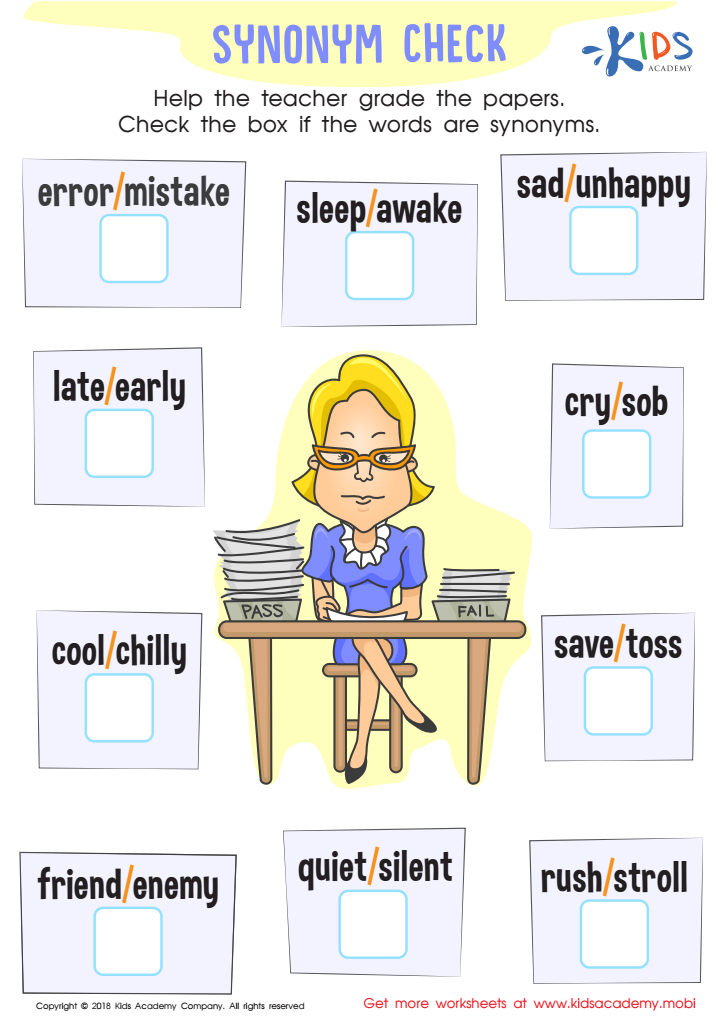
Synonym Check Worksheet

Synonym Check Worksheet

Ask your kids what a synonym is, and listen to their definitions. If needed, explain it's a word that has a similar meaning to another. Give examples, then ask them to do the same. For this worksheet, get them to help grade the papers. Have them check the boxes if the words are synonyms.
Synonym Check Worksheet
Worksheet
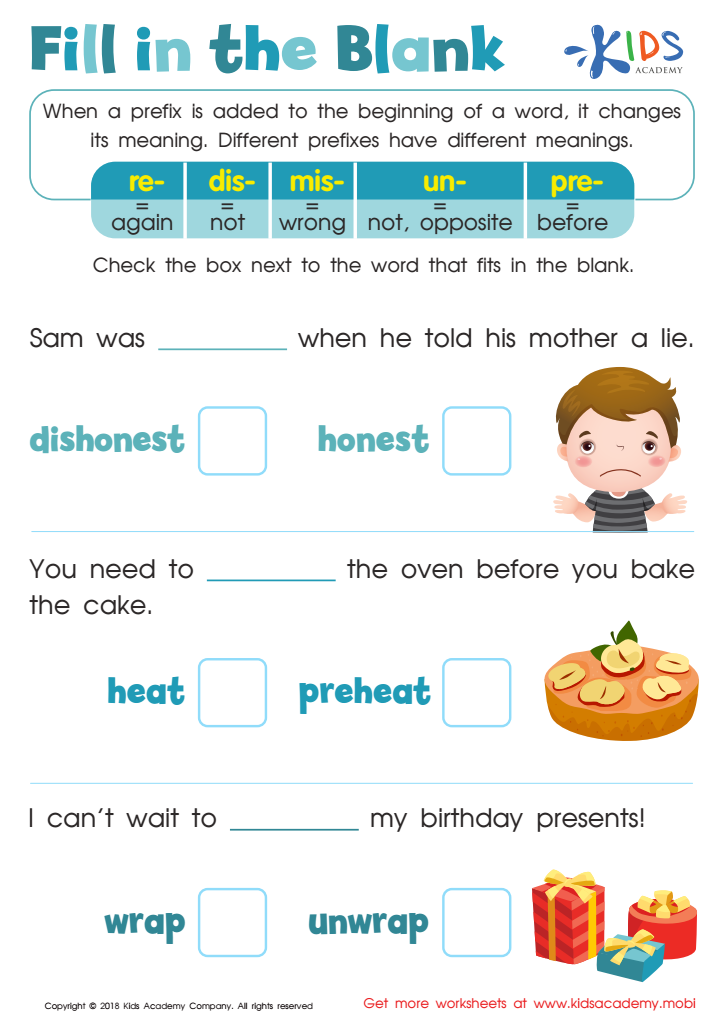
Reading: Fill in the Blank Worksheet

Reading: Fill in the Blank Worksheet

Students can practice understanding the meaning of common prefixes with this worksheet. They read sentences and pick the correct word with the appropriate prefix to complete it. Downloadable and a great addition to reading and vocabulary resources, this helps improve comprehension with mastery of the skill!
Reading: Fill in the Blank Worksheet
Worksheet
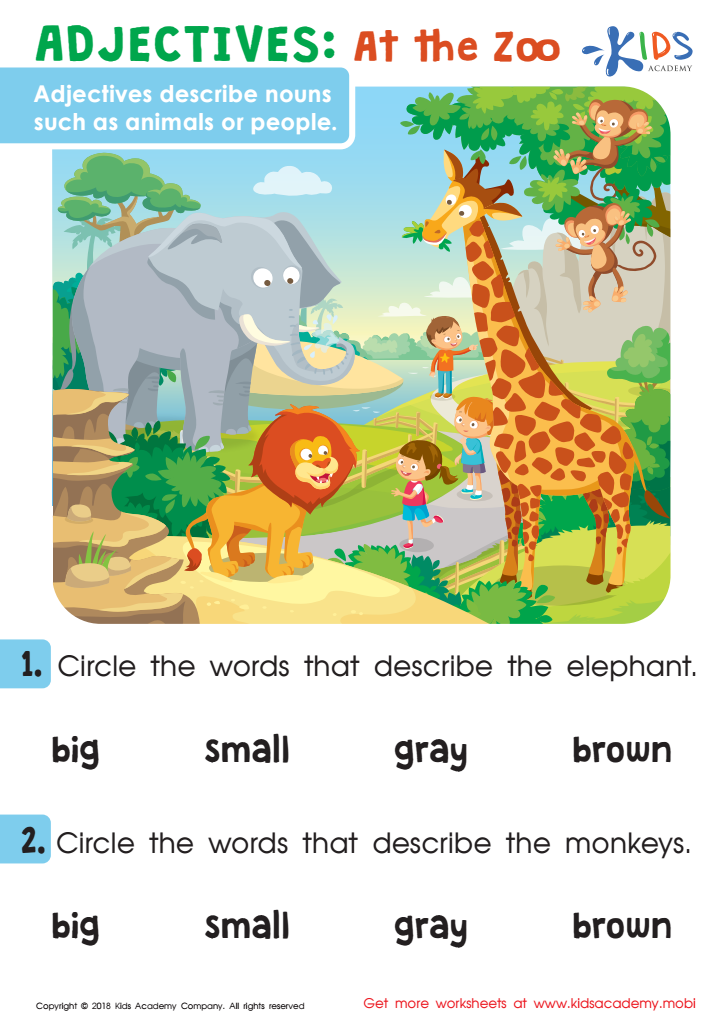
Adjectives: At The Zoo Worksheet

Adjectives: At The Zoo Worksheet

Take your kids to the zoo and ask them about their favorite activities and animals. This worksheet is a great way for kids to learn about adjectives. Explain that adjectives describe nouns like people or animals (e.g. big, tall, dark). Look at the printout with your kids and help them circle words that describe the animals in the picture.
Adjectives: At The Zoo Worksheet
Worksheet
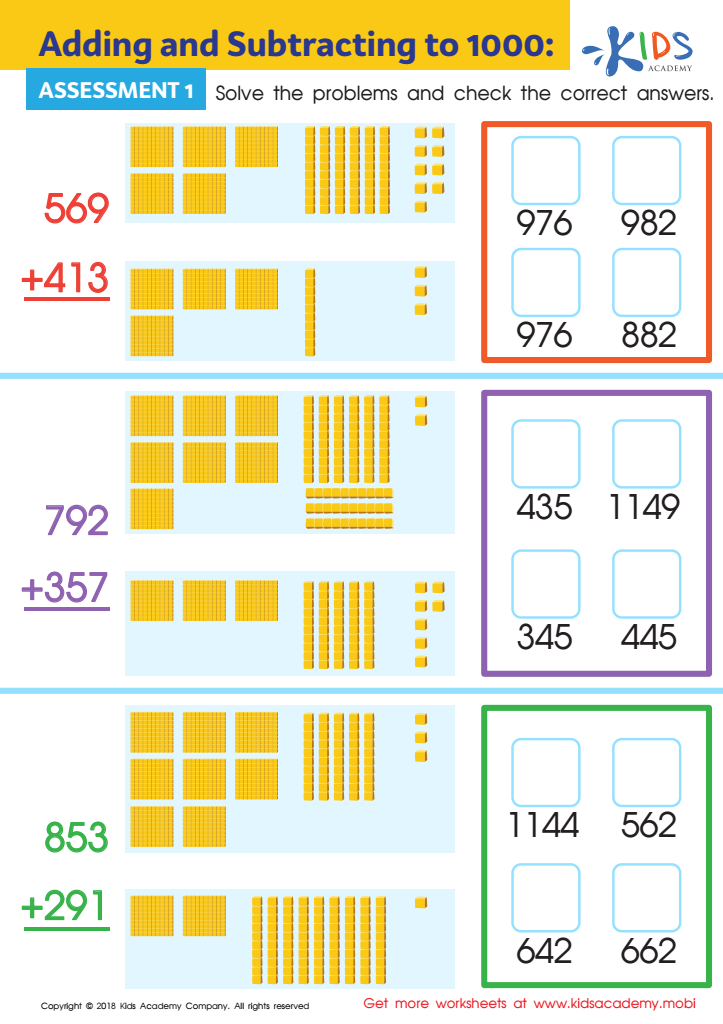
Adding and Subtracting to 1 Worksheet: Assessment 1

Adding and Subtracting to 1 Worksheet: Assessment 1

This assessment worksheet tests your child's addition skills. It has 3 3-digit problems with base ten blocks for visual aid. Encourage learners to use these visuals for better understanding. When they have solved the problems, they can check the box with the right answer. It's a quick and easy way to gauge numeracy development.
Adding and Subtracting to 1 Worksheet: Assessment 1
Worksheet
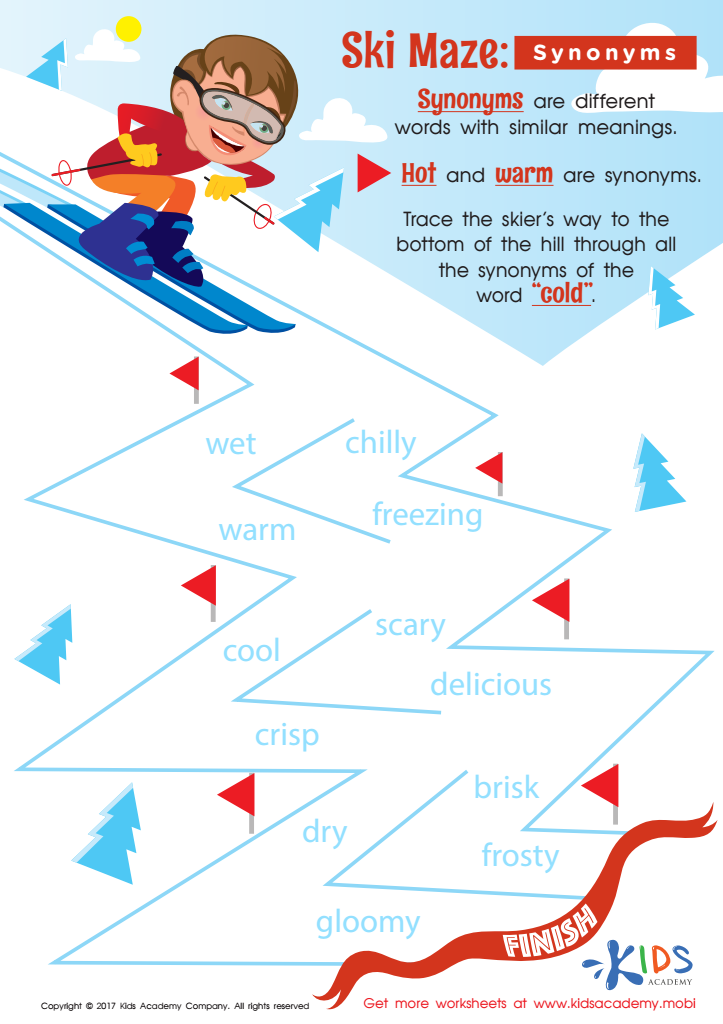
Free printable synonym worksheets for 2nd grade

Free Printable Synonym Worksheet

Our free printable synonym worksheet for 2nd grade will help kids learn similar words to expand their vocabulary. Kids will have fun challenging themselves to find all the words that are synonyms for “cold”. Enhance their language and writing with this joyful worksheet!
Free Printable Synonym Worksheet
Worksheet
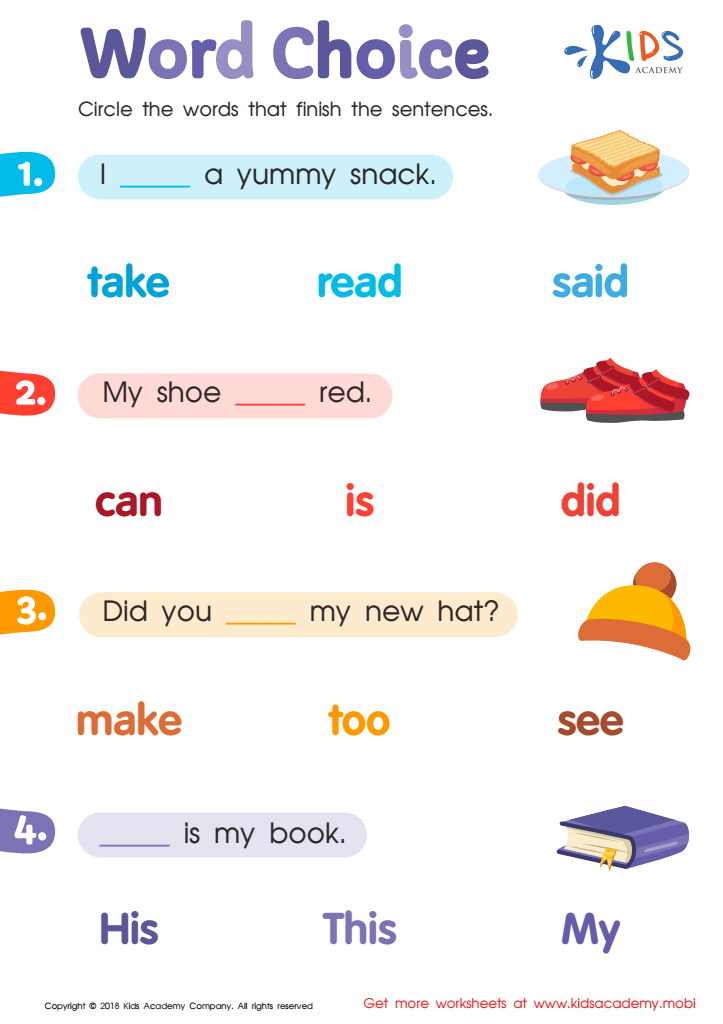
Word Choice Worksheet


Word Choice Worksheet

This worksheet can help your children become better readers. By now, you should have an idea of their reading level. Read the incomplete sentences aloud and point to the missing piece. Have your students pick the correct word they think best fits the sentence out of the options given.
Word Choice Worksheet
Worksheet


Contextual understanding is crucial for 8-year-olds as it lays the foundation for successful learning and social interaction. At this age, children are developing the ability to relate new information to their experiences, which enhances comprehension in reading, mathematics, and other subjects. When parents or teachers emphasize contextual understanding, they help children grasp fundamental concepts more effectively. For instance, understanding the context of a story or mathematical problem enables children to draw connections, making the content more meaningful and memorable.

Furthermore, contextual understanding cultivates critical thinking skills. Children learn to assess situations, consider different perspectives, and draw conclusions based on context, which is essential for problem-solving. This skill also promotes empathy, as children become more aware of diverse cultures, viewpoints, and life experiences, fostering social connections and respect for others.

In addition, enhancing contextual understanding in practice makes learning more engaging and relevant. Parents and teachers can encourage this by linking lessons to real-world scenarios or children's personal experiences. Ultimately, when parents and teachers prioritize this skill, they nurture well-rounded individuals equipped with the cognitive and social tools necessary for academic success and positive interpersonal relationships.