
Improving critical thinking Worksheets for 8-Year-Olds
5 filtered results
Difficulty Level
Grade
Age
-
From - To
Subject
Activity
Standards
Enhance your 8-year-old's critical thinking skills with our carefully designed worksheets! Our printable resources encourage young learners to explore logical reasoning, problem-solving, and analytical skills through engaging activities. Each worksheet is tailored to foster curiosity and creativity, allowing children to practice identifying patterns, making connections, and drawing conclusions. As they work through these exercises, students will become more adept at thinking independently and tackling complex challenges. Ideal for classroom or home use, our critical thinking worksheets provide a fun and interactive way to sharpen essential cognitive skills. Empower your child's learning journey today with our stimulating and educational resources!
Favorites
With answer key
Interactive
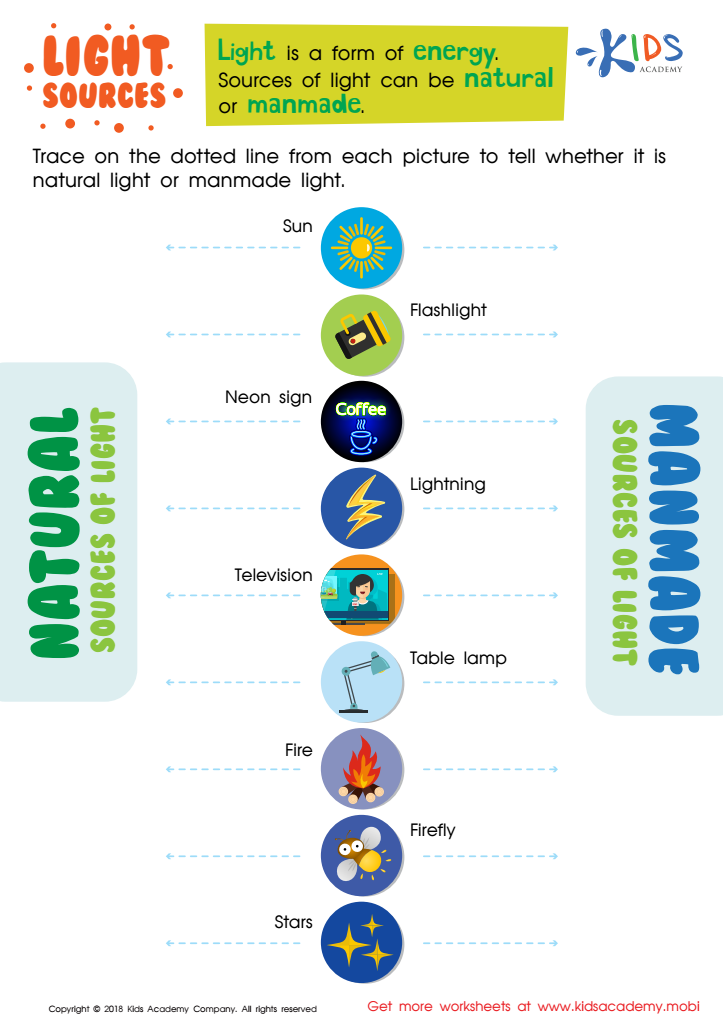
Natural and Manmade Light Sources Worksheet
Have your child learn about natural and manmade light sources with this fun worksheet! They'll distinguish the sun, fireflies and more as either natural or artificial sources. Brighten up their knowledge with this engaging activity!
 Assign to My Students
Natural and Manmade Light Sources Worksheet
Worksheet
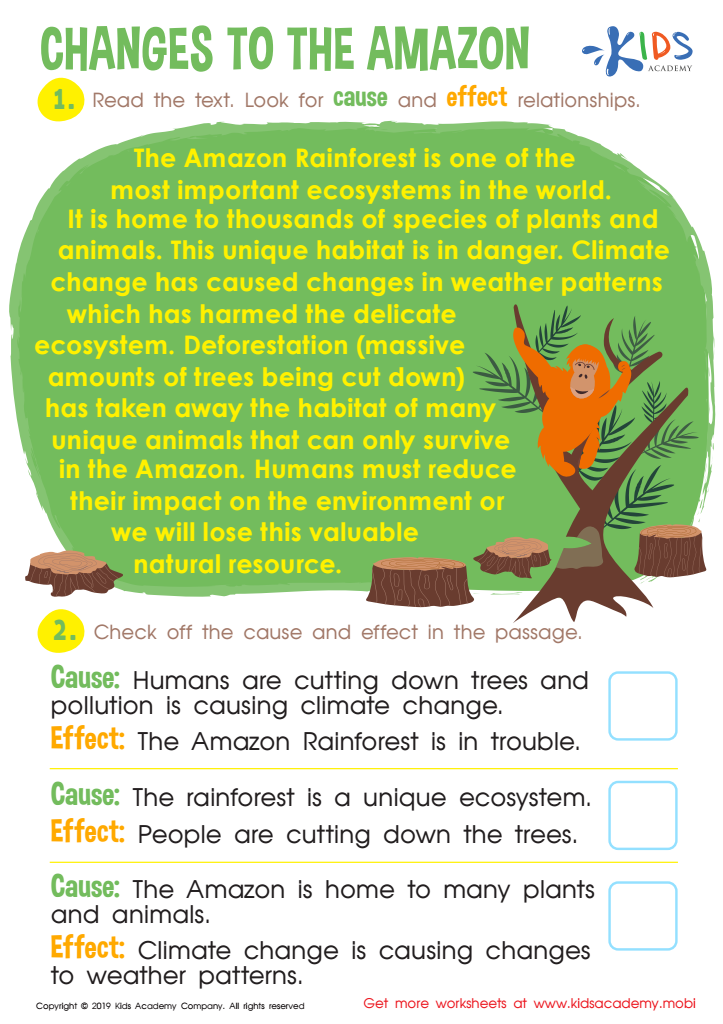
Changes to the Amazon Worksheet
If your kids are interested in protecting the planet, they should know about the Amazon. Use this worksheet to teach them about it. Read it with them and help them find the cause and effect relationships, then check them off. It explains the situation in the Amazon, why it's happening and the results.
Changes to the Amazon Worksheet
Worksheet
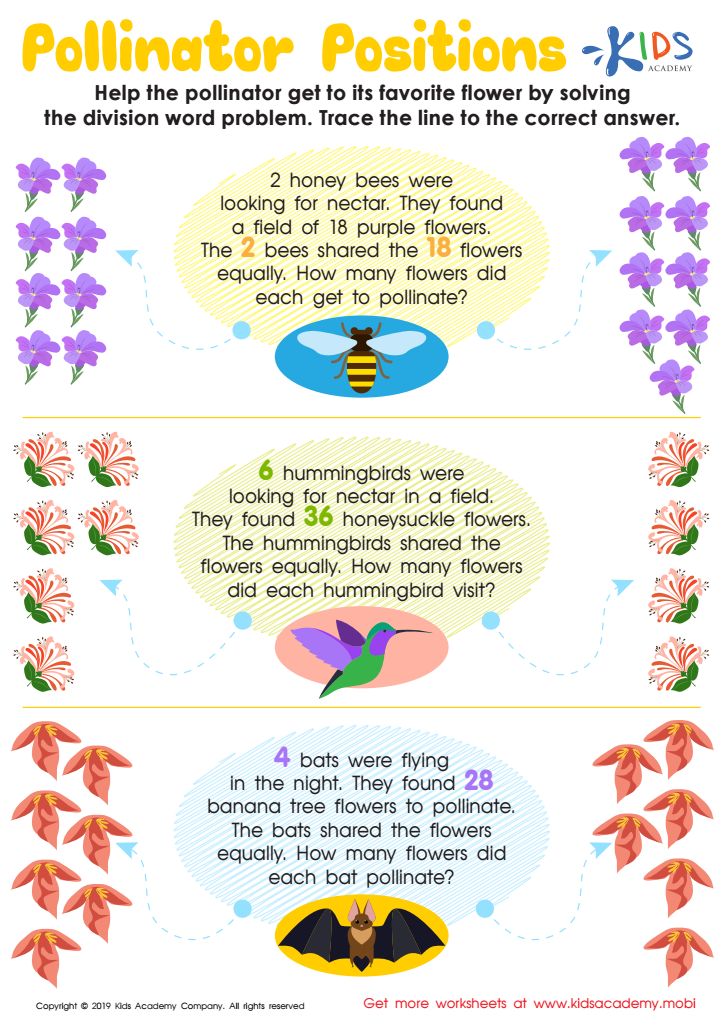
Pollinator Positions Worksheet
Kids will love learning about pollinators and how vital they are. Help their favorite friends get to the right flowers with this fun PDF. Children can solve the problems without even knowing they're doing division; just read the word problems and use the highlighted numbers. Finish by tracing the lines to the correct quotient!
Pollinator Positions Worksheet
Worksheet
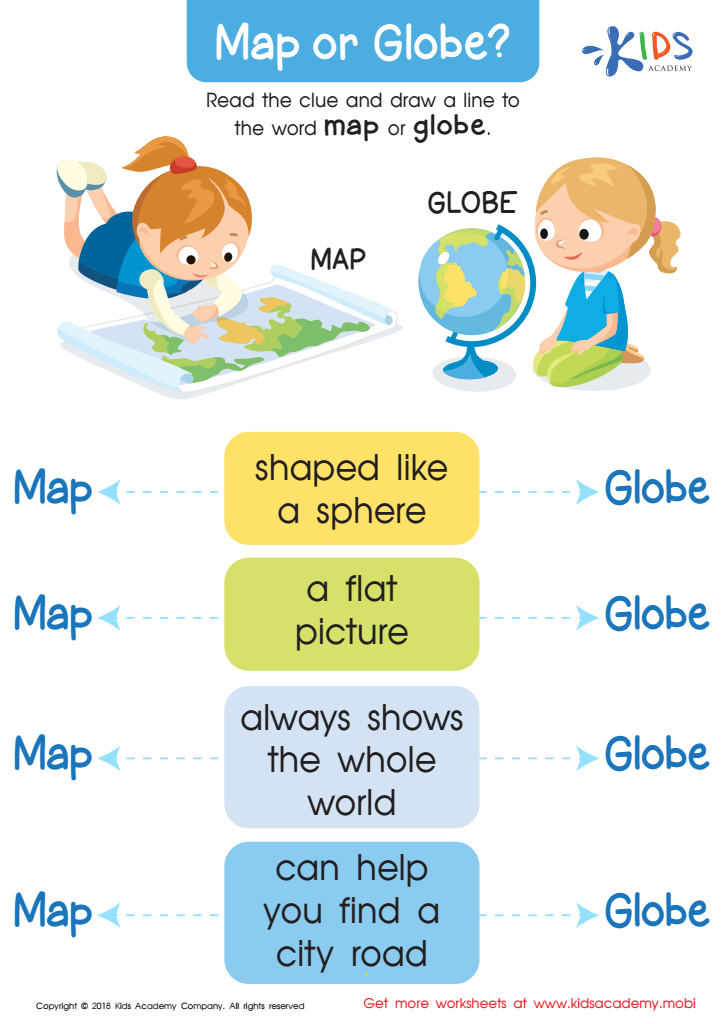
Map or Globe? Worksheet
Learning the difference between maps and globes can be difficult for young children. Get this free worksheet to help them! It offers word and picture clues for them to practice matching. They'll also get to use their fine motor skills as they trace the lines to find the answers.
Map or Globe? Worksheet
Worksheet
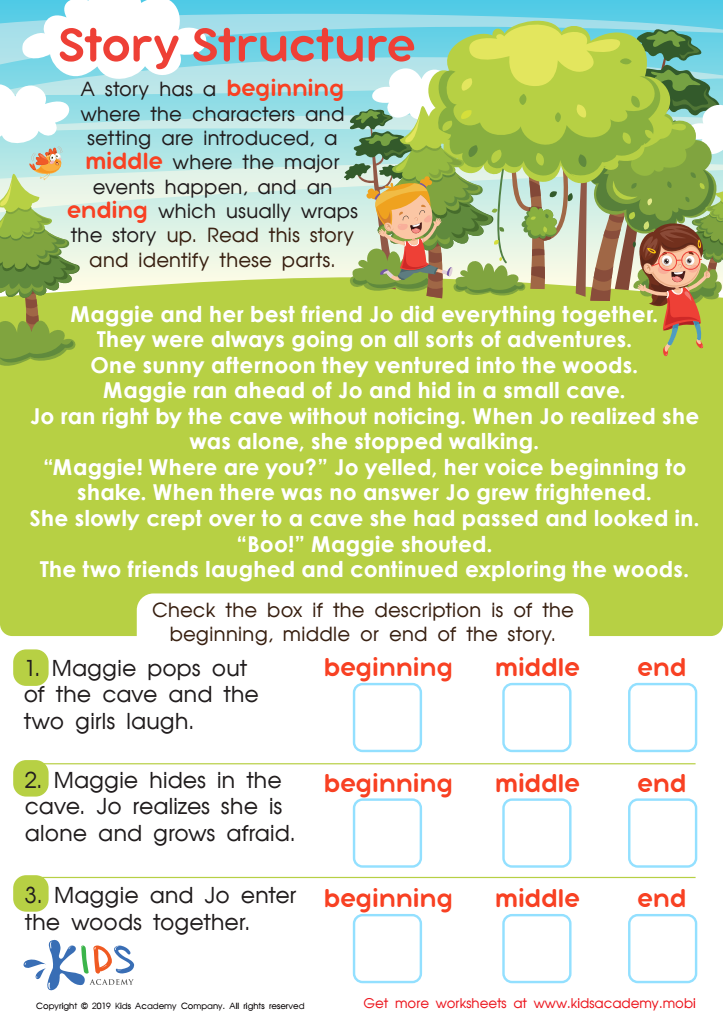
Story Structure Worksheet
Help your students read and identify the parts of the story in this worksheet: the beginning (characters and setting), middle (major events), and ending (events are resolved). Show them how to structure a story for clarity.
Story Structure Worksheet
Worksheet
Learning Skills
Join Kids Academy for Free
Who is primarily going to use this learning content?






Improving critical thinking in 8-year-olds is crucial for their overall development and future success. At this age, children are beginning to move beyond rote memorization, and fostering their ability to analyze, evaluate, and create is essential for their academic growth. By nurturing critical thinking skills, parents and teachers empower children to tackle complex problems, ask insightful questions, and become more independent learners.
This foundational skill equips children to navigate the vast information landscape of today's world. In an era dominated by technology and instant communication, teaching kids to discern credible information from misinformation is imperative. Developing critical thinking helps them make informed decisions, enhancing their abilities in subjects like math, science, and literacy, where analytical skills are often tested.
Furthermore, engaging in critical thinking activities encourages creativity and resilience. Children learn to embrace mistakes as learning opportunities rather than setbacks, fostering a growth mindset. This not only increases their self-confidence but also prepares them for collaborative environments where teamwork and diverse perspectives are valued.
Ultimately, fostering critical thinking in young learners not only enhances their academic performance but also equips them with essential life skills, making them better problem solvers, communicators, and future leaders.








