Recognizing shapes Worksheets for 8-Year-Olds
39 filtered results
-
From - To
Discover our engaging "Recognizing Shapes Worksheets for 8-Year-Olds" designed to boost your child's geometric skills. Our expertly crafted worksheets offer a variety of activities to help children effortlessly identify and differentiate between shapes, enhancing their spatial awareness and critical thinking. Suitable for both classroom and home use, these worksheets seamlessly blend fun and learning, ensuring that your child remains captivated while mastering essential shape recognition skills. With clear instructions and creative tasks, our worksheets are the perfect educational tool to support your child's mathematical journey, making learning both enjoyable and effective. Dive into a world of shapes today!
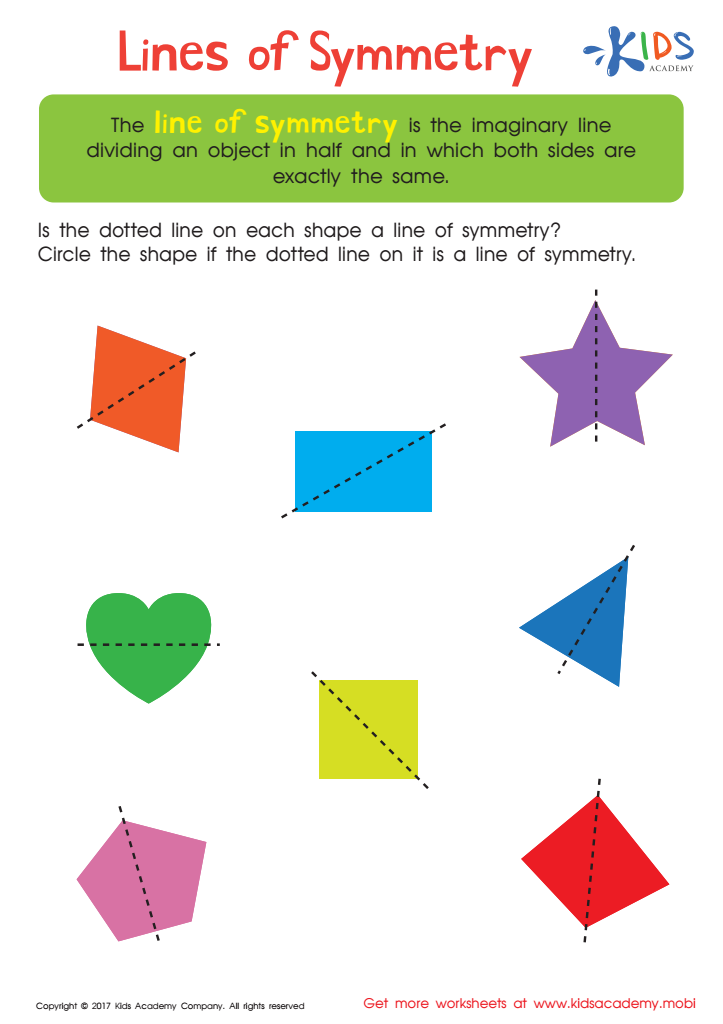
Lines of Symmetry Printable
 Assign to My Students
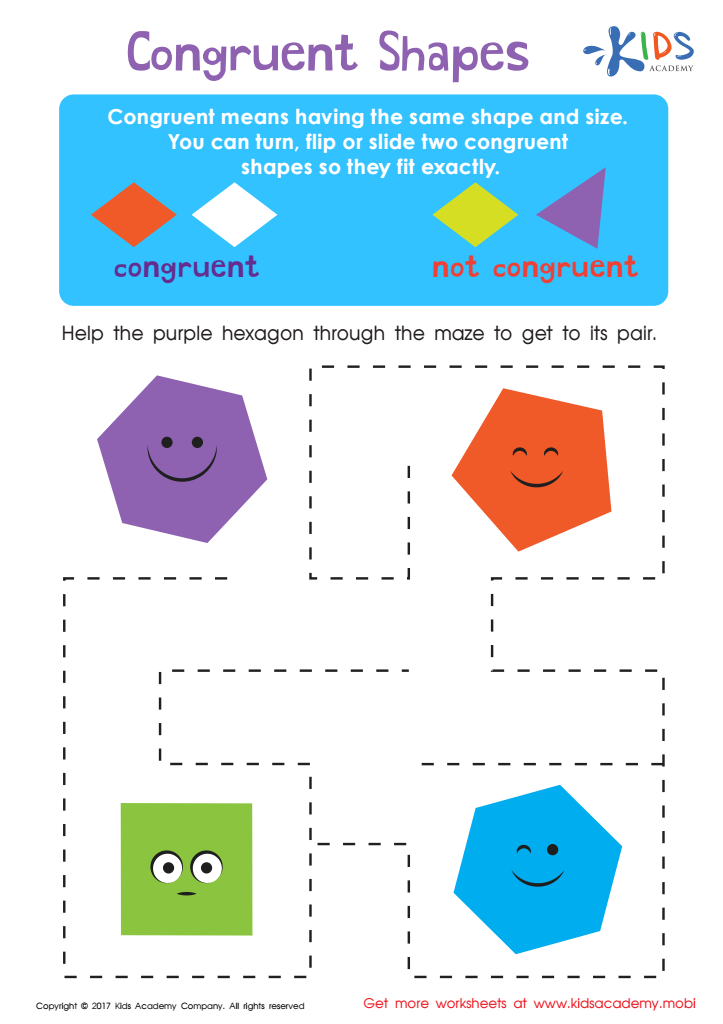
Congruent Shapes Worksheet
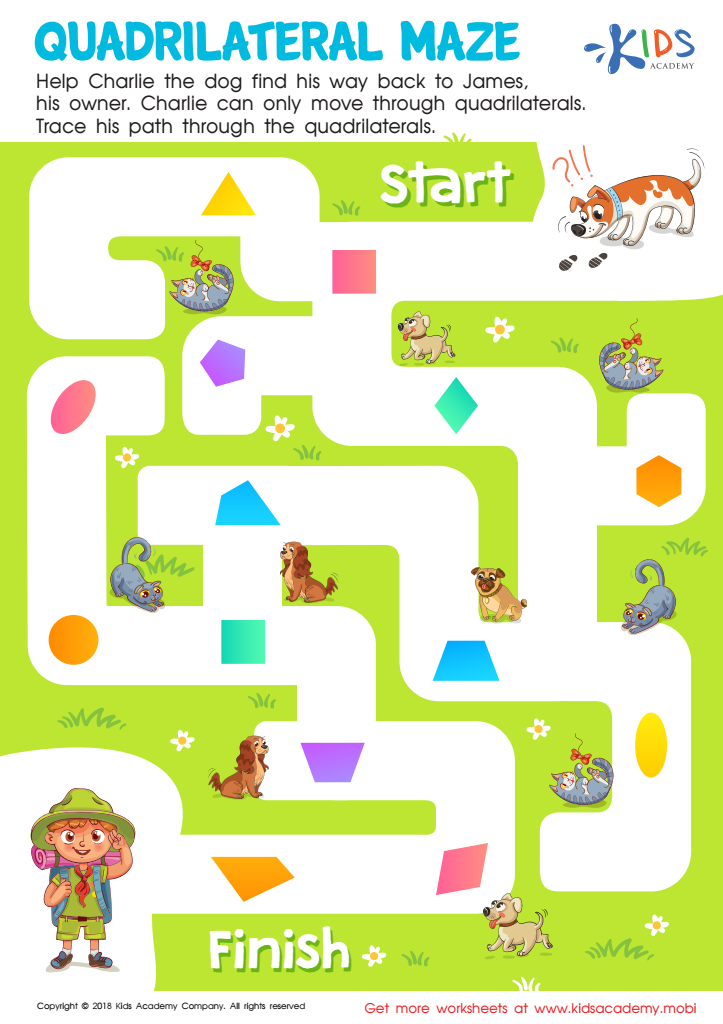
Quadrilateral Maze Worksheet
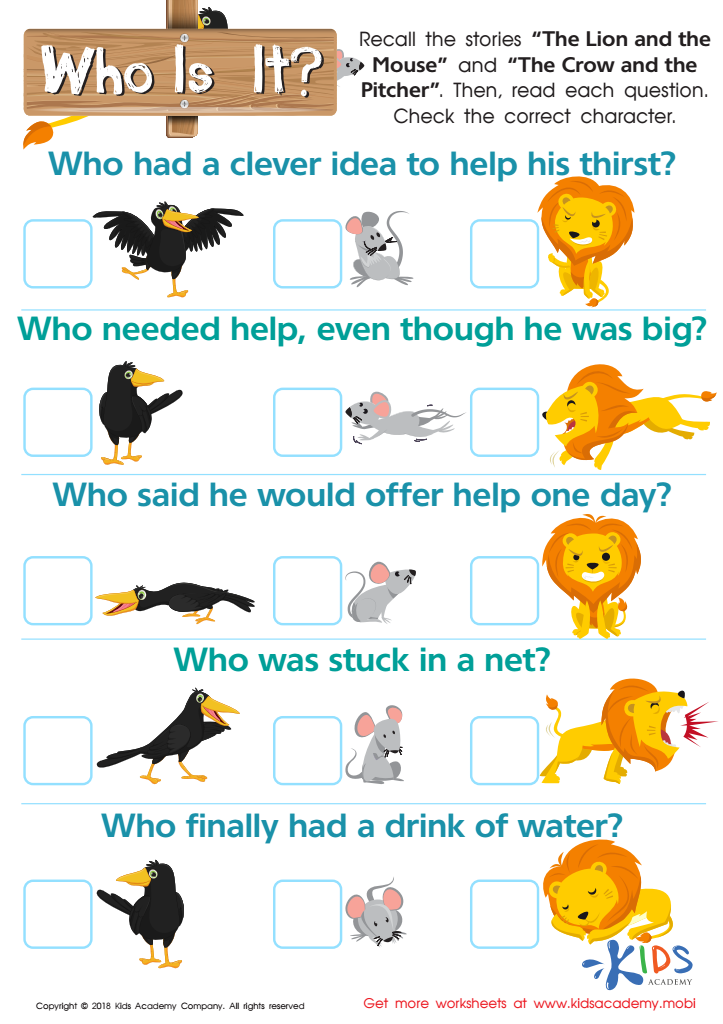
Who Is It? Worksheet
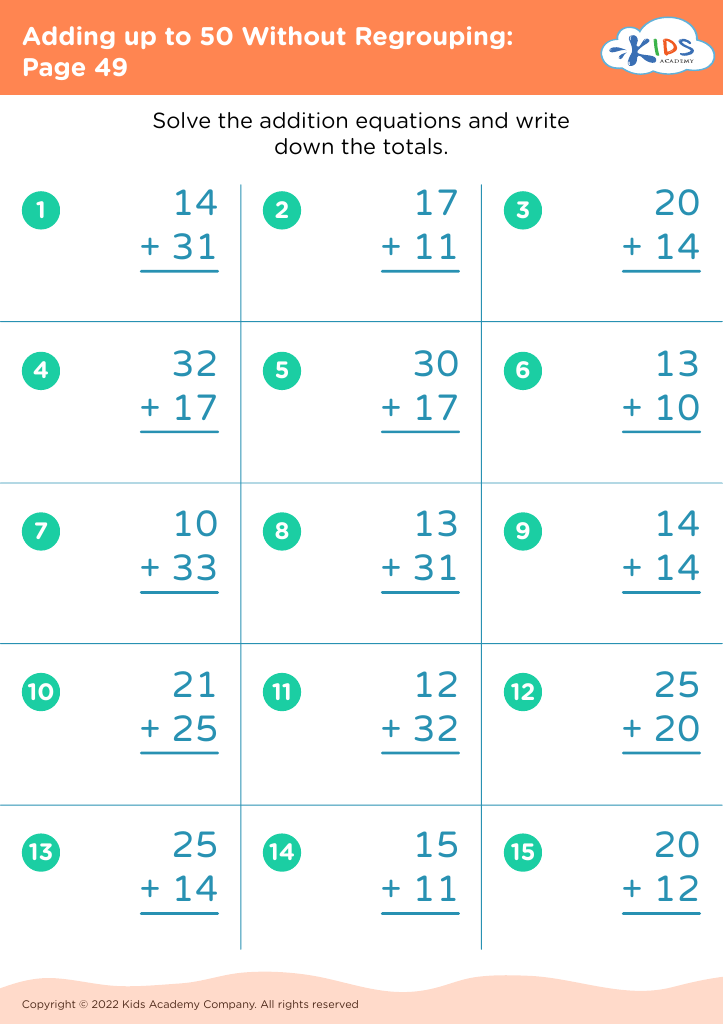
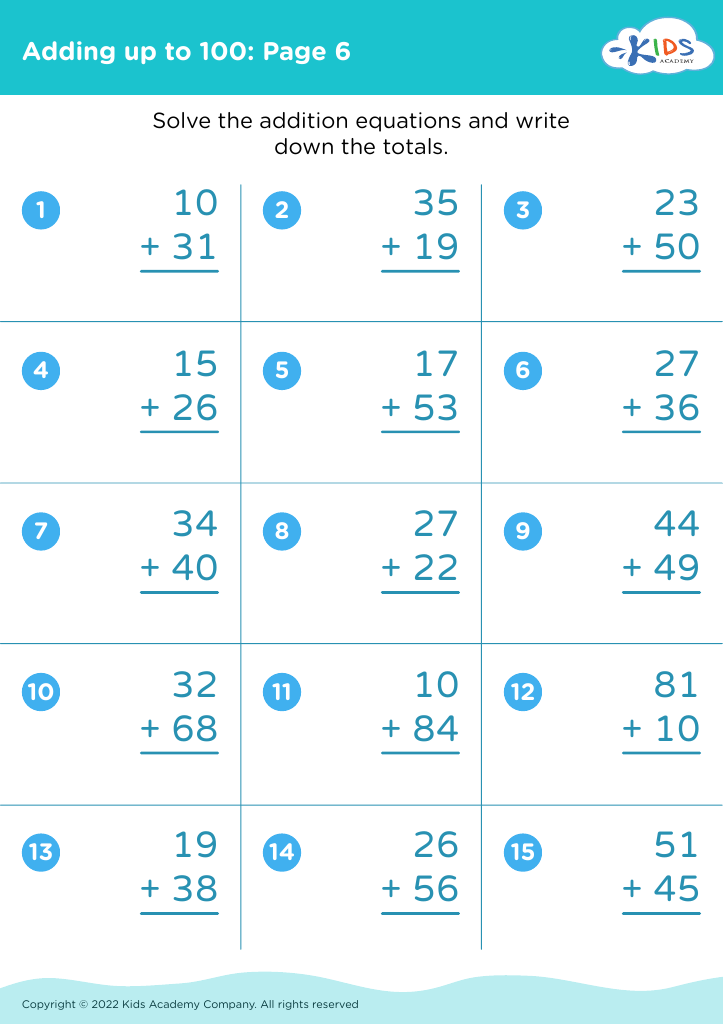
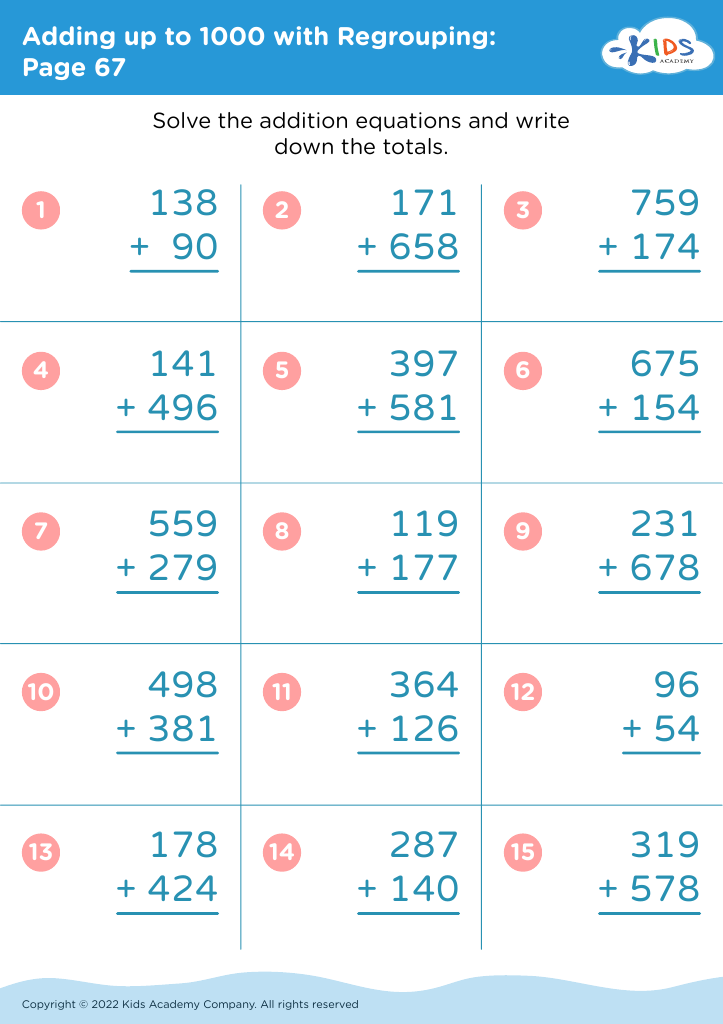





.jpg)

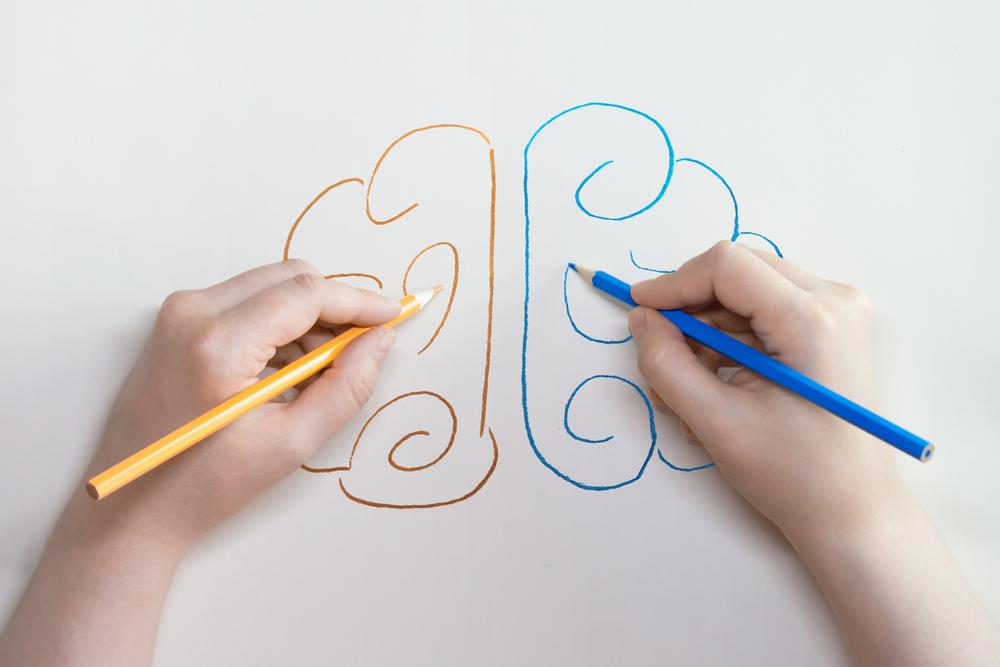
Recognizing shapes is a fundamental skill for 8-year-olds as it forms the building blocks for more complex mathematical and cognitive development. At this age, children are actively exploring and making sense of the world around them through patterns, symbols, and spatial awareness. Recognizing shapes helps them understand key concepts such as geometry, spatial reasoning, and visual discrimination, which are vital for solving more advanced problems later on.
For parents and teachers, emphasizing shape recognition enhances a child's ability to categorize and organize information. This skill contributes to reading and writing by helping them recognize patterns in letters and words, aiding in literacy development. Furthermore, grasping basic geometric shapes prepares children for understanding complex structures in science and art.
Additionally, shape recognition fosters critical thinking and problem-solving abilities. For instance, when children identify shapes in their environment, they learn to compare attributes like size, orientation, and relationships between forms. This not only bolsters their observational skills but also strengthens their ability to think abstractly and analytically.
Overall, recognizing shapes is not just about identifying circles, squares, or triangles. It's a critical part of a child's early education that supports various aspects of their intellectual and emotional growth. Such a foundational skill enables them to confidently and creatively engage with the world around them.








