Fine Motor Skills Adding up to 100 Worksheets for 8-Year-Olds
12 filtered results
-
From - To
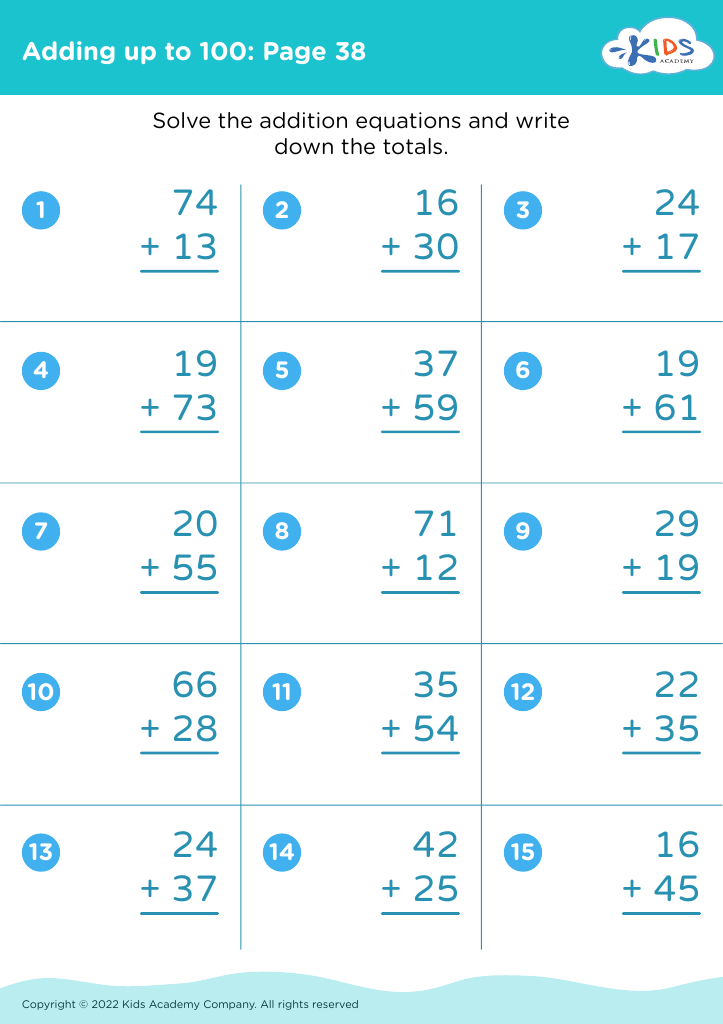
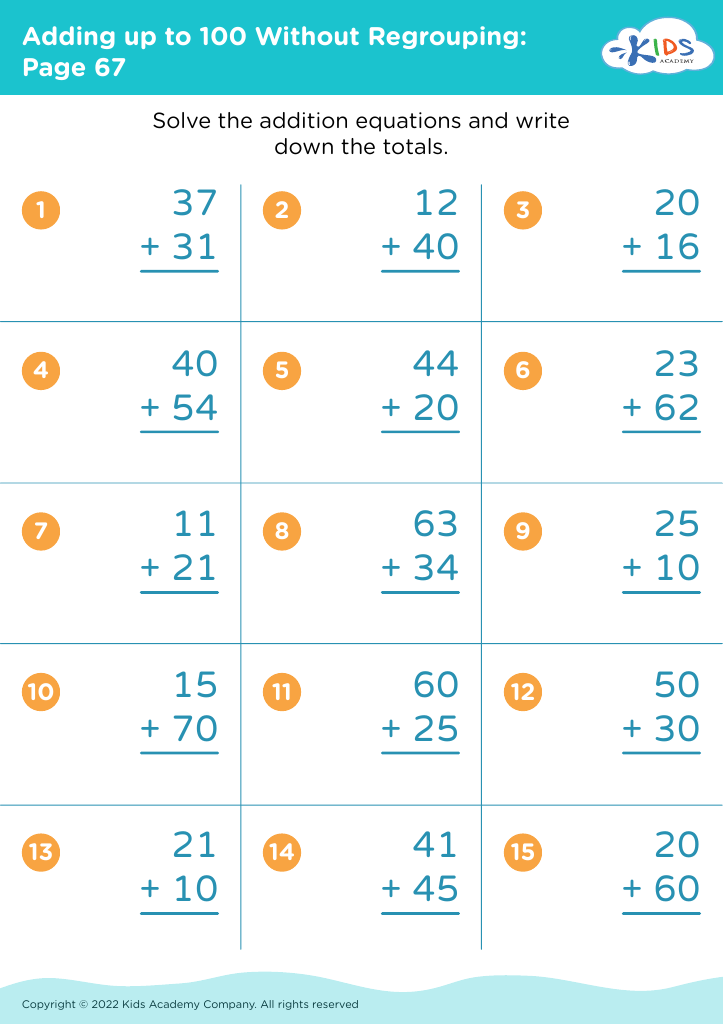
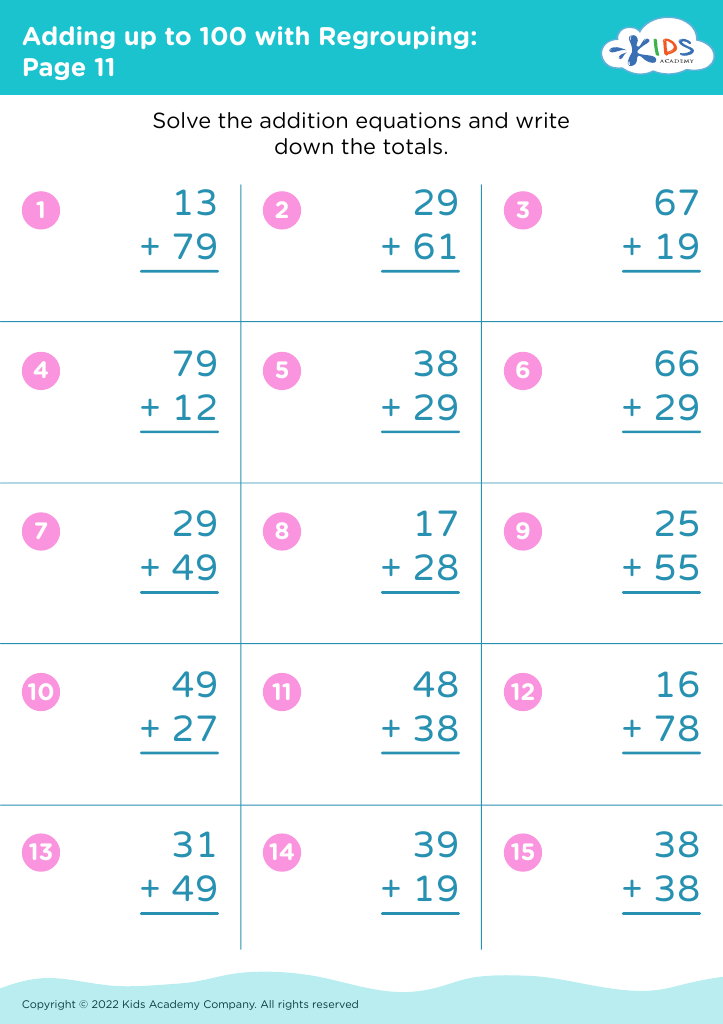
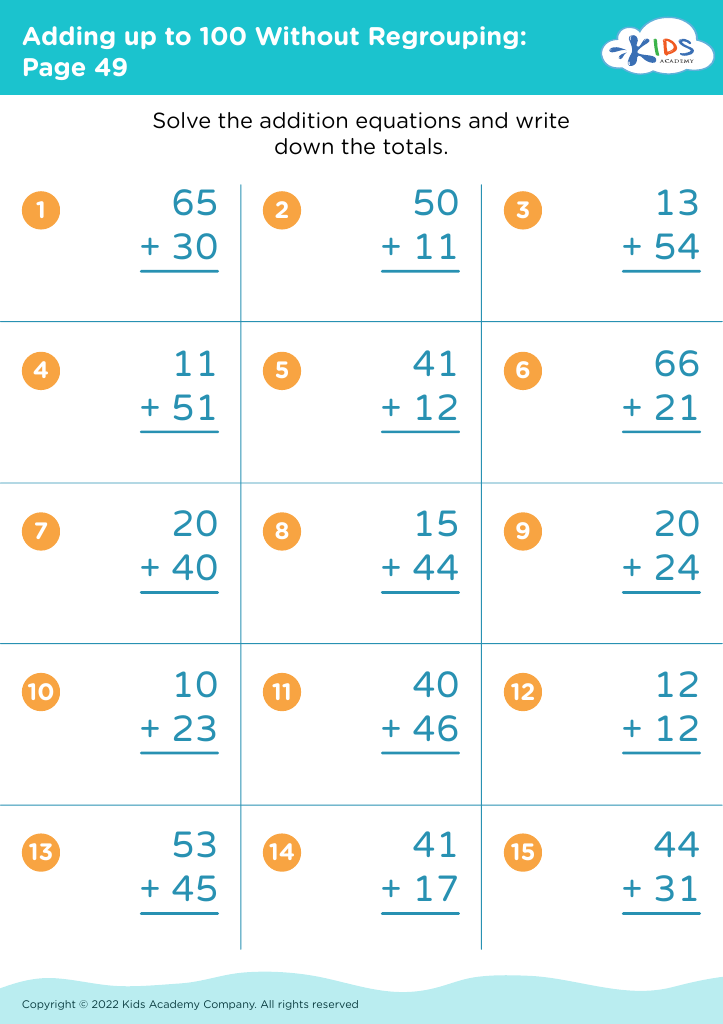
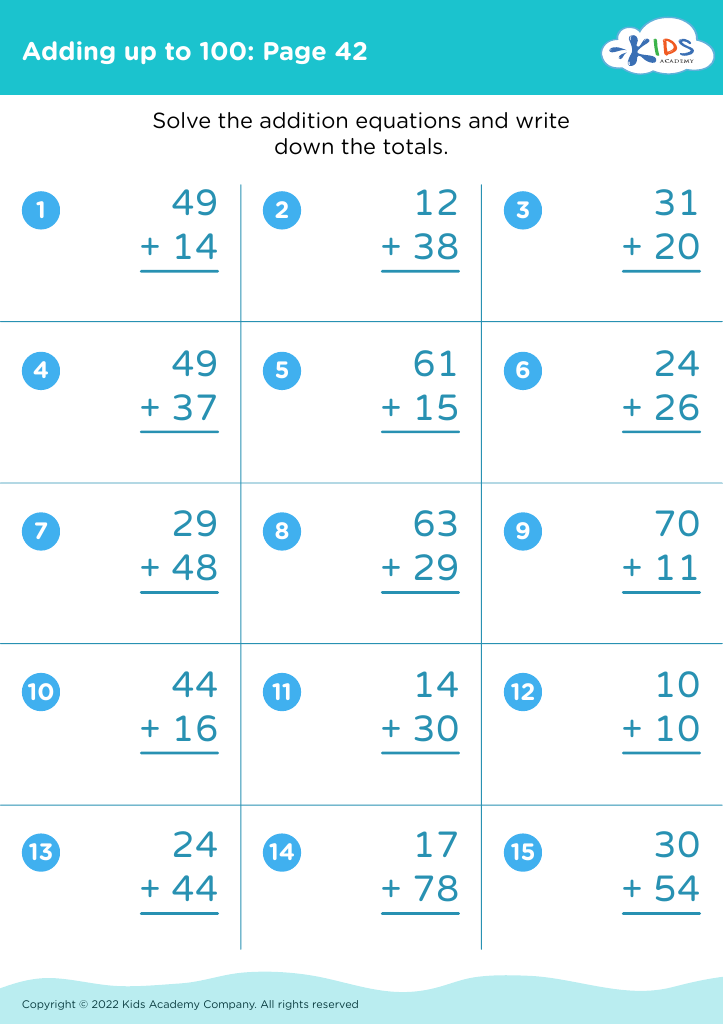
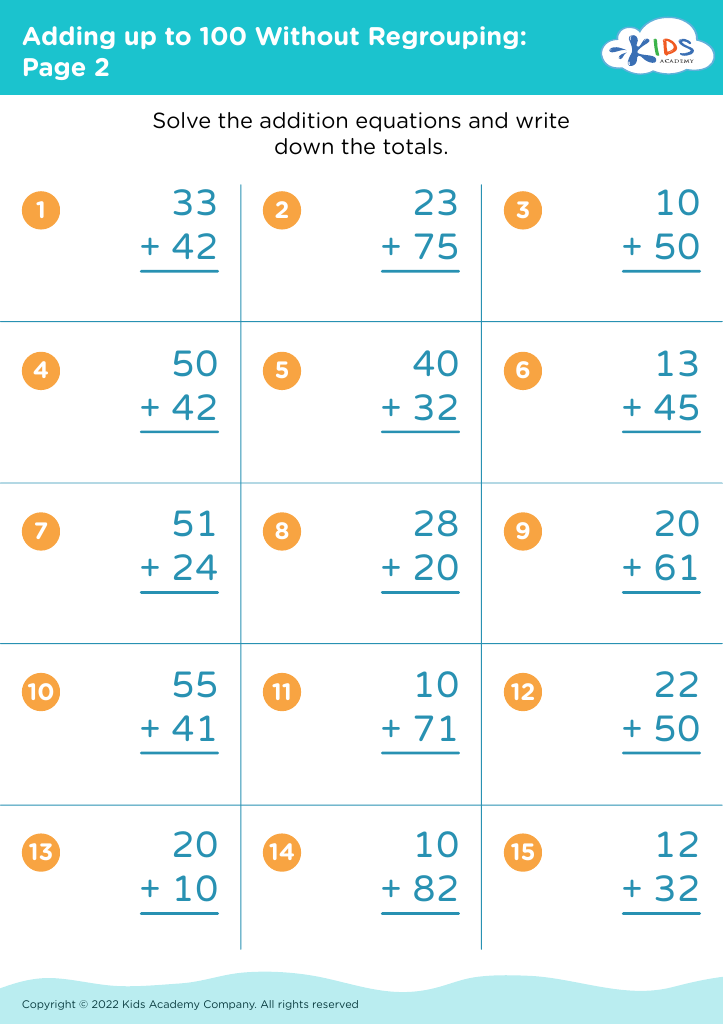
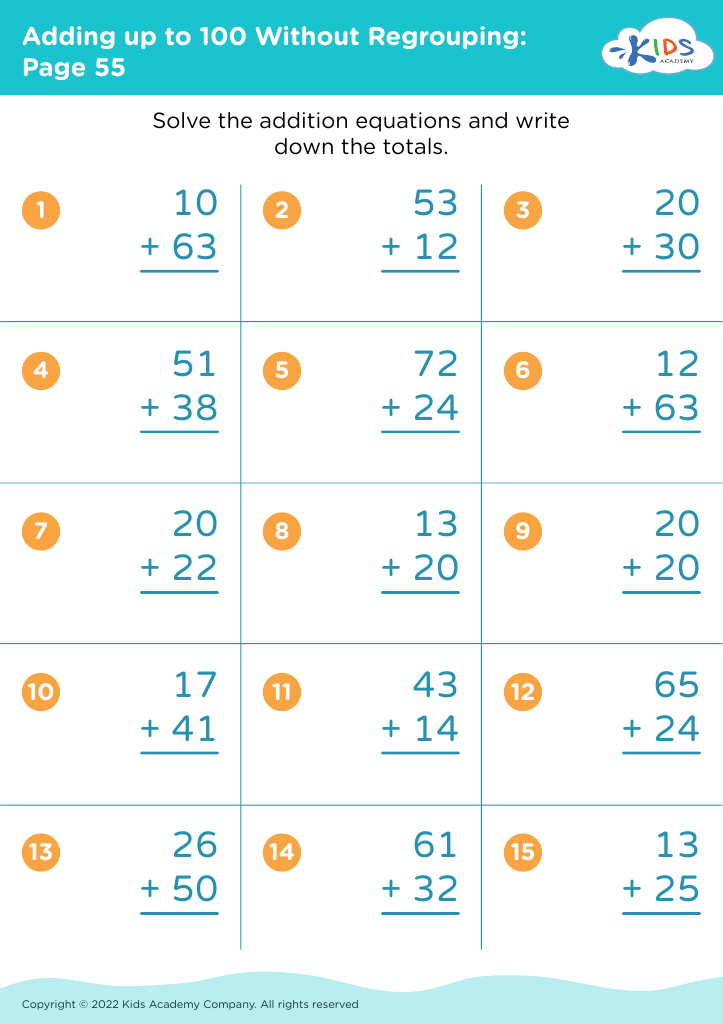
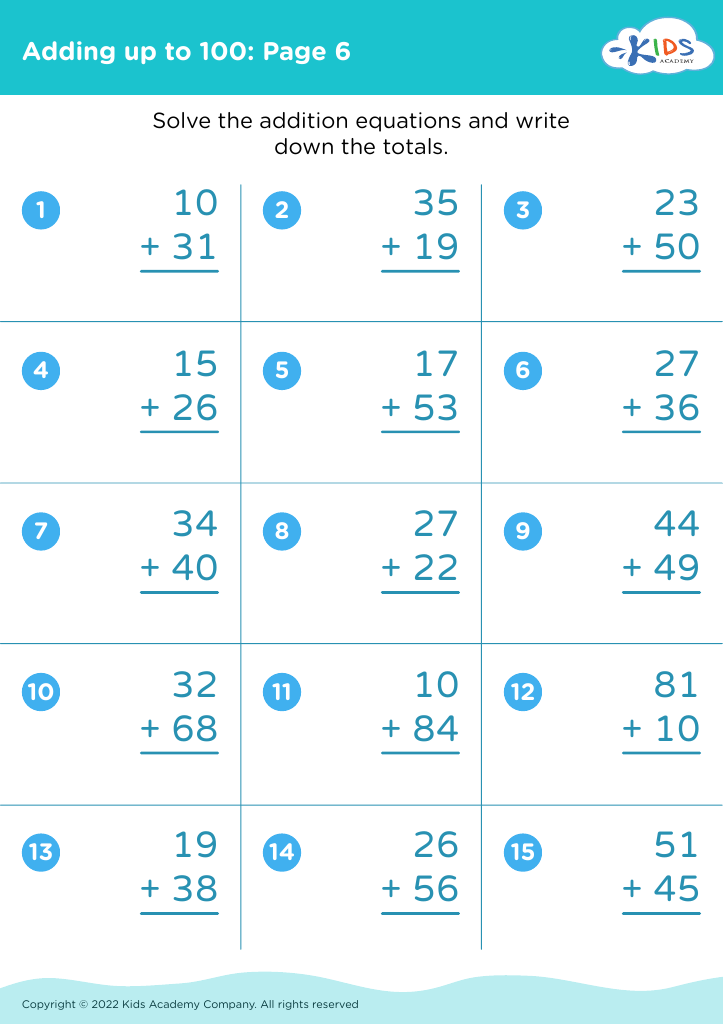
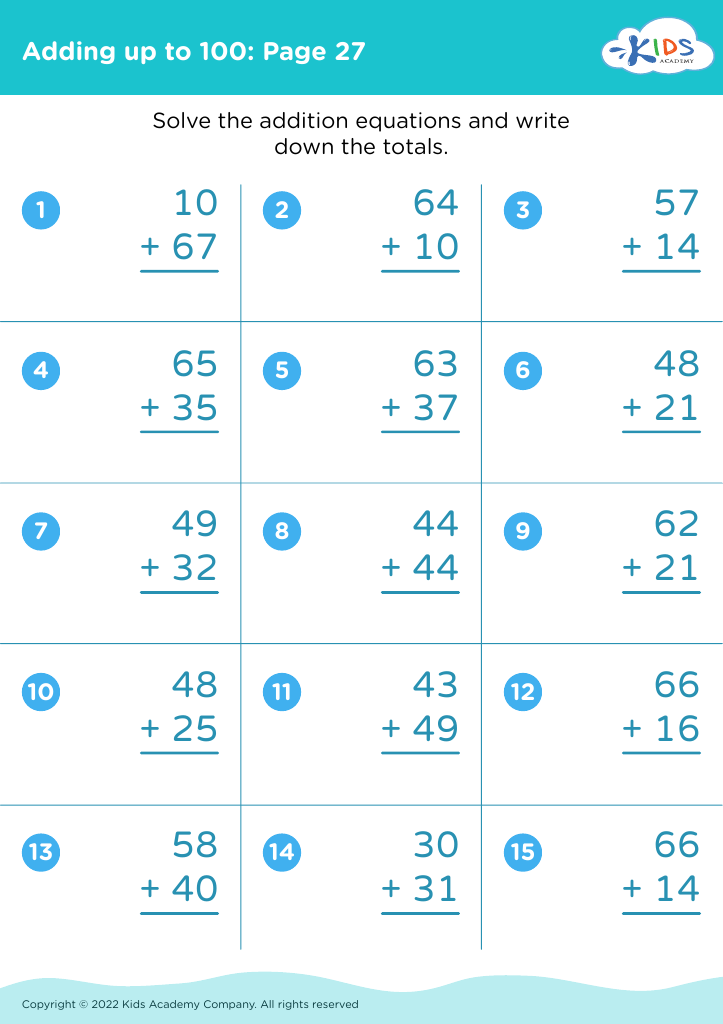
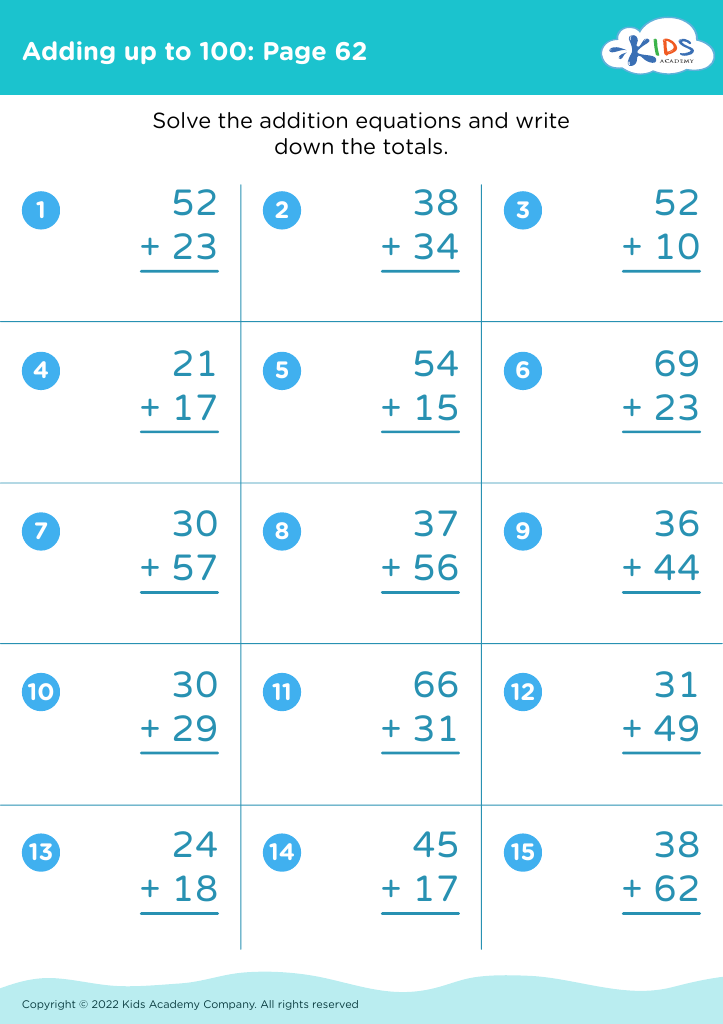
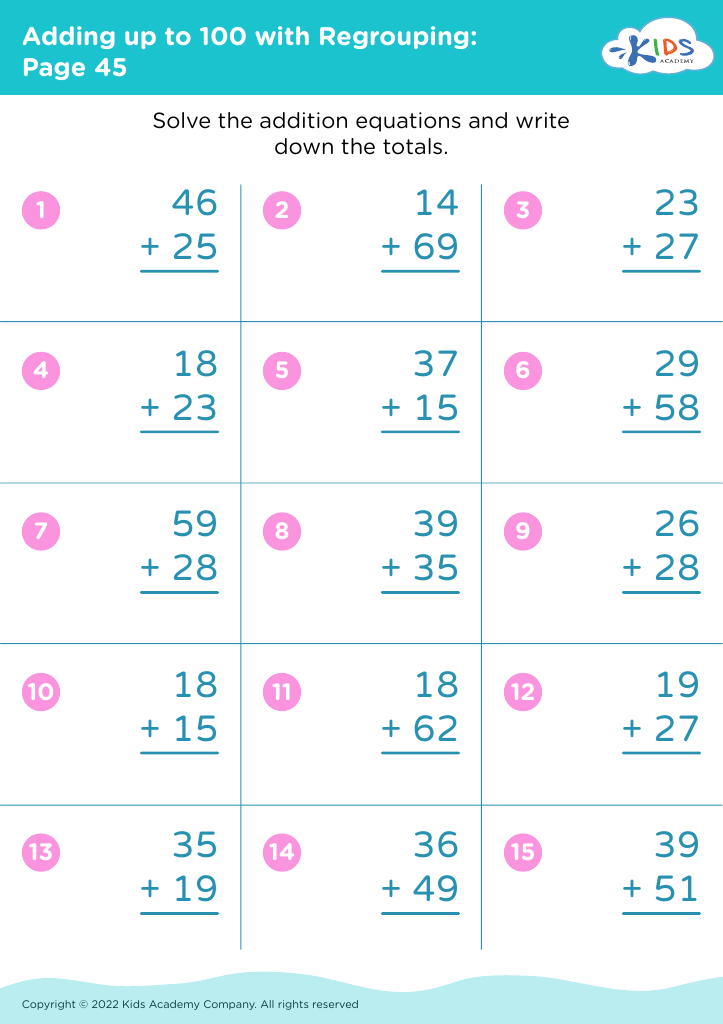
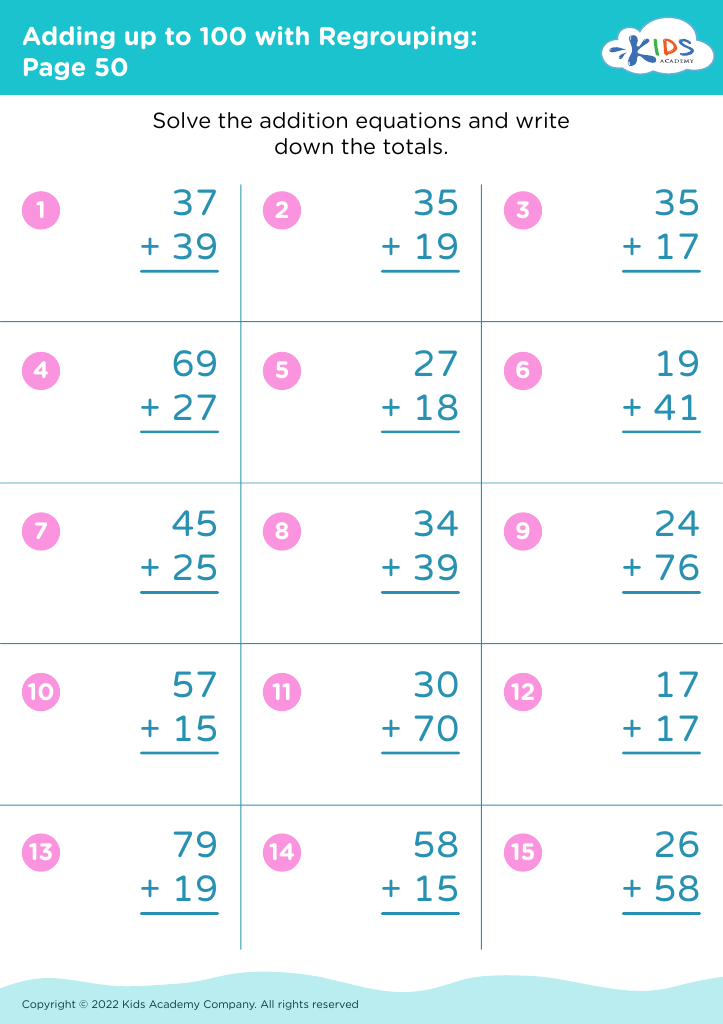
Develop your child's fine motor skills while mastering addition with our "Fine Motor Skills Adding up to 100 Worksheets for 8-Year-Olds." These engaging worksheets combine mathematical practice with activities that enhance hand-eye coordination, precision, and control. With fun, interactive exercises designed by educational experts, your child will advance their addition skills while strengthening their pencil grip and overall hand dexterity. Ideal for both classroom and at-home learning, our worksheets provide a balanced approach to skill-building that fosters excitement and confidence in young learners. Discover a creative way to support your 8-year-old’s mathematical journey and fine motor development today!




%20(1).jpg)


Fine motor skills play a critical role in a child's overall development and education, making them essential for parents and teachers to prioritize, especially in 8-year-olds. At this age, many educational activities require precise hand and finger movements, such as writing, drawing, and using scissors. These tasks are foundational for academic success, underpinning skills like handwriting, which affects not just legibility but also cognitive processes related to reading and math.
Developing abilities such as adding up to 100 involves a significant amount of fine motor coordination. Manipulating objects like counters or using pencils to solve arithmetic problems enhances both numerical understanding and hand-eye coordination. Poor fine motor skills can lead to difficulties in these areas, resulting in frustration and a potential aversion to learning. For teachers, incorporating fine motor tasks into math lessons ensures that children not only grasp numerical concepts but also practice the physical skills necessary for their application.
Parents who engage their children in activities like playing with building blocks, stringing beads, and doing puzzles can greatly support this development. Such tasks are enjoyable and non-threatening, providing an excellent context for skill growth. Prioritizing fine motor skill development ensures that children are well-equipped for a successful, enjoyable learning experience and sets the foundation for lifelong skills.








