Filters

37 filtered results

Clear all filters
Favorites
With answer key
Interactive

37 filtered results

Difficulty Level

Grade


Enhance your child's learning experience with our Fine Motor Skills Addition & Subtraction Worksheets designed specifically for 8-year-olds. These interactive worksheets combine math practice with activities that promote fine motor development, perfect for young learners. As children solve addition and subtraction problems, they’ll also engage in cutting, tracing, and coloring exercises, fostering their hand-eye coordination and dexterity. This multi-faceted approach not only builds essential math skills but also supports physical development. Ideal for homeschooling or supplementary practice, our worksheets make learning fun and effective. Explore our collection now to help your child master math while improving their fine motor skills!
Check out this FREE Trial Lesson on Addition & Subtraction for age 8!

Match Exactly the Same

Favorites
With answer key
Interactive
  • 8
  • Fine Motor Skills
  • Addition & Subtraction
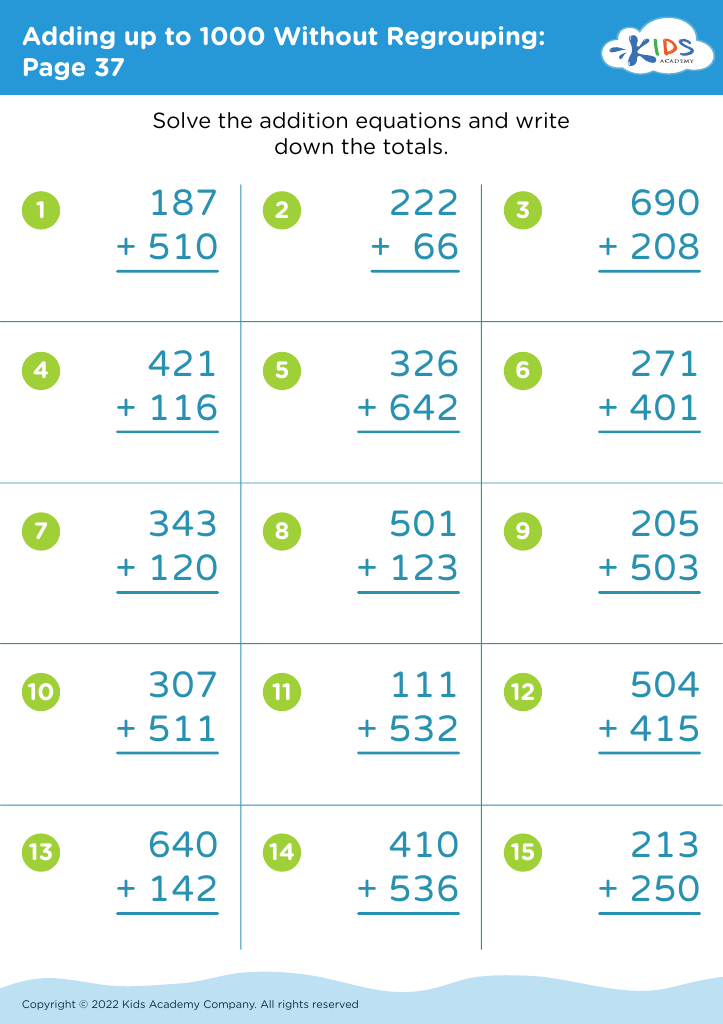
Adding up to 1000 Without Regrouping: Page 37
Worksheet
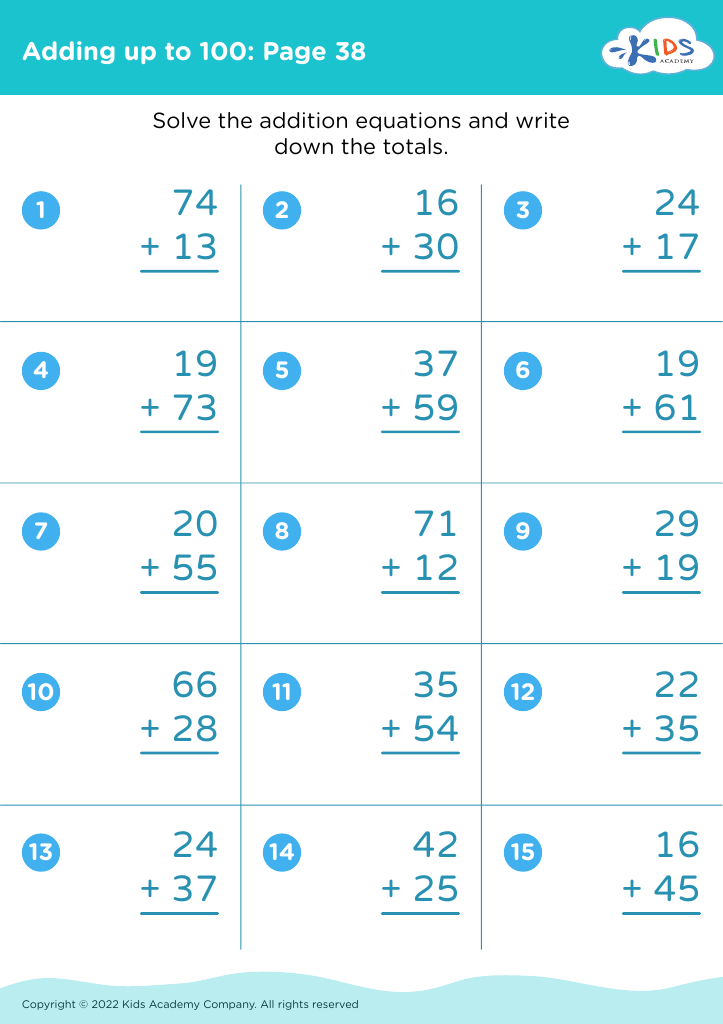
Adding up to 100: Page 38

Adding up to 100: Page 38

Adding up to 100: Page 38
Worksheet
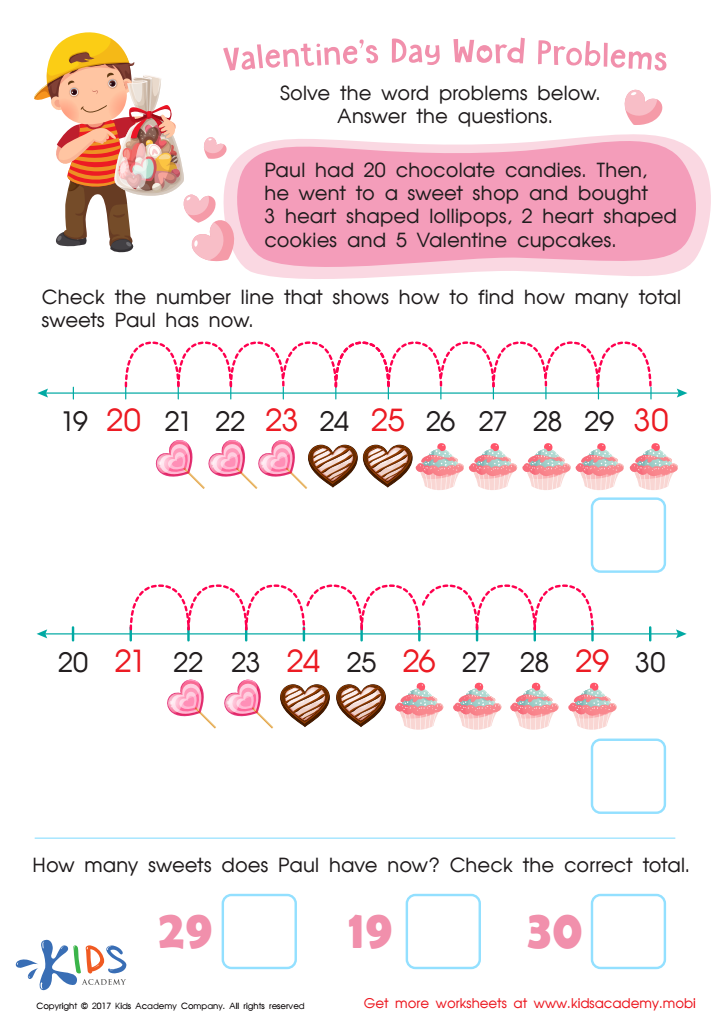
Valentine’s Day word problem PDF worksheet

Valentines Day 2 Printable

This PDF worksheet uses a number line to help solve the problems. Your child will be ready for Valentine's Day after completing it. Counting and adding from 20 is also reinforced.
Valentines Day 2 Printable
Worksheet
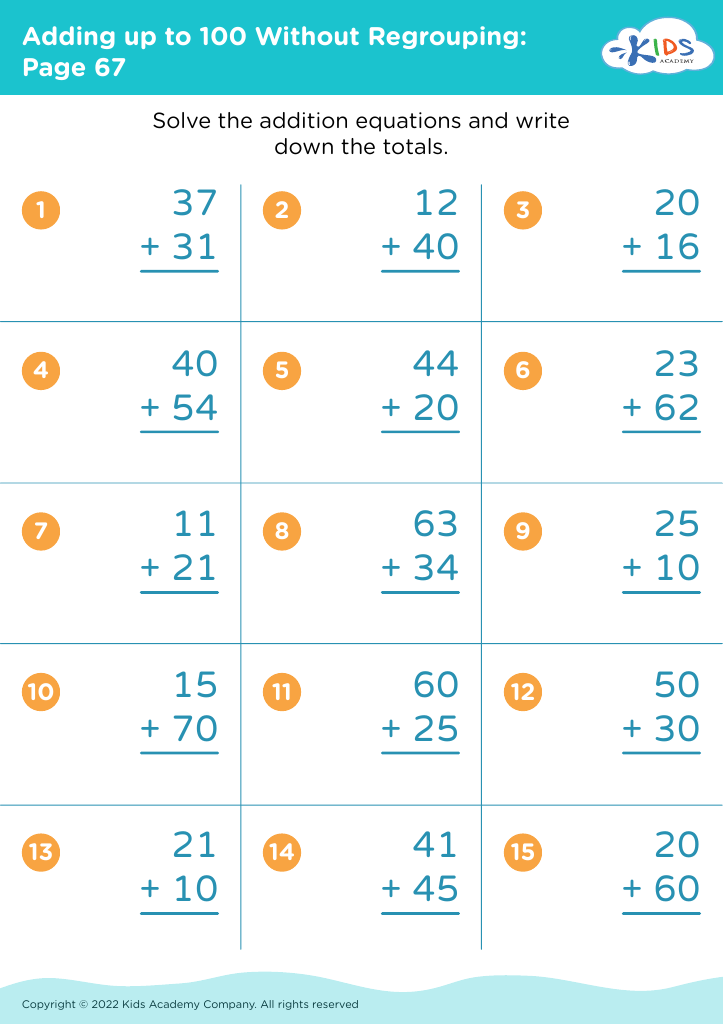
Adding up to 100 Without Regrouping: Page 67
Worksheet
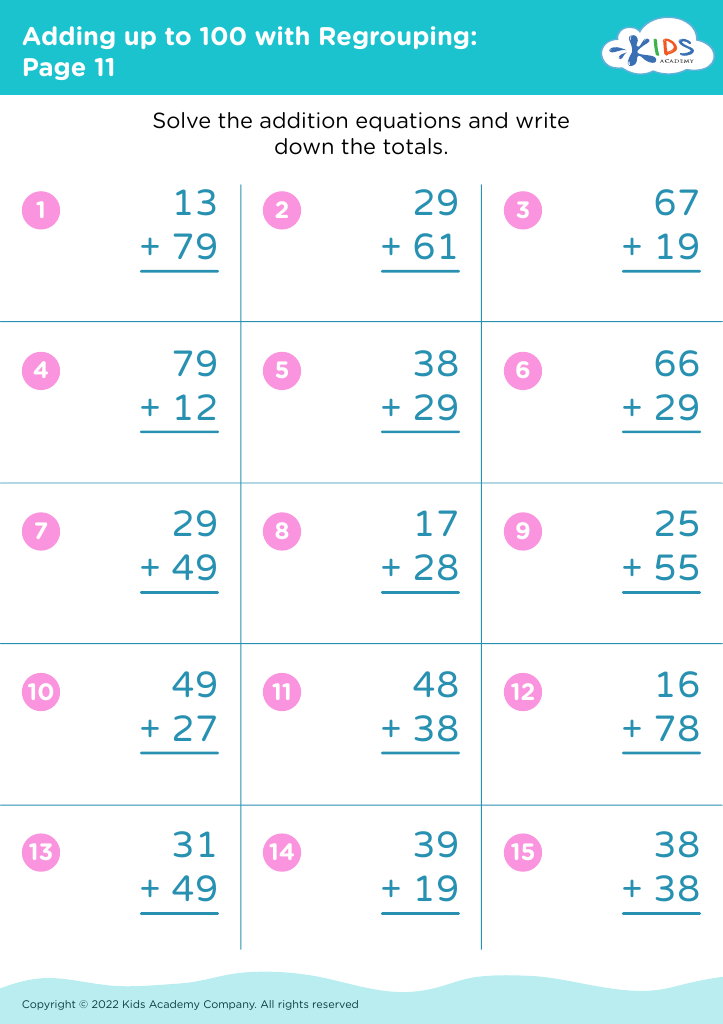
Adding up to 100 with Regrouping: Page 11
Worksheet
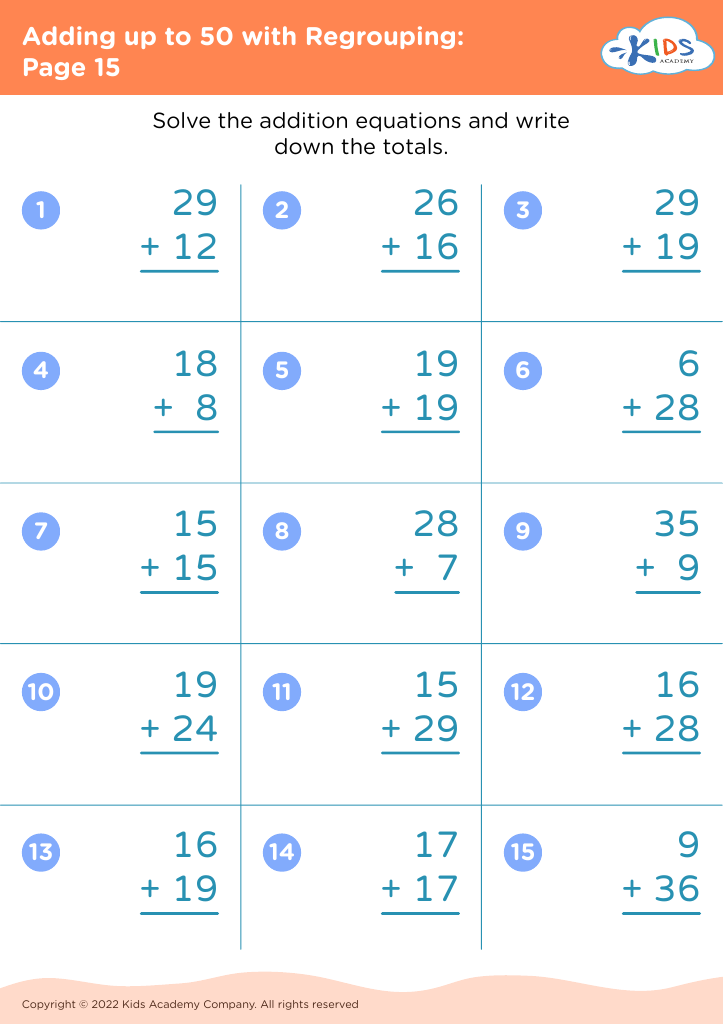
Adding up to 50 with Regrouping: Page 15
Worksheet
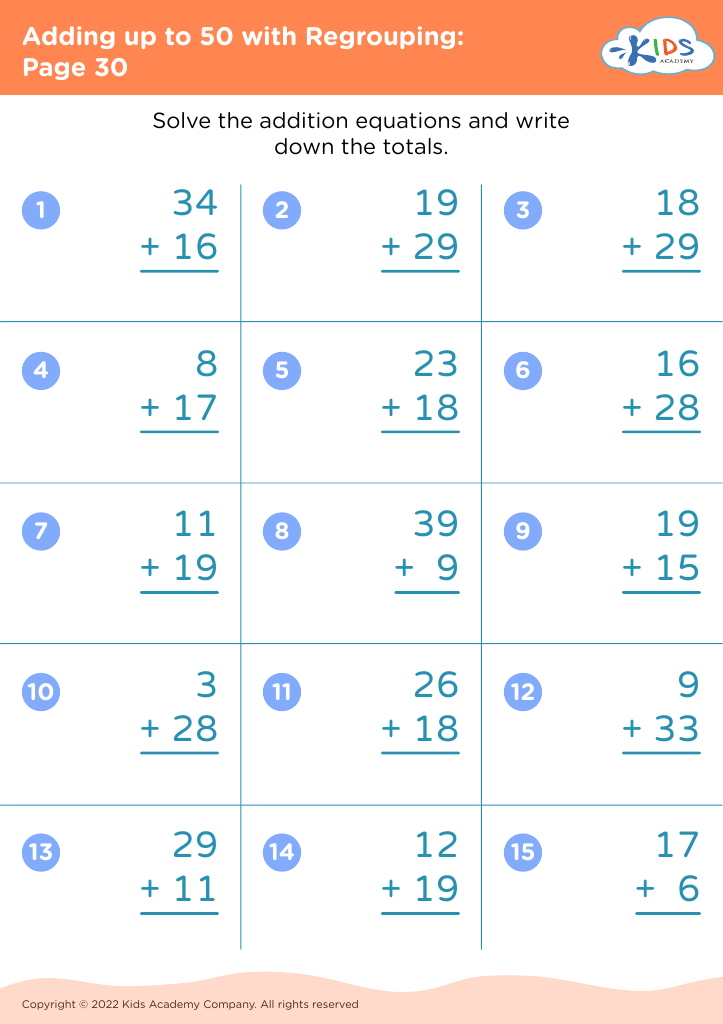
Adding up to 50 with Regrouping: Page 30
Worksheet
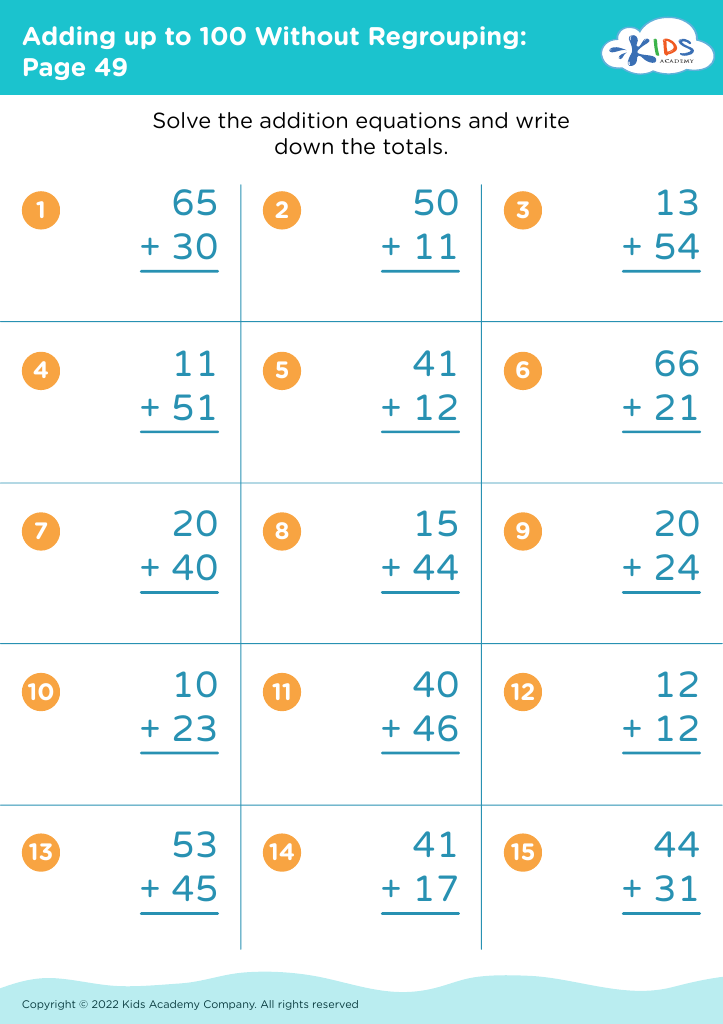
Adding up to 100 Without Regrouping: Page 49
Worksheet
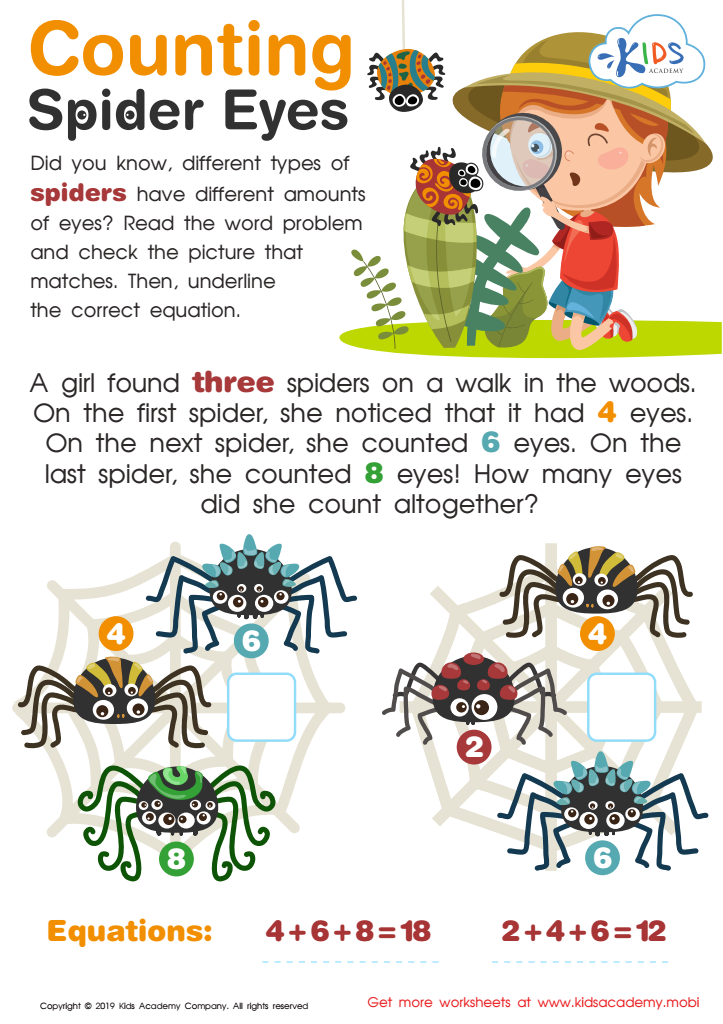
Counting Spider Eyes Worksheet

Counting Spider Eyes Worksheet

Did you know different spiders have different eye numbers? Kids will love learning this fact and solving the spider word problems on this free worksheet! Word problems promote a deeper understanding of the concept, plus they get to add up the spiders’ eyes while solving addition problems with more than one addend. Fun and math all in one!
Counting Spider Eyes Worksheet
Worksheet
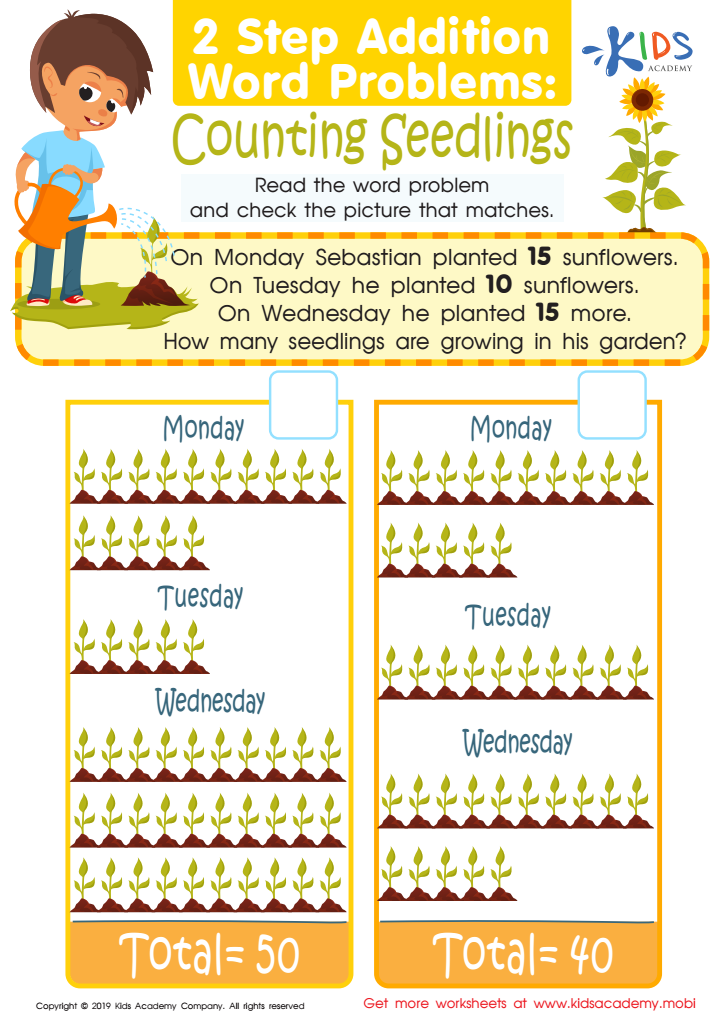
Counting Seedlings Worksheet
Counting Seedlings Worksheet
Understanding math word problems is key. Multiple steps can prove challenging - this free worksheet provides one-to-one picture representation to help kids solve multi-step addition word problems. Strengthen addition skills by choosing the matching picture to the answer.
Counting Seedlings Worksheet
Worksheet
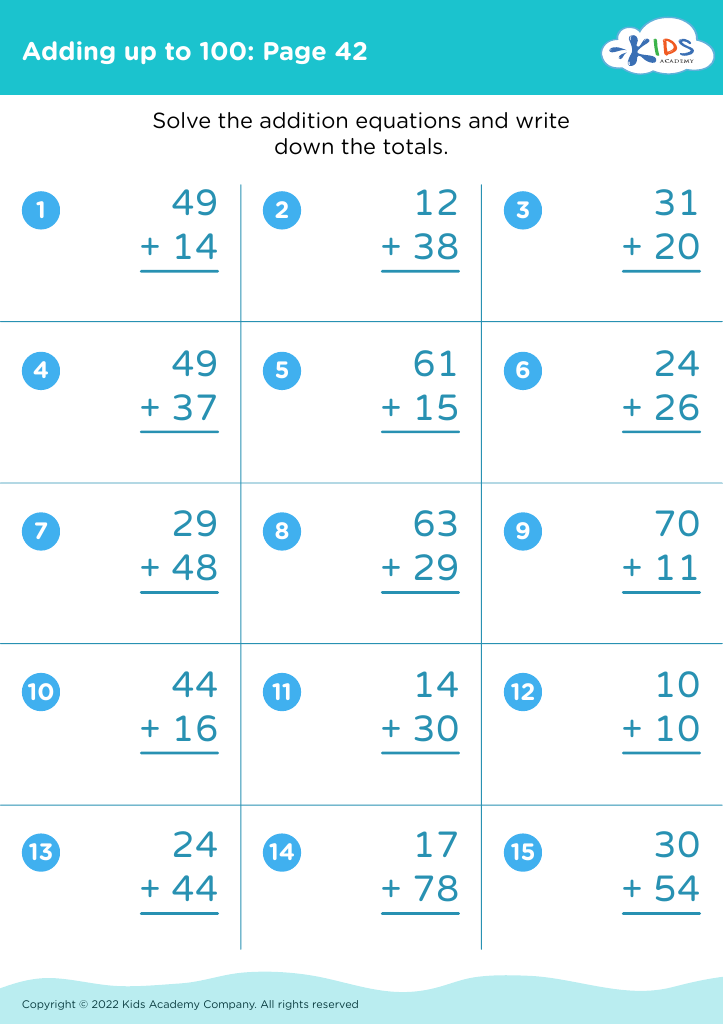
Adding up to 100: Page 42

Adding up to 100: Page 42

Adding up to 100: Page 42
Worksheet
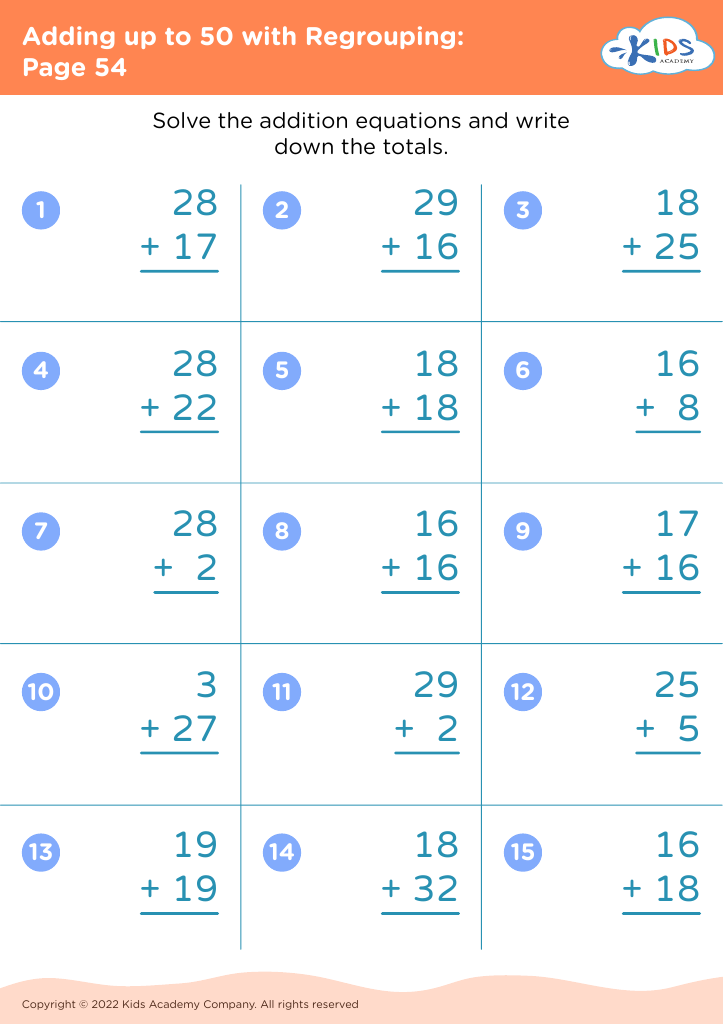
Adding up to 50 with Regrouping: Page 54
Worksheet
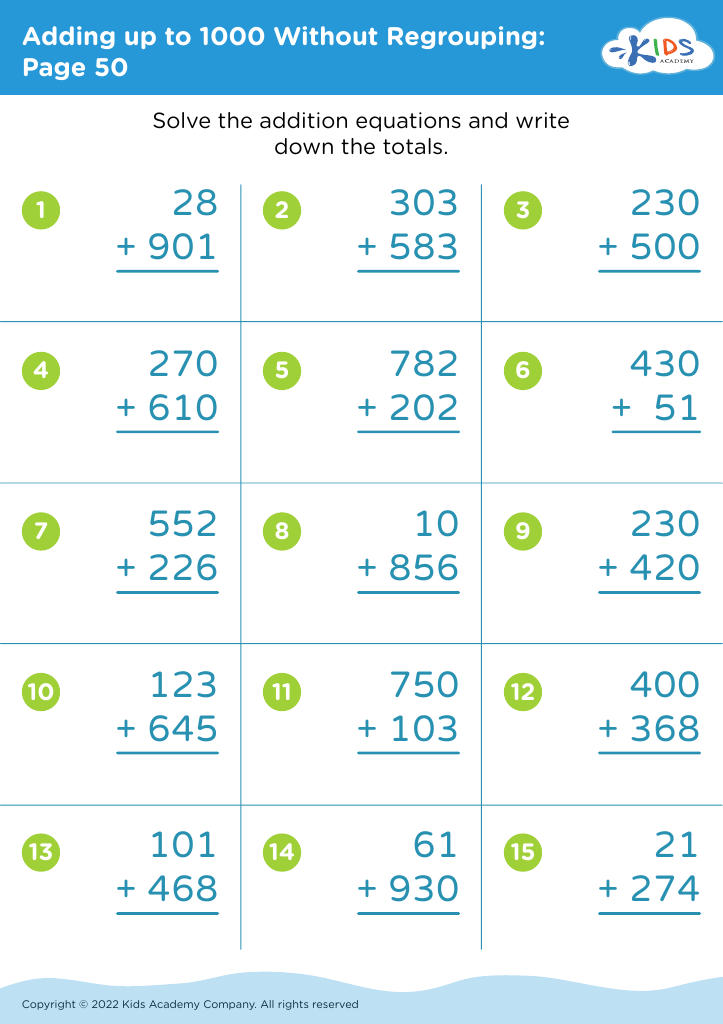
Adding up to 1000 Without Regrouping: Page 50
Worksheet
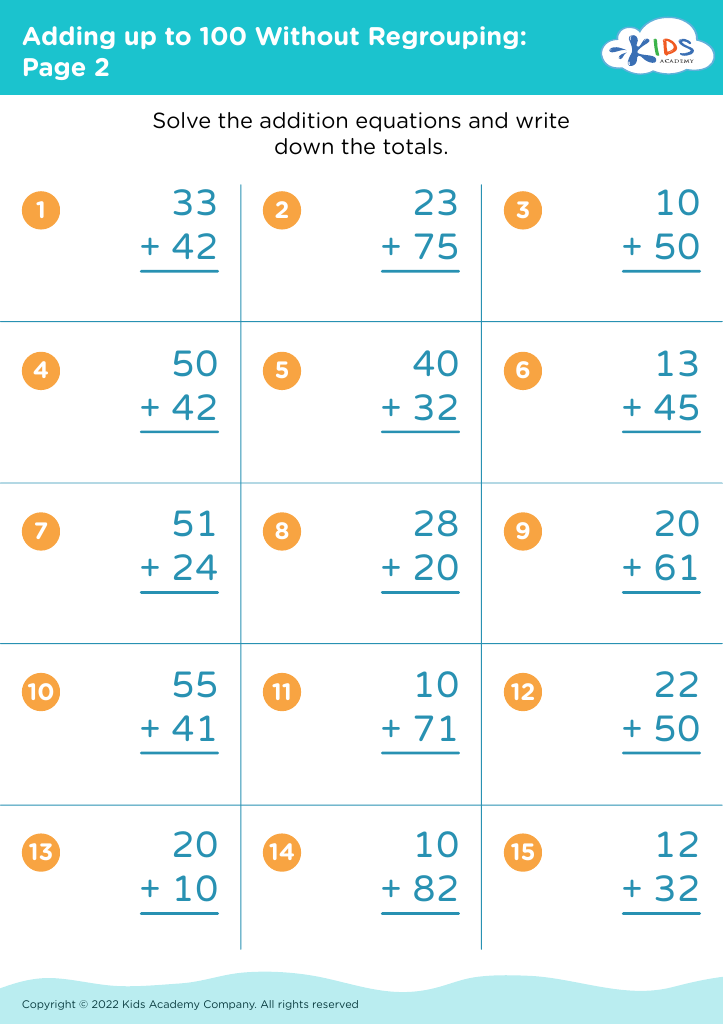
Adding up to 100 Without Regrouping: Page 2
Worksheet
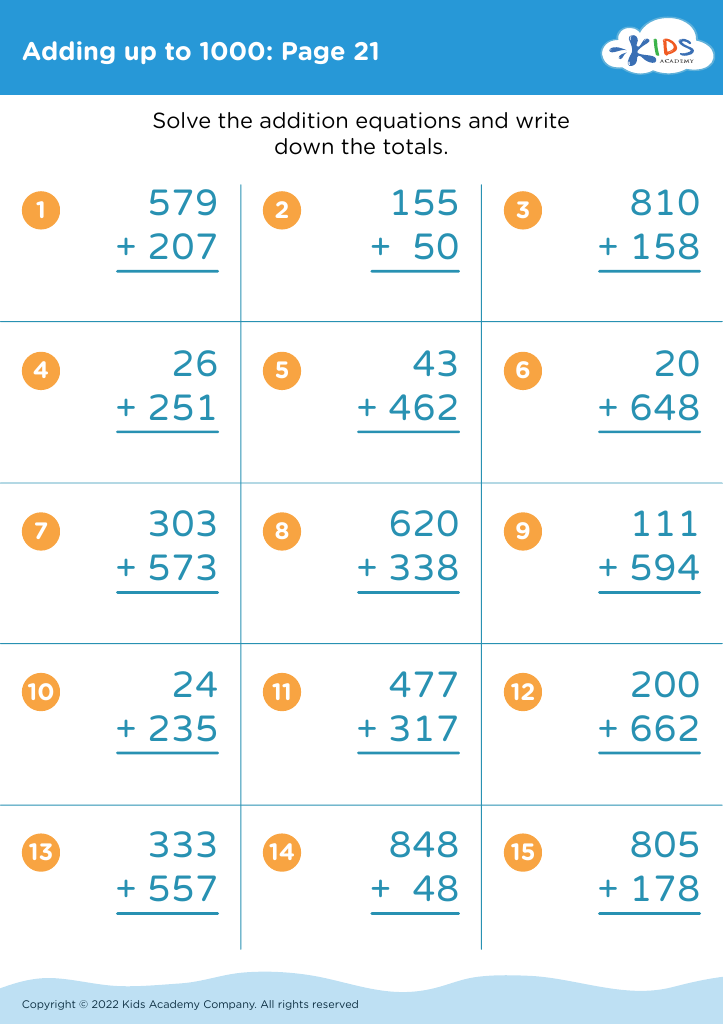
Adding up to 1000: Page 21

Adding up to 1000: Page 21

Adding up to 1000: Page 21
Worksheet
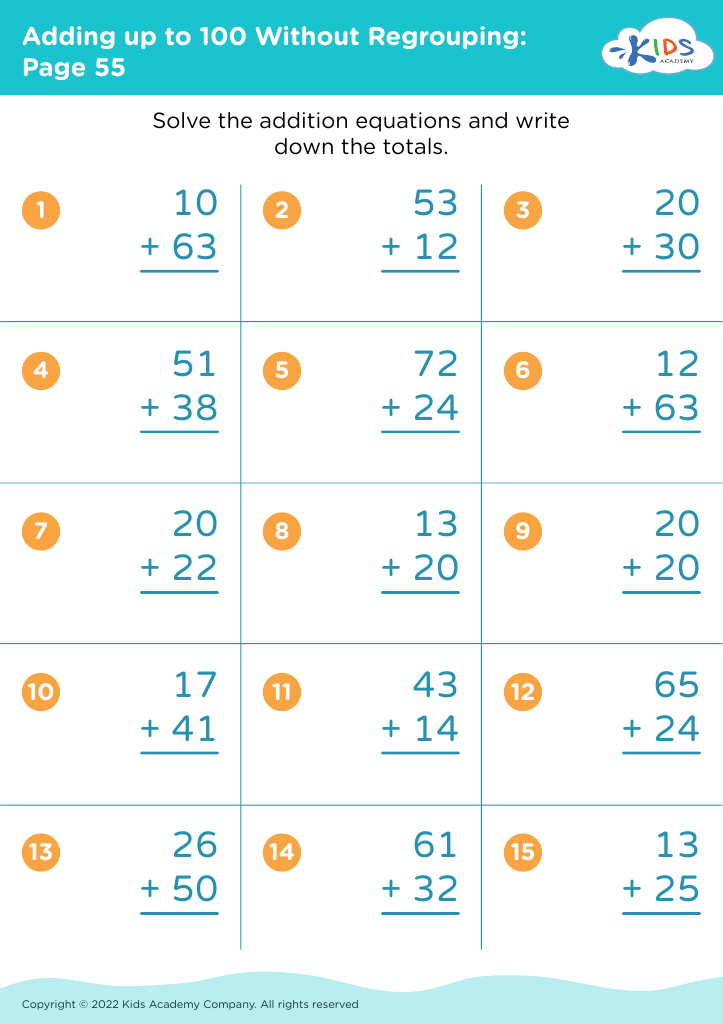
Adding up to 100 Without Regrouping: Page 55
Worksheet
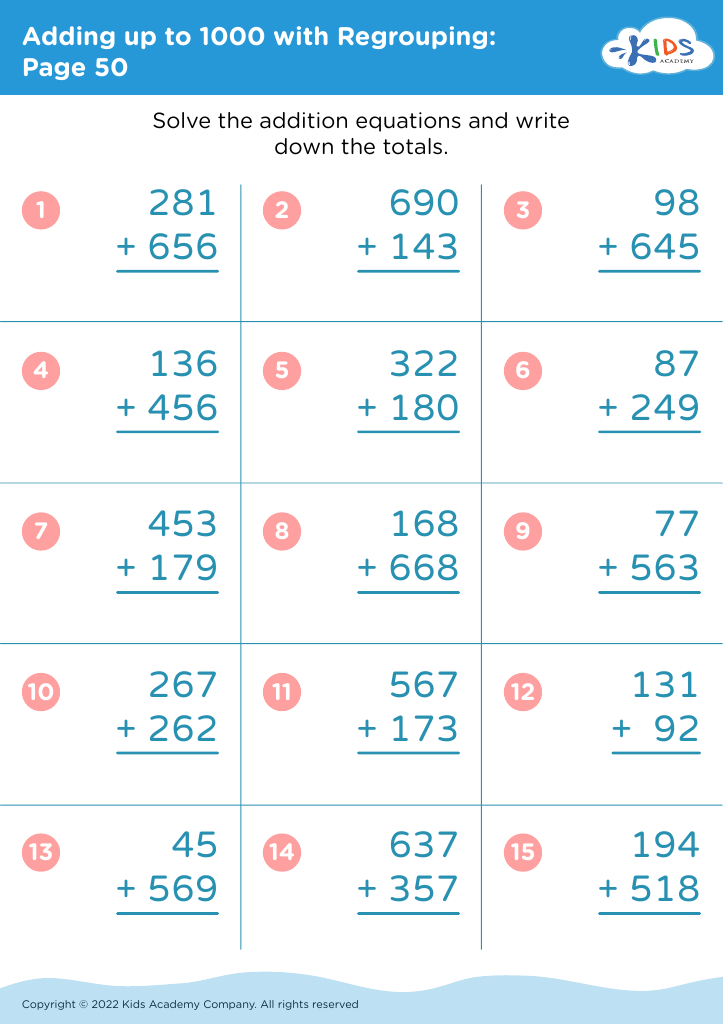
Adding up to 1000 with Regrouping: Page 50
Worksheet
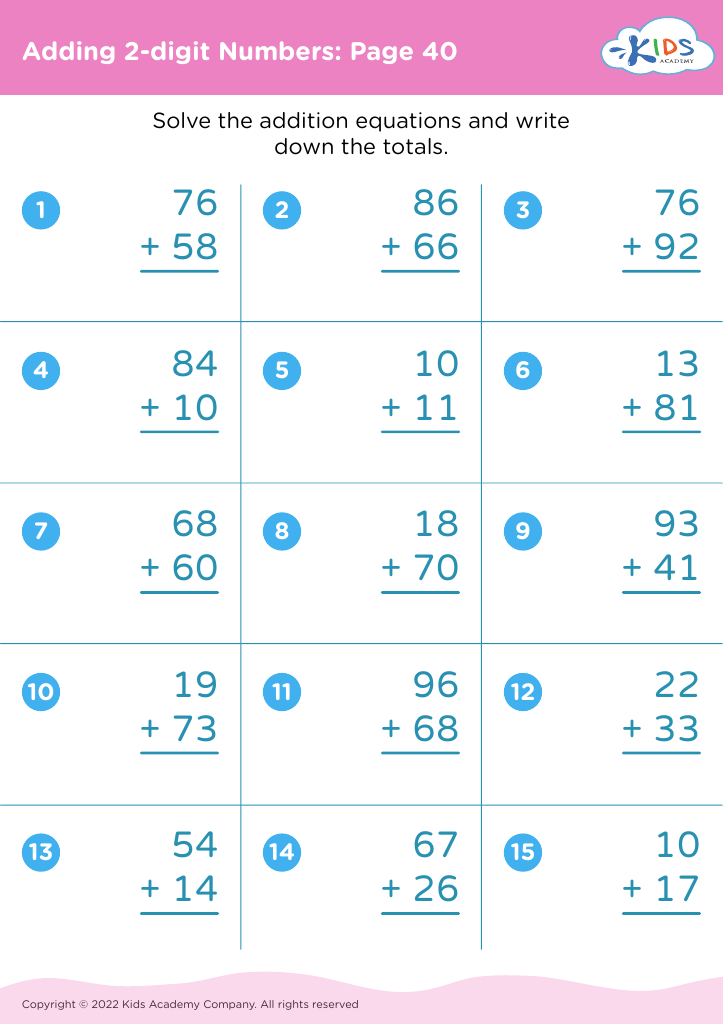
Adding 2-digit Numbers: Page 40

Adding 2-digit Numbers: Page 40

Adding 2-digit Numbers: Page 40
Worksheet
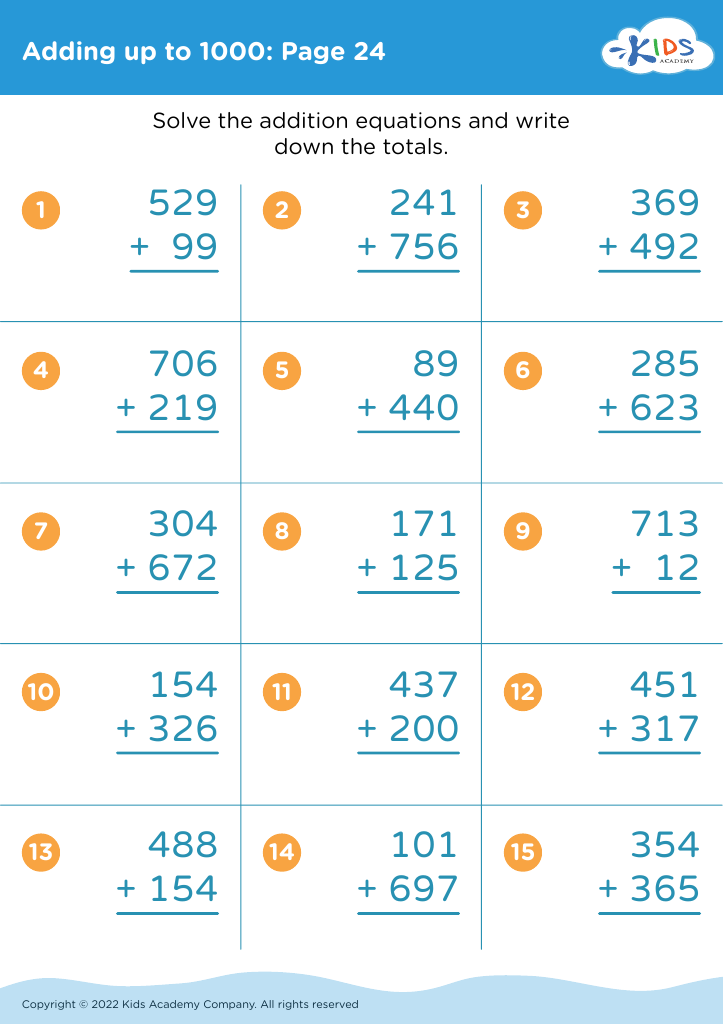
Adding up to 1000: Page 24

Adding up to 1000: Page 24

Adding up to 1000: Page 24
Worksheet
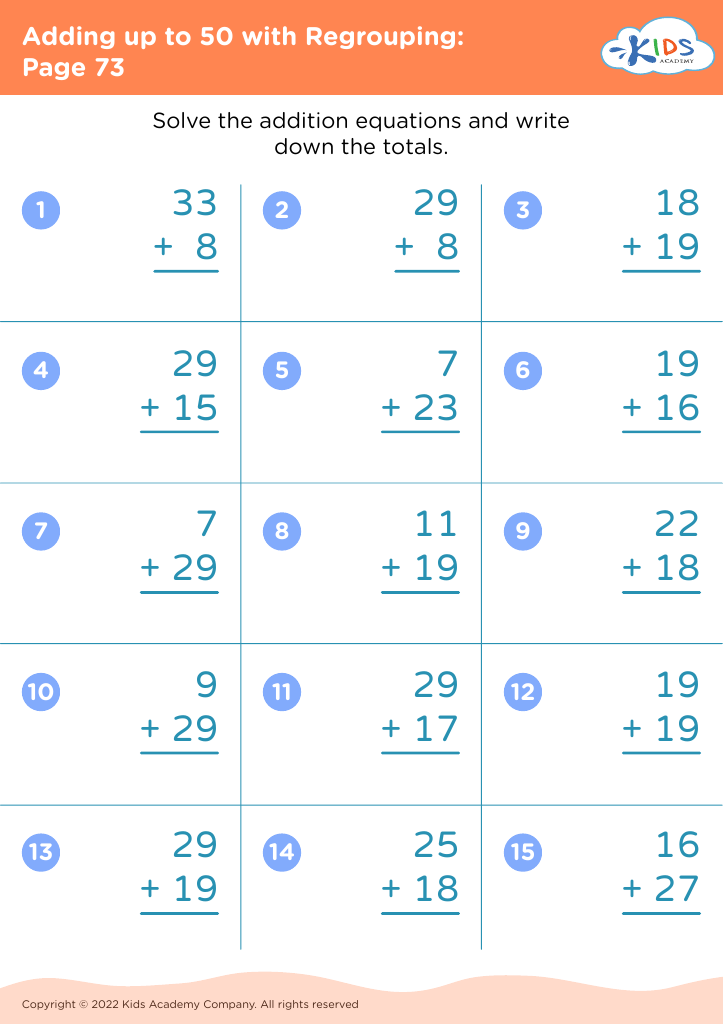
Adding up to 50 with Regrouping: Page 73
Worksheet
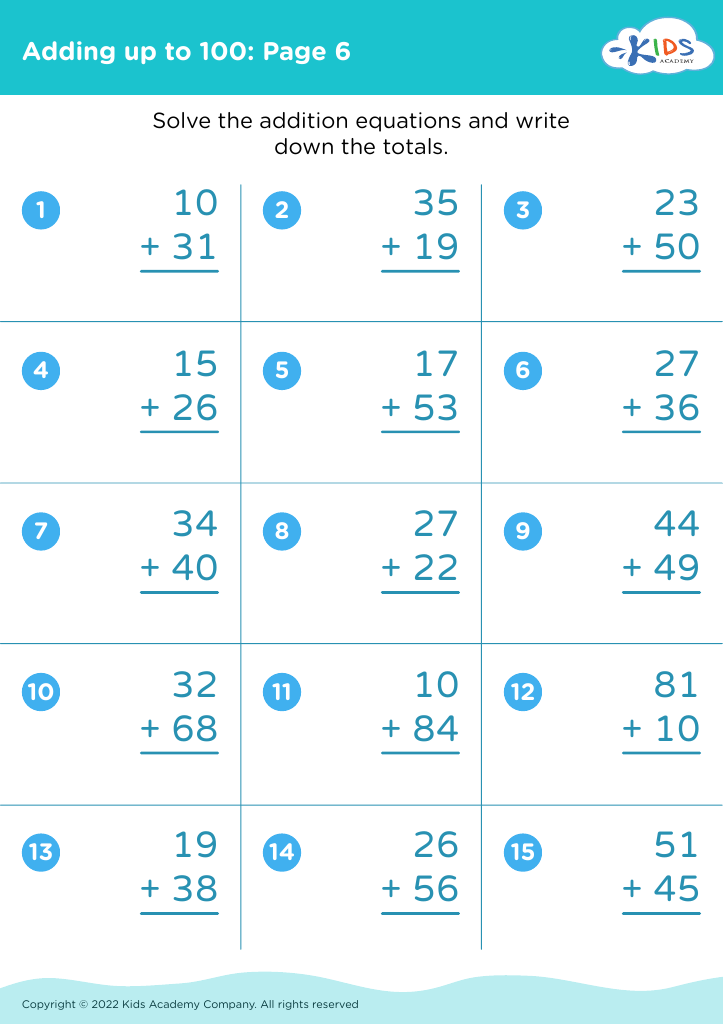
Adding up to 100: Page 6

Adding up to 100: Page 6

Adding up to 100: Page 6
Worksheet
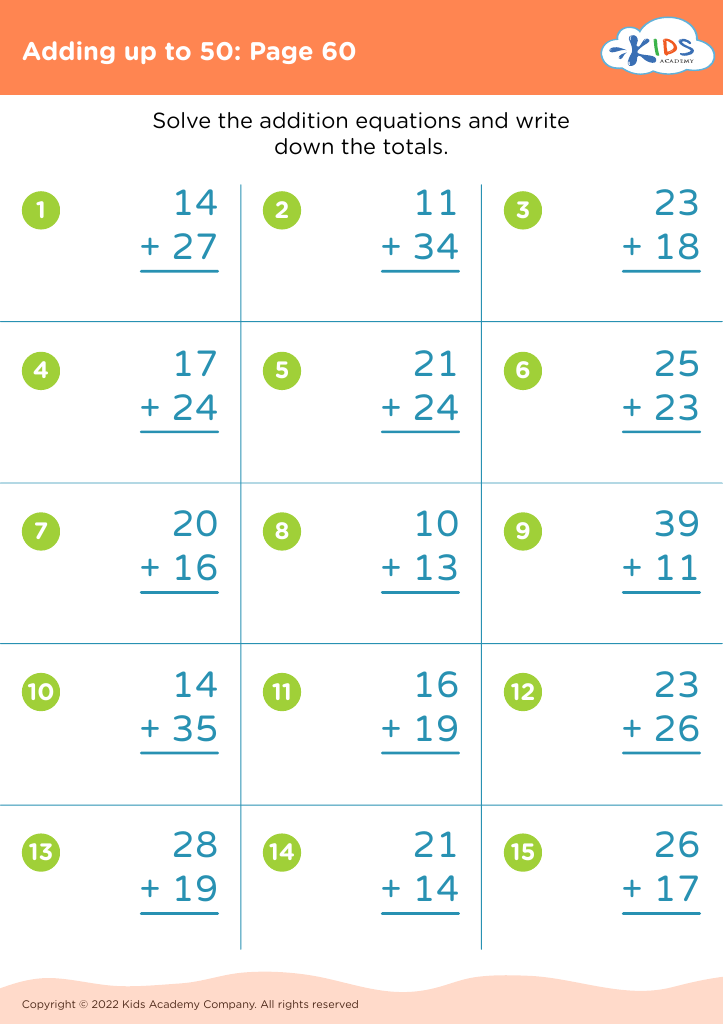
Adding up to 50: Page 60

Adding up to 50: Page 60

Adding up to 50: Page 60
Worksheet
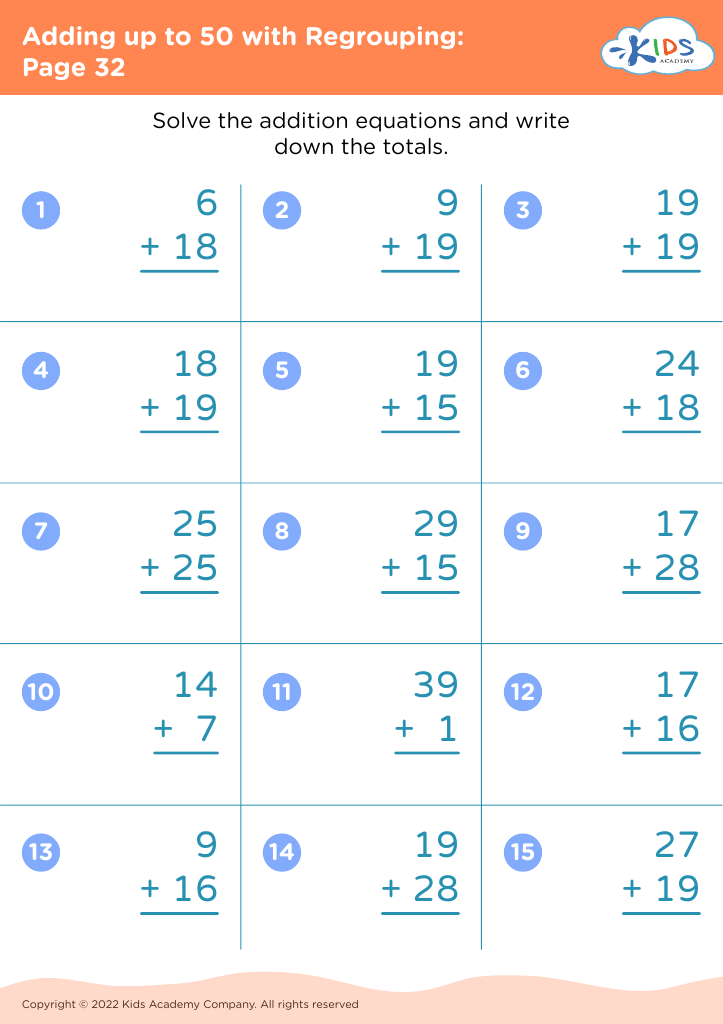
Adding up to 50 with Regrouping: Page 32
Worksheet
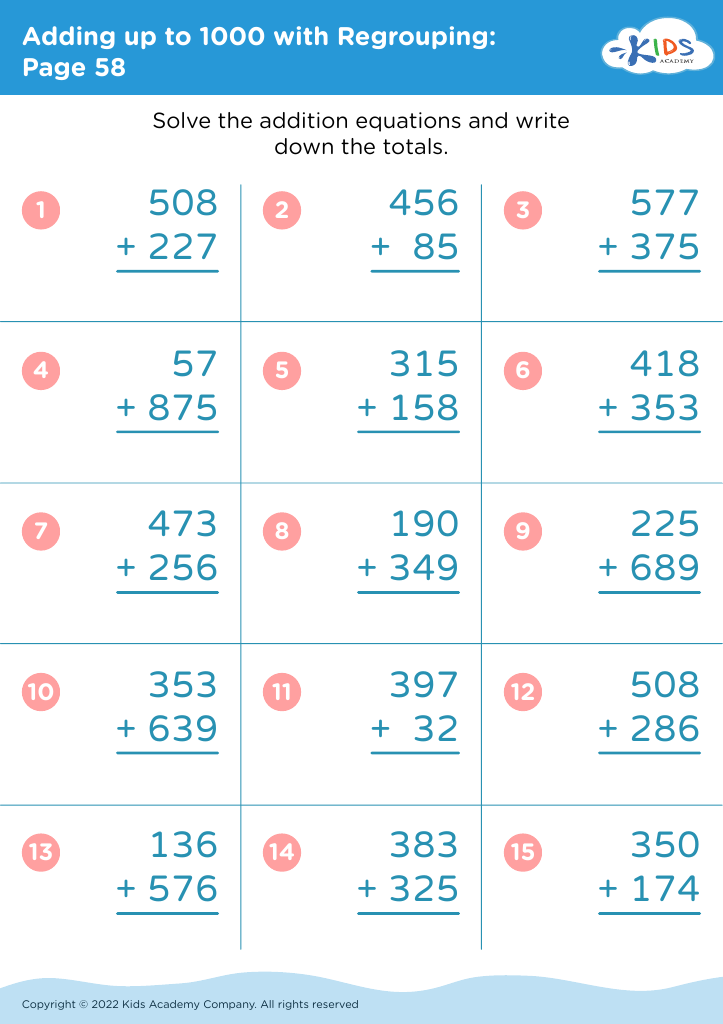
Adding up to 1000 with Regrouping: Page 58
Worksheet


Fine motor skills are crucial for 8-year-olds, especially regarding activities such as addition and subtraction. At this age, children are not only enhancing their foundational math skills but also refining their hand-eye coordination and dexterity through practices like writing numbers, using manipulatives, or engaging in art projects related to math concepts.

When parents and teachers emphasize fine motor skills in the context of math, they contribute to a child's overall cognitive development by fostering better control over their movements. This control is essential for performing math-related tasks, including drawing graphs, writing neatly, and engaging in hands-on activities such as measuring or counting with tools like calculators and rulers. Improved fine motor skills can lead to a more positive attitude toward math, increased confidence, and enhanced problem-solving abilities.

Moreover, fine motor activities that incorporate math, like using blocks for counting or drawing shapes while learning subtraction, make learning more engaging and enjoyable. Addressing fine motor skills alongside math education shapes well-rounded learners who develop both their cognitive and physical abilities. Therefore, supporting fine motor development is key to ensuring children not only master their math skills but also gain confidence in their overall academic journey.