Fine Motor Skills Fractions of Shapes Worksheets for 8-Year-Olds
6 filtered results
-
From - To
Enhance your child's fine motor skills with our "Fractions of Shapes Worksheets for 8-Year-Olds" at Kids Academy. These engaging activities focus on dividing shapes into fractions, fostering hand-eye coordination, and precision. As children color, cut, and label different shapes, they master both mathematical concepts and essential fine motor capabilities. Ideal for supplementing school curriculum or at-home practice, these worksheets are designed to make learning fractions fun and interactive. Parents and teachers can easily download and print these resources to provide quality, hands-on learning that supports your child's development in an enjoyable way.
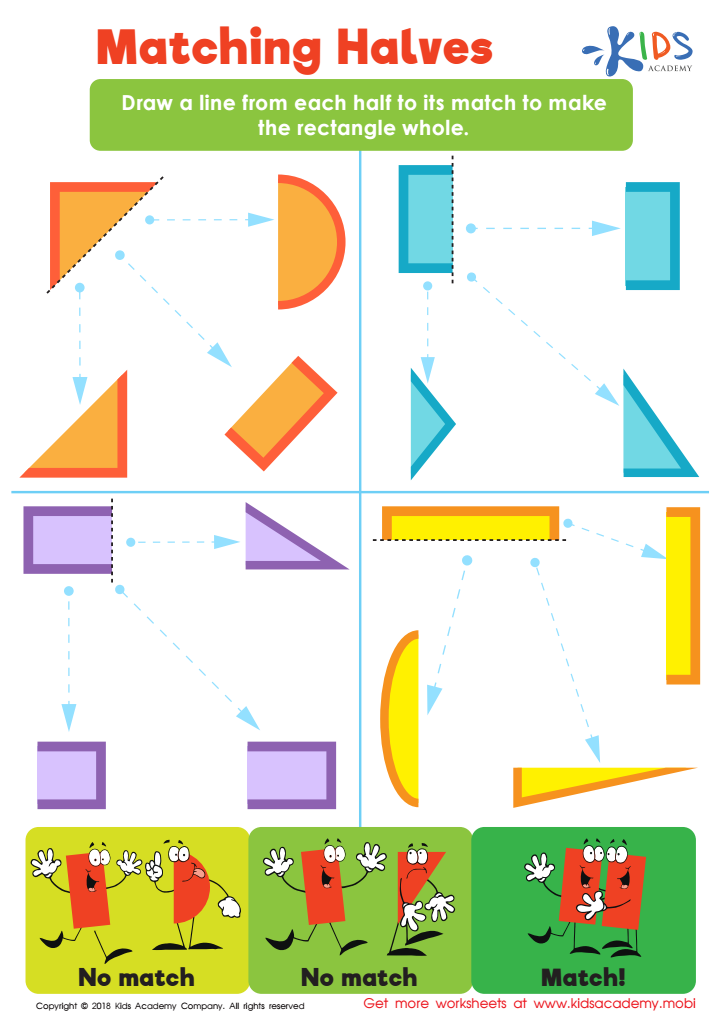
Matching Halves Worksheet
 Assign to My Students
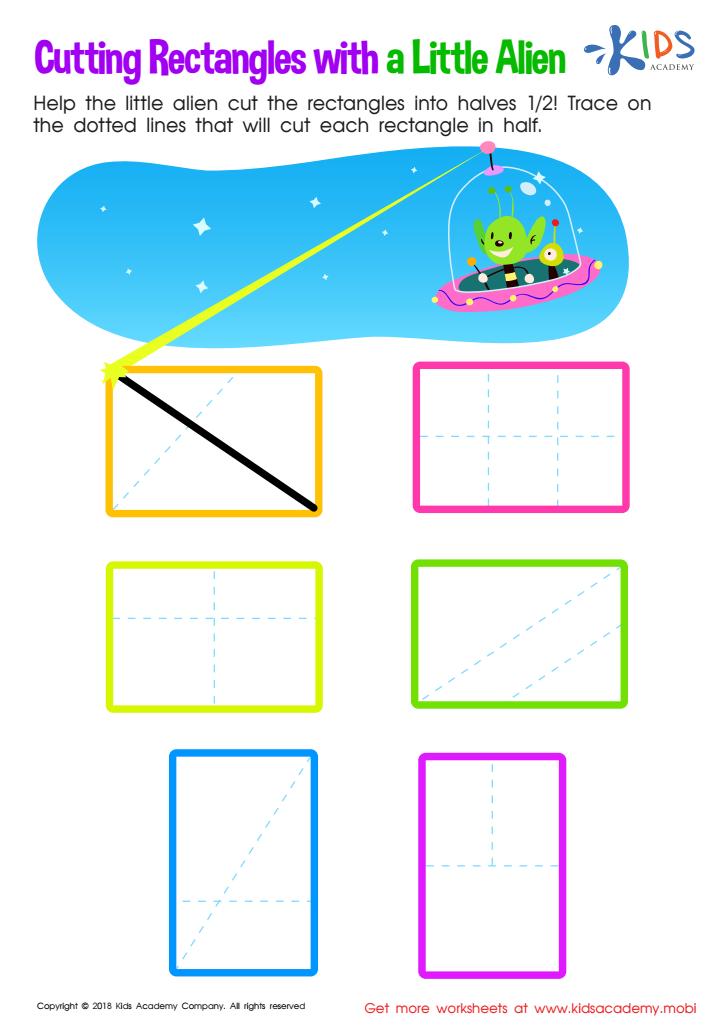
Cutting Rectangles with Alien Worksheet
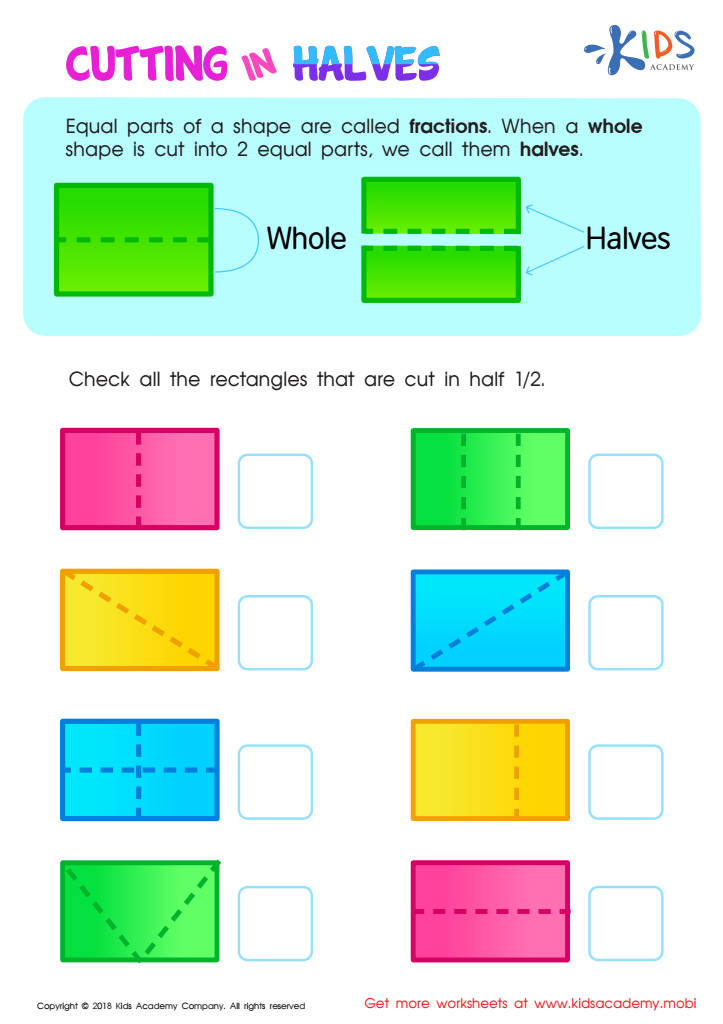
Cutting in Halves Worksheet
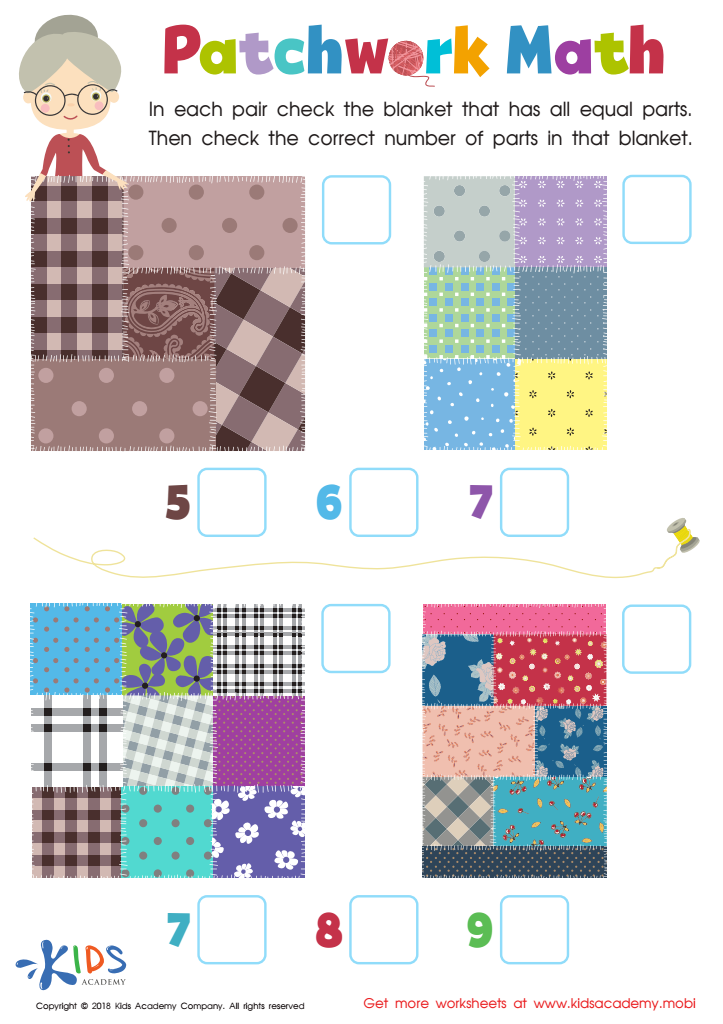
Patchwork Math Worksheet
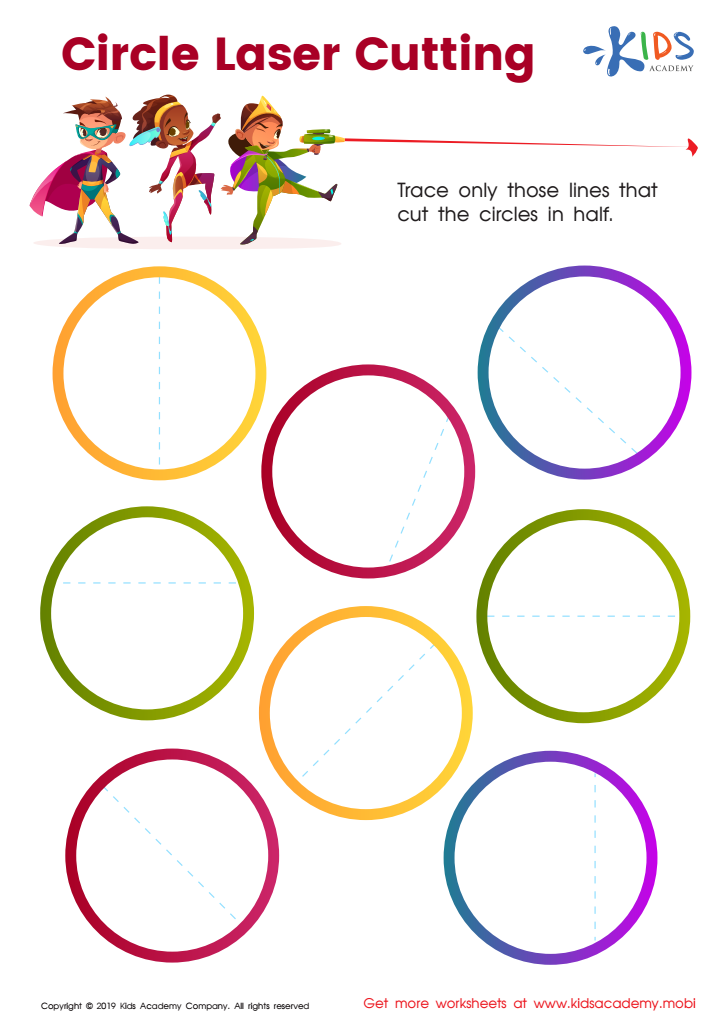
Circle Laser Cutting Worksheet
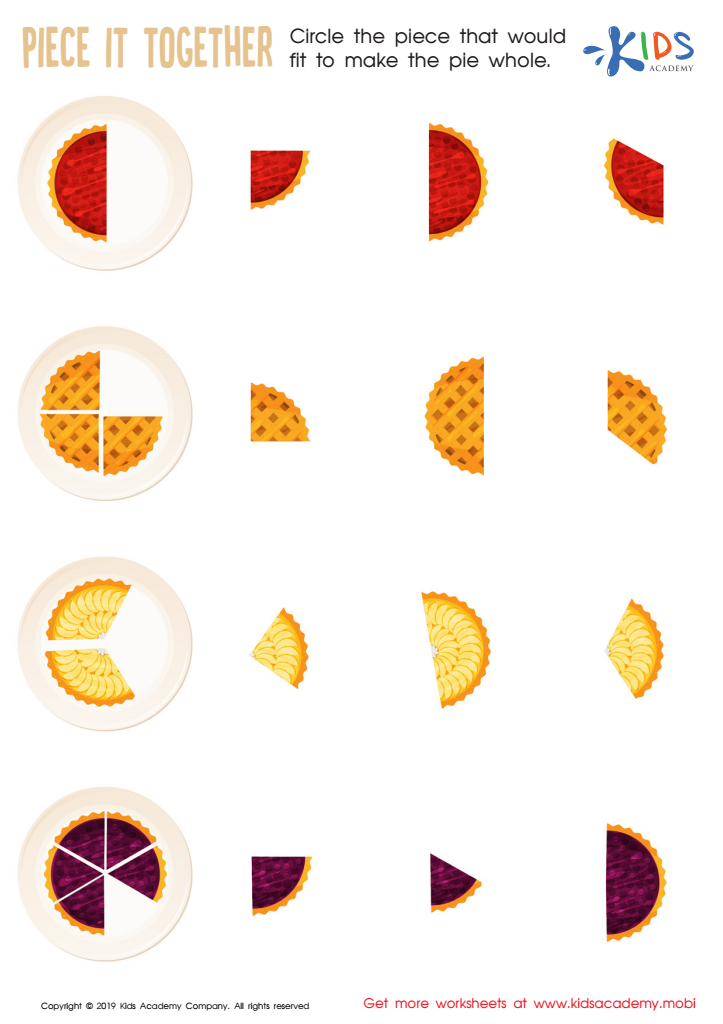
Piece it together Worksheet








Fine motor skills and an understanding of fractions of shapes are foundational for 8-year-olds’ cognitive and physical development. Fine motor skills involve the coordination of small muscles in movements—typically of the hands and fingers—essential for daily tasks such as writing, drawing, buttoning clothes, or tying shoelaces. When children engage in activities involving fractions of shapes, such as cutting shapes into halves or quarters, they use fine motor skills to manipulate materials precisely.
Caring about these areas is crucial because fine motor proficiency supports academic achievement and builds self-confidence. Mastery of motor skills directly enhances handwriting, enabling smoother transitions to advanced writing tasks integral to their schoolwork. Additionally, fractions of shapes introduce fundamental mathematical concepts. Understanding fractions establishes a strong foundation for more advanced math topics they will encounter later.
Hands-on activities combining fine motor skills with fractions—like cutting paper into fractional parts or using manipulatives—promote active learning and make abstract mathematical concepts more concrete. This approach can foster a positive attitude towards math by making it accessible and enjoyable. For these reasons, parents and teachers should care about integrating activities that develop fine motor skills and fractions of shapes, which collectively support holistic educational growth and lifelong learning skills.