Understanding fractions Fractions of Shapes Worksheets for 8-Year-Olds
18 filtered results
-
From - To
Welcome to our "Understanding Fractions of Shapes Worksheets" designed specifically for 8-year-olds! These engaging worksheets help young learners grasp the concept of fractions by visually breaking down various shapes. Through fun activities, children will explore how to identify and represent fractions using real-life examples, enhancing their understanding of dividing shapes into equal parts. Each worksheet is crafted to cater to different learning styles, ensuring all kids can effectively practice and develop their fraction skills. Boost your child's mathematical confidence and solidify their foundational knowledge of fractions with our interactive and educational resources. Discover the joy of learning with fractions today!
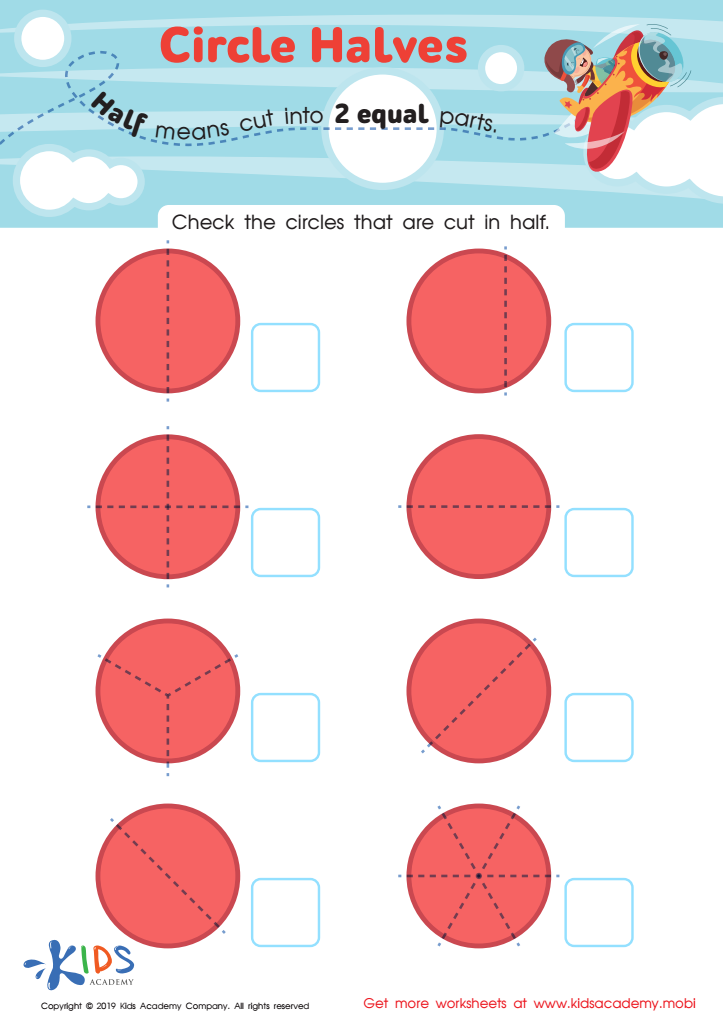
Circle Halves Worksheet
 Assign to My Students
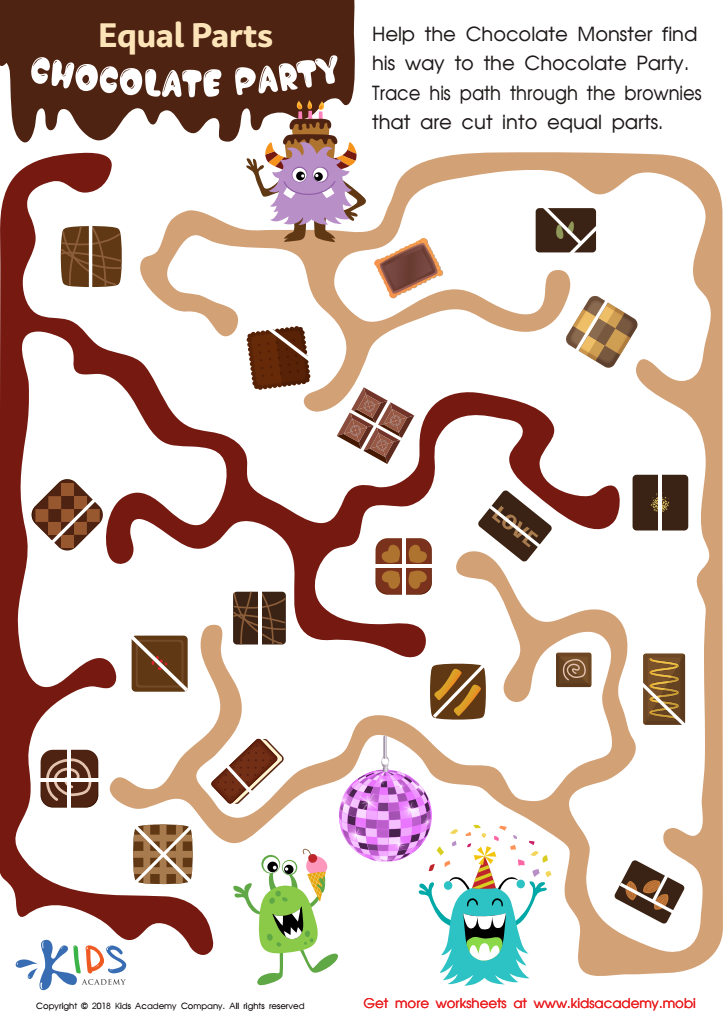
Equal Parts: Chocolate Party Worksheet
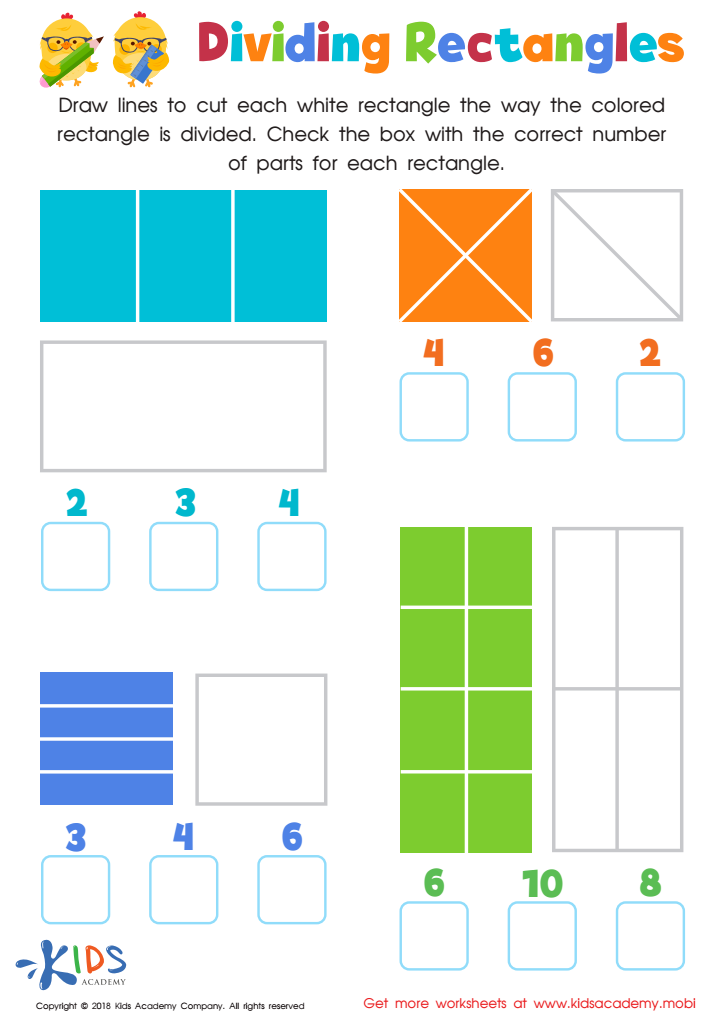
Dividing Rectangles Worksheet
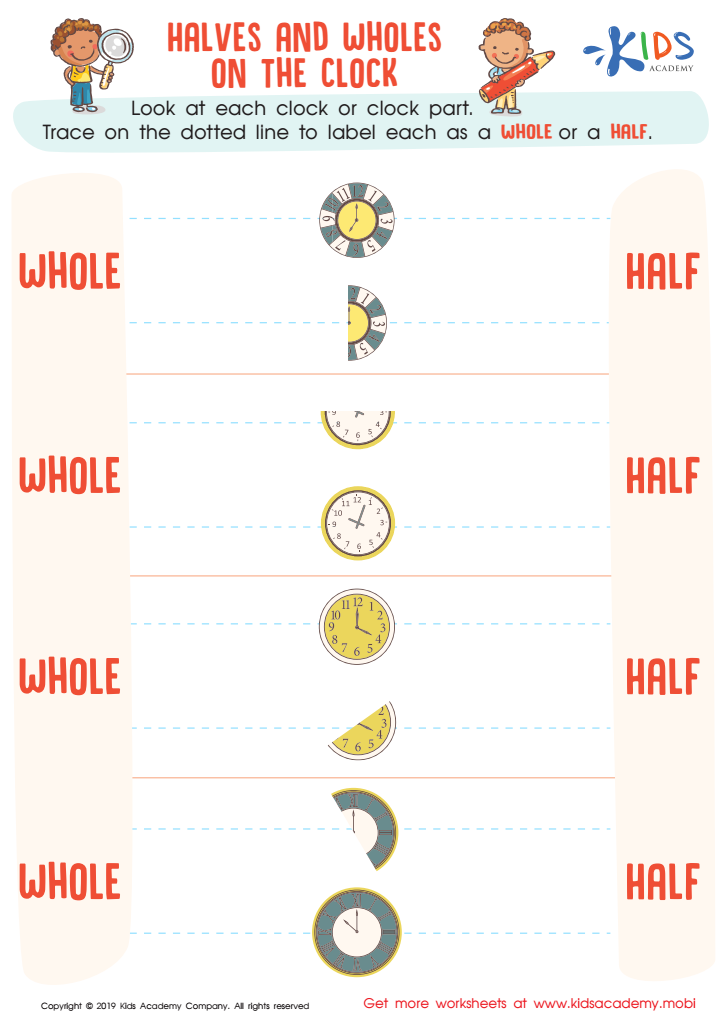
Halves and Wholes on the Clock Worksheet
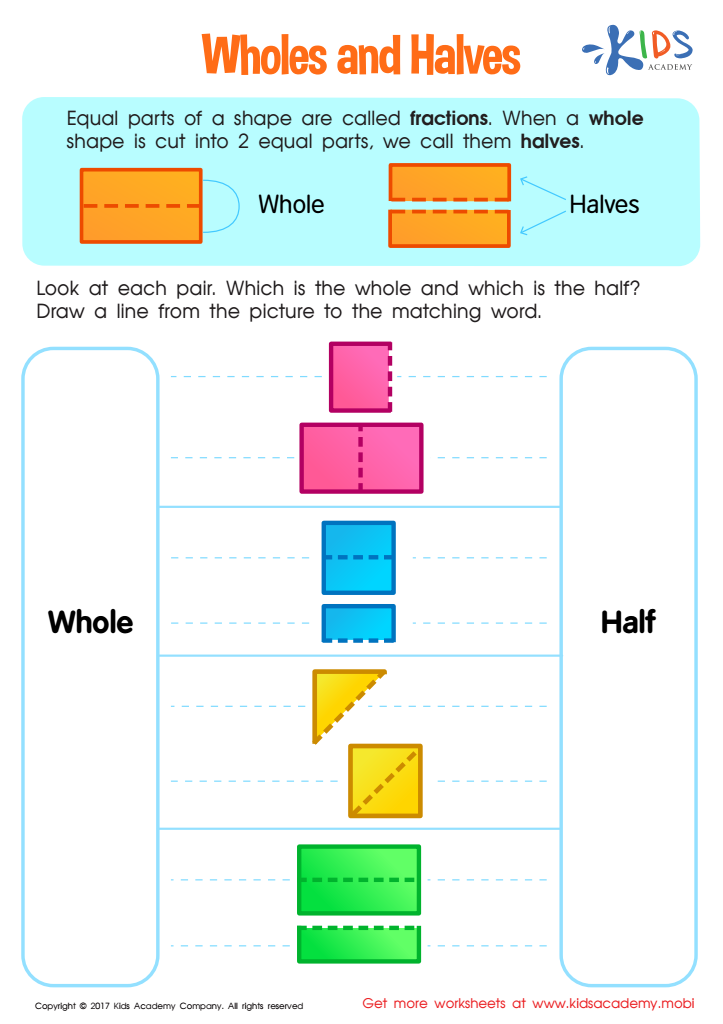
Wholes and Halves Worksheet
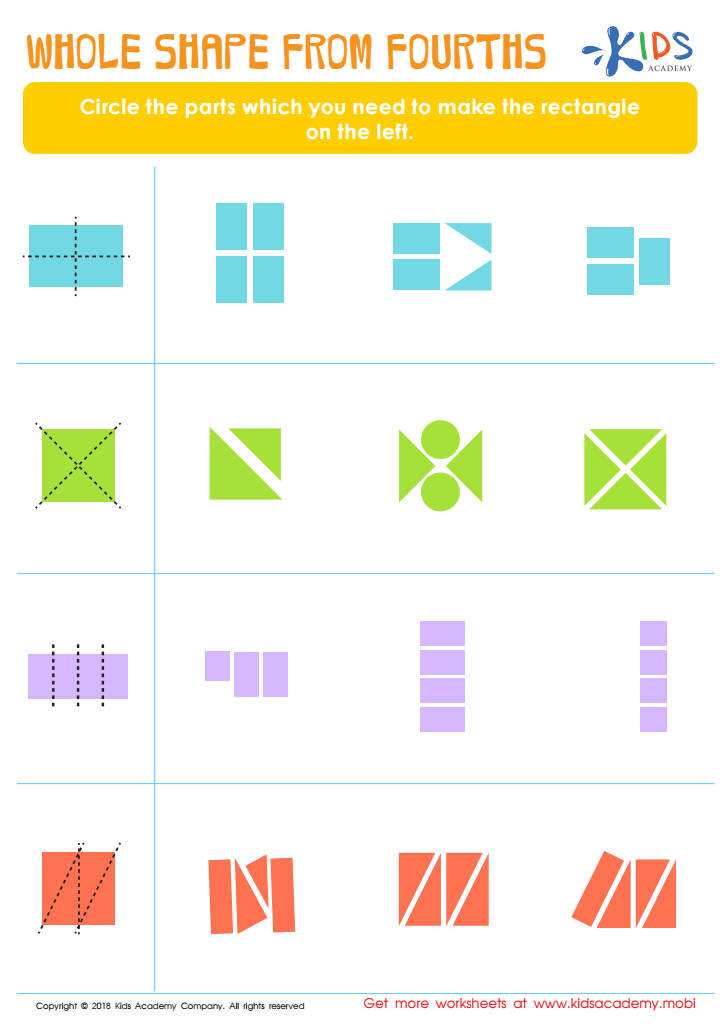
Whole Shape from Fourths Worksheet
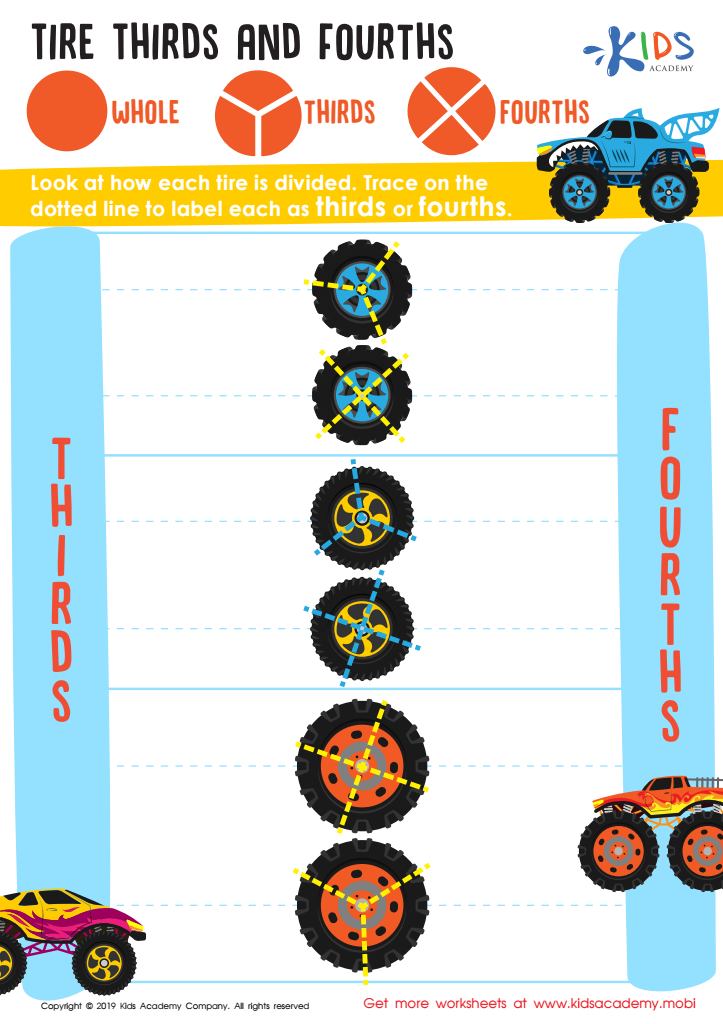
Tire Thirds and Fourths Worksheet
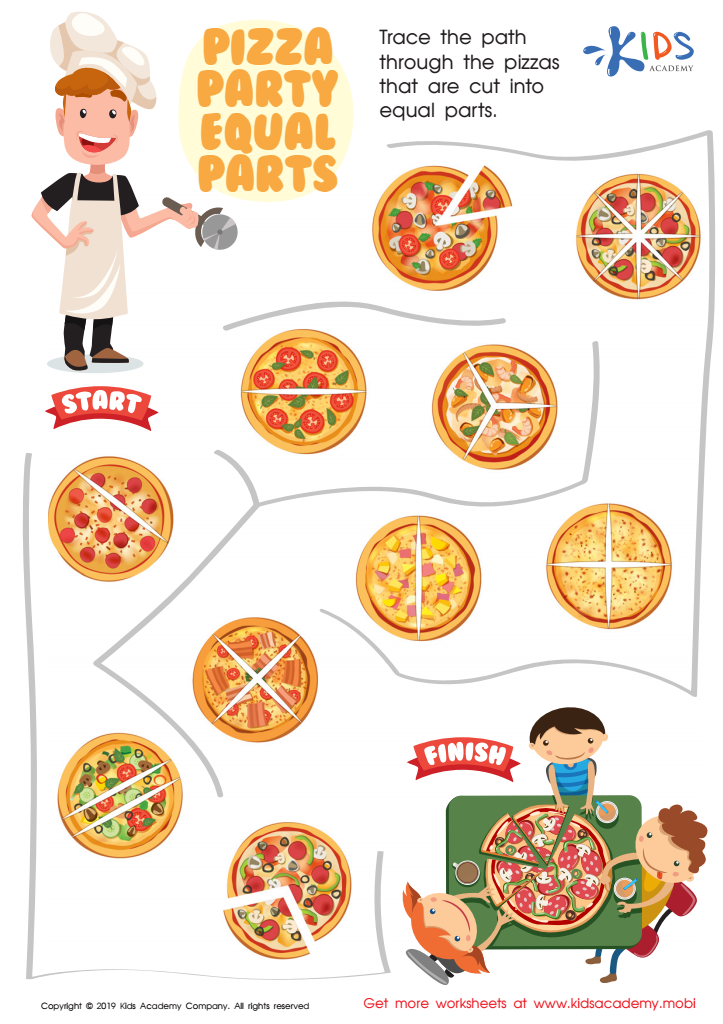
Pizza Party Equal Parts Worksheet
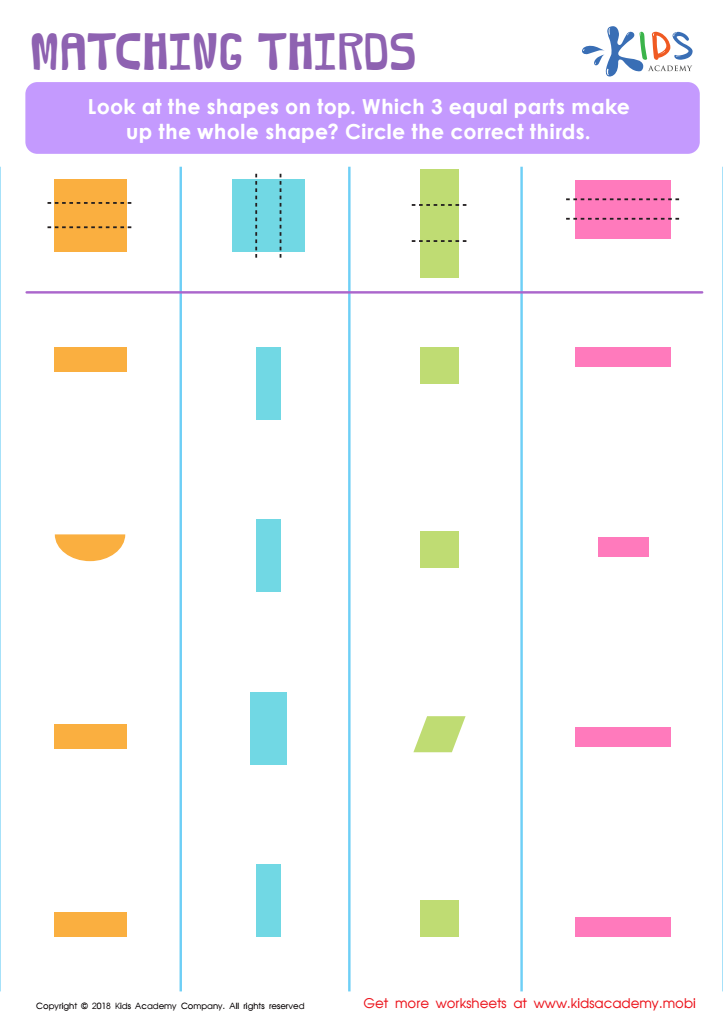
Matching Thirds Worksheet
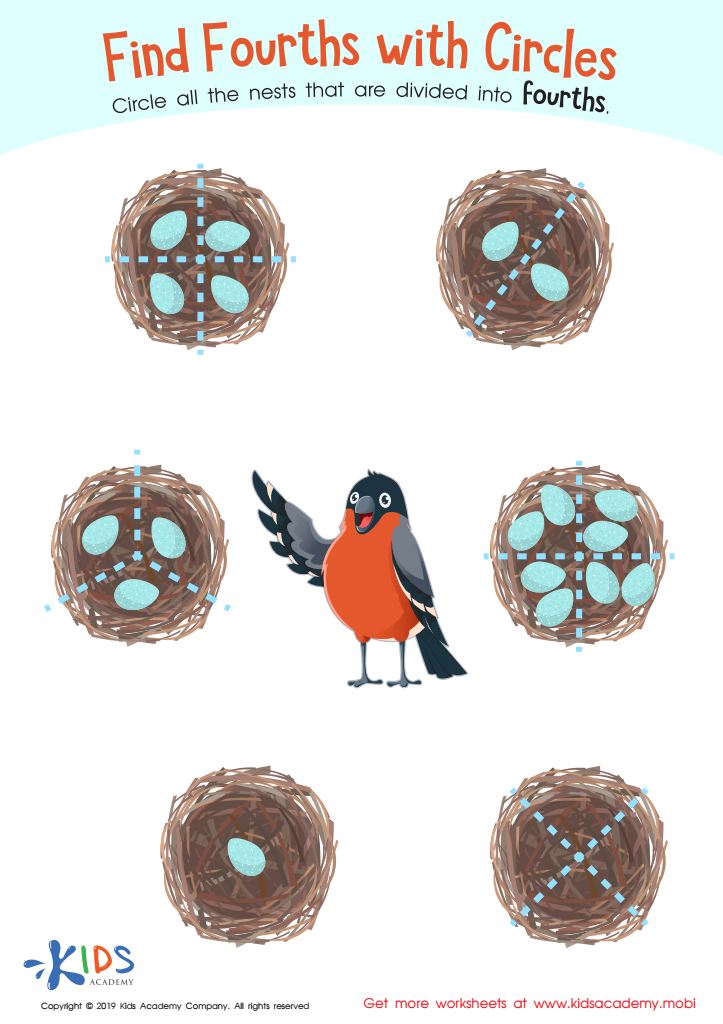
Find Fourths Circles Worksheet
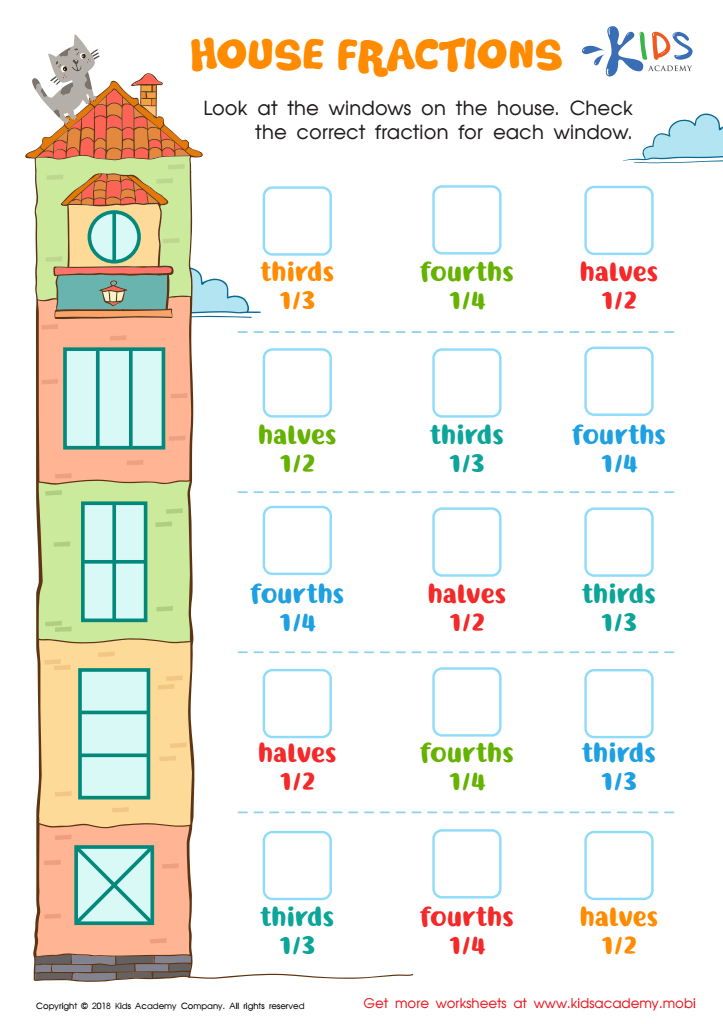
House Fractions Worksheet
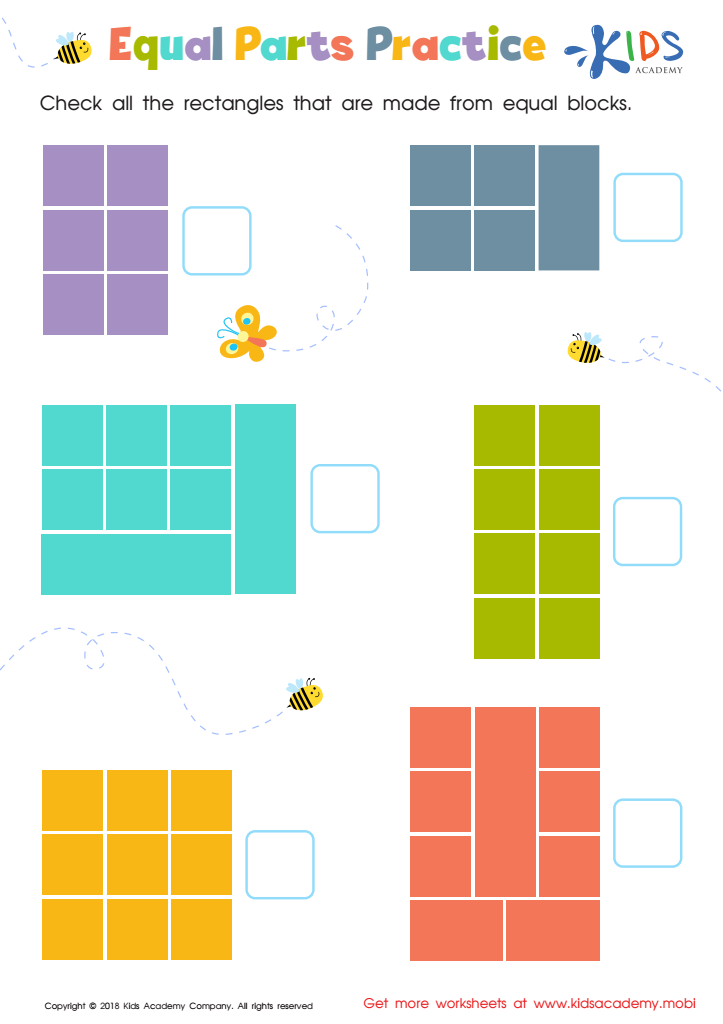
Equal Parts Practice Worksheet
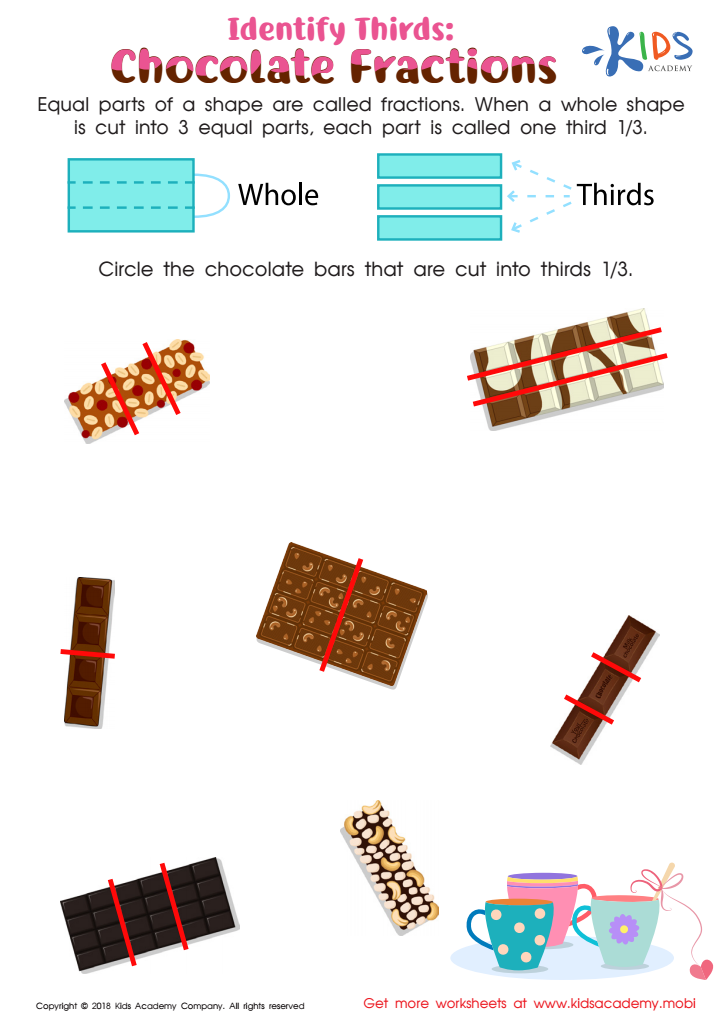
Identify Thirds: Chocolate Fractions Worksheet
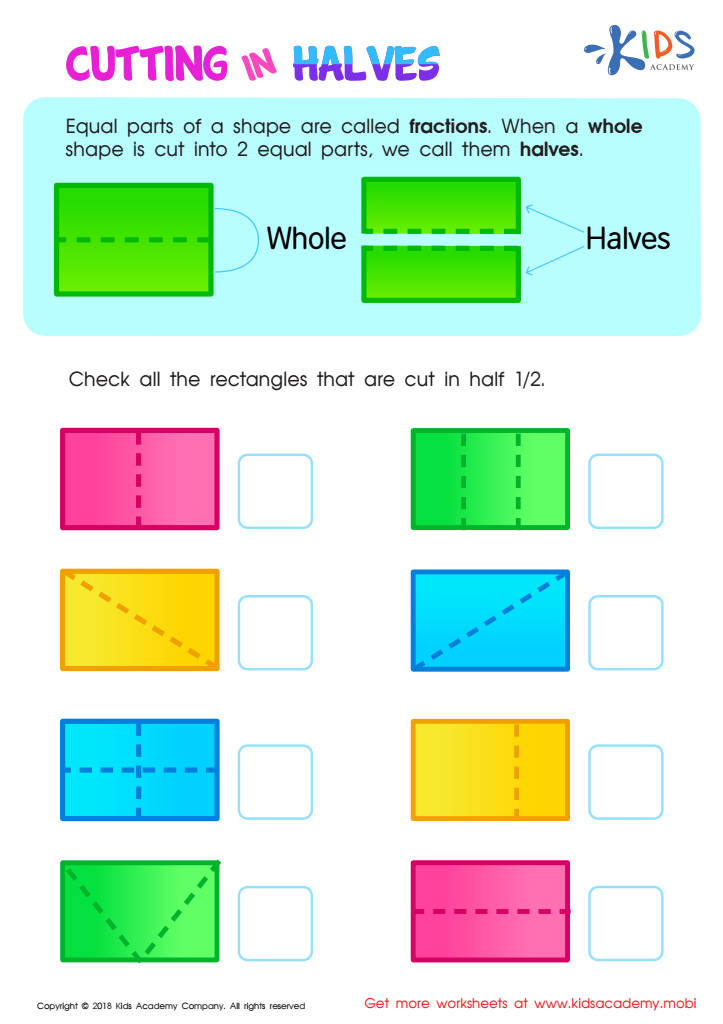
Cutting in Halves Worksheet
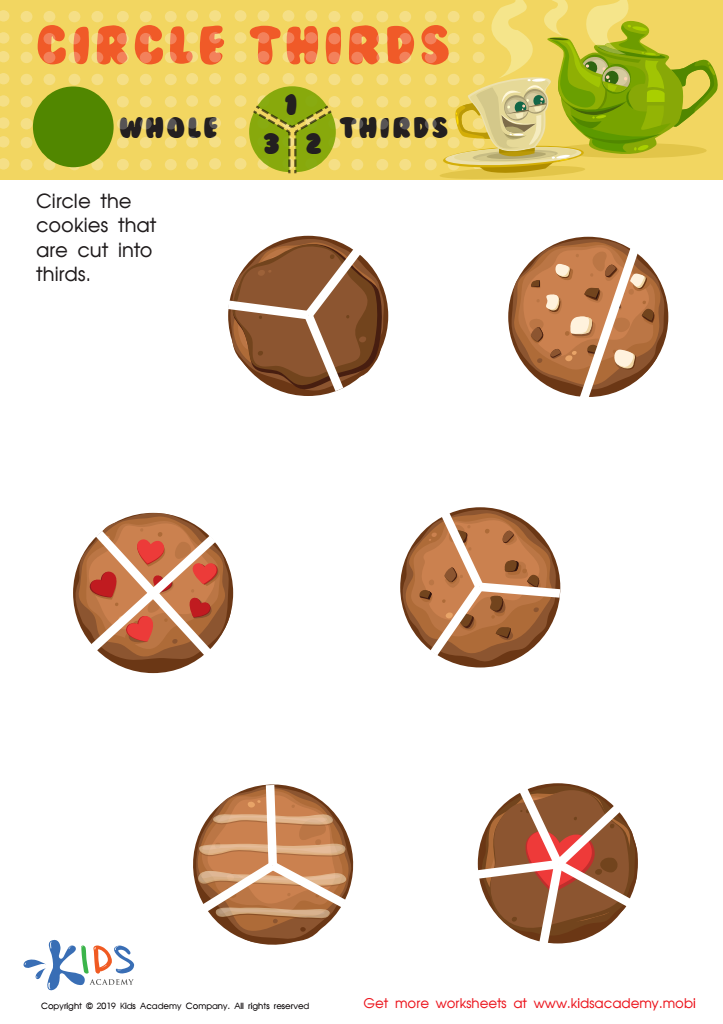
Circle Thirds Worksheet
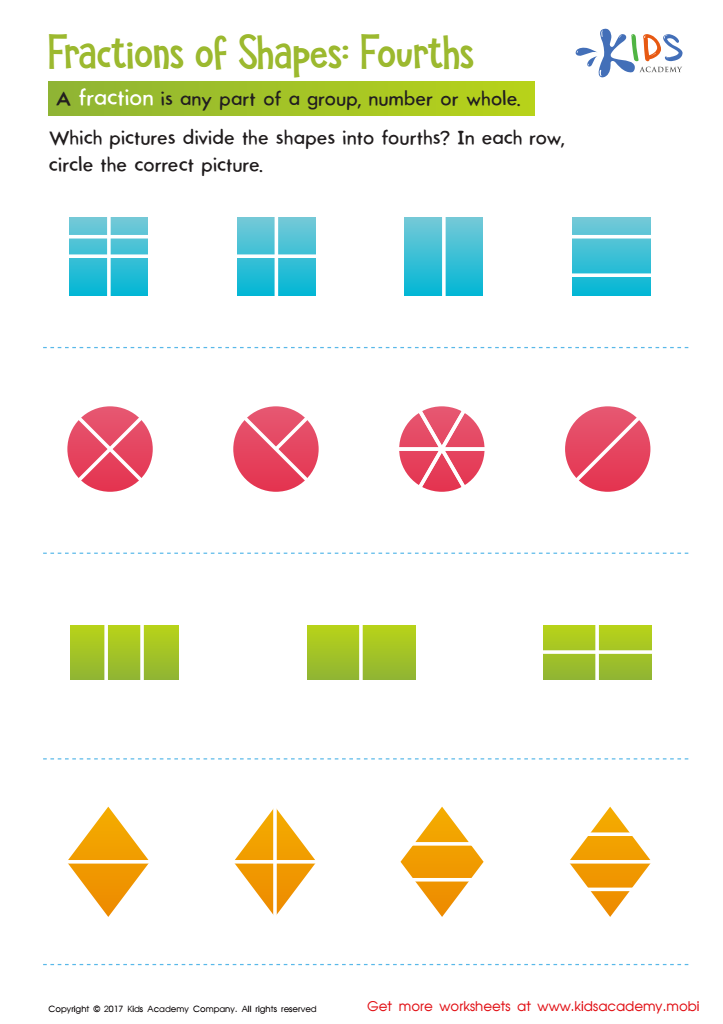
Fractions of Shapes Worksheet
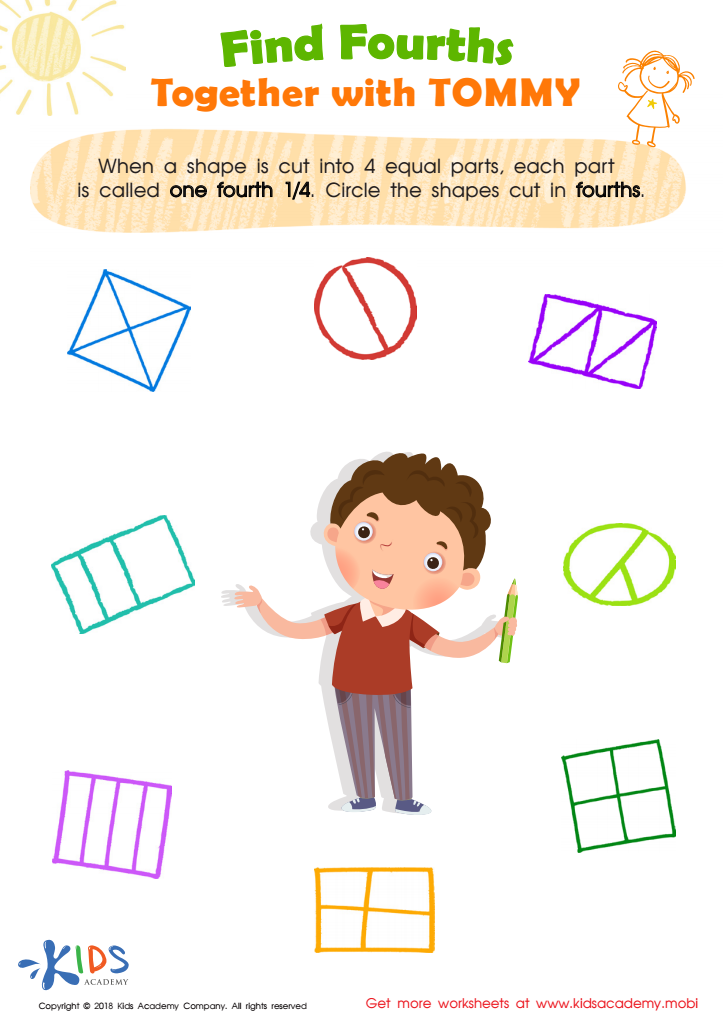
Find Fourths Together with Tommy Worksheet
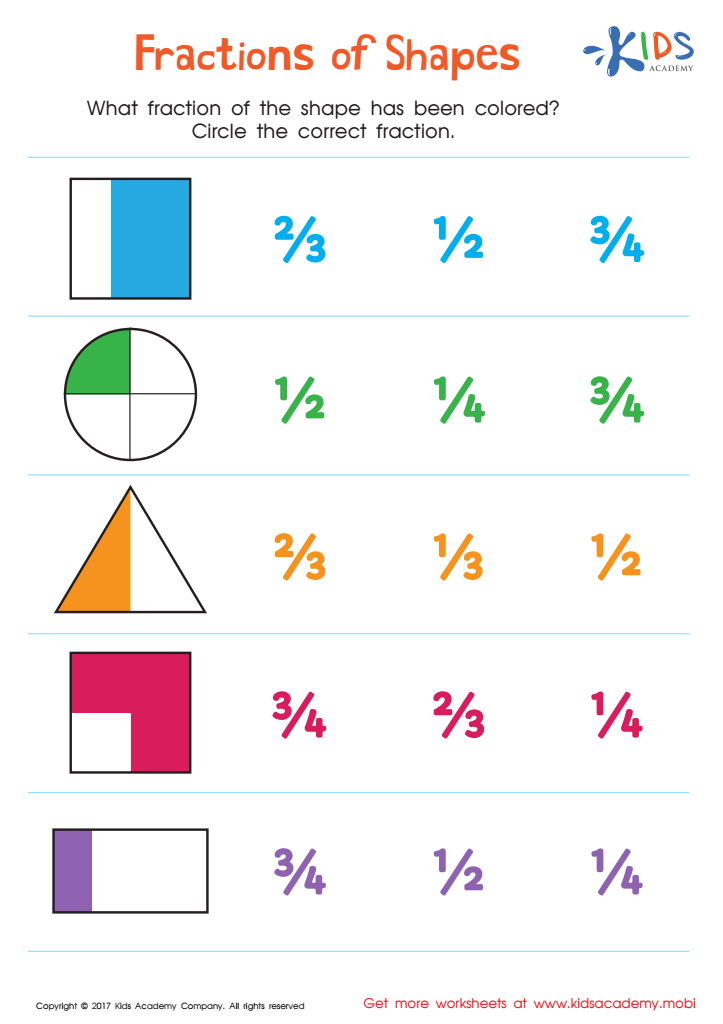
Fractions of Shapes: Math Concept Worksheet








Understanding fractions, particularly fractions of shapes, is crucial for 8-year-olds as it lays the groundwork for more advanced mathematical concepts. At this age, children are transitioning from concrete operations to more abstract reasoning, making it an ideal time to explore fractions. Recognizing fractions in shapes helps children visualize and internalize the concept of parts of a whole, which is fundamental in daily life, such as sharing food or dividing resources.
Parents and teachers should care about this because a solid foundation in fractions enhances students’ problem-solving skills and logical thinking. It encourages critical skills like comparison and measurement, which are vital in math and science. Additionally, mastering fractions fosters confidence, as it prepares children for future math challenges, such as adding, subtracting, or multiplying fractions.
Furthermore, understanding fractions relates to cultural and practical contexts, as children can apply their knowledge creatively in cooking, art, or even playing games. Parents can help reinforce this by encouraging activities that involve shapes and fractions, while teachers can include hands-on learning experiences in their curriculum. Ultimately, a strong grasp of fractions supports overall academic success and everyday decision-making, making it essential for holistic development.