Understanding area Geometry Worksheets for 8-Year-Olds
3 filtered results
-
From - To
Explore our engaging "Understanding Area Geometry Worksheets" designed specifically for 8-year-olds to enhance their mathematical skills. These worksheets provide a fun and interactive way for young learners to grasp the concept of area through colorful visuals and hands-on activities. Students will tackle various challenges, including measuring shapes, calculating area, and applying their knowledge in real-world scenarios. Our resources are perfect for classroom use or at-home practice, ensuring children build a strong foundation in geometry. With a variety of problems tailored to their learning level, these worksheets will instill confidence and foster a love for math in your little learners!
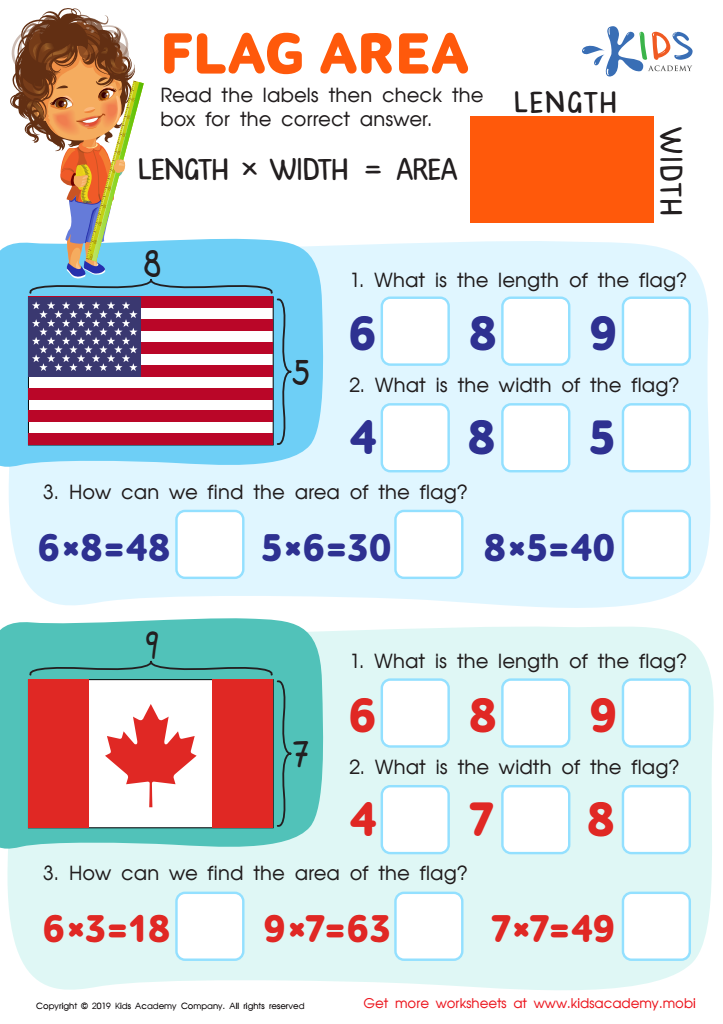
Flag Area Worksheet
 Assign to My Students











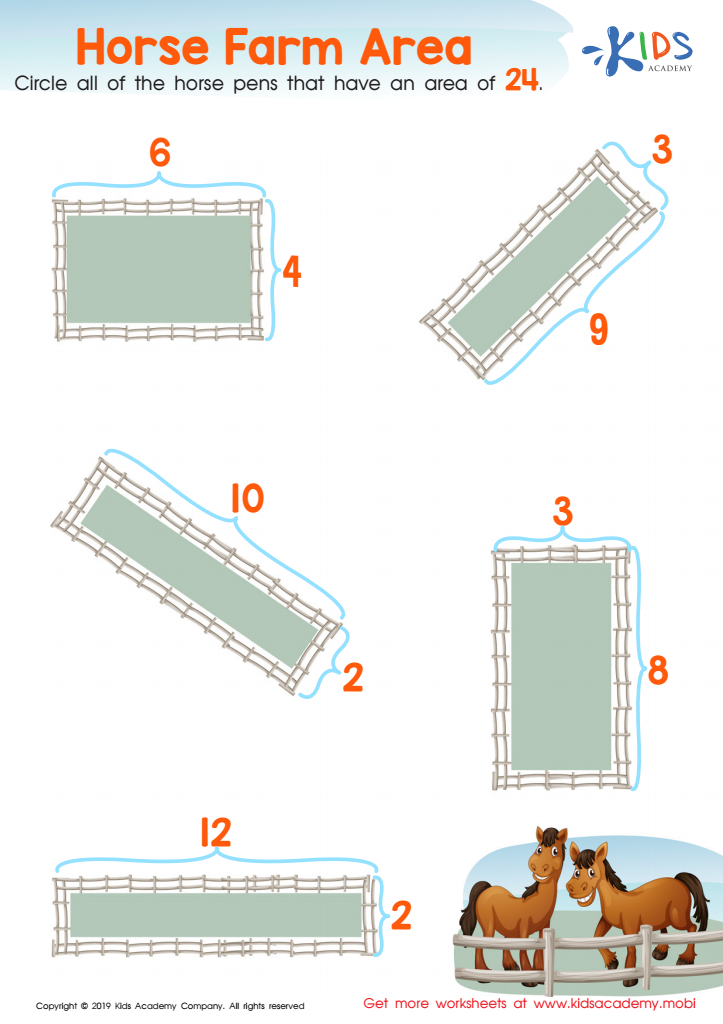
Horse Farm Area Worksheet
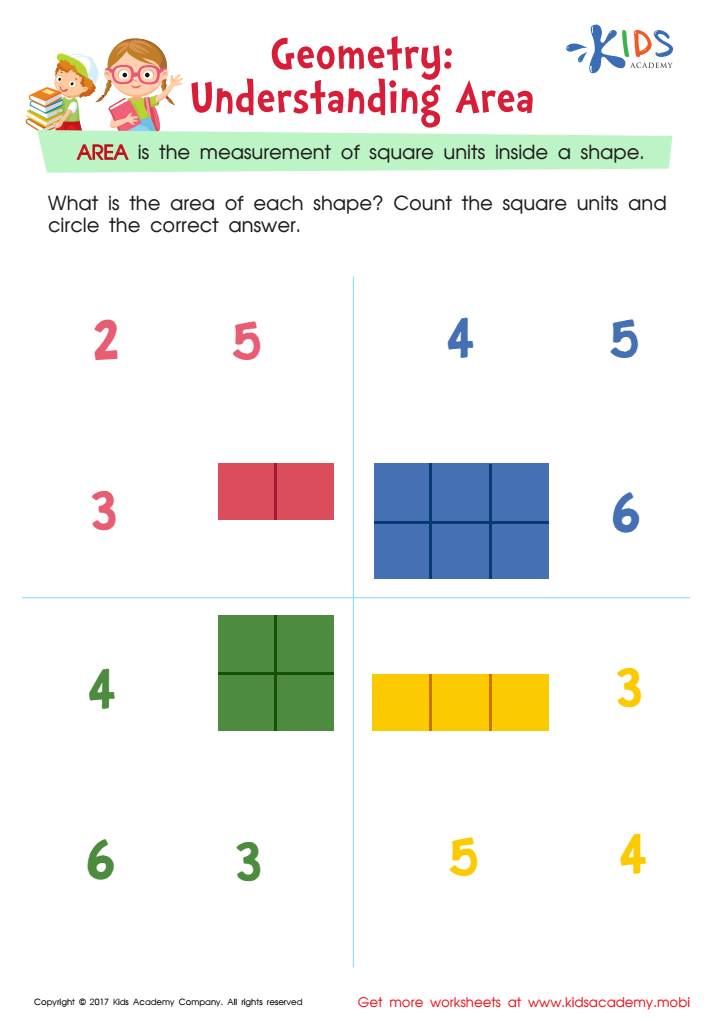
Understanding Area Worksheet








Understanding area and geometry is essential for 8-year-olds as it lays the groundwork for their mathematical development and critical thinking skills. At this age, children are beginning to grasp more abstract concepts, and introducing them to geometry helps enhance their spatial awareness and problem-solving abilities. When parents and teachers take an active interest in these concepts, they foster a supportive learning environment, encouraging children to explore and relate mathematics to real-life situations.
Geometry introduces children to shapes, sizes, and the properties of space. Familiarizing them with the concept of area helps them apply these ideas to practical situations, such as measuring spaces for furniture or understanding the dimensions of their play areas. Additionally, understanding area promotes logical reasoning and precision, skills which are vital as children progress in their education.
Moreover, mastering geometry early enhances future learning in mathematics, enabling students to tackle more complex topics, such as measurement, fractions, and algebra, with confidence. By caring about geometry and area education, parents and teachers play an active role in helping children gain a solid foundation in mathematics that supports their overall academic development and prepares them for real-world applications in the future.








