Understanding place values Numbers Worksheets for 8-Year-Olds
10 filtered results
-
From - To
Unlock your child's mathematical potential with our "Understanding Place Values Numbers Worksheets for 8-Year-Olds." These engaging and curriculum-aligned worksheets are designed to enhance your child's comprehension of place values—units, tens, hundreds, and beyond. By breaking down complex concepts into manageable exercises, our worksheets provide interactive and fun ways for young learners to solidify their understanding. From identifying place values to comparing and ordering numbers, your child will gain the foundational skills needed for advanced math topics. Perfect for at-home practice or classroom reinforcement, start exploring our collection today to give your 8-year-old a strong numerical foundation.
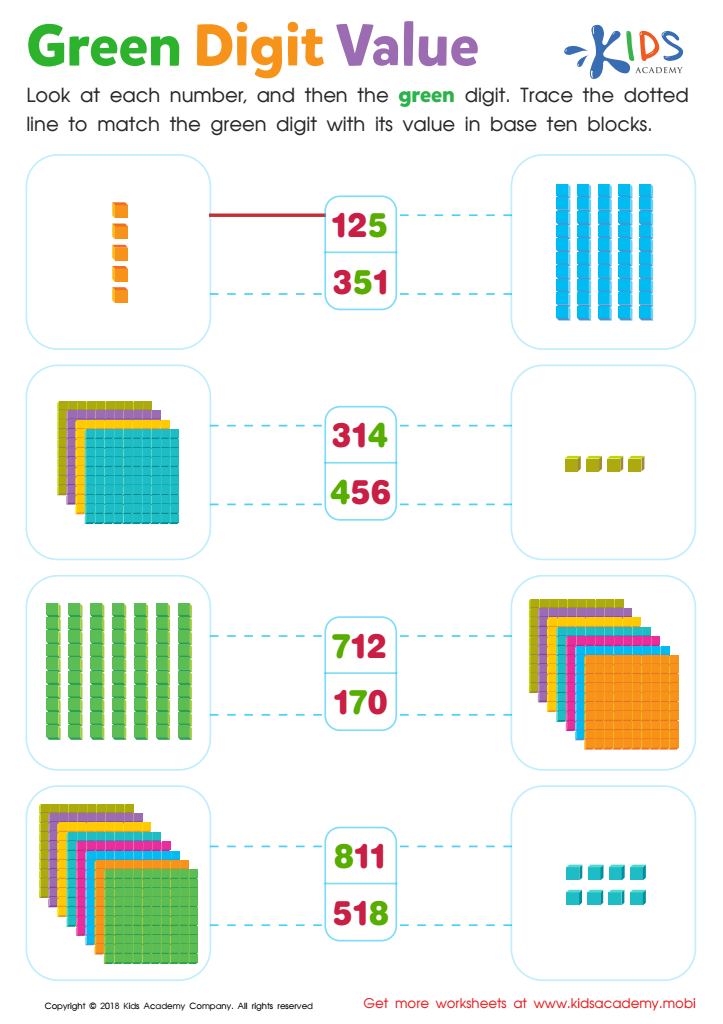
Green Digit Value Worksheet
 Assign to My Students
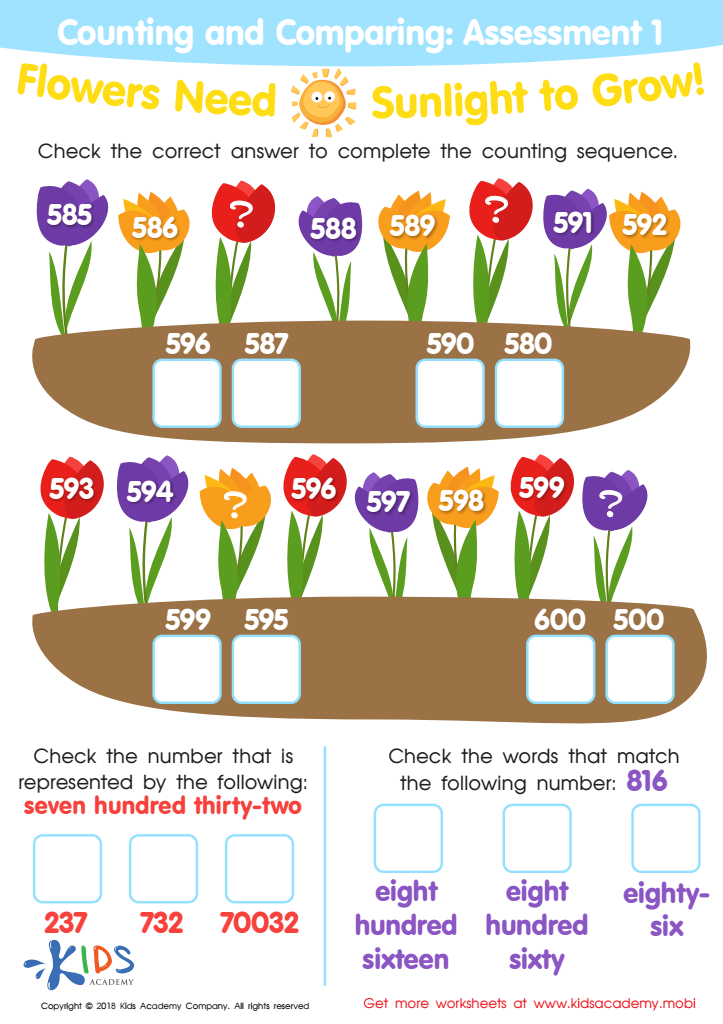
Counting and Comparing: Assessment 1 Worksheet
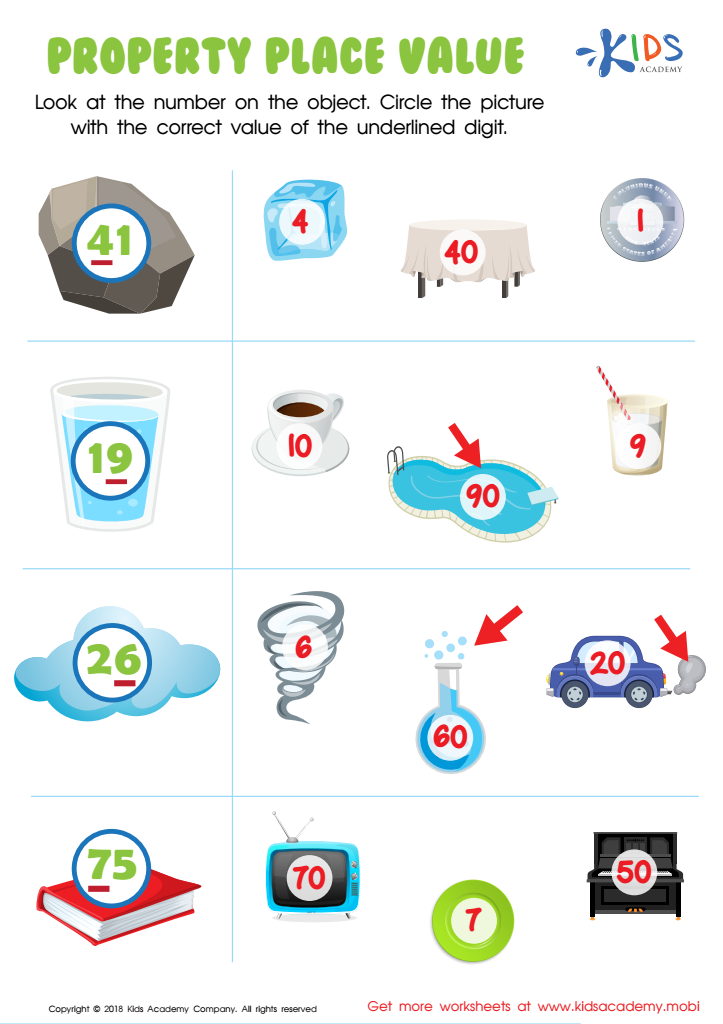
Property Place Value Worksheet
Place Value Thousands Worksheet
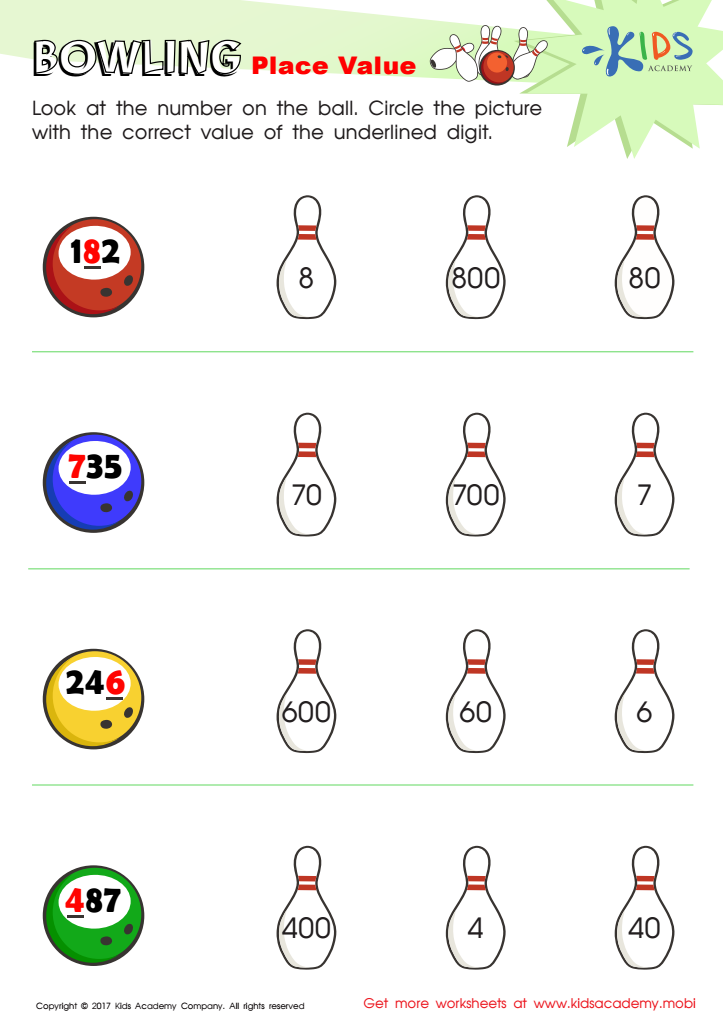
Place Value Worksheet
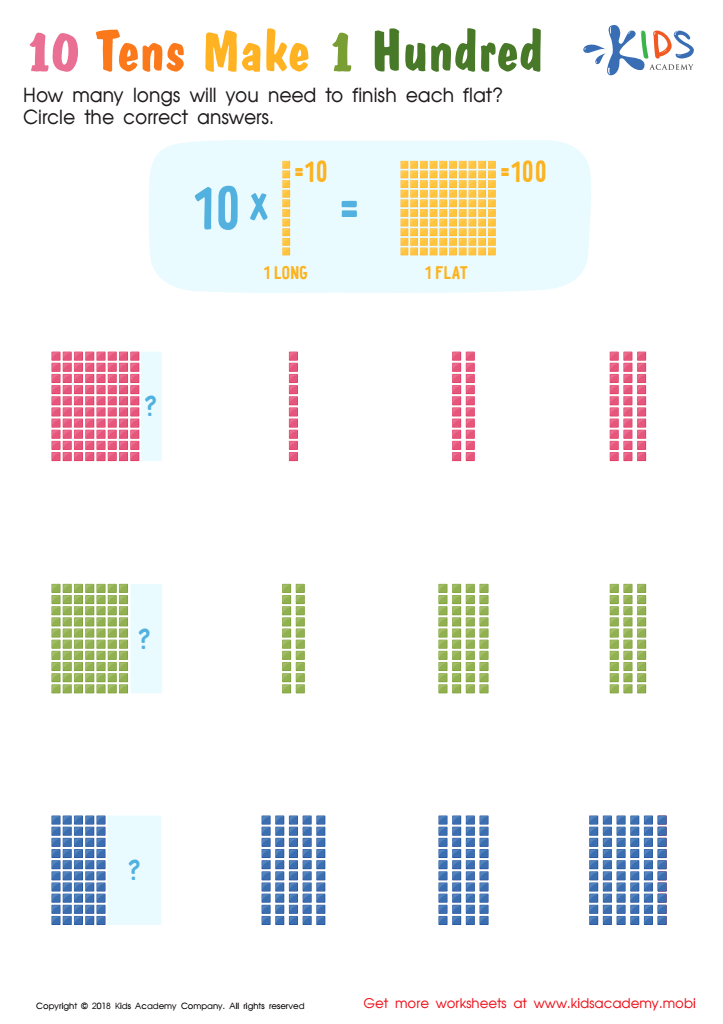
10 Tens Make 1 Hundred Worksheet
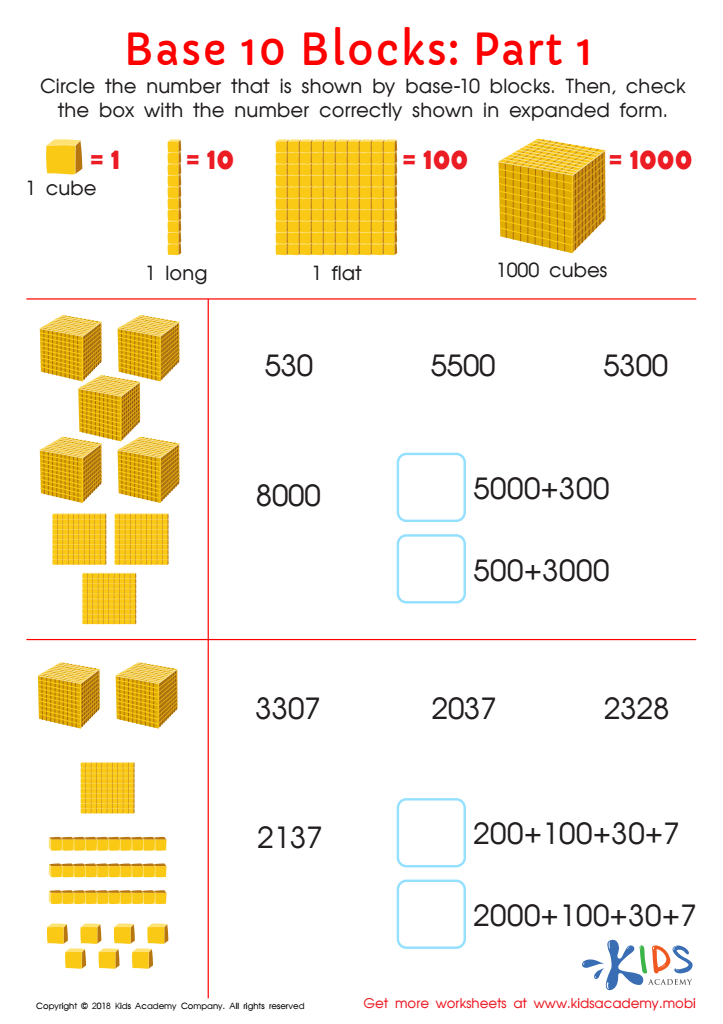
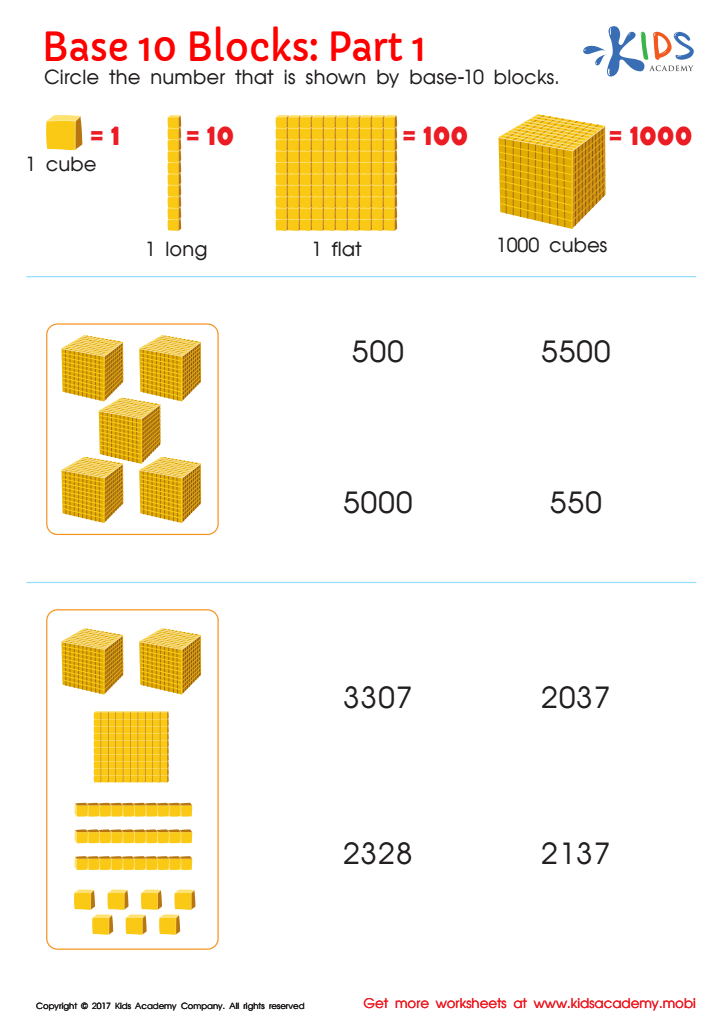
Base 10 Blocks Worksheet: Part 1
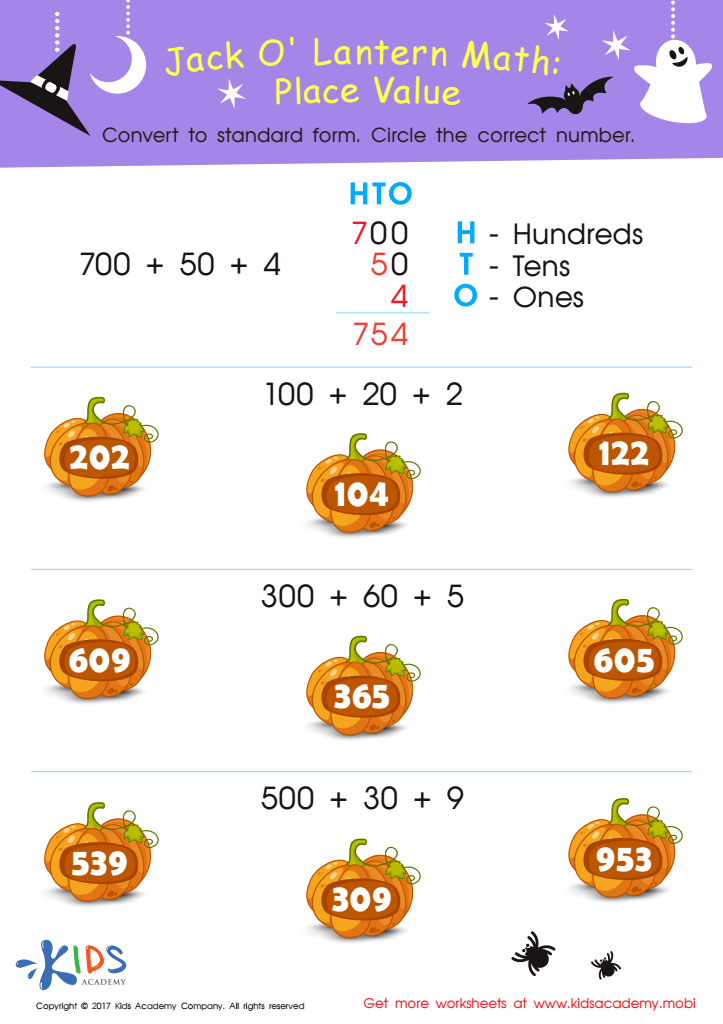
Free Place Value Worksheet
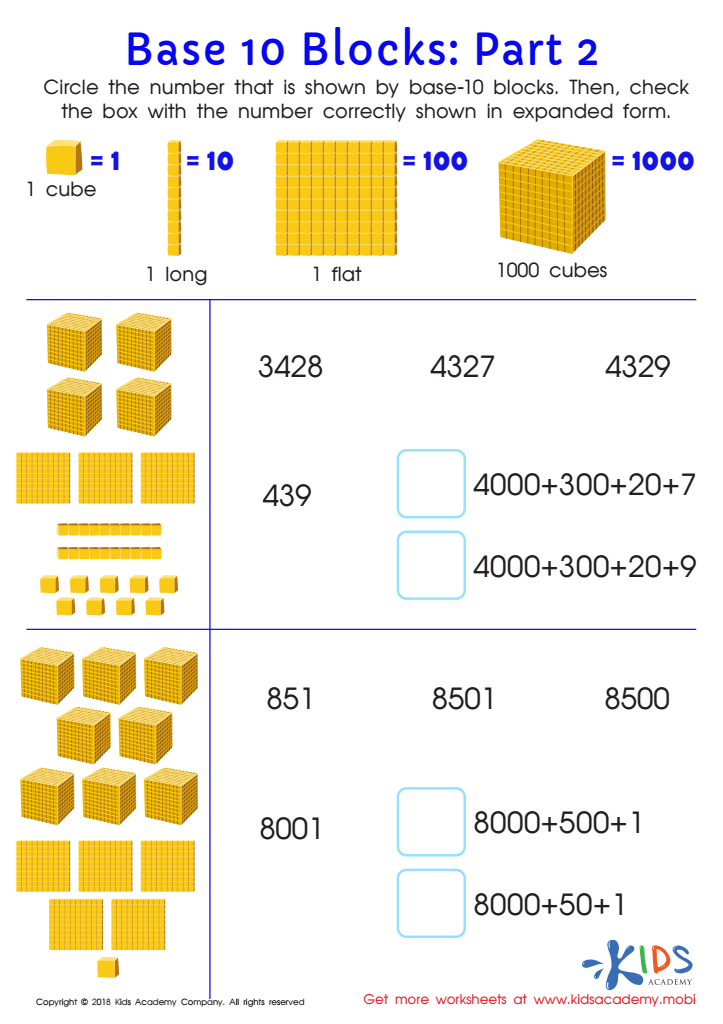
Base 10 Blocks Worksheet: Part 2
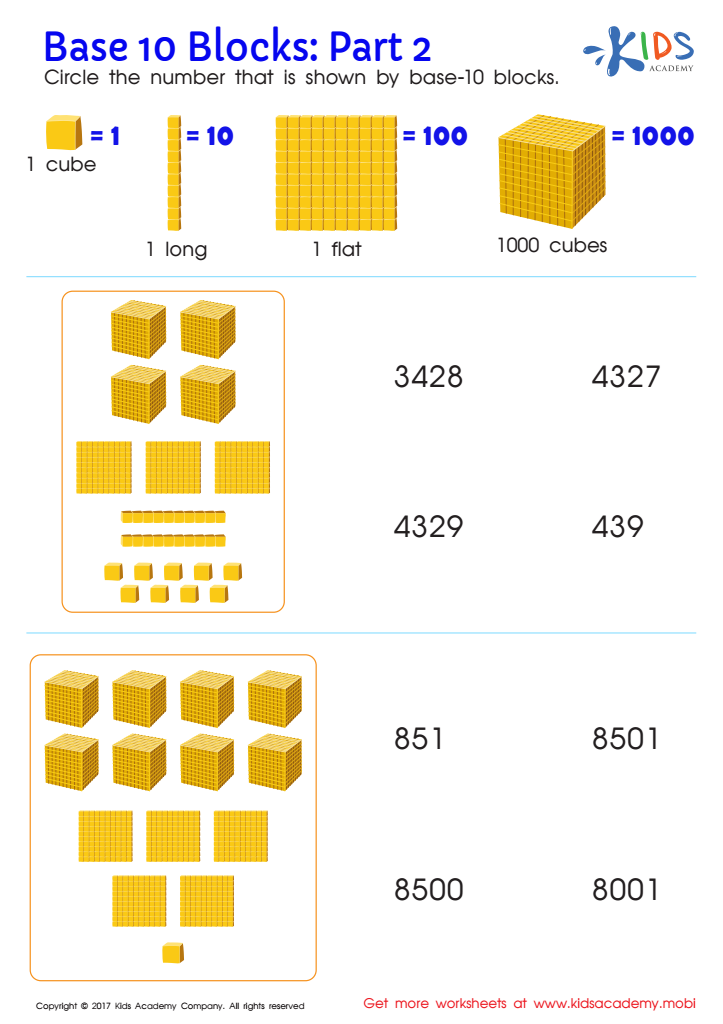
Place Value Worksheet: Thousands







Understanding place values is fundamental for 8-year-olds because it forms the bedrock of their mathematical knowledge. Place value allows children to comprehend the magnitude of numbers, fostering a clearer sense of what numbers actually represent. For instance, recognizing that in the number 352, the digit 3 stands for three hundred, not just three, is crucial for performing arithmetic operations accurately.
A good grasp of place values enhances a child's ability to add, subtract, multiply, and even divide larger numbers with confidence. It also makes it easier for them to read and write numerals, understand the concept of “carrying over” or “borrowing” in arithmetic, and tackle word problems efficiently.
For teachers, ensuring students understand place value is key to accelerating their math proficiency, enabling smoother progression to more complex mathematical concepts like fractions and decimals. For parents, supporting their child in mastering these foundational skills can reduce frustration and build a positive attitude towards math, instilling confidence in their young learners.
By fostering a solid understanding of place values, parents and teachers equip children with critical thinking and problem-solving skills that are applicable in everyday life, ultimately stretching beyond the classroom into real-life scenarios where numeric literacy is essential.








