Alphabet Worksheets for Ages 3-7 - Page 15
338 filtered results
-
From - To
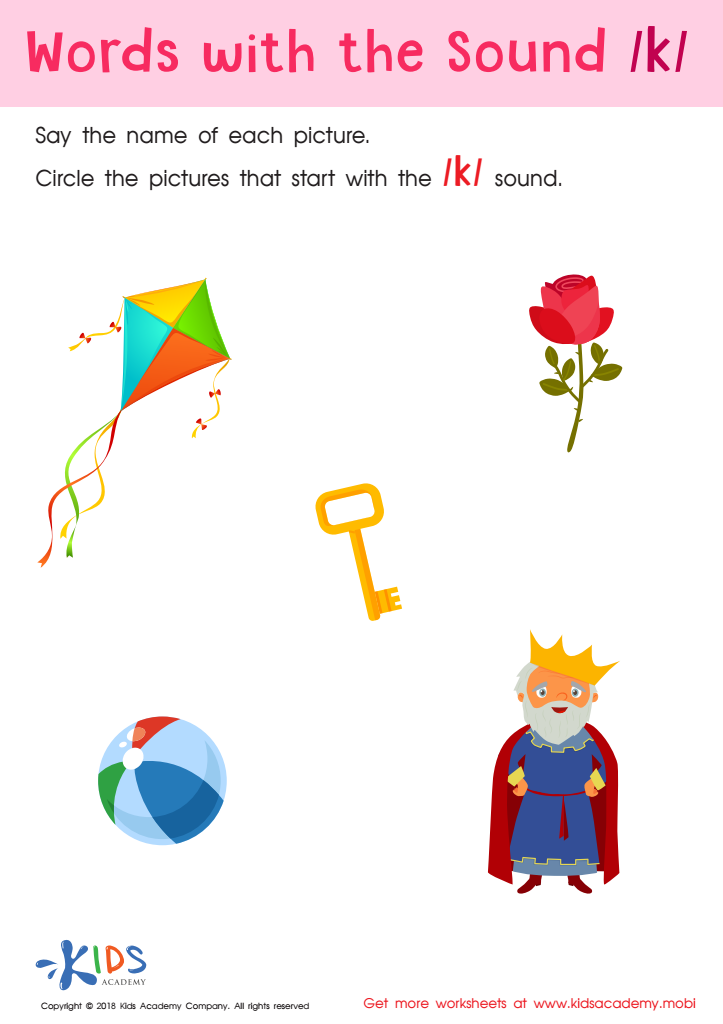
Words with sound k Reading Worksheet
 Assign to My Students
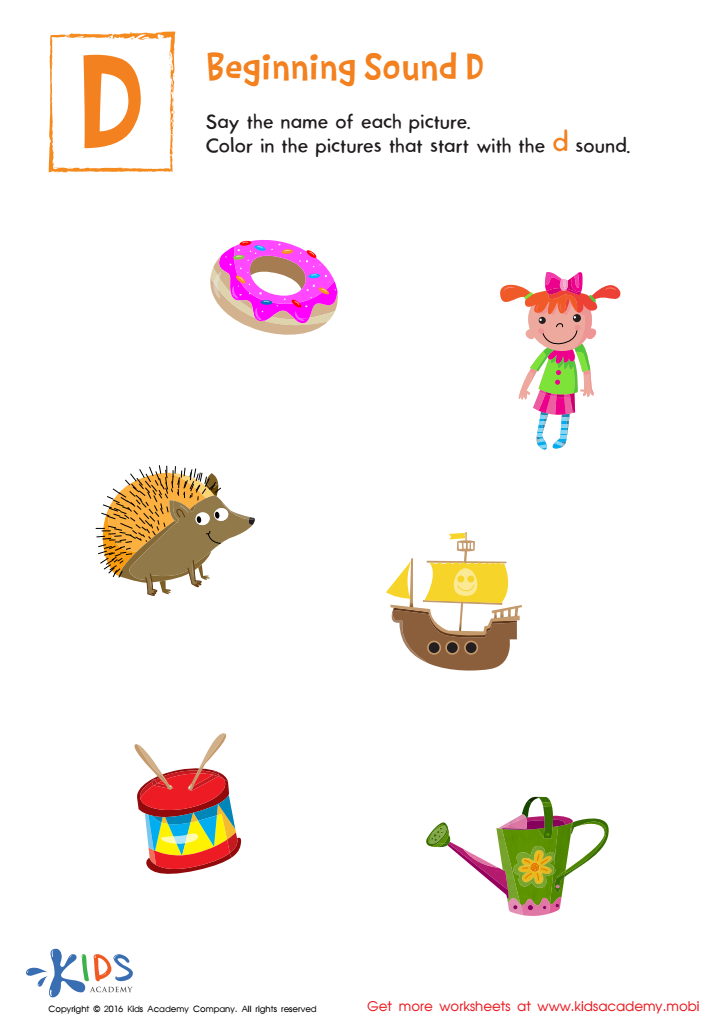
Beginning Sound D Worksheet








Parents and teachers should care about the alphabet for ages 3-7 because it lays the foundation for literacy and critical cognitive skills. At this developmental stage, children are particularly receptive to learning new information, and the alphabet serves as the gateway to reading and writing. Recognizing letters and their sounds not only boosts phonemic awareness but also enhances vocabulary and comprehension.
Engaging with the alphabet can make learning enjoyable through songs, games, and interactive activities that capture children's attention. This playful approach not only fosters a love for reading but also builds self-confidence as children begin to identify letters and spell simple words.
Additionally, early literacy skills have a long-lasting impact on academic success. Children who are proficient in their letters often excel in school and develop better communication abilities as they grow. Nurturing an understanding of the alphabet can also support social-emotional development, as kids learn to express themselves through writing.
In summary, prioritizing alphabet knowledge for young learners is crucial. It equips them with essential skills for future learning, promotes a lifelong love for literacy, and ultimately contributes to their overall development.







