Long Vowels Worksheets for Ages 3-7 - Page 2
29 filtered results
-
From - To
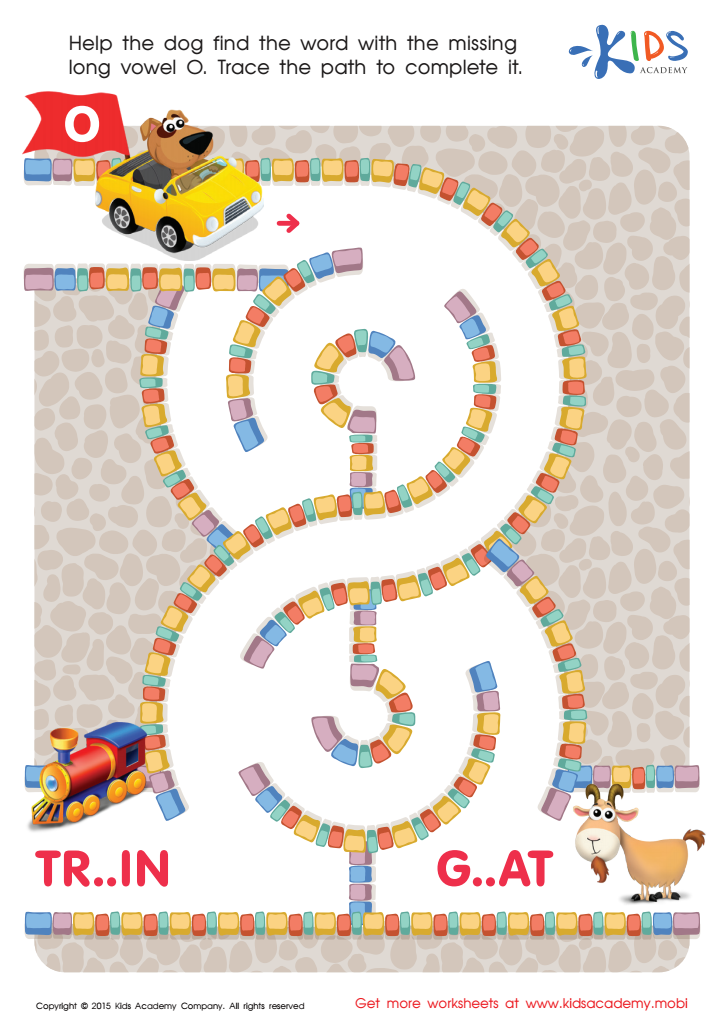
Long Vowel Sound O Worksheet
 Assign to My Students
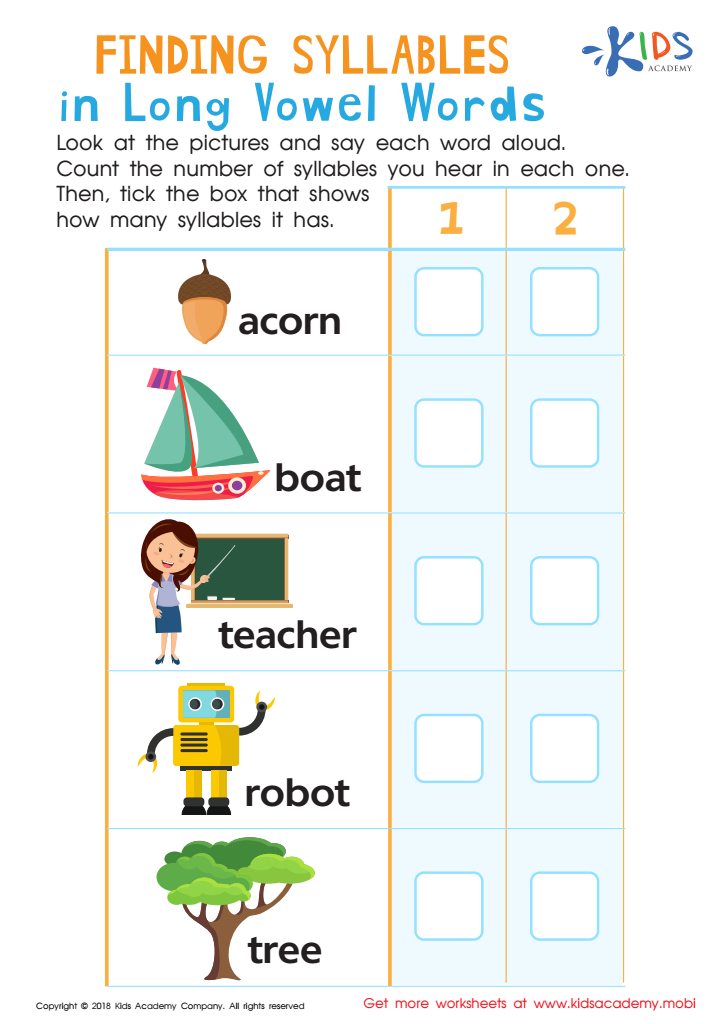
Finding Syllables in Long Vowel Words Worksheet
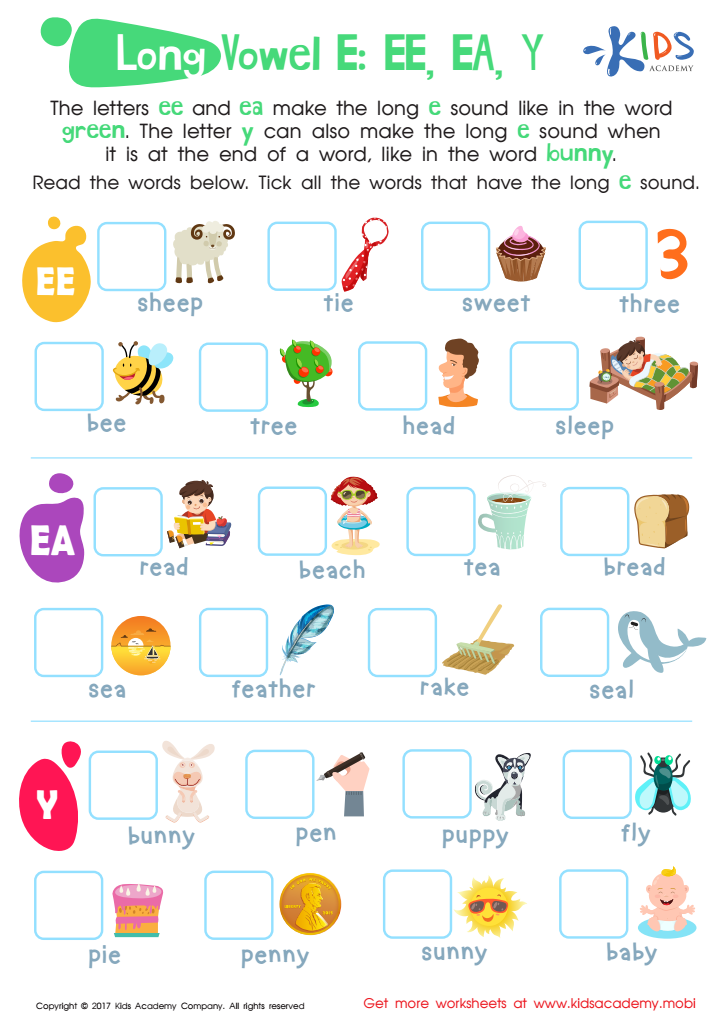
Long Vowel E Printable
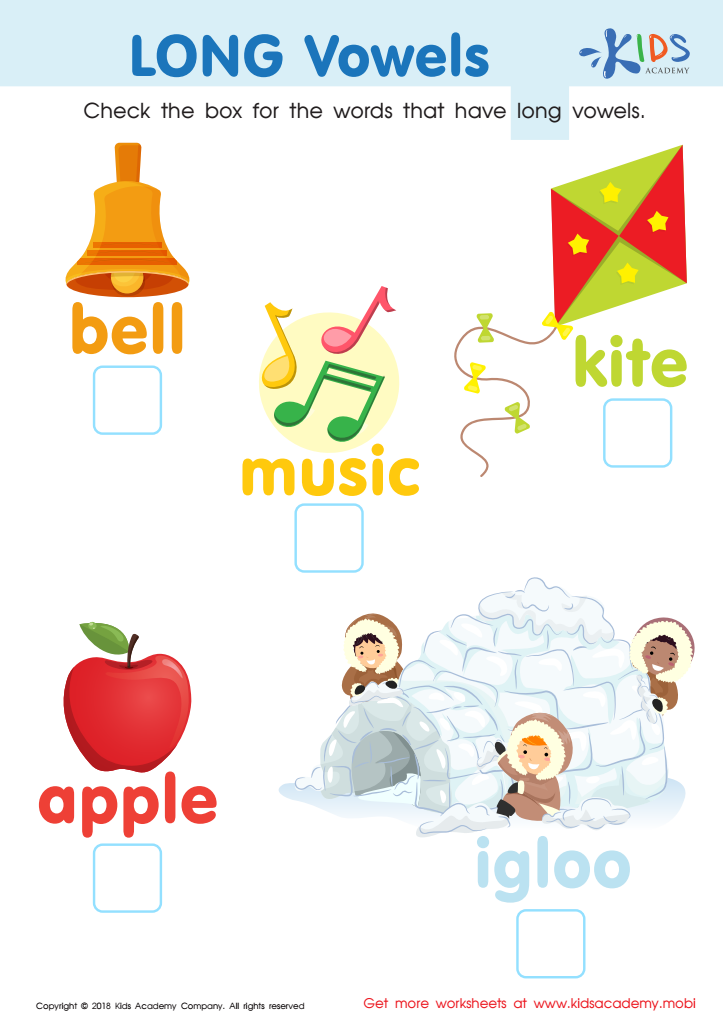
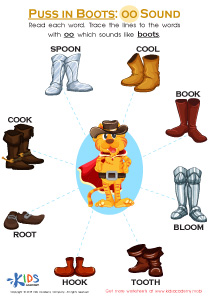
long vowels Worksheet
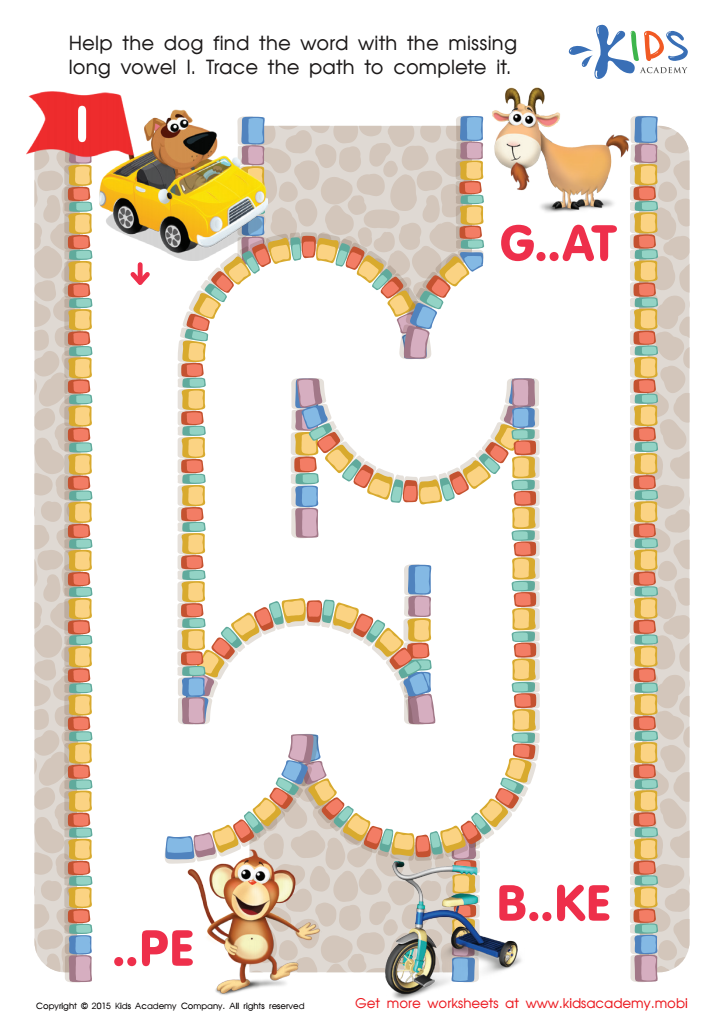
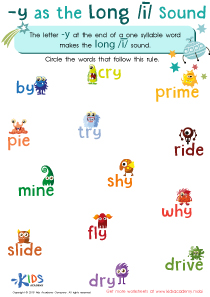
Long Vowel Sound I Worksheet



Long vowels are crucial in early childhood education because mastering them sets a strong foundation for young readers' literacy development. Ages 3-7 are formative years when children are most receptive to learning new sounds and words. Long vowels differ from short vowels in that they "say their name" and often appear in words that students commonly encounter as they begin to read.
For parents and teachers, prioritizing long vowels helps children improve their pronunciation and spelling skills. When children learn to recognize and use long vowel sounds, they can more easily decode and sound out unfamiliar words. This proficiency can increase their confidence in reading, making the process more enjoyable and less frustrating.
Additionally, understanding long vowels contributes to better comprehension skills. Children's ability to differentiate between long and short vowel sounds means they can read words more accurately, leading to fewer misunderstandings of the text. Phonics education involving long vowels also promotes writing skills. When children grasp the rules around long vowel usage, they start spelling words correctly, which enhances their writing clarity.
By focusing on teaching long vowels, parents and teachers support children in developing strong reading and writing abilities, ensuring they build a robust foundation for their future education. This attention can foster a lifelong love of reading and learning.