Silent Vowels Worksheets for Ages 3-7
4 filtered results
-
From - To
Unlock the magic of reading with our Silent Vowels Worksheets designed for ages 3-7! These carefully crafted printable worksheets help young learners recognize and practice silent vowels in a fun and engaging way. Perfect for early readers, they enhance phonics skills by focusing on common silent vowel combinations. Kids will enjoy activities like matching, tracing, and coloring while developing their reading proficiency. Ideal for classroom or homeschool settings, our resources make learning enjoyable and effective. Give your child a head start in reading fluency with our educational Silent Vowels Worksheets today!
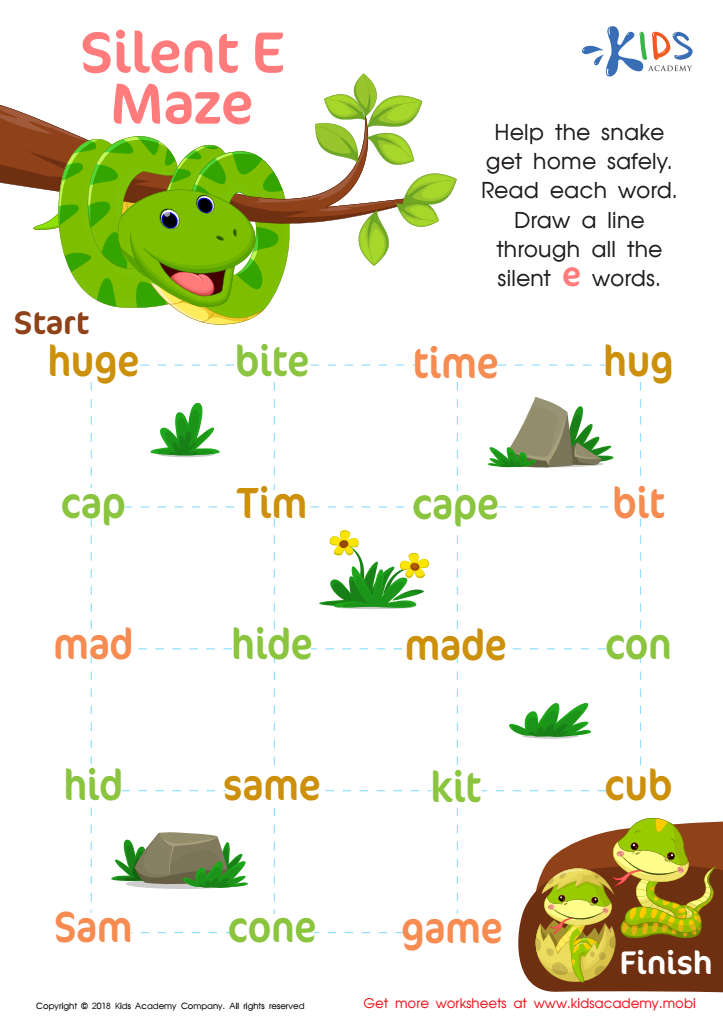
Silent E Maze Worksheet
 Assign to My Students
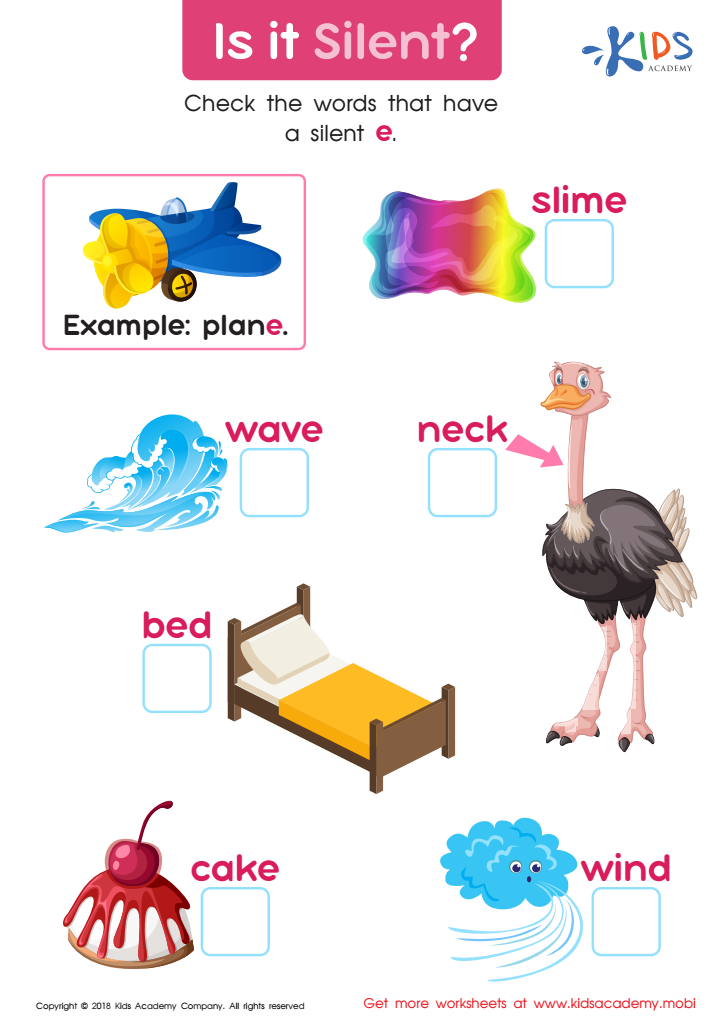
Is It Silent? Worksheet
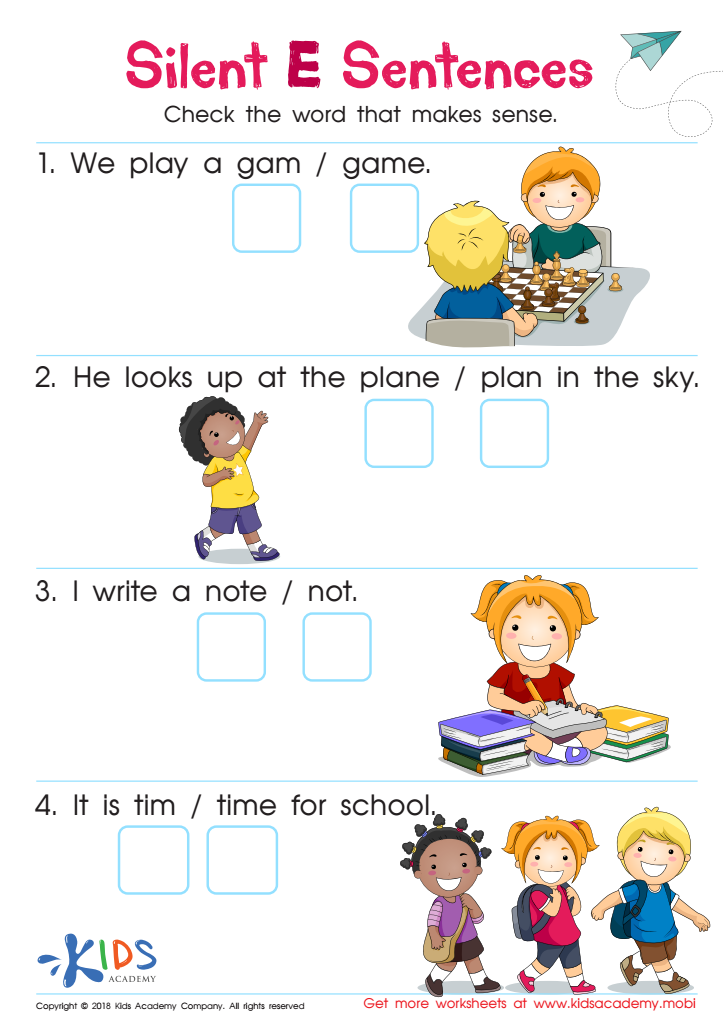
Silent E Sentences Worksheet
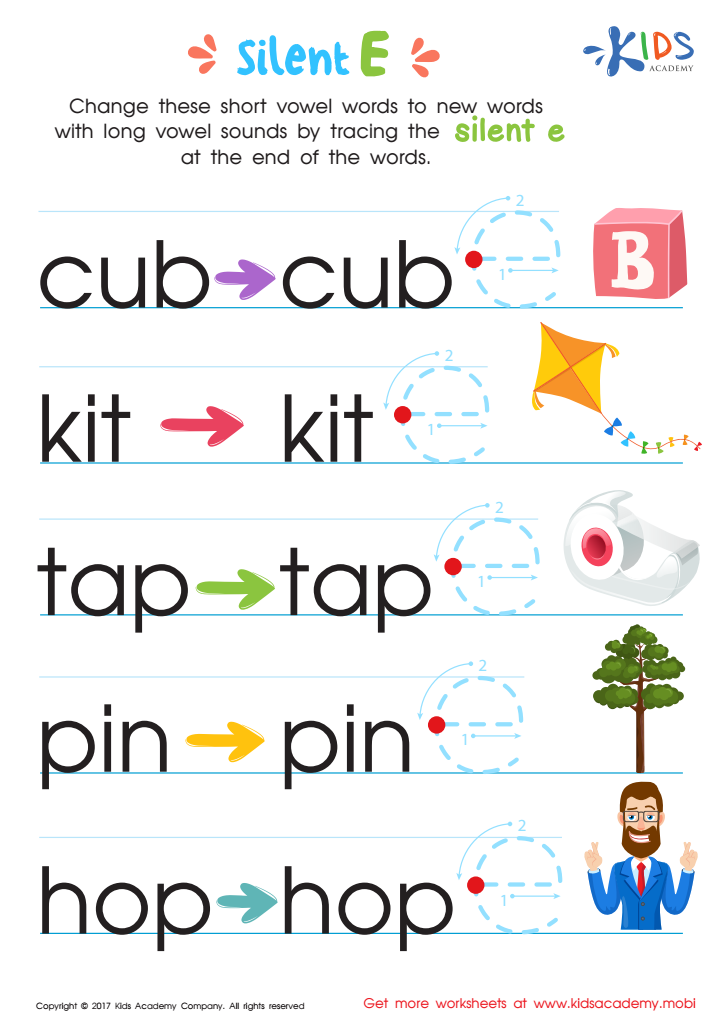
Silent E Words Worksheet


When teaching children between the ages of 3-7, understanding silent vowels is crucial for literacy development. Silent vowels are letters that appear in words but are not pronounced, such as the 'e' in "cake" or the ‘a’ in "bread." For young learners, mastering these can significantly enhance their reading, writing, and spelling abilities.
Firstly, knowledge of silent vowels helps children decode new words. Recognizing patterns, like the silent 'e' that usually makes the vowel before it long (e.g., "mad" versus "made"), equips them to read more confidently and accurately. This awareness builds a strong foundation for fluent reading.
Secondly, understanding silent vowels aids in spelling. Children who grasp why a word contains a silent vowel are better equipped to write correctly, reducing confusion with similar-sounding words (like "hat" vs. "hate"). This also leads to improved vocabulary retention.
Finally, early proficiency with silent vowels contributes to overall language development. As children recognize these patterns and exceptions, they enhance their cognitive abilities, such as memory and problem-solving skills.
In essence, a solid grasp of silent vowels isn’t just about better reading or writing; it's about creating confident, capable learners with a strong command of the English language. Taking the time to focus on these elements supports children’s academic growth and lifelong communication skills.