Sorting Worksheets for Ages 5-9 - Page 2
27 filtered results
-
From - To
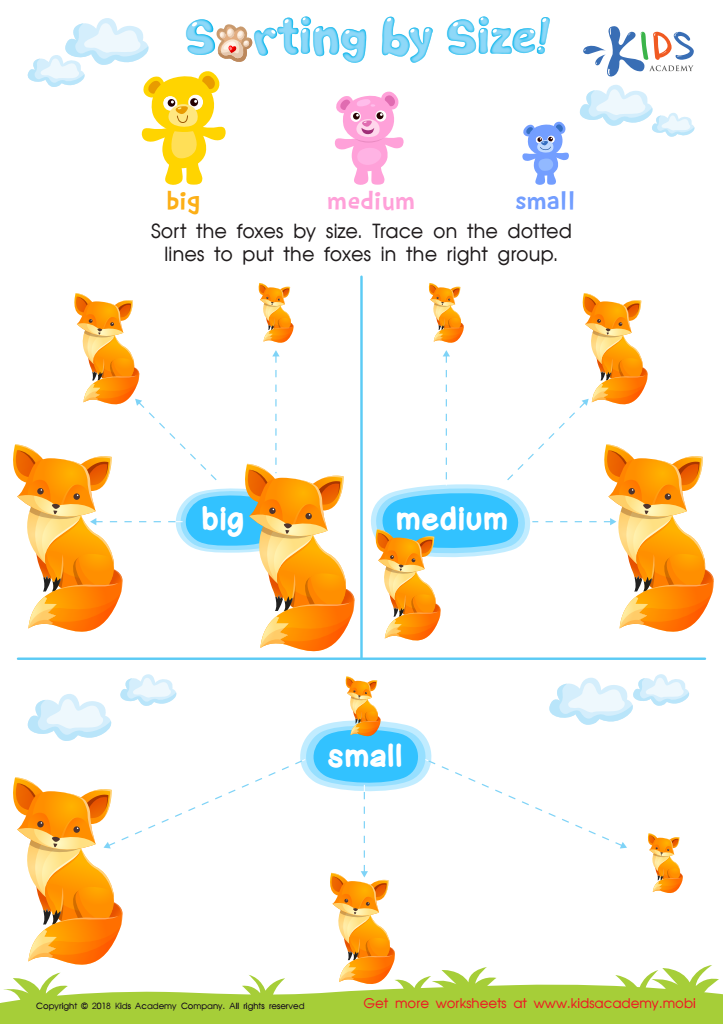
Sorting by Size Worksheet
 Assign to My Students
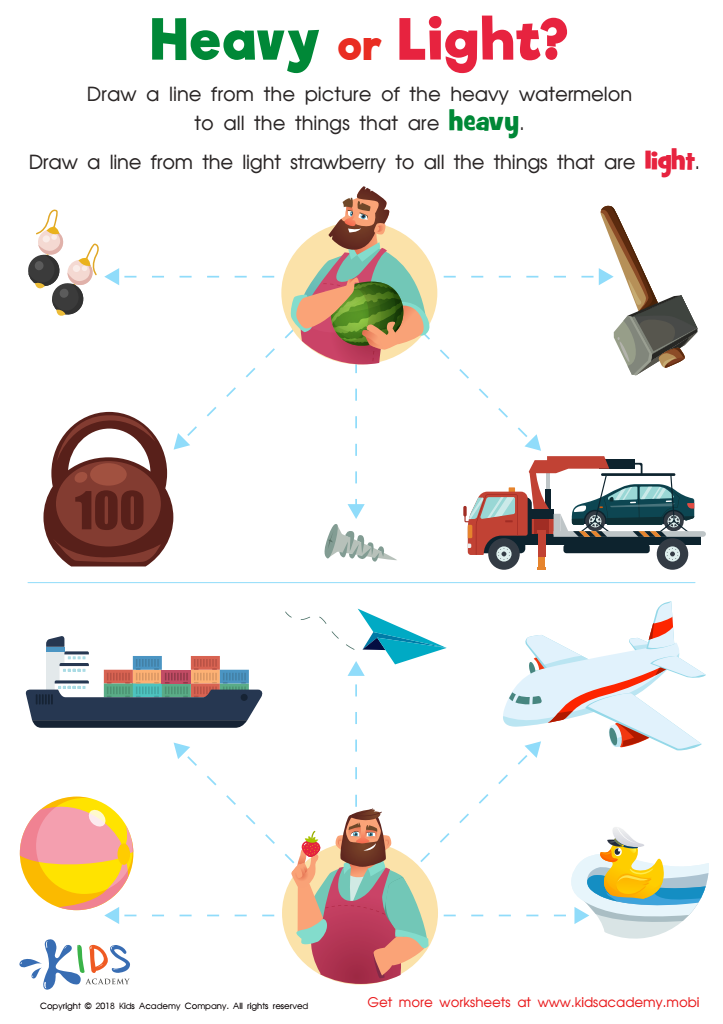
Heavy or Light? Worksheet
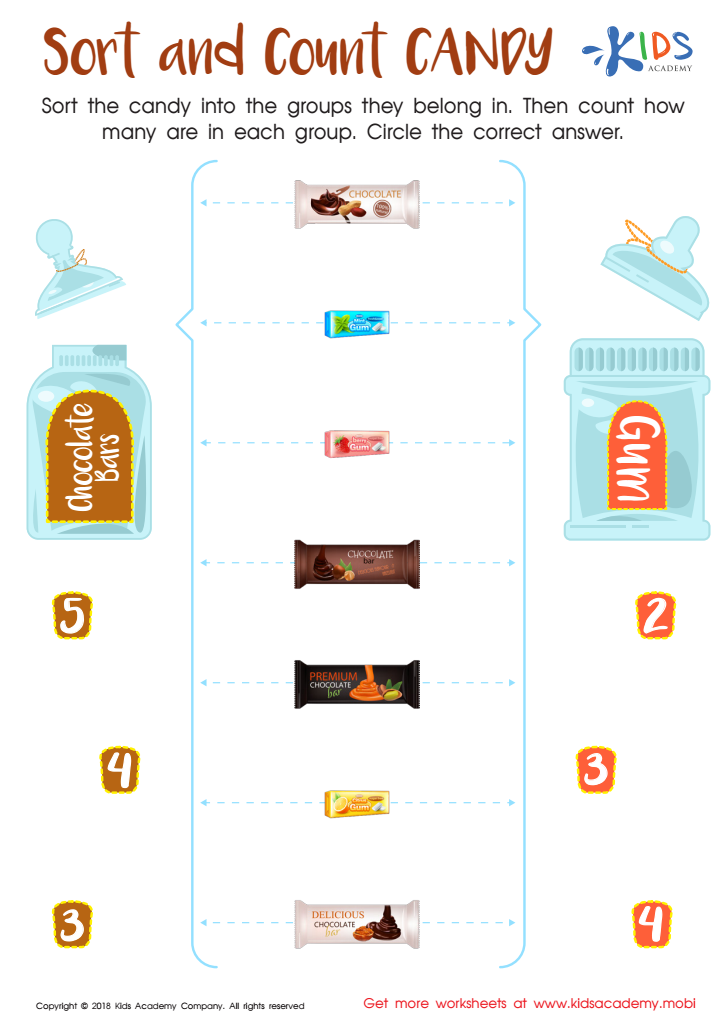
Sort and Count Candy Worksheet








Parents and teachers should care about teaching sorting to children aged 5-9 because it plays a fundamental role in cognitive development and fosters critical thinking. At its core, sorting involves categorizing objects based on attributes such as color, size, shape, or type, which enhances children's ability to recognize patterns and make connections. These skills are foundational for subjects like mathematics, reading, and science.
For instance, sorting helps children understand the concept of classification, which is essential in biology when grouping animals or plants. It also develops organizational skills as children learn to arrange their toys or classroom materials logically. Understanding categories and sets is directly related to grasping elementary math concepts like addition and subtraction.
Moreover, sorting improves problem-solving abilities. When faced with a mixed bag of items, children learn to observe differences and similarities, make decisions, and solve puzzles systematically. This cognitive process mirrors analytical thinking used in everyday situations and various academic disciplines.
Incorporating sorting tasks in play and education, such as organizing blocks by color or size, not only makes learning interactive and enjoyable but also fosters an early love for structured thinking. By nurturing these skills, parents and teachers lay a strong groundwork for the child's future academic and life successes.








