Word Problems Worksheets for Ages 5-9 - Page 6
123 filtered results
-
From - To
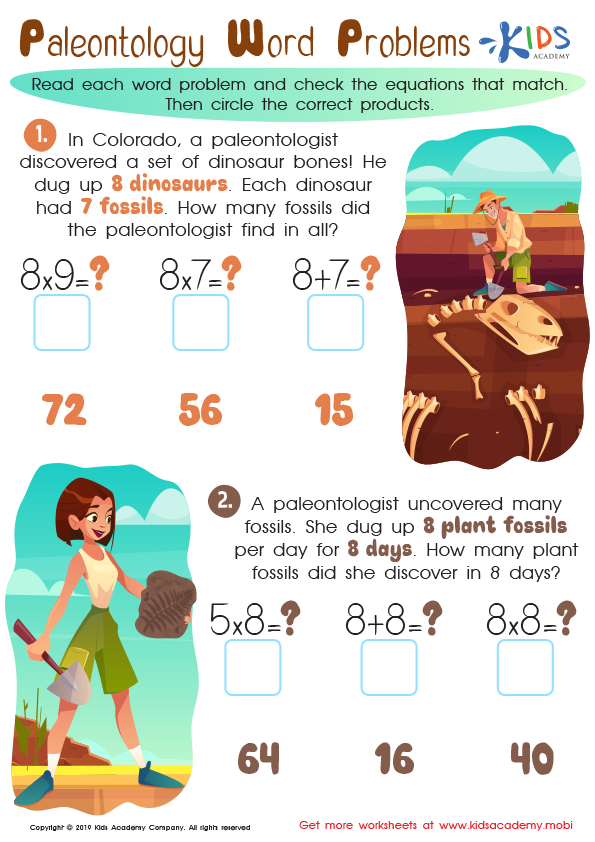
Archeology Word Problems Worksheet
 Assign to My Students
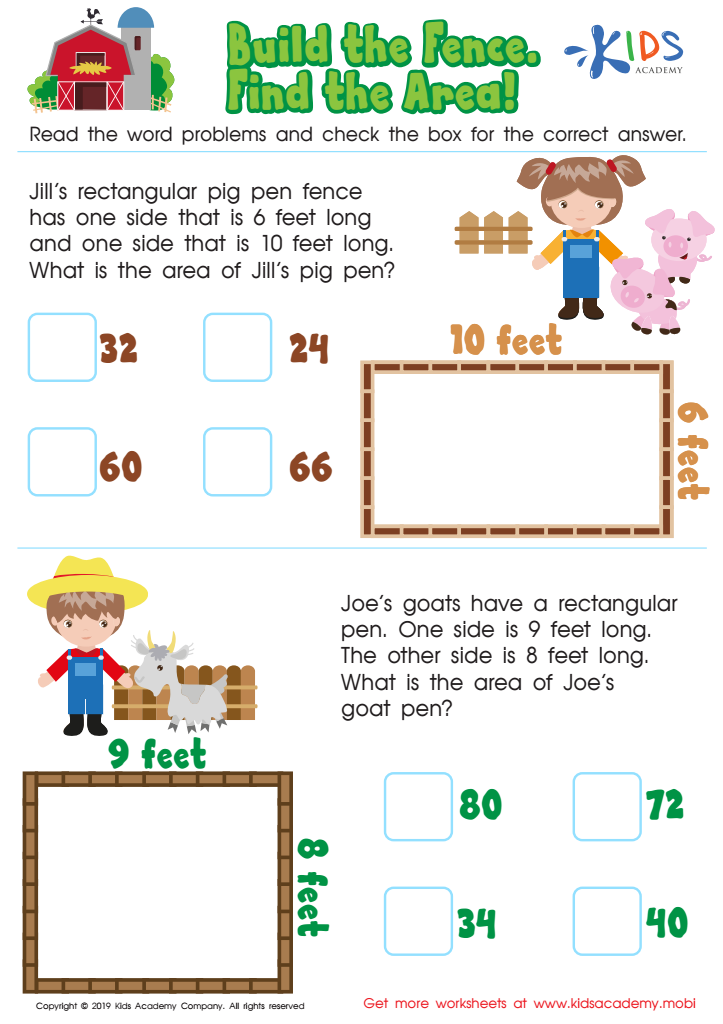
Build the Fence, Find the Area Worksheet
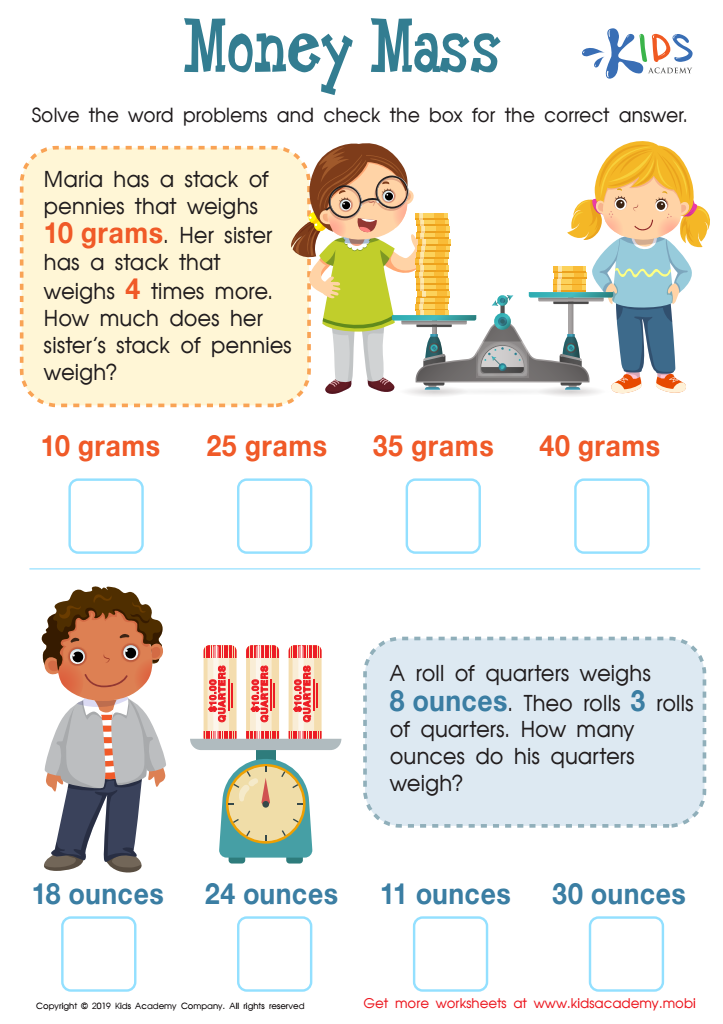
Money Mass Worksheet


.jpg)



Word problems are crucial for children aged 5-9 as they bridge the gap between abstract concepts and real-world application, fostering a more comprehensive understanding of math. This age is a foundational period for cognitive development, and practicing word problems helps enhance critical thinking skills, logical reasoning, and problem-solving abilities. They expose children to a variety of scenarios that require them to interpret text, identify relevant information, and apply mathematical operations systematically.
Additionally, word problems encourage reading comprehension and linguistic skills because children must understand the question's context to solve it correctly. This dual focus on language and math can build confidence and reduce math anxiety, as children realize these problems aren’t just numbers—they’re stories they can decipher.
Parents and teachers who emphasize word problems provide a well-rounded learning experience that integrates math with daily life. Such holistic education prepares children for advanced mathematical concepts and everyday challenges. Moreover, working on word problems with peers or adults promotes social interaction and collaborative learning, enhancing communication skills. Ultimately, incorporating word problems in early education nurtures a love for learning and equips children with essential life skills. Parents and teachers are pivotal in this process, offering support and encouragement.








