Life Science Worksheets for Ages 5-9
3 filtered results
-
From - To
Discover exciting, educational Life Science Worksheets designed for children ages 5-9. Foster curiosity and enrich young minds with engaging activities that explore the wonders of biology. Our worksheets cover essential life science topics, including plants, animals, human body, and ecosystems, to enhance early learning in a fun and interactive way. These expertly crafted materials support foundational knowledge, cultivate critical thinking skills, and align with educational standards. Join Kids Academy and make science an adventure for your young learners. Perfect for teachers and parents looking to inspire a love of science in young explorers!
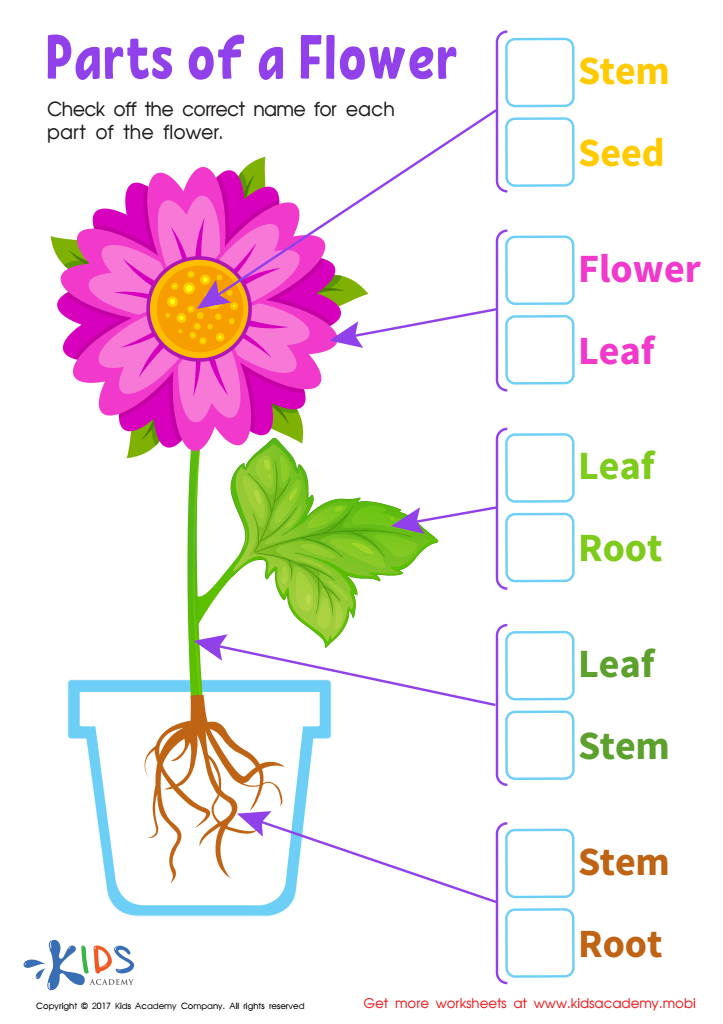
Parts Flower Printable
 Assign to My Students
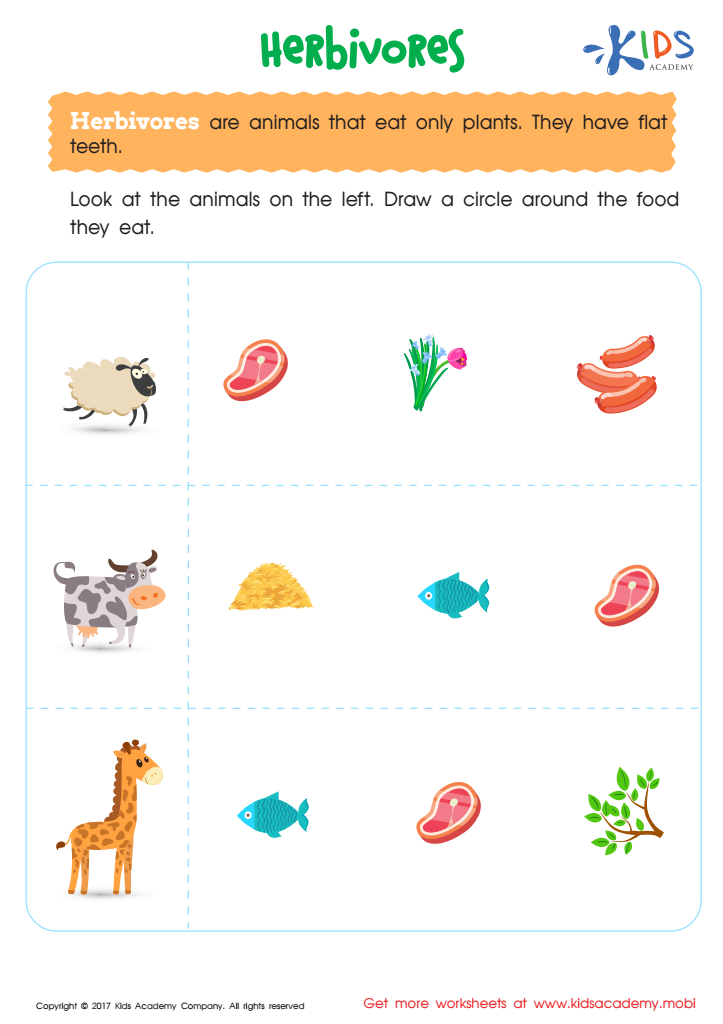
Herbivores Printable
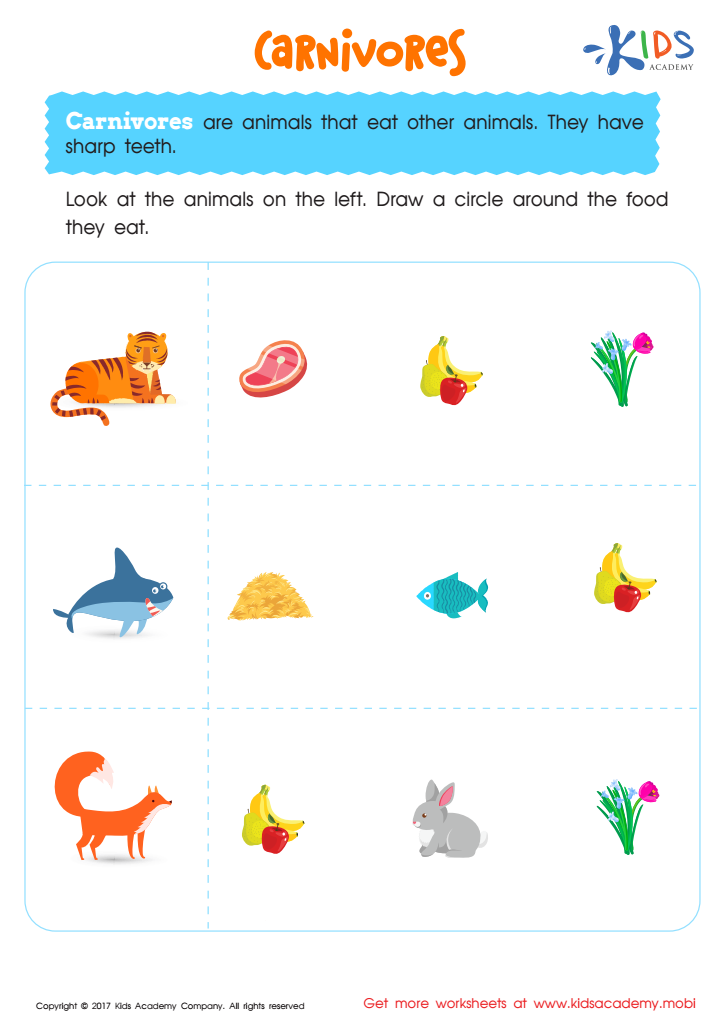
Carnivores Worksheet


.jpg)





Life Science for children aged 5 to 9 is foundational for cultivating an early curiosity about the natural world and instilling important values and skills. Firstly, it helps to foster a sense of wonder and curiosity. At this age, children are naturally curious, and learning about animals, plants, and their environments caters to this innate interest. Introducing them to these concepts helps to establish a lifelong love for learning and discovery.
Additionally, Life Science teaches critical thinking and scientific reasoning. By observing living organisms, conducting simple experiments, and asking questions, children learn how to think analytically and solve problems, skills that are valuable in all areas of learning and life.
Understanding Life Science also helps children develop a sense of responsibility and empathy. Learning about ecosystems and the interdependence of living things instills an appreciation for the environment and the importance of conservation. It encourages them to take care of their surroundings and make eco-friendly choices, cultivating responsible future citizens.
Moreover, early exposure to life science can lay the groundwork for future educational opportunities and career paths in science, technology, engineering, and mathematics (STEM). By making science engaging and accessible, parents and teachers empower children to explore these fields with confidence and enthusiasm.