Tracing Words Worksheets for Ages 6-8 - Page 2
42 filtered results
-
From - To
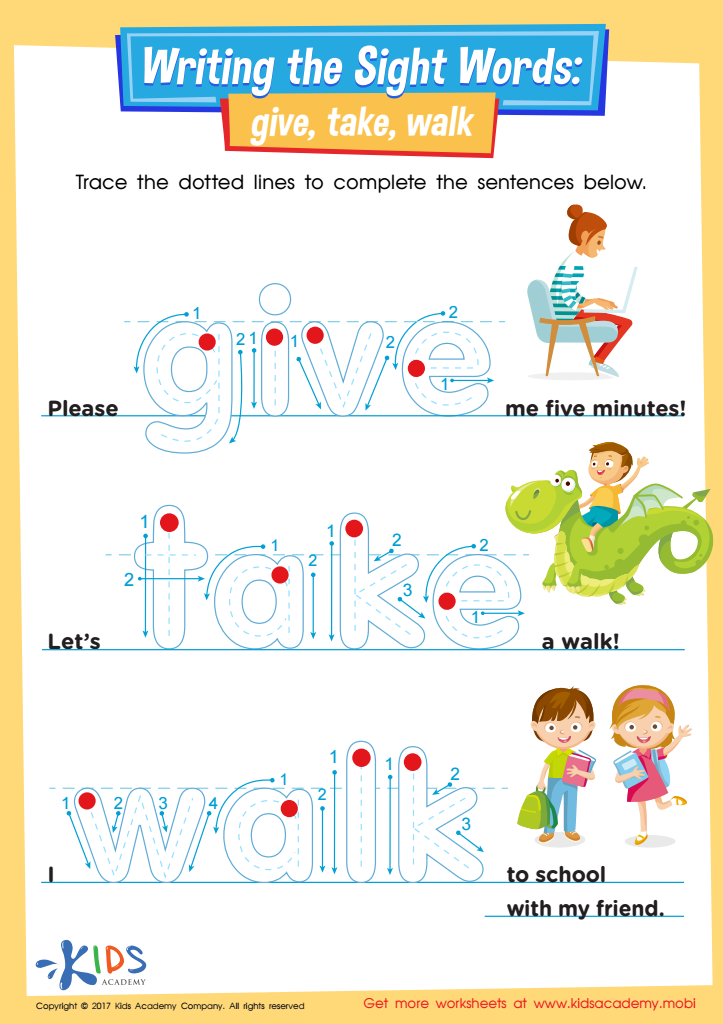
Give, Take, Walk Printable Sight Words Worksheet
 Assign to My Students

Grey Tracing Color Words Worksheet

White Tracing Color Words Worksheet

Deer Tracing Winter Words Worksheet

Green Tracing Color Words Worksheet

Purple Tracing Color Words Worksheet

The Planets: Saturn Printable

Santa Claus Tracing Winter Words Worksheet

Chinese Word Tracing: Ni Hao Worksheet
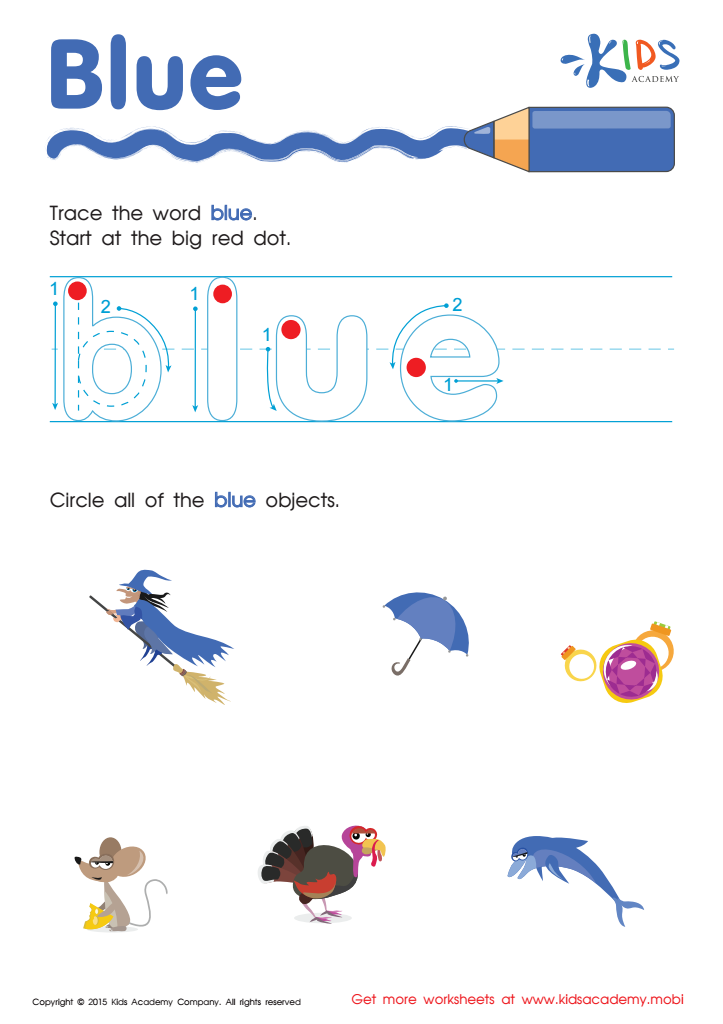
Blue Tracing Color Words Printable
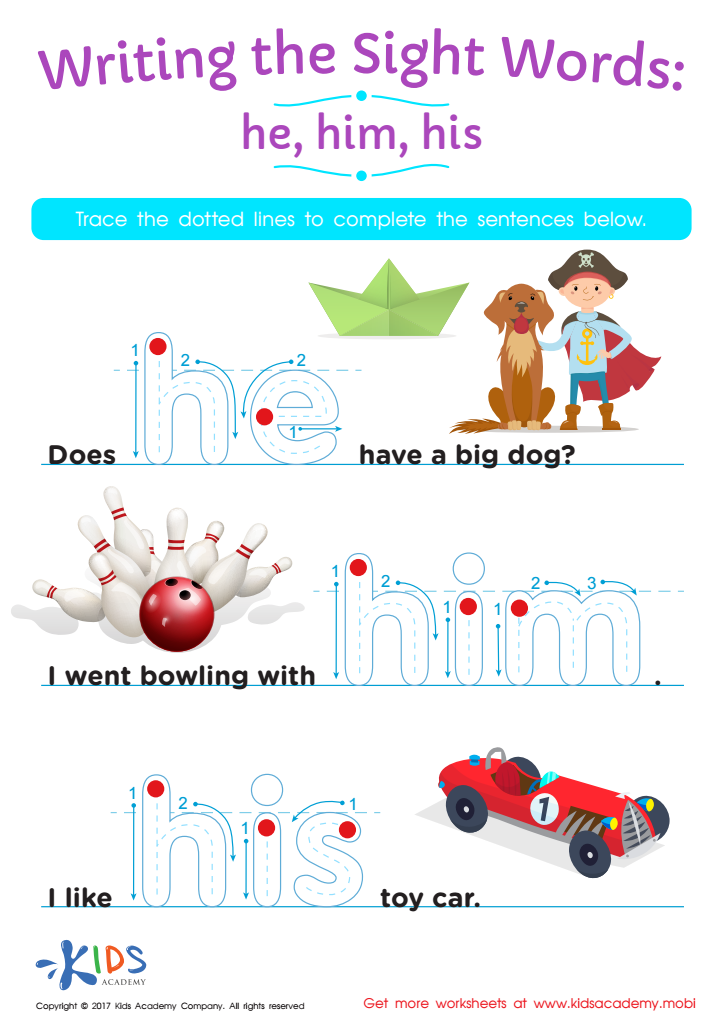
He, Him, His Printable Sight Words Worksheet

Brown Tracing Color Words Worksheet

A Cup, an Ape and Tea Spelling Worksheet
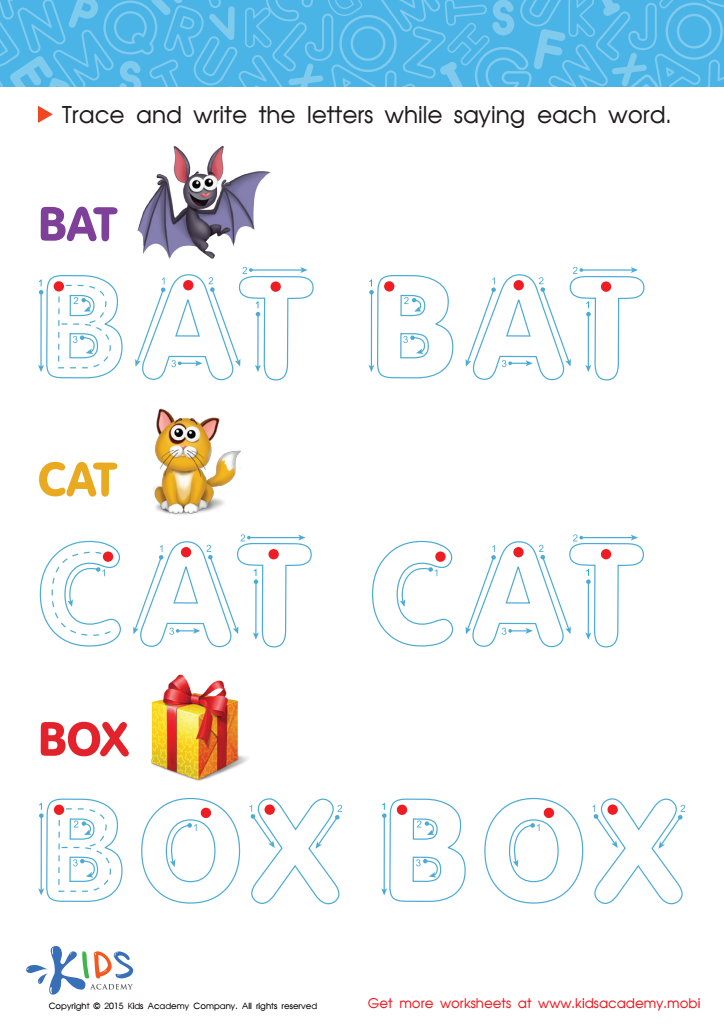
A Bat, a Cat and a Box Spelling Worksheet
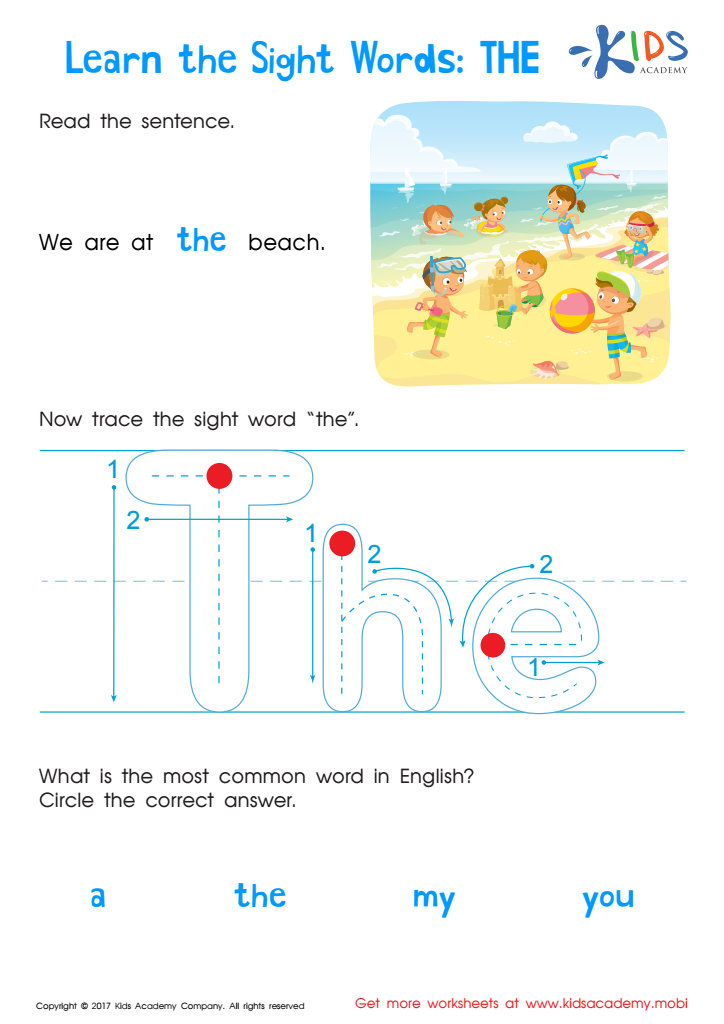
Sight Words: The Worksheet

Black Tracing Color Words Printable
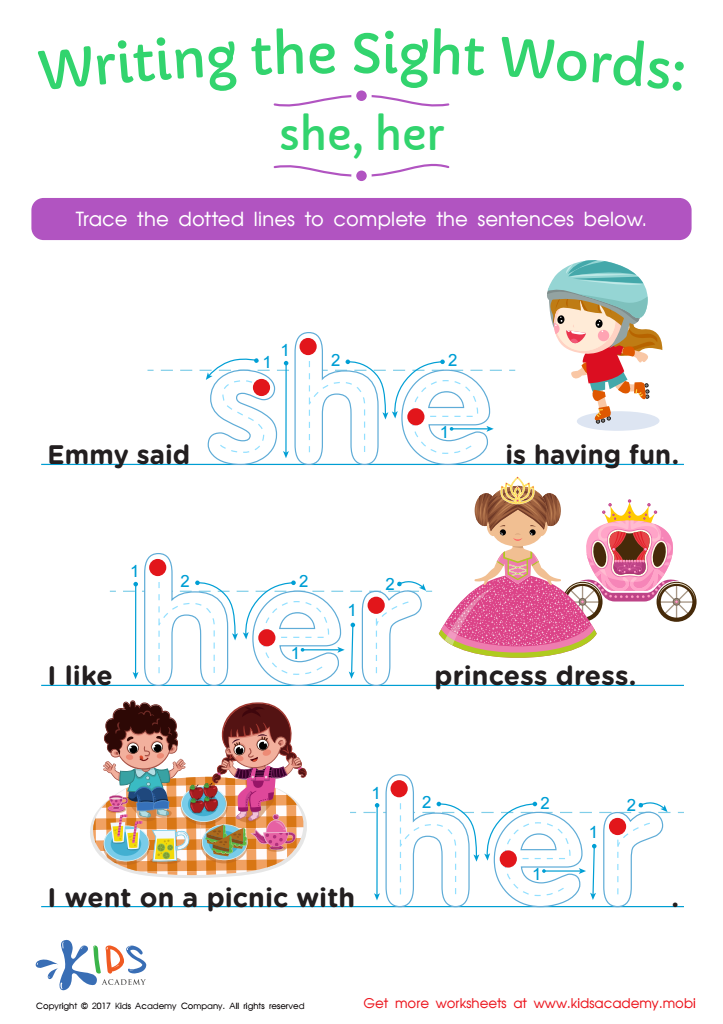
She, Her Printable Sight Words Worksheet
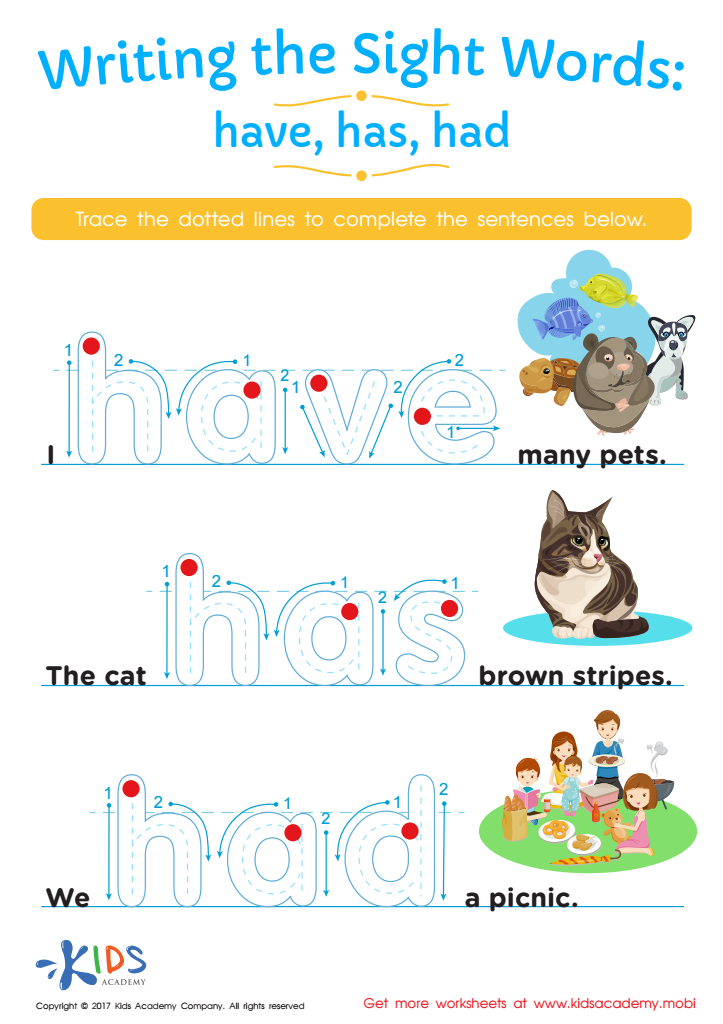
Have, Has, Had Worksheet Sight Words Worksheet








Tracing words for children ages 6-8 plays a critical role in their early literacy development. At this stage, children are transitioning from recognizing letters to forming them. Tracing helps solidify their understanding of letter shapes and how they are constructed, which is foundational for handwriting skills. When children trace, they engage in repetitive motion, enhancing muscle memory in their fingers and hands, essential for writing fluidly and efficiently.
Furthermore, tracing words aids in phonemic awareness. As children trace and simultaneously pronounce words, they link visual symbols with sounds, a key component in decoding words when reading. This interactive learning process bolsters cognitive connections between letters and phonics, which is crucial for early reading success.
Tracing also accelerates vocabulary acquisition. Constant exposure to different words while tracing helps children internalize word structures and meanings, expanding their language repertoire. Additionally, it fosters fine motor skills, coordination, and attention to detail, indirectly benefiting other academic areas.
In essence, tracing words is a multifaceted developmental tool that supports literacy, fine motor skills, and cognitive connections, building a strong foundation for future academic success. Therefore, parents and teachers should incorporate tracing activities into educational routines to nurture comprehensive childhood development.








