Addition Worksheets for Ages 7-9 - Page 4
87 filtered results
-
From - To
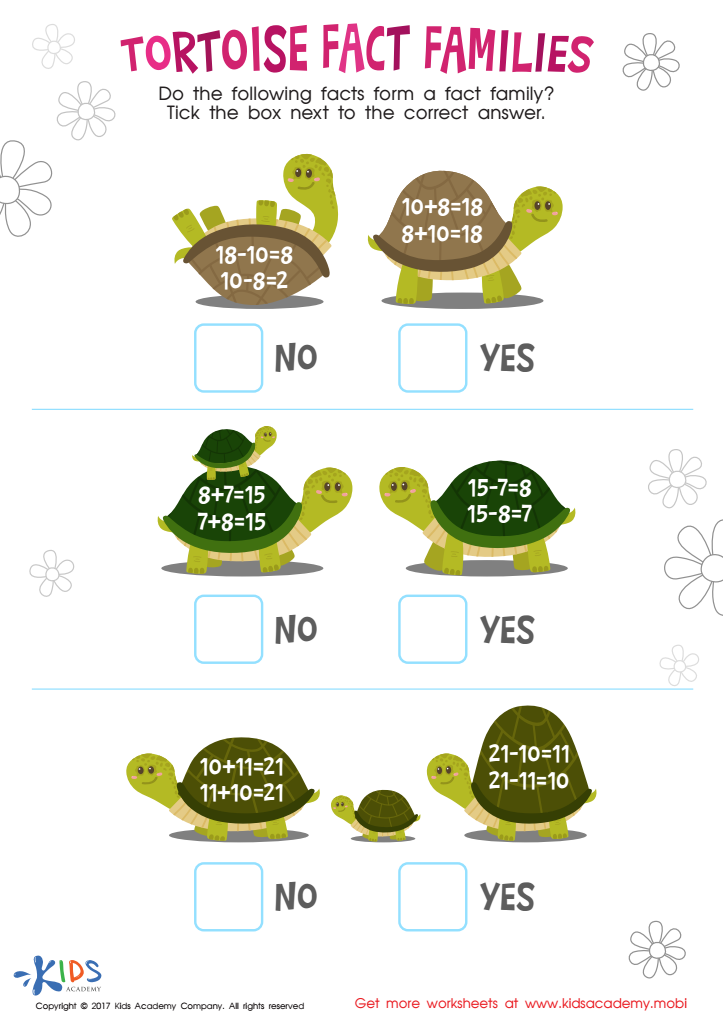
Tortoise Fact Families Printable
 Assign to My Students

Aircraft Carrier Picture Graphs Worksheet
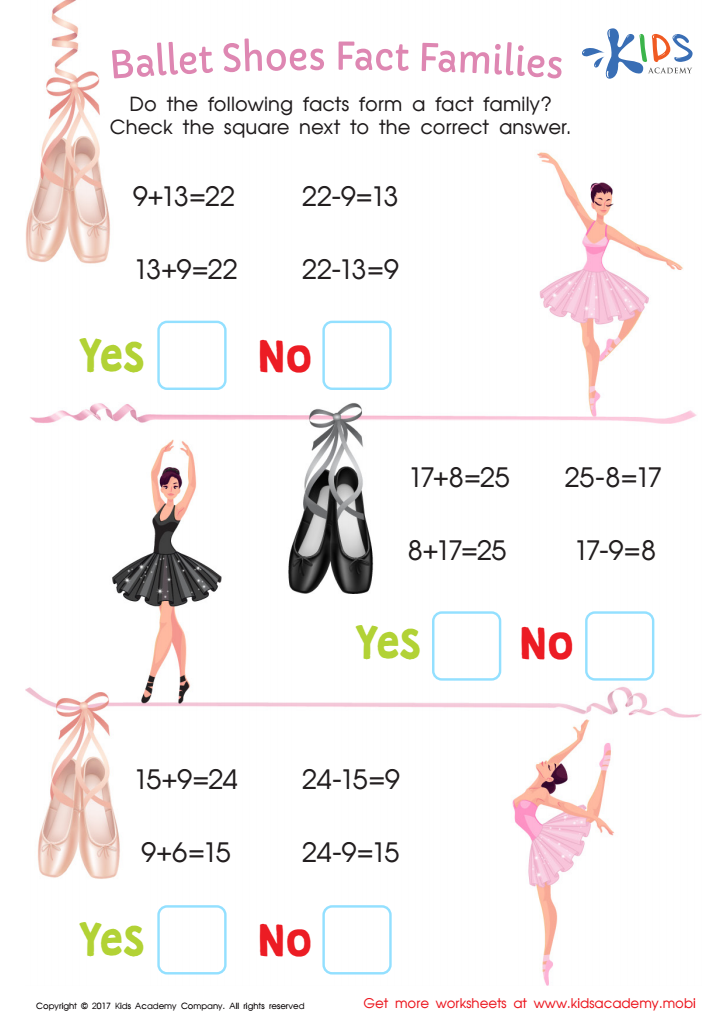
Ballet Shoes Fact Family Printable
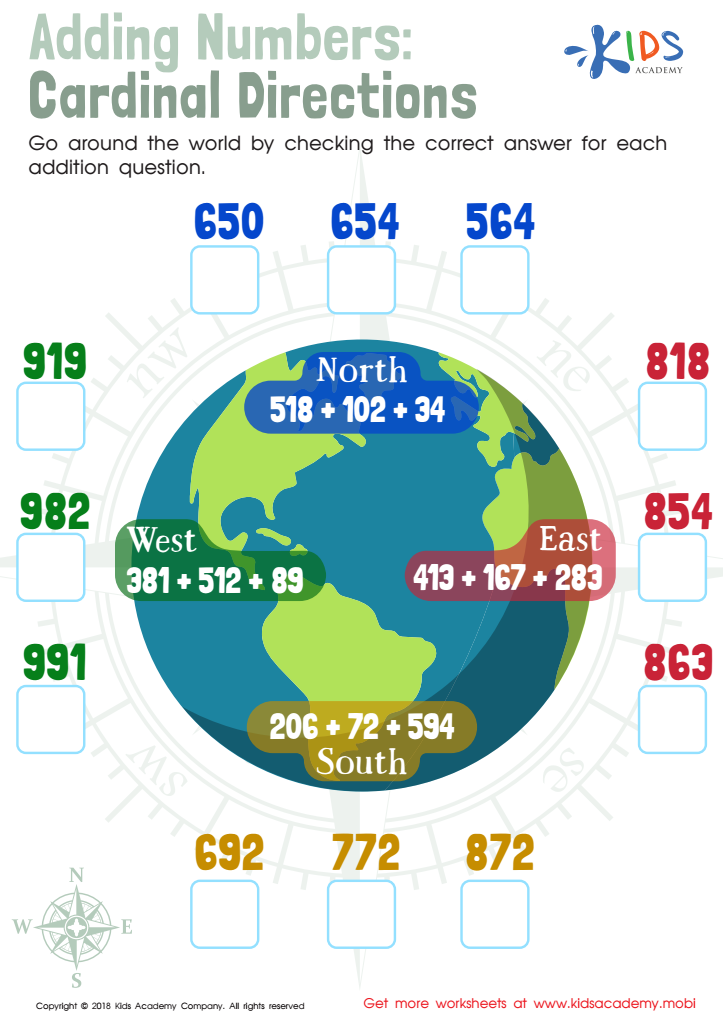
Adding Numbers: Cardinal Directions Worksheet
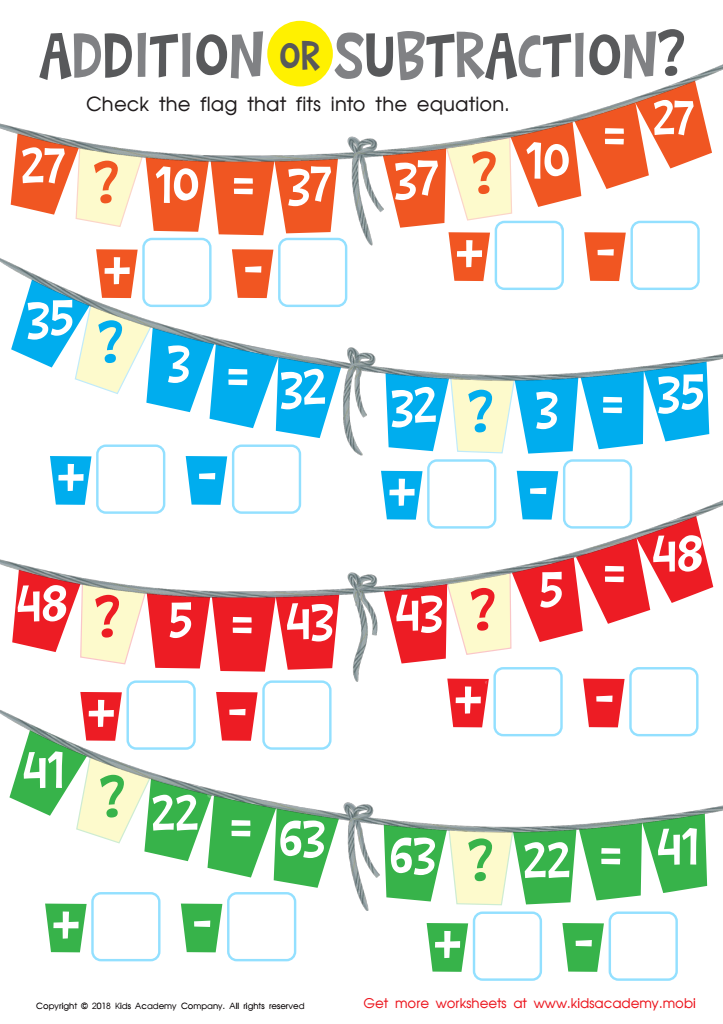
Addition or Subtraction? Worksheet
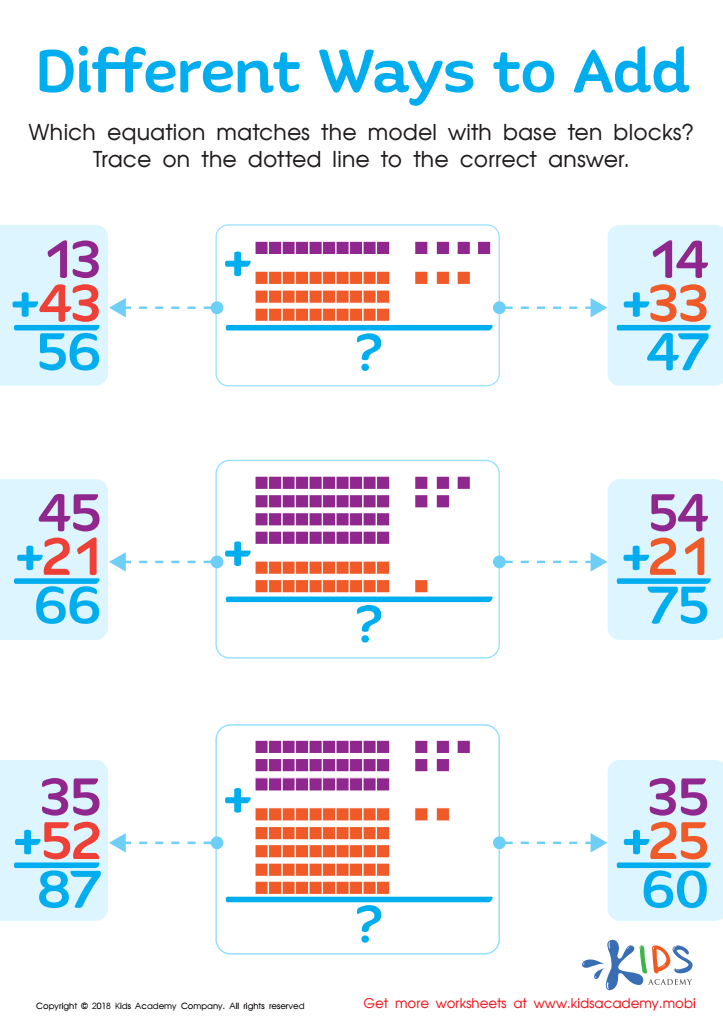
Different Ways to Add Worksheet
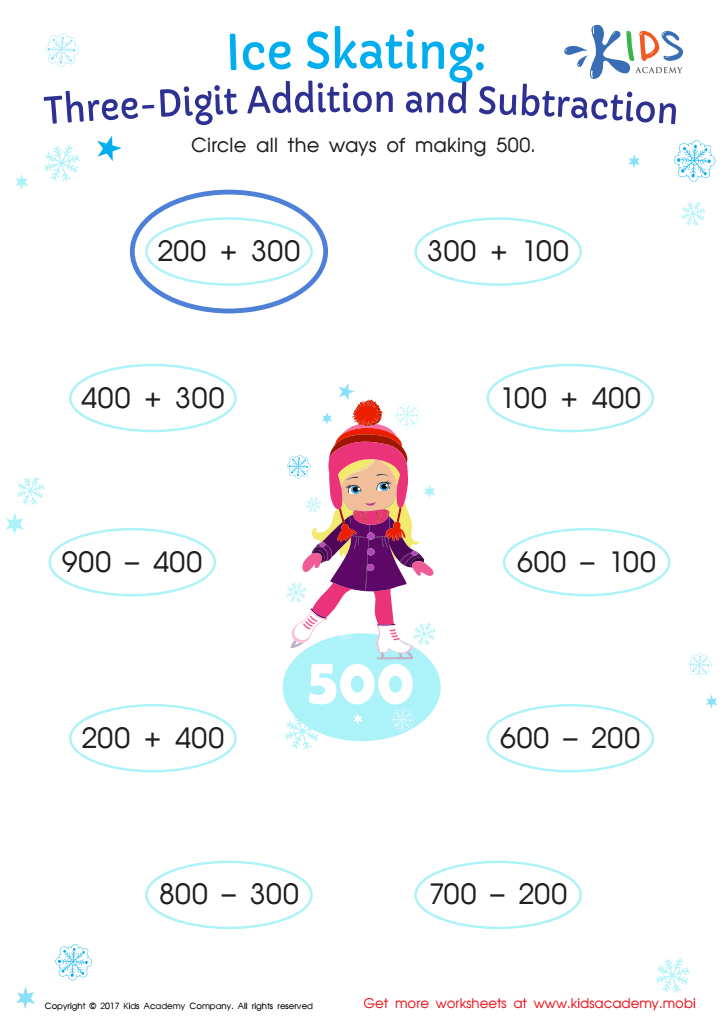
Three Digit Addition and Subtraction Worksheet
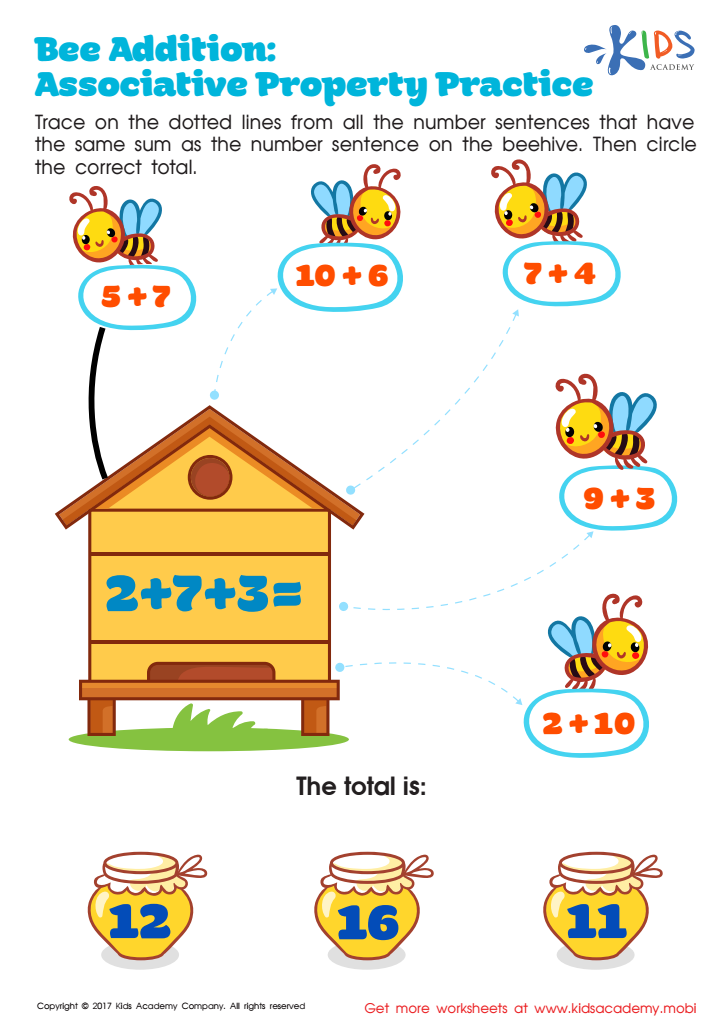
Bee Addition: Associative Property Practice Worksheet
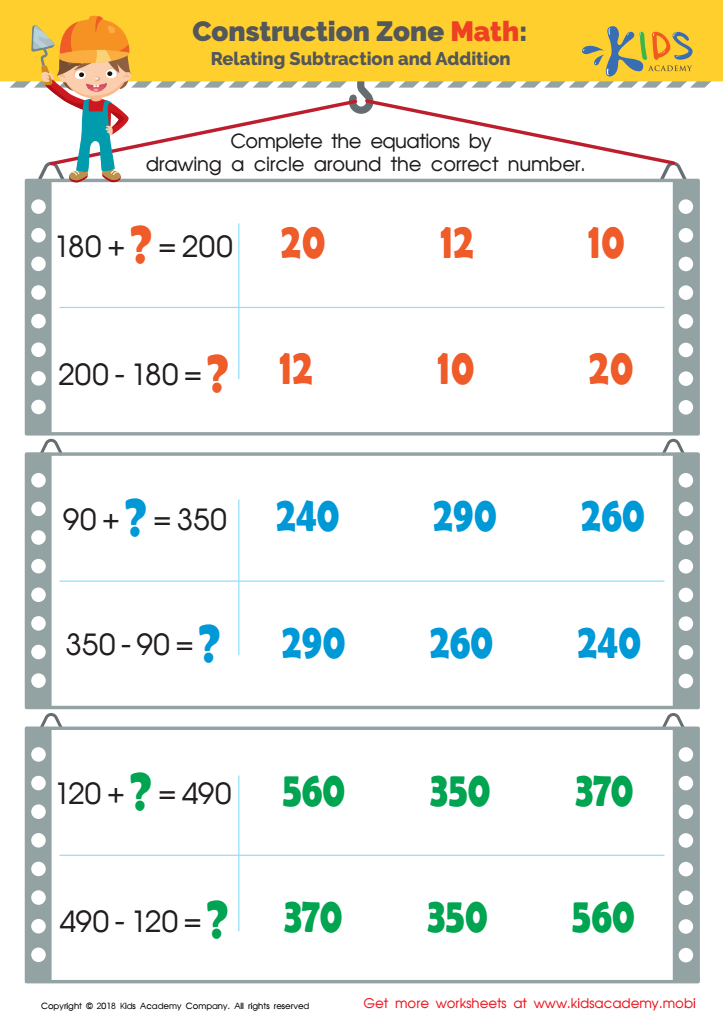
Construction Zone Math: Relating Subtraction and Addition Worksheet
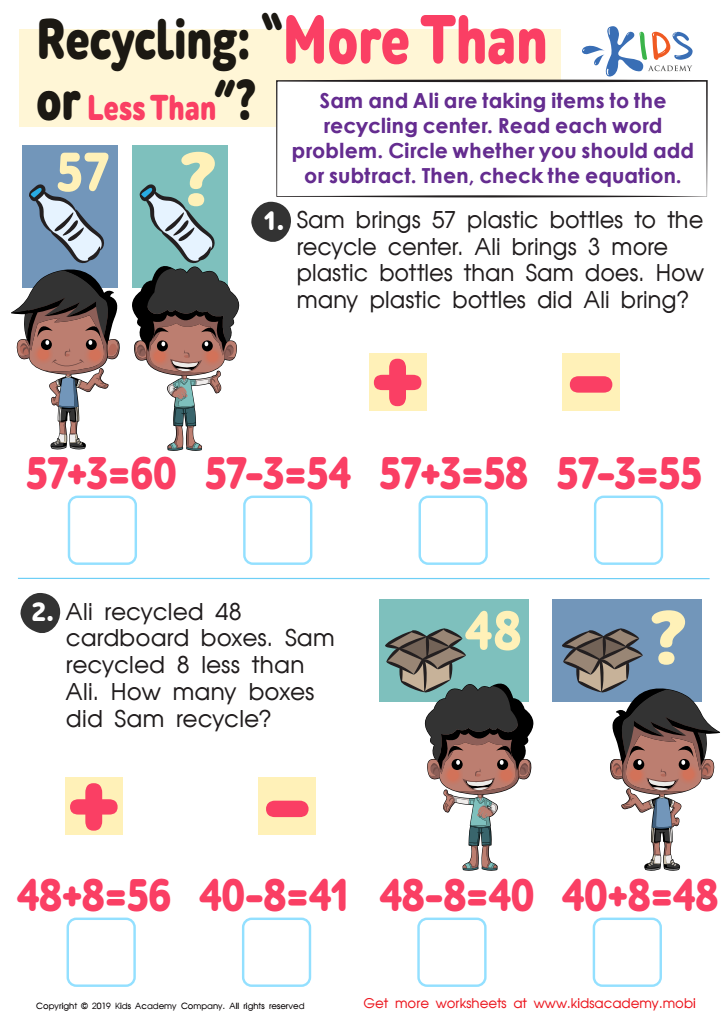
Recycling - More or Less Worksheet
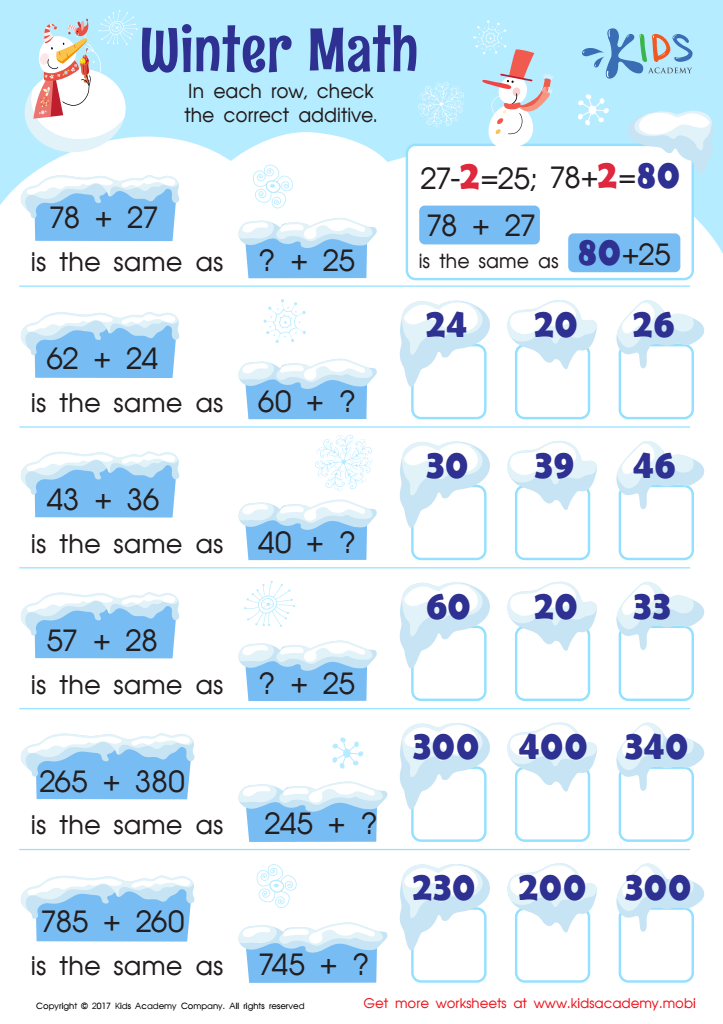
Free Addition Worksheet
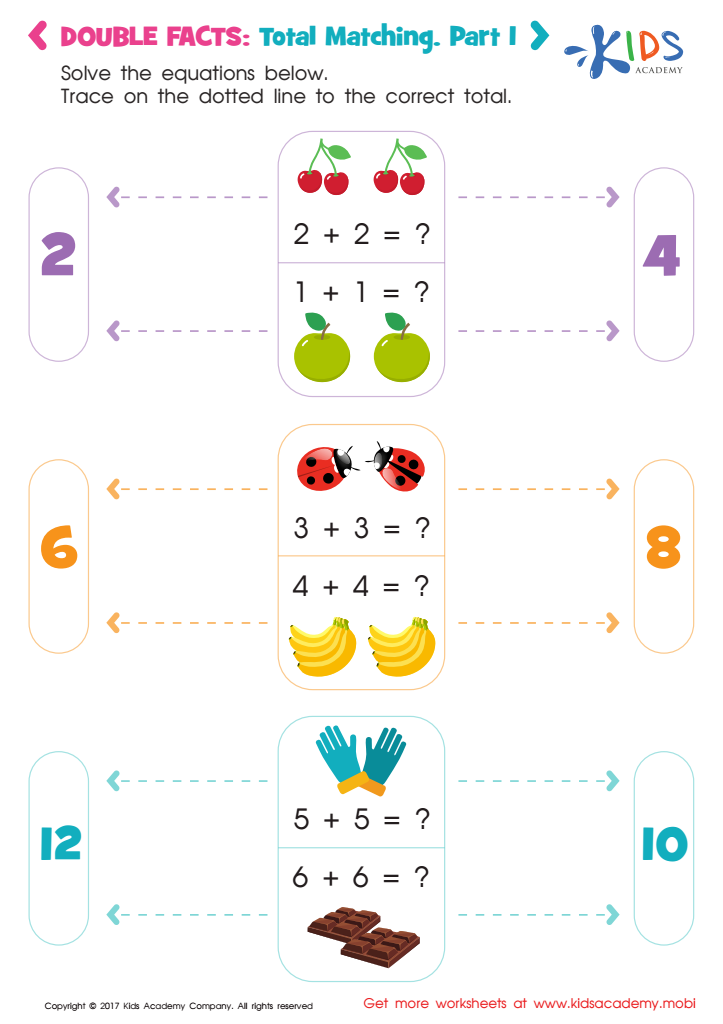
Double Facts: Total Matching Worksheet: Part 1
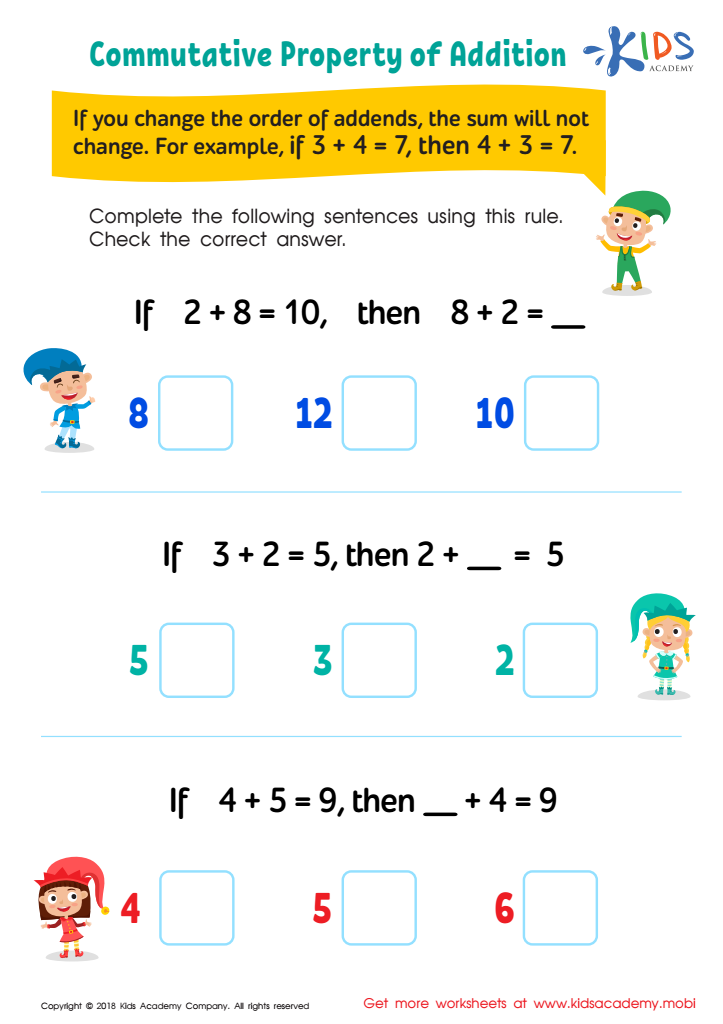
Commutative Property of Addition Worksheet
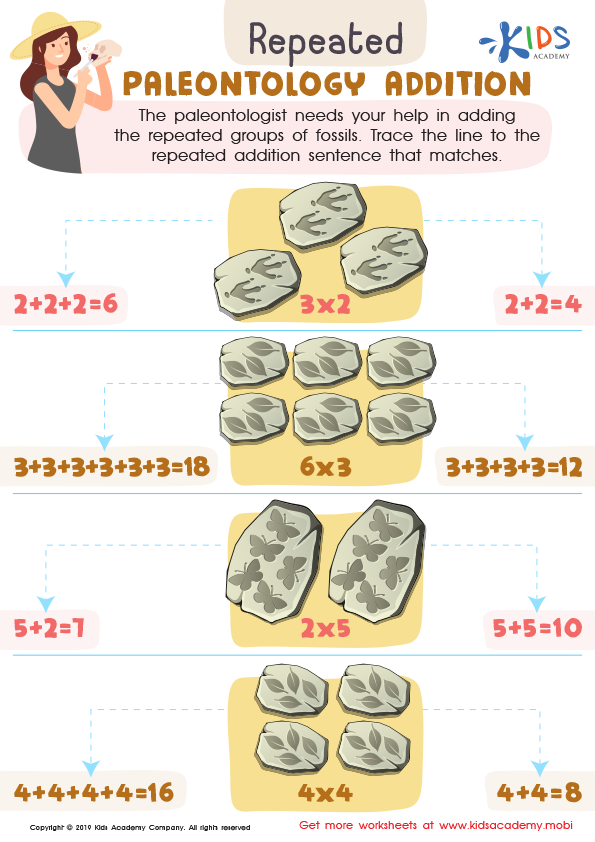
Repeated Archaeology Addition Worksheet
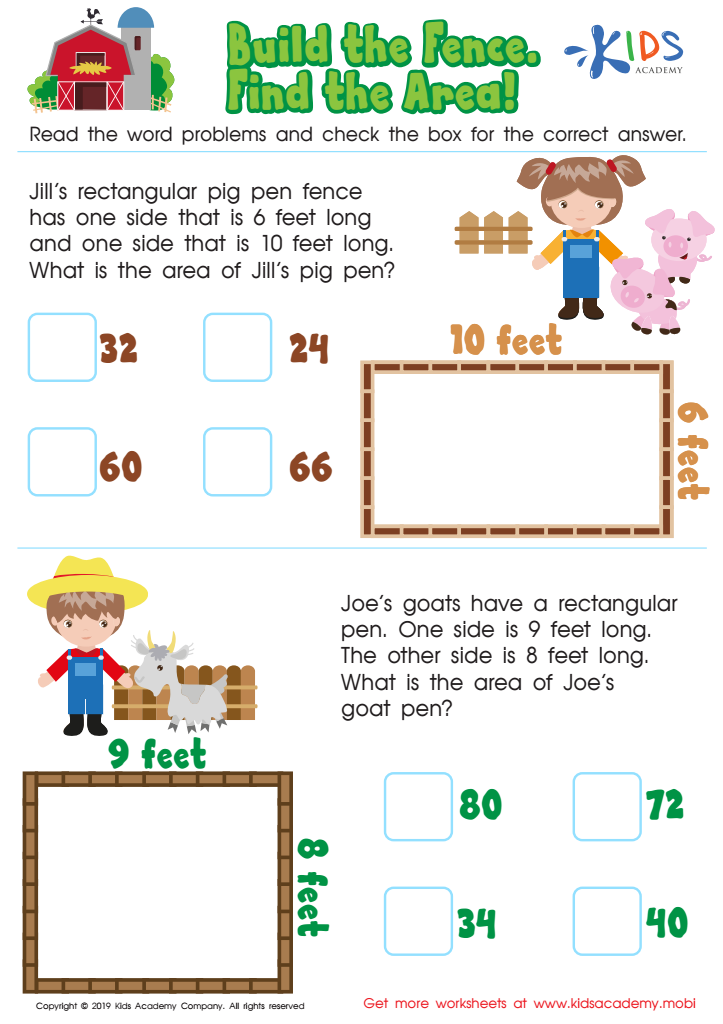
Build the Fence, Find the Area Worksheet








Parents and teachers should recognize the importance of mastering addition for children aged 7-9 because it serves as a cornerstone in their overall mathematical development. At this stage, children are building foundational skills that will influence their academic success in not only mathematics but also in other subjects that require logical reasoning and problem-solving. Proficiency in addition enhances a child’s confidence and facilitates their understanding of more complex mathematical operations, such as subtraction, multiplication, and division.
Moreover, addition is not confined to the classroom; it has practical applications in real-life situations. When children comprehend the concept of addition, they can perform everyday tasks like counting money, telling time, or measuring ingredients for a recipe. This practical understanding fosters independent living skills.
In addition, learning addition stimulates cognitive development by cultivating pattern recognition and critical thinking. It encourages children to understand numerical relationships, thereby promoting a deeper comprehension of abstract concepts. This, in turn, aids in the development of analytical and logical thinking skills.
For teachers, incorporating engaging and interactive methods for teaching addition can create a positive learning experience, instilling a love for mathematics early on. Thus, emphasizing addition at this crucial age sets a strong educational foundation, ensuring children are well-prepared for future academic challenges.








