Filters

31 filtered results

Clear all filters
Favorites
With answer key
Interactive

31 filtered results

Difficulty Level

Grade


Check out this FREE Kindergarten Phonological Awareness Trial Lesson!

Review

Favorites
With answer key
Interactive
  • Phonological Awareness
  • With answer key
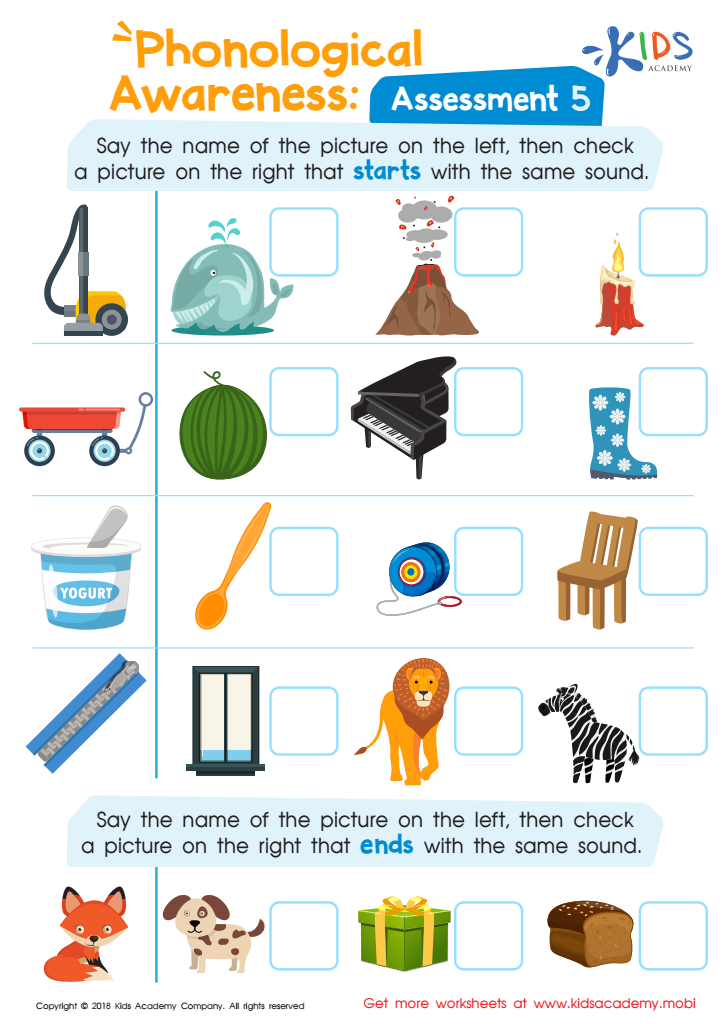
Phonological Awareness: Assessment 5 Worksheet

Phonological Awareness: Assessment 5 Worksheet

Repetition is key to success! This worksheet tests kids' ability to match beginning and ending sounds in words. Instruct them to say each word and listen closely to the sounds they make. Focus on the starting sounds for the first four pics, then the last one to hear ending sounds and find the right match!
Phonological Awareness: Assessment 5 Worksheet
Worksheet
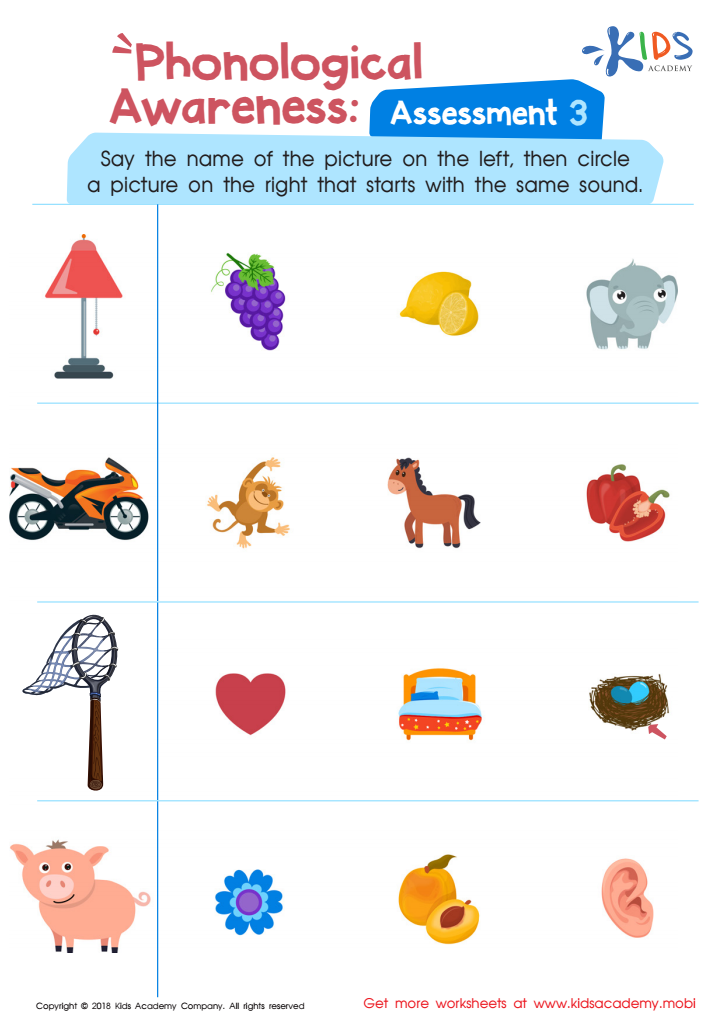
Phonological Awareness: Assessment 3 Worksheet

Phonological Awareness: Assessment 3 Worksheet

Test kids' reading readiness with a phonological awareness worksheet! With this PDF exercise, encourage children to name each picture aloud and match left to right. Help them learn to recognize word sounds at the start, middle and end of words. They'll be sure to remember that lamp doesn't sound like elephant!
Phonological Awareness: Assessment 3 Worksheet
Worksheet
Matching Consonant Sounds - Part 2 Worksheet Preview

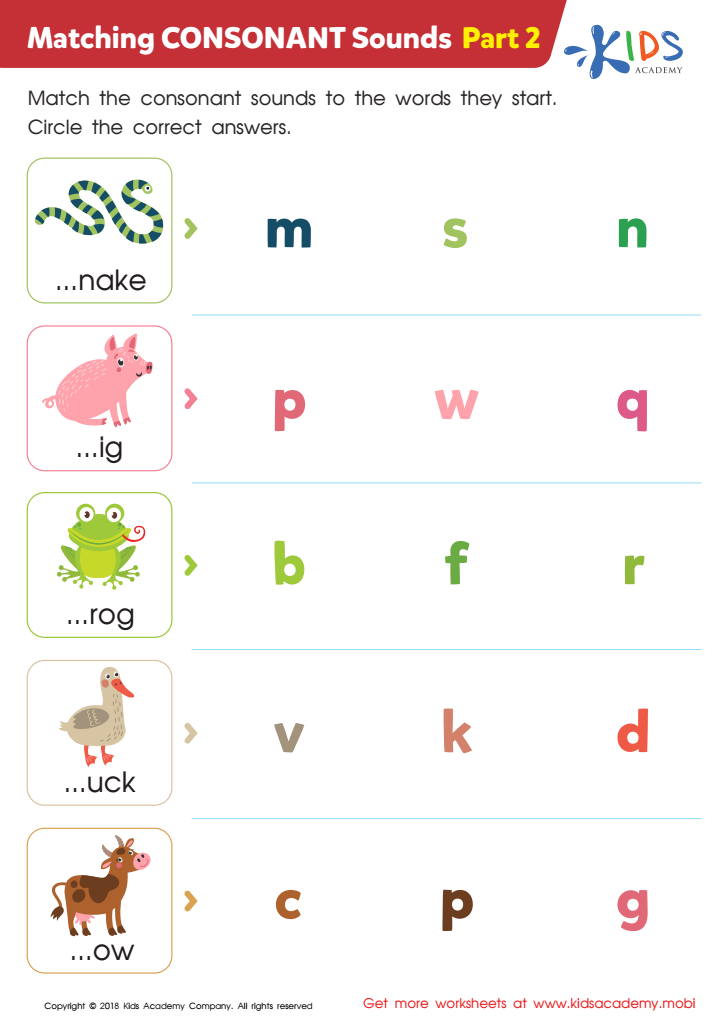
Matching Consonant Sounds: Part 2 Worksheet
Look at the picture, say the word and match the consonant sound with the letter. Coach your child to name the animal and complete the word. For extra challenge, write the missing letter in the box! This PDF worksheet helps kids learn to read words with familiar animal pictures.
Matching Consonant Sounds: Part 2 Worksheet
Worksheet
Matching Consonant Sounds - Part 1 Worksheet Preview

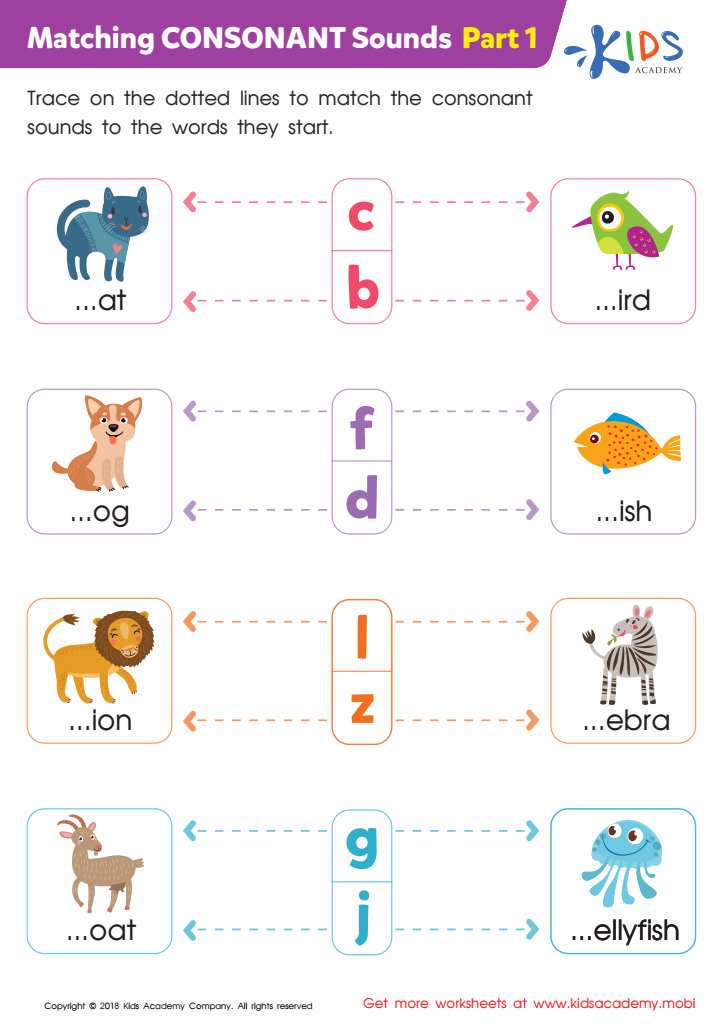
Matching Consonant Sounds: Part 1 Worksheet
Decide which letter matches each word and picture in this fun phonics worksheet. Slide your finger over each word, trying out each letter to check for matches. Once each pair is solved, trace the dotted lines with pencil to complete the printable. Who knew learning could be so enjoyable?
Matching Consonant Sounds: Part 1 Worksheet
Worksheet
Make a New Word Worksheet

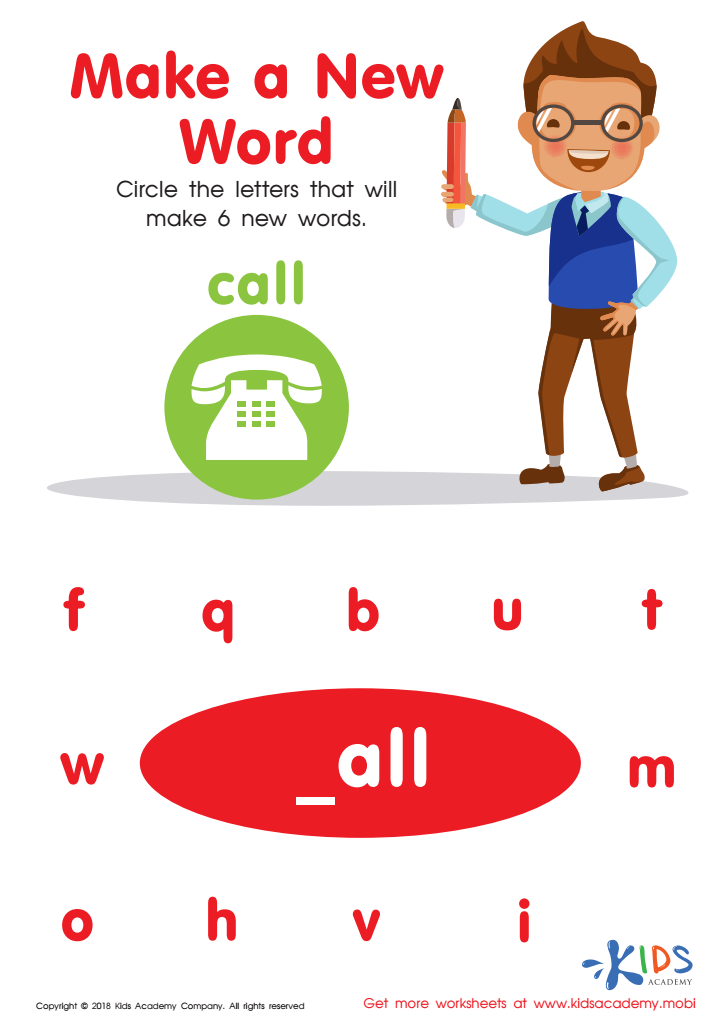
Make a New Word Worksheet

Young readers and writers can enhance their skills with this fun PDF worksheet. They'll trace letters to create new words and feel like super readers and writers after finding six words. They'll also practice building words with the "all" word family.
Make a New Word Worksheet
Worksheet
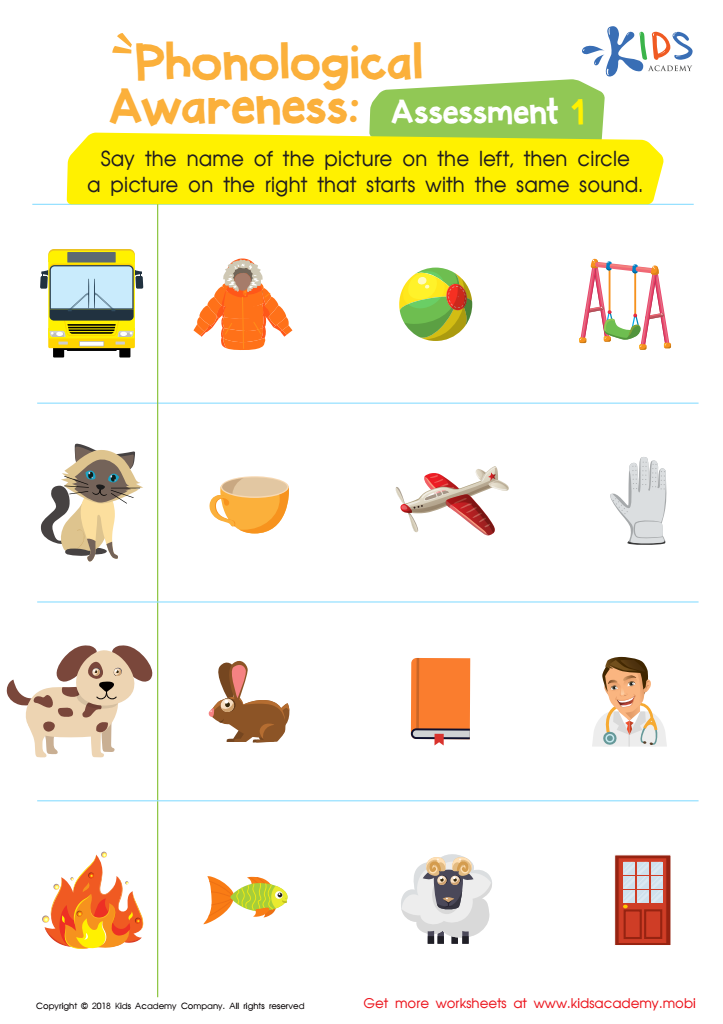
Phonological Awareness: Assessment 1 Worksheet

Phonological Awareness: Assessment 1 Worksheet

This worksheet helps kids build key phonics skills for pre-reading. They say each picture name aloud, focusing on the starting sound. Then, they match the sound with an image in the same row. Use as a checkpoint for kindergarten or grade 1 phonics readiness.
Phonological Awareness: Assessment 1 Worksheet
Worksheet
Which Is the Rime? Worksheet


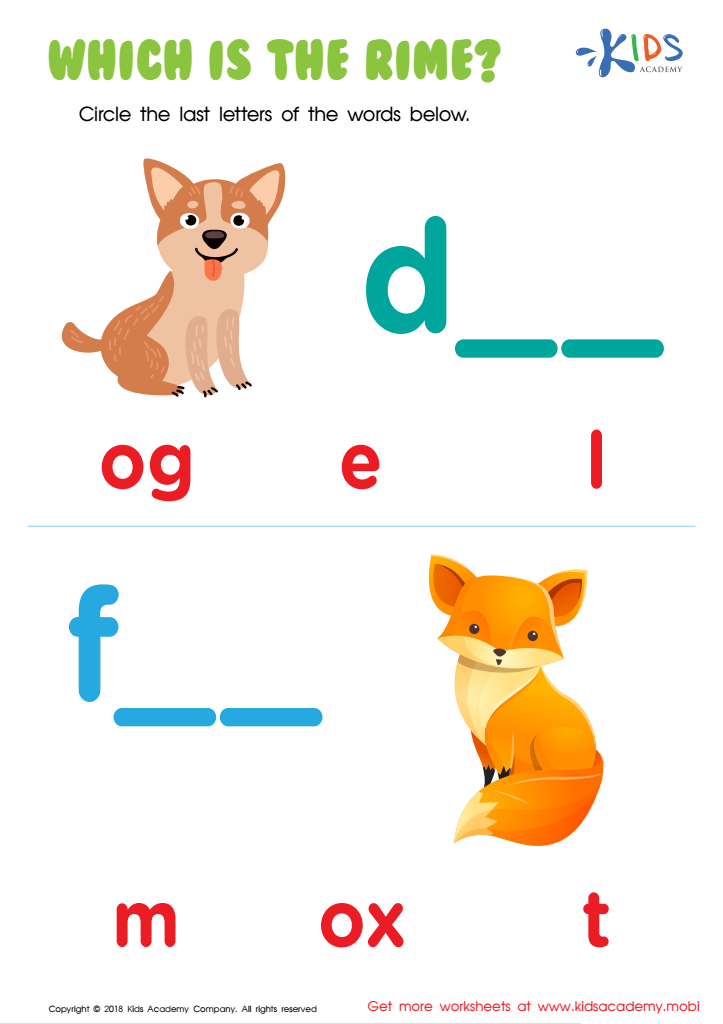
Which Is the Rime? Worksheet

Beginning readers benefit from rimes that aid letter familiarity, recognition, and spelling. With this fun PDF worksheet, kids can identify and spell the correct word for each image by circling the last letter. This activity develops fine motor skills as well.
Which Is the Rime? Worksheet
Worksheet


Phonological awareness is crucial for early literacy development, and both parents and teachers should prioritize it in kindergarten. This skill involves recognizing and manipulating sounds in spoken language, which is foundational for reading and writing. When children develop phonological awareness, they learn to identify rhymes, syllables, and individual sounds (phonemes) in words.

Firstly, paying attention to phonological awareness can significantly enhance a child's reading abilities. As children become more adept at hearing and manipulating sounds, they are better equipped to decode new words, leading to improved reading fluency and comprehension. This sets the stage for a lifelong love of reading.

Secondly, phonological awareness activities, such as rhyming games and sound matching, also promote listening and concentration skills, essential for overall academic success. Additionally, these activities can build vocabulary and encourage speech development.

Finally, fostering phonological awareness helps instill confidence in students. As they master this skill, children become more comfortable engaging with language and expressing themselves, which is vital for their social and emotional development.

In summary, prioritizing phonological awareness benefits children's literacy, listening, vocabulary, and self-confidence, making it a vital focus for parents and teachers in kindergarten.