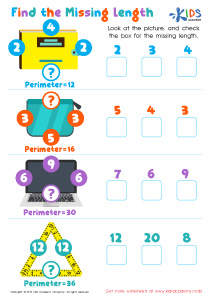
Easy Subtraction Worksheets for Ages 8-9
19 filtered results
-
From - To
Explore our easy subtraction worksheets for ages 8-9 designed to make learning subtraction fun and engaging! Perfect for third graders, these worksheets are packed with colorful activities and clear instructions to help young learners build strong math foundations. From basic problems to slightly more challenging exercises, each worksheet promotes confidence and enhances problem-solving skills. Our resources are crafted to meet educational standards, ensuring your child is on the right track. Download today to turn subtraction practice into amusing and productive sessions. Ideal for both classroom use and home practice, these worksheets simplify learning subtraction!
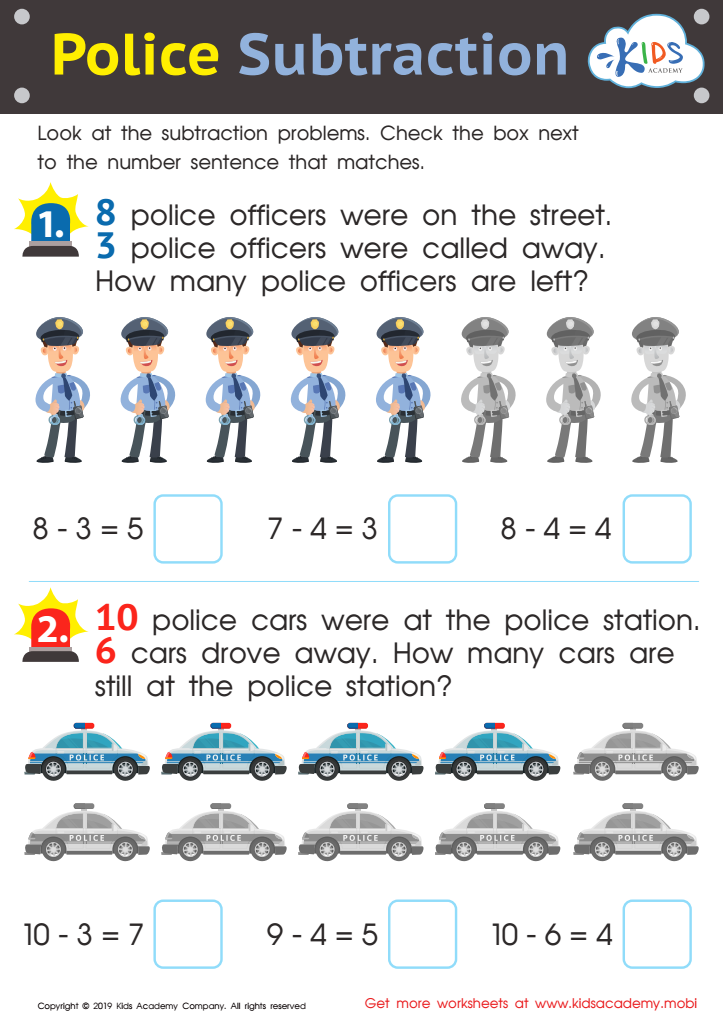
Police Subtraction Worksheet
 Assign to My Students
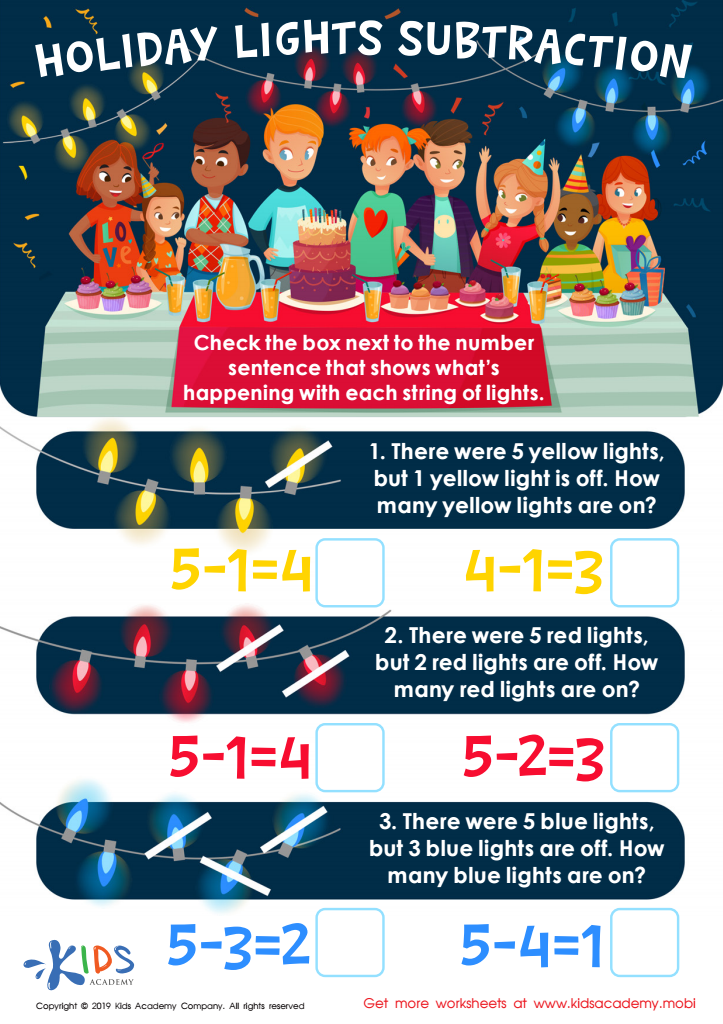
Holiday Lights Subtraction Worksheet
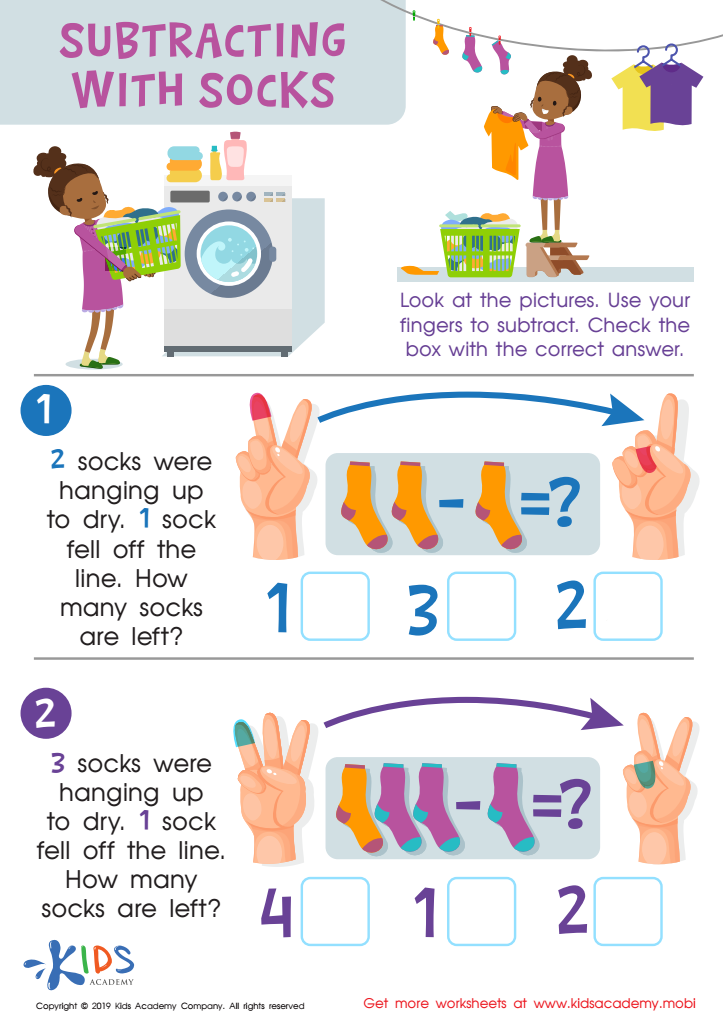
Subtracting Socks Worksheet
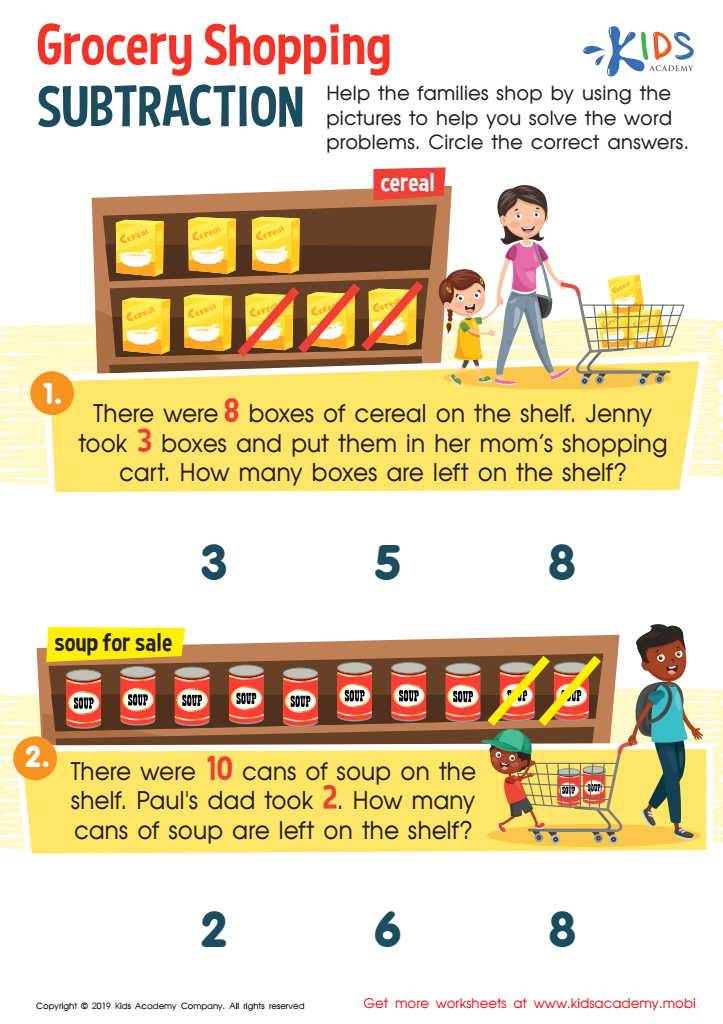
Grocery Shopping Subtraction Worksheet
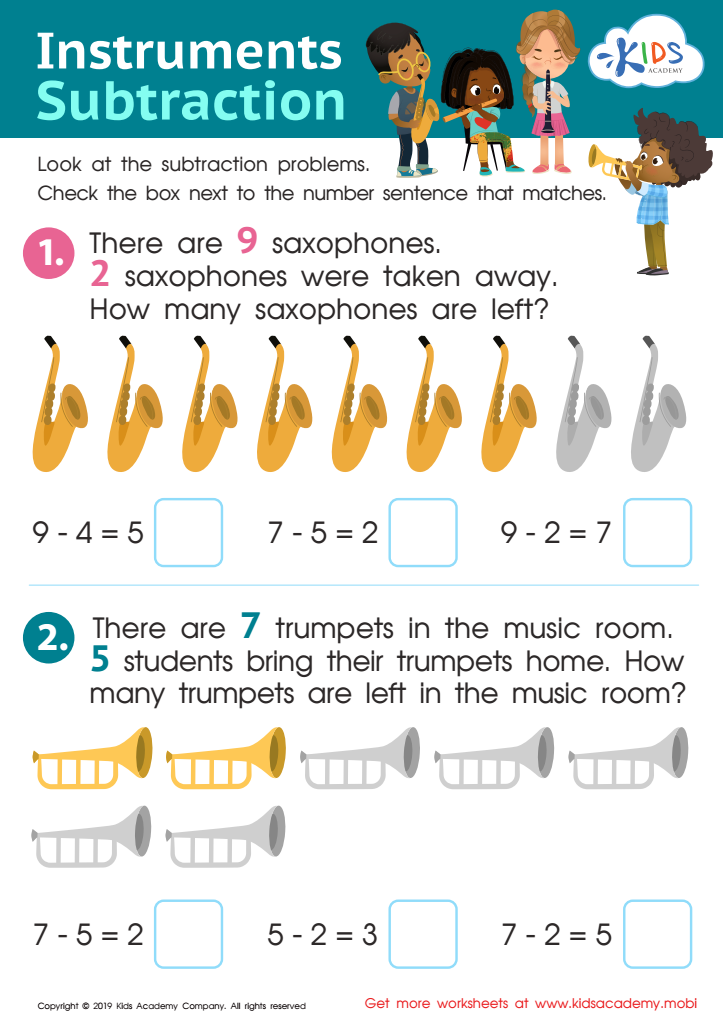
Instrument Subtraction Worksheet
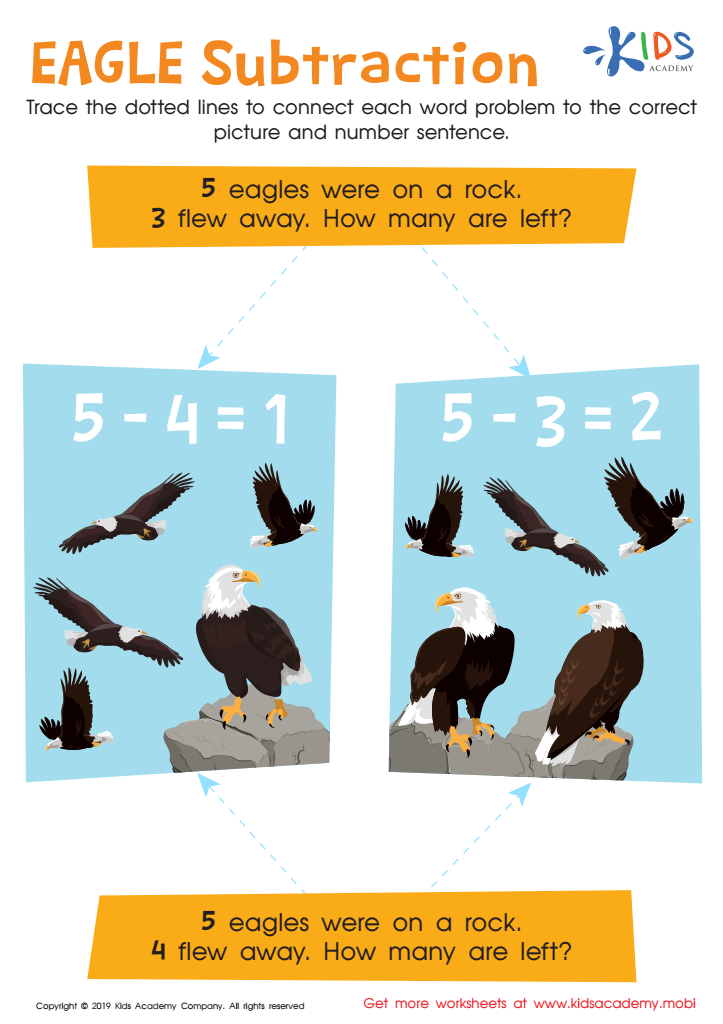
Eagle Subtraction Worksheet
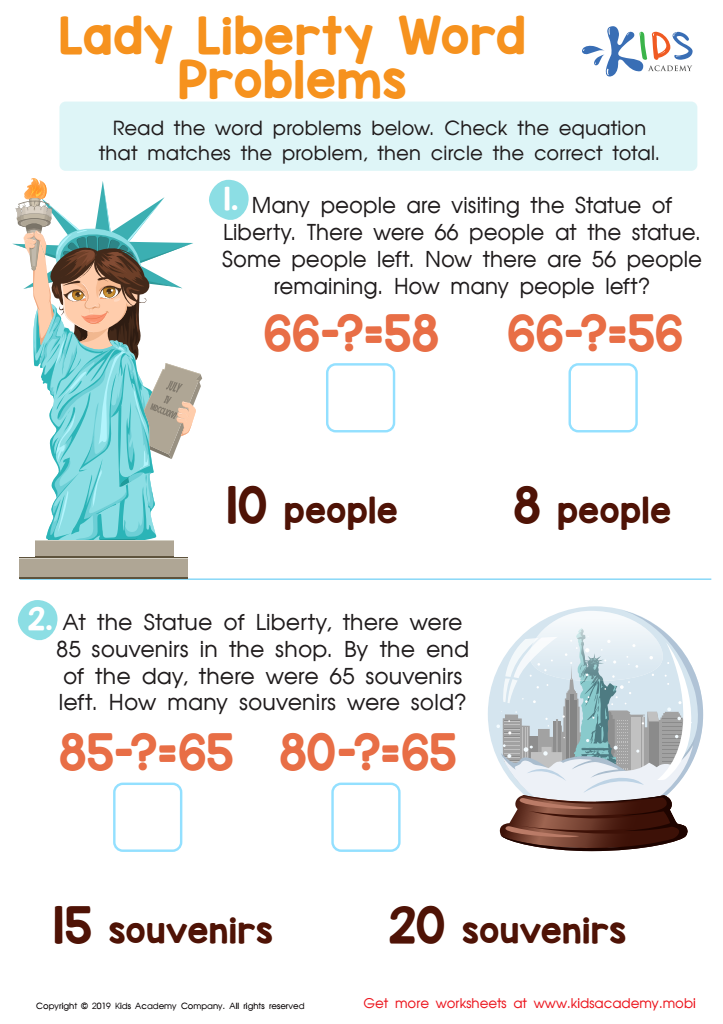
Lady Liberty Worksheet
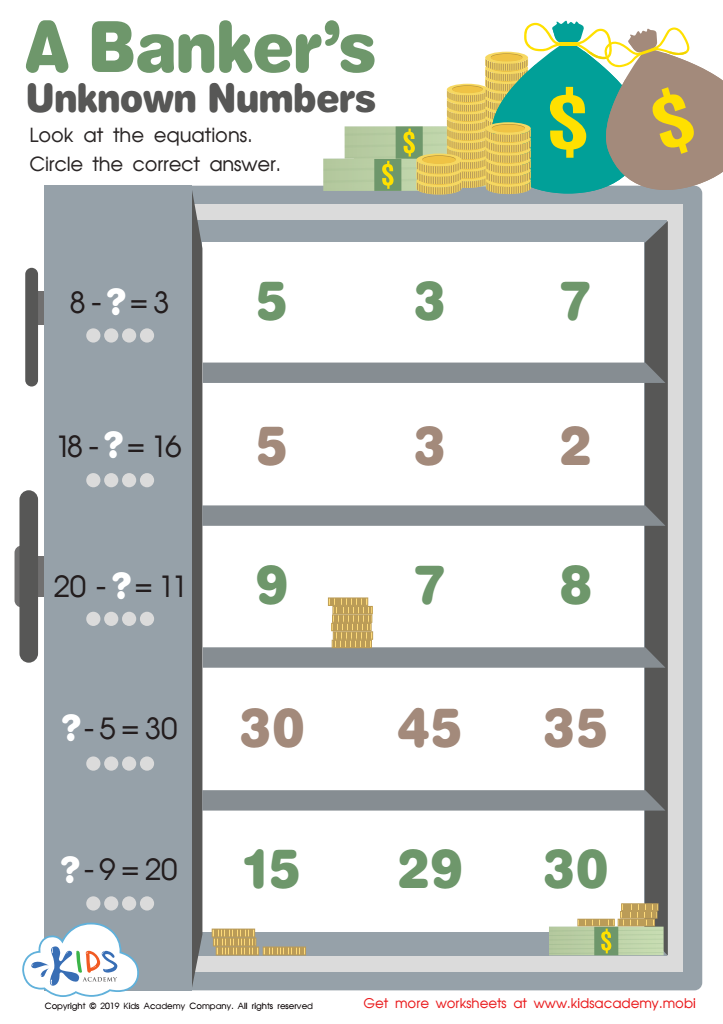
A Banker's Unknown Numbers Worksheet
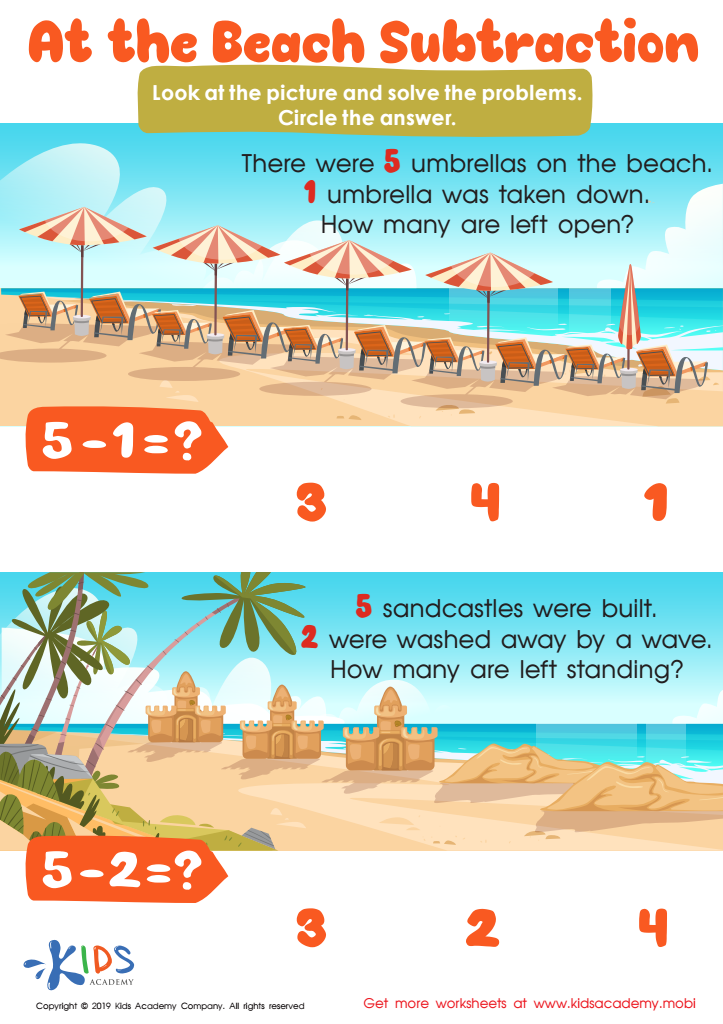
At the Beach Subtraction Worksheet
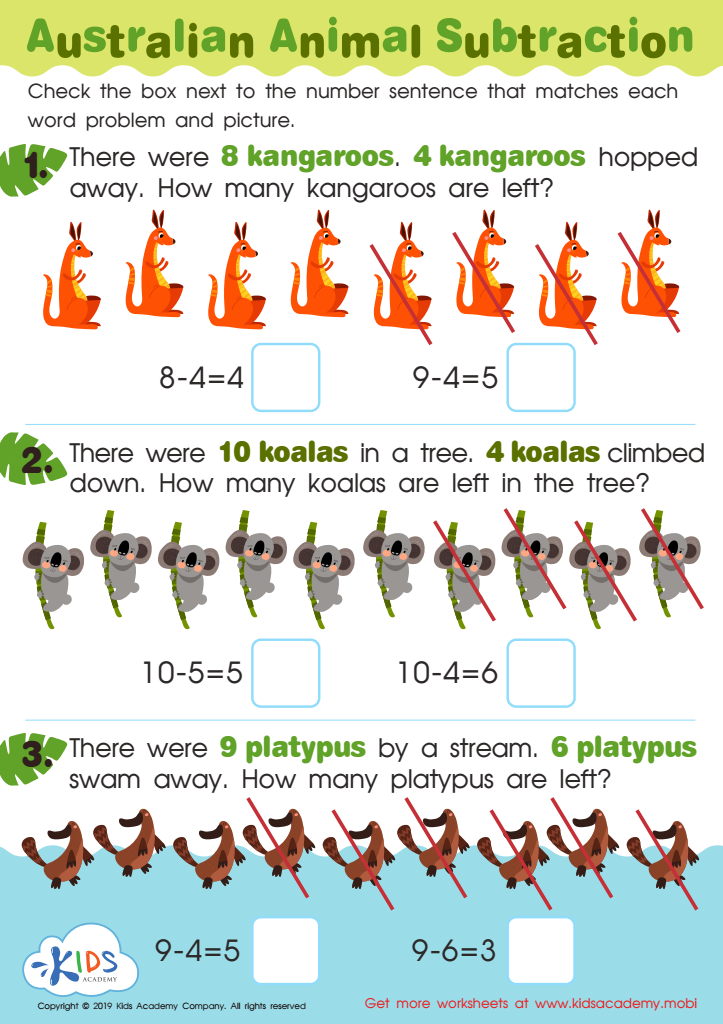
Australian Animal Subtraction Worksheet
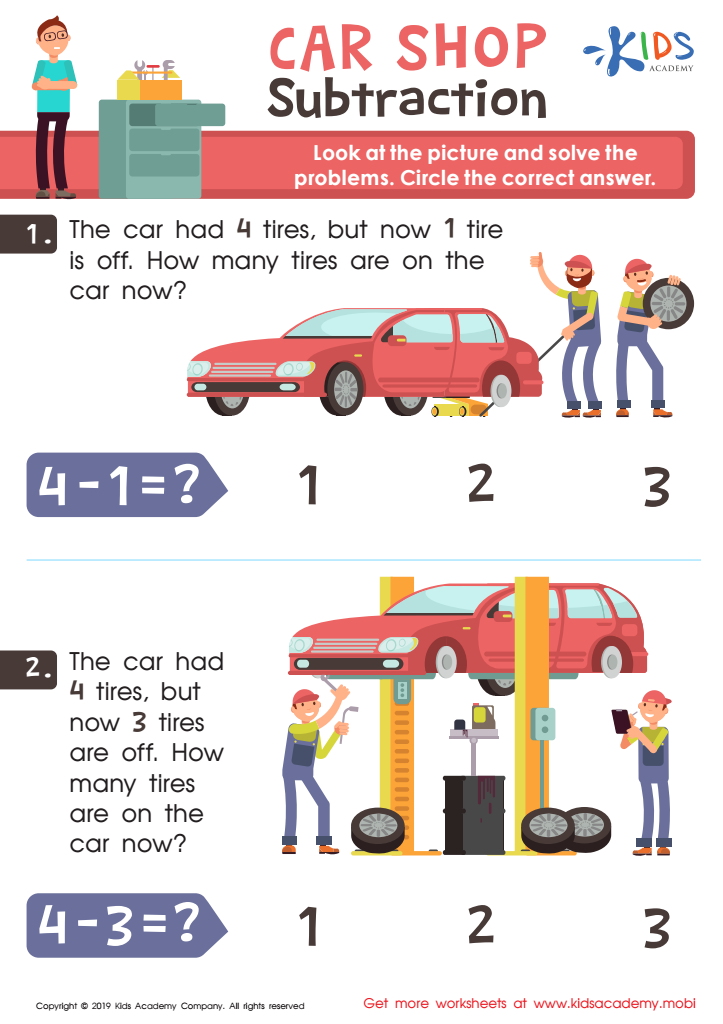
Car Shop Subtraction Worksheet
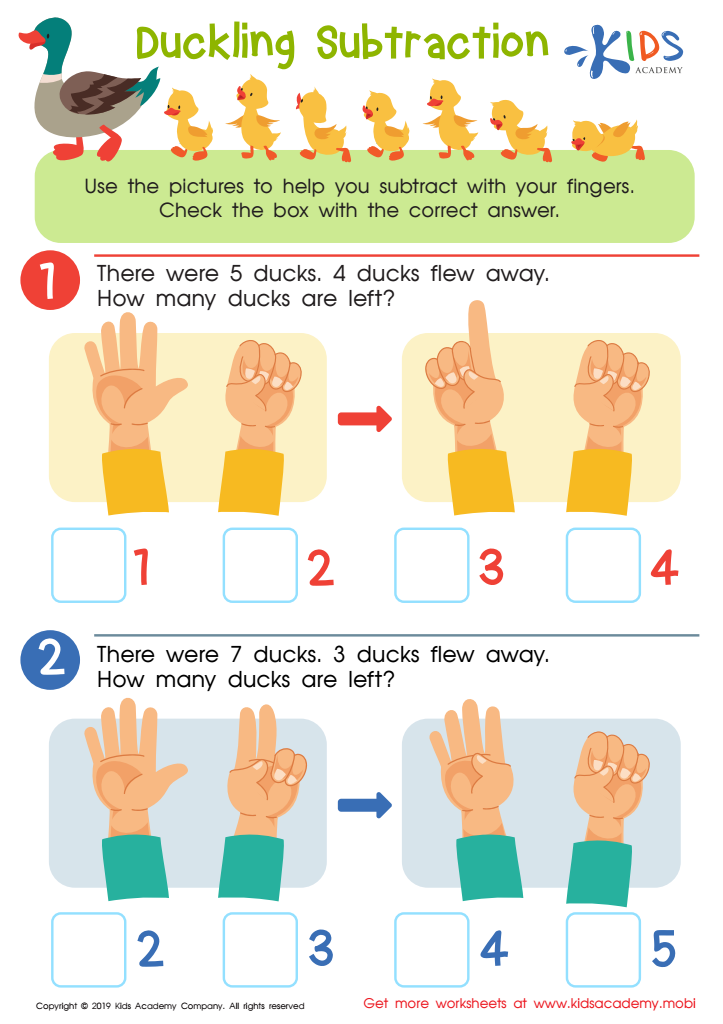
Duckling Subtraction Worksheet
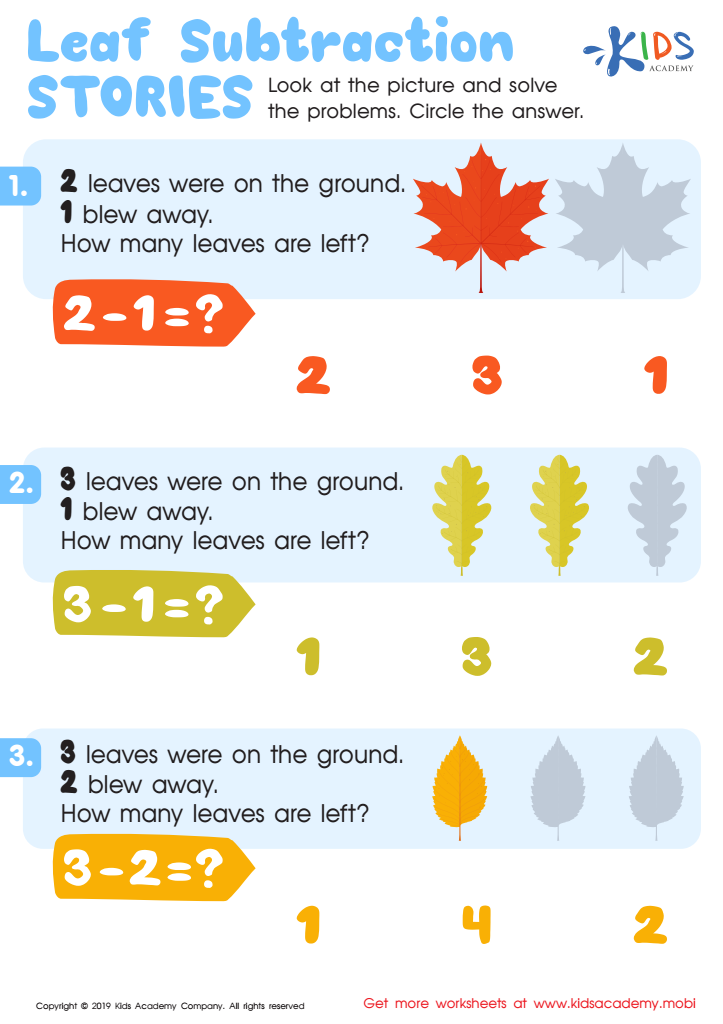
Leaf Subtraction Stories Worksheet
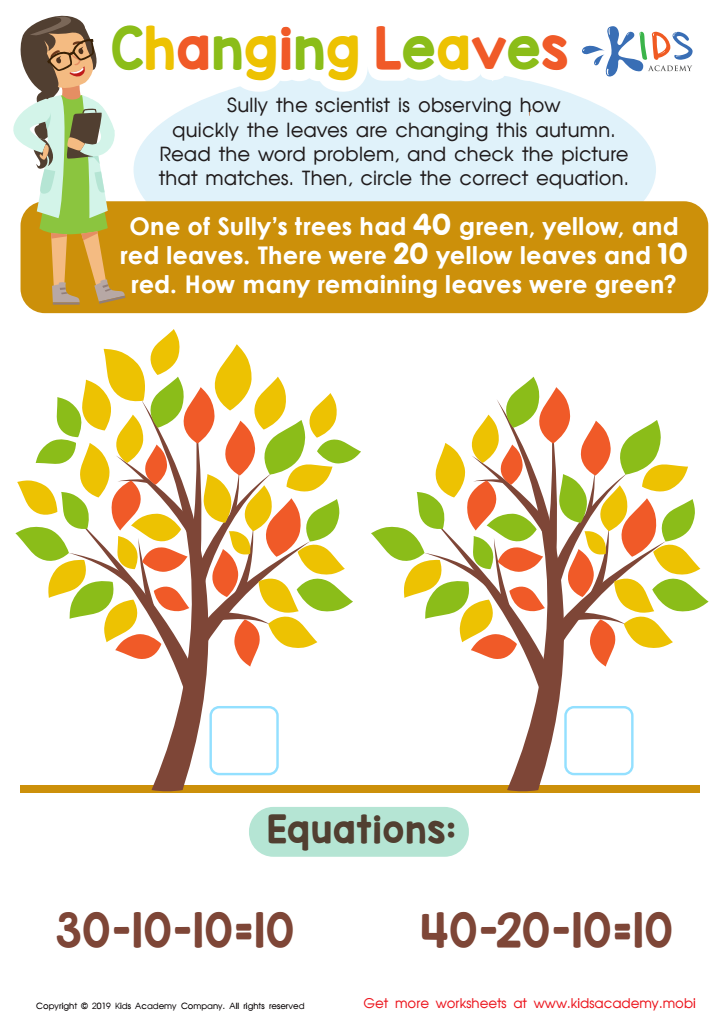
Changing Leaves Worksheet
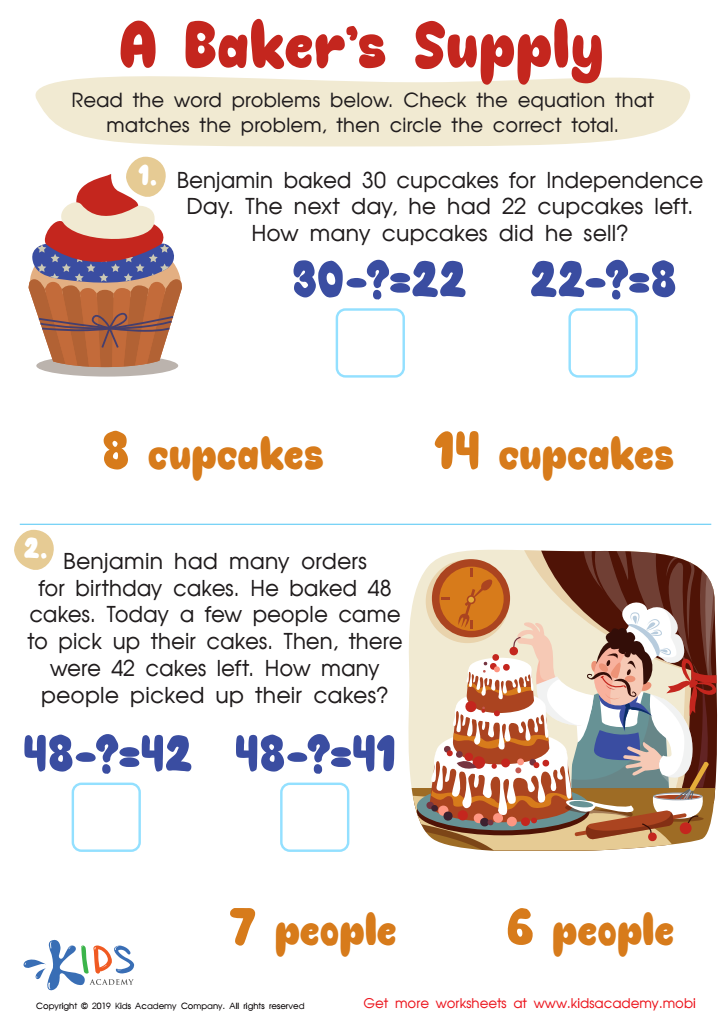
A Baker's Supply Worksheet
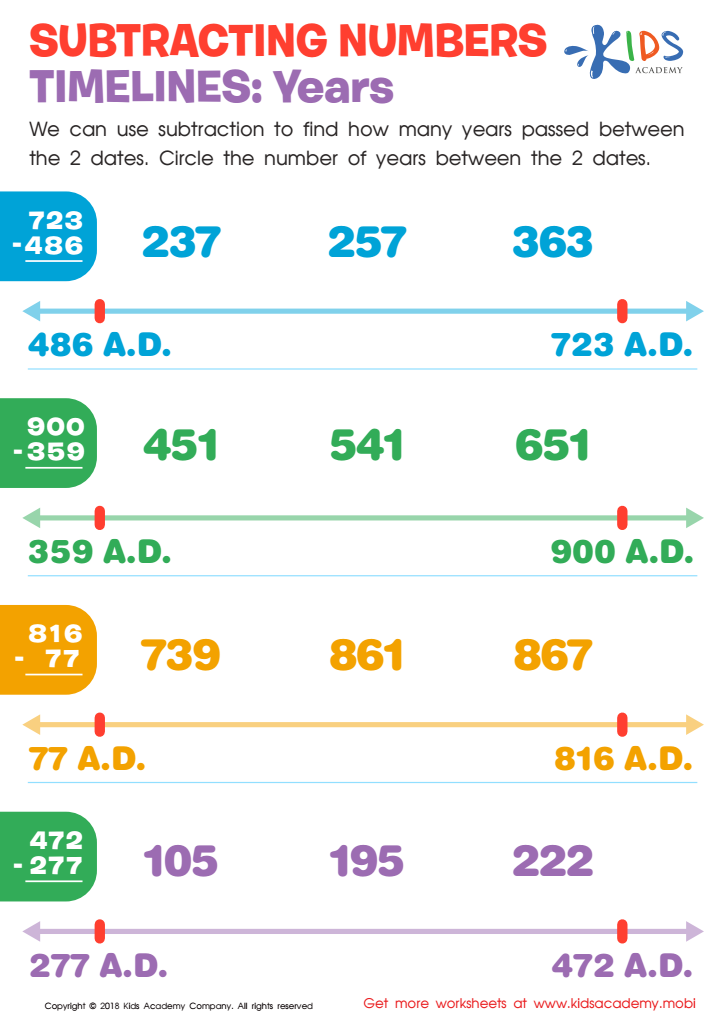
Subtracting Numbers Timelines: Years Worksheet
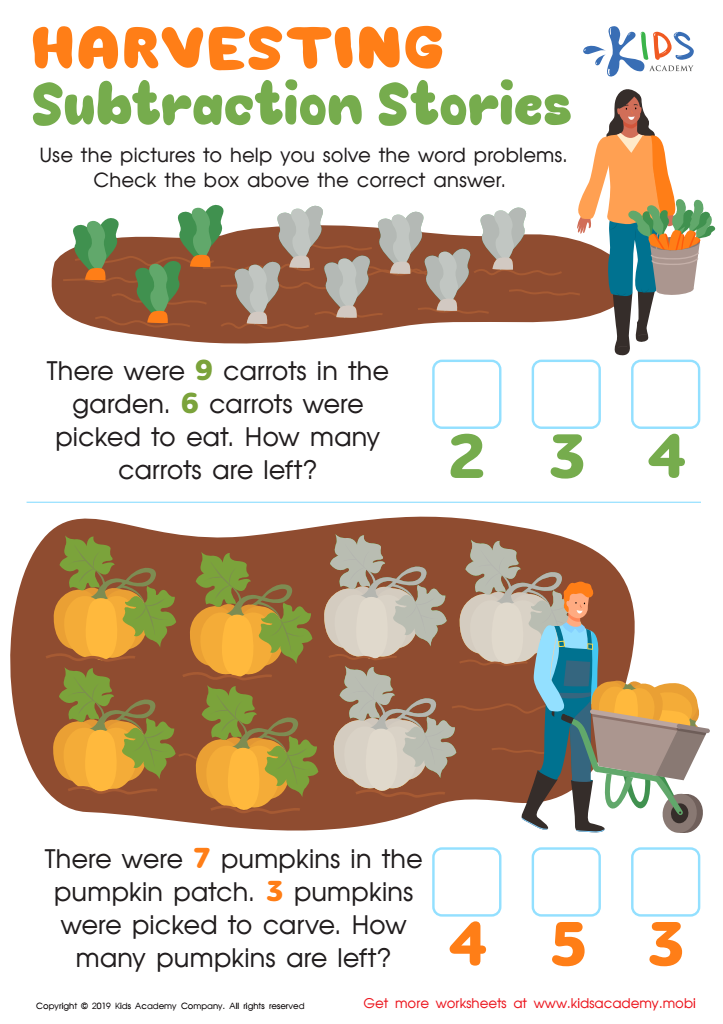
Harvesting Subtraction Stories Worksheet
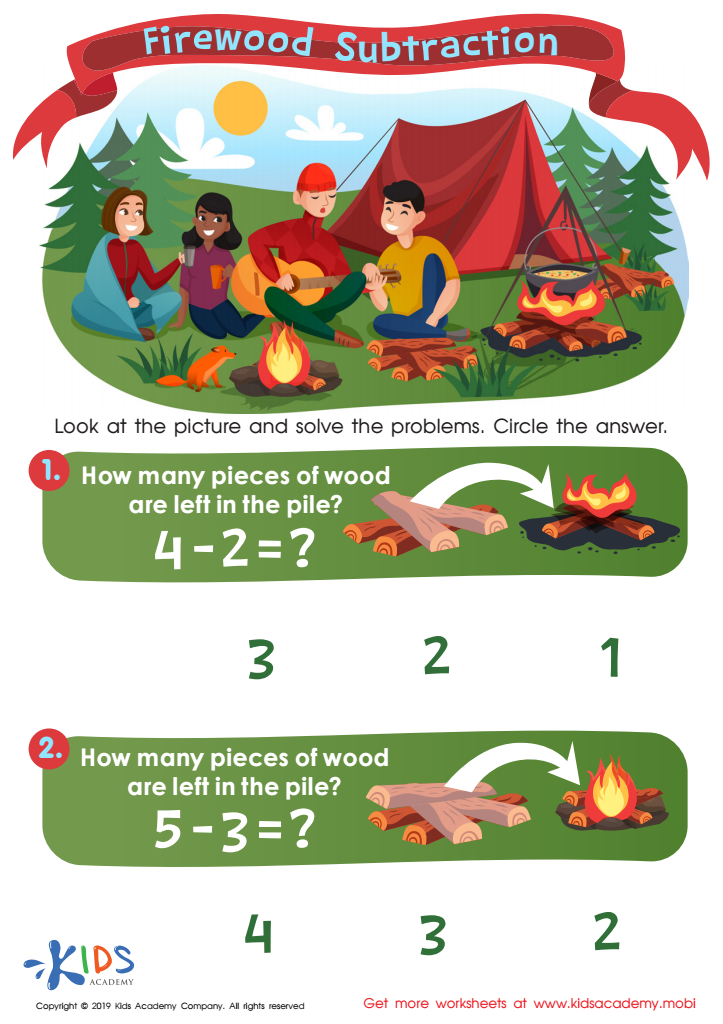
Firewood Subtraction Worksheet
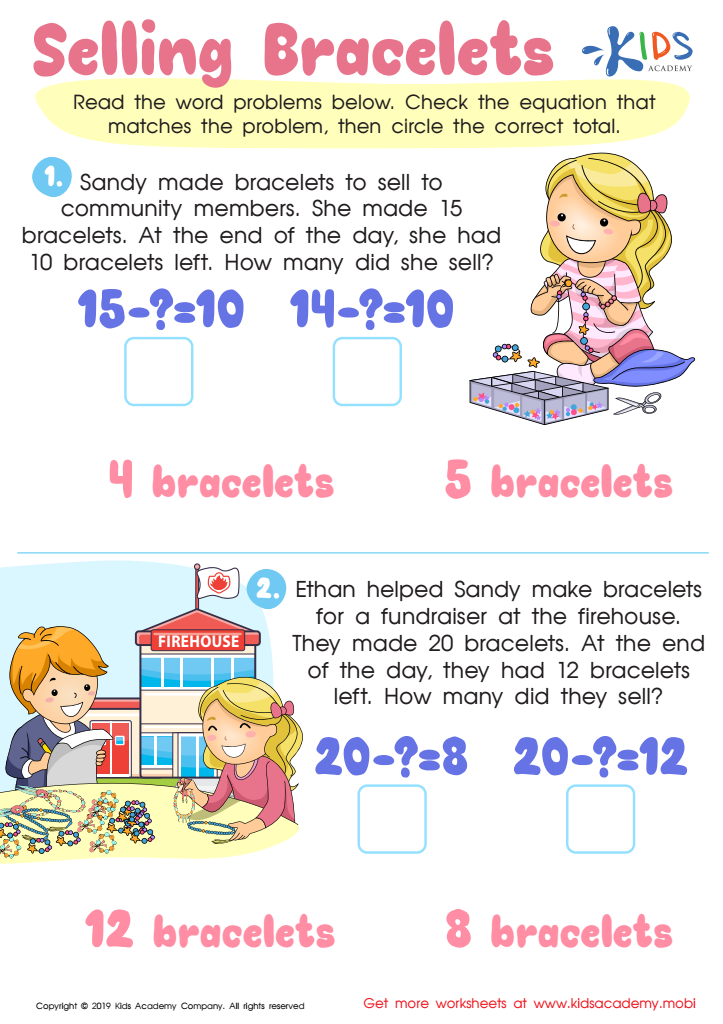
Selling the Bracelets Worksheet








Easy subtraction is a fundamental skill that serves as a cornerstone for more complex mathematical concepts, making it crucial for both parents and teachers to ensure that children aged 8-9 grasp it effectively. At this age, children are transitioning from simple arithmetic to more advanced topics like division and fractions. A strong understanding of subtraction not only reinforces addition skills but also lays the groundwork for these future learning areas.
Mathematics, including subtraction, also helps develop critical cognitive skills such as problem-solving, logical thinking, and analytical reasoning. These skills are not only essential for math but are also transferable to other subjects and real-life situations. Ensuring that children are comfortable with subtraction can boost their confidence and motivation to tackle more difficult problems, creating a positive learning experience.
Additionally, subtraction is often used in everyday tasks, such as calculating change, measuring ingredients for recipes, or even keeping track of time. Teaching children to subtract easily aids them in practical, real-world applications, fostering independence and self-sufficiency from a young age.
Parents and teachers who focus on making subtraction easy and understandable provide children with a solid educational foundation, positively affecting their academic journeys and everyday problem-solving capabilities.