Extra Challenge Tracing Letters Worksheets for Ages 4-8
10 filtered results
Difficulty Level
Grade
Age
-
From - To
Subject
Activity
Standards
Unlock a world of learning with our Extra Challenge Tracing Letters Worksheets, meticulously designed for children ages 4-8. These printable worksheets take alphabet tracing to the next level, making handwriting practice engaging and effective. With a focus on fine motor skills and letter recognition, each sheet presents unique challenges that boost confidence and mastery. From basic letter shapes to more intricate designs, our worksheets ensure children remain motivated and progress smoothly. Ideal for both home and classroom settings, these worksheets are perfect tools for inspiring young learners to develop their writing skills with enthusiasm. Ignite learning today!
Favorites
With answer key
Interactive
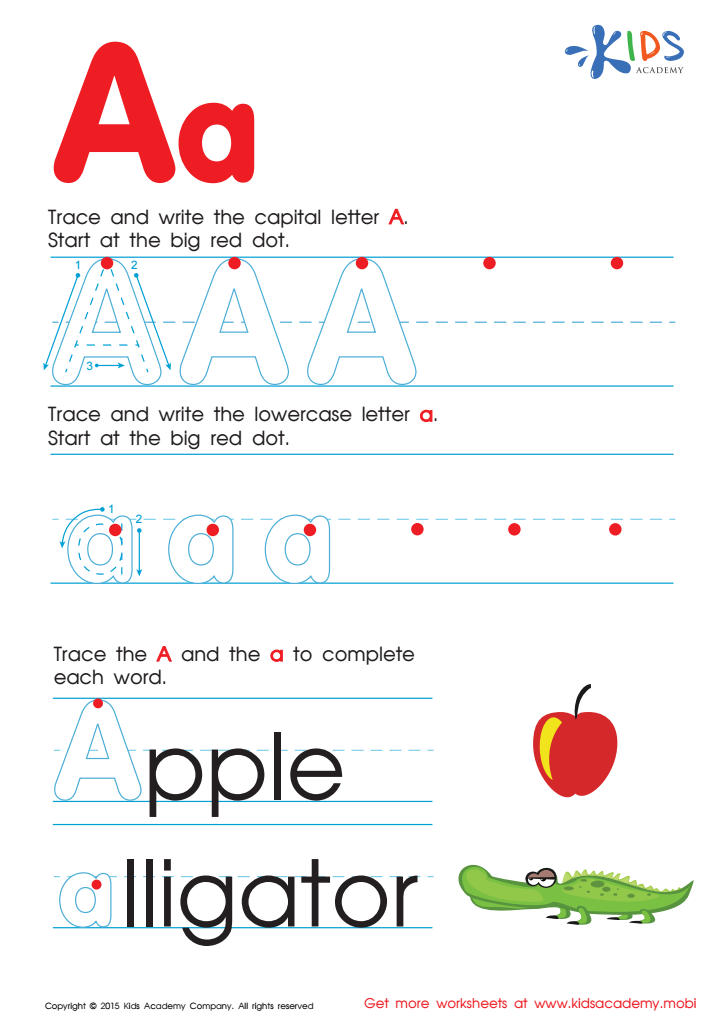
Letter A Tracing Page
Trace and write the letter "A"! Start with the big red dot, then do the capital and lowercase versions. Then write it again with two words - apple and alligator. Download more tracing worksheets at Kids Academy.
 Assign to My Students
Letter A Tracing Page
Worksheet
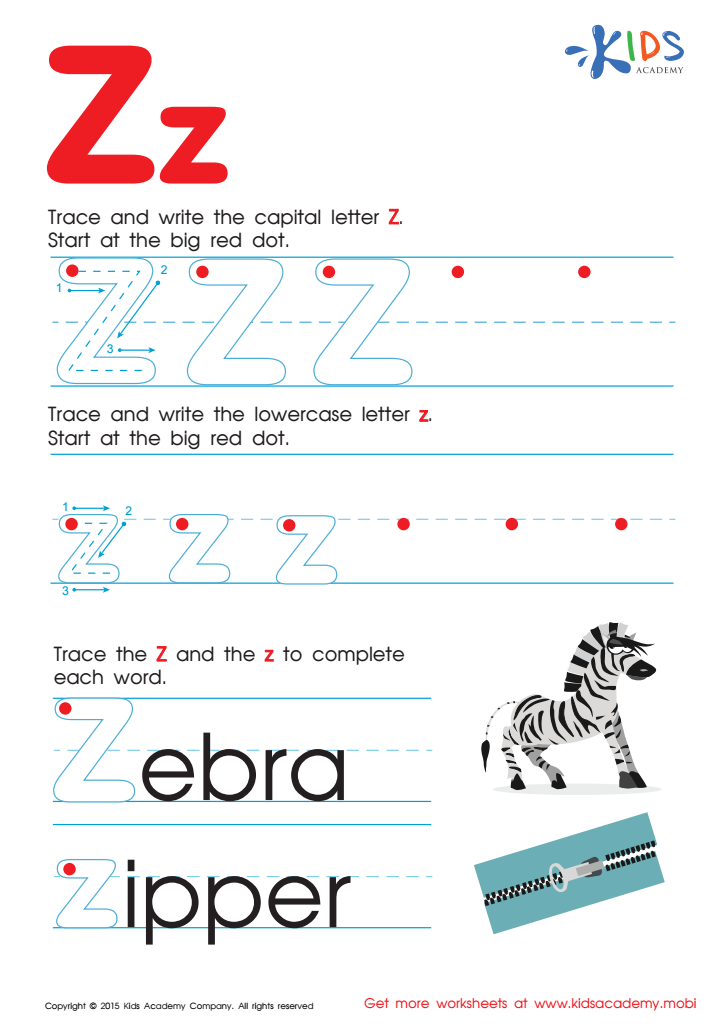
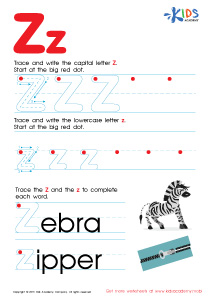
Letter Z Tracing Page
Trace and write capital "Z" and lowercase "z". Complete words "zebra" and "zipper". Be attentive and have fun! (80 words)
Letter Z Tracing Page
Worksheet
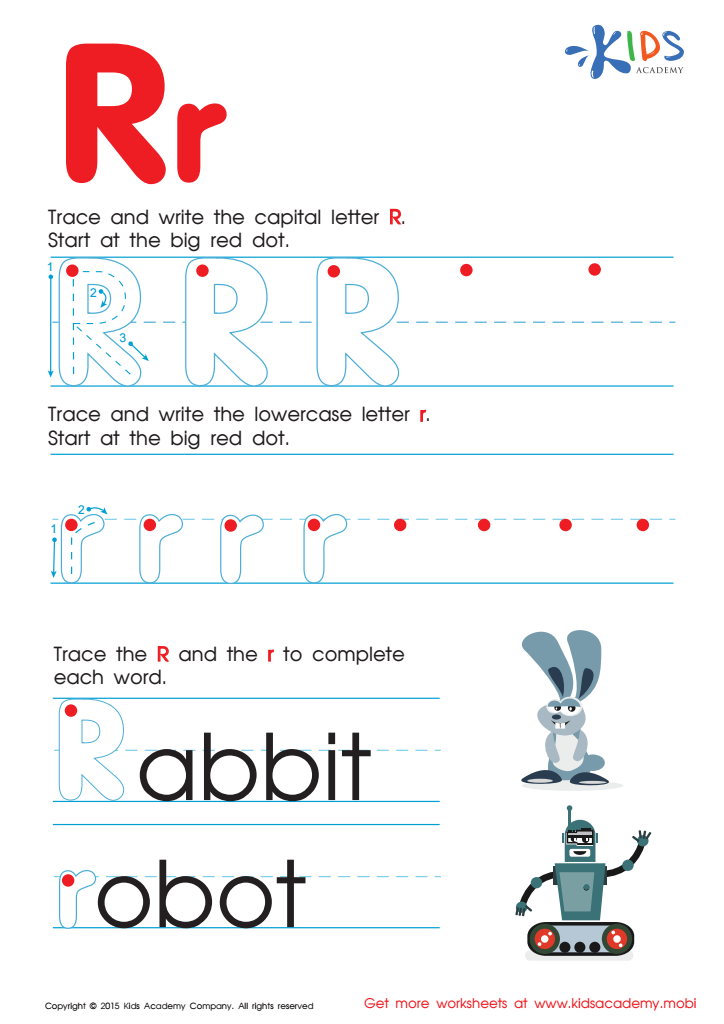
Letter R Tracing Page
Trace and write the letter "R" with this worksheet for kindergarten. Start with the uppercase, then move on to the lowercase. Write the letters several times for practice. Then help complete the words for the rabbit and robot, spelling carefully. More ABC worksheets can be found at Kids Academy.
Letter R Tracing Page
Worksheet
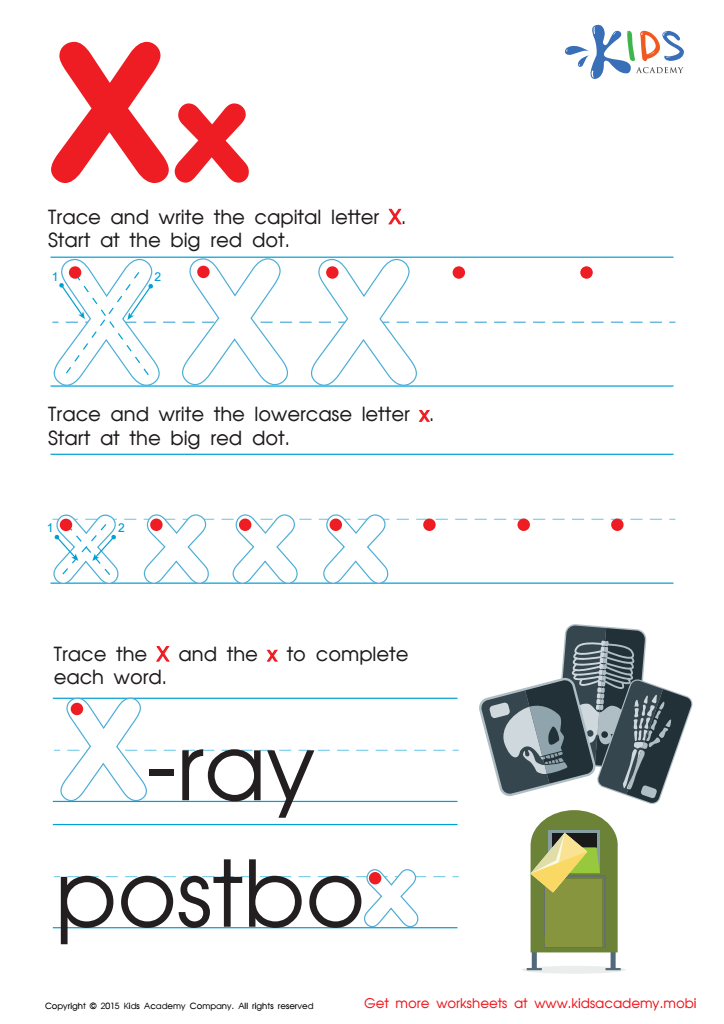
Letter X Tracing Page
Trace the uppercase letter "X" to learn, then write it yourself and practice. Then do the same with the lowercase "x" before completing the words "X-ray" and "postbox". Enjoy our alphabet printables!
Letter X Tracing Page
Worksheet
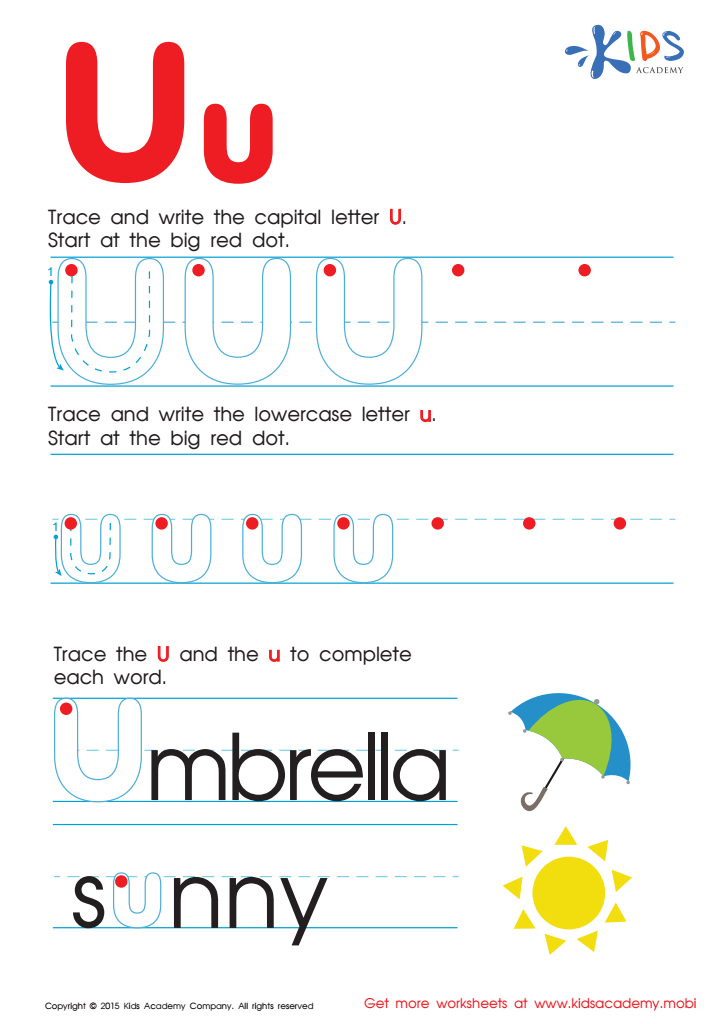
Letter U Tracing Page
Ready to trace and write the letter "U"? Use our worksheet and practice tracing both uppercase and lowercase letters. Complete the words "umbrella" and "sunny" with a capital "U". Check our full collection of alphabet printables for more activities.
Letter U Tracing Page
Worksheet
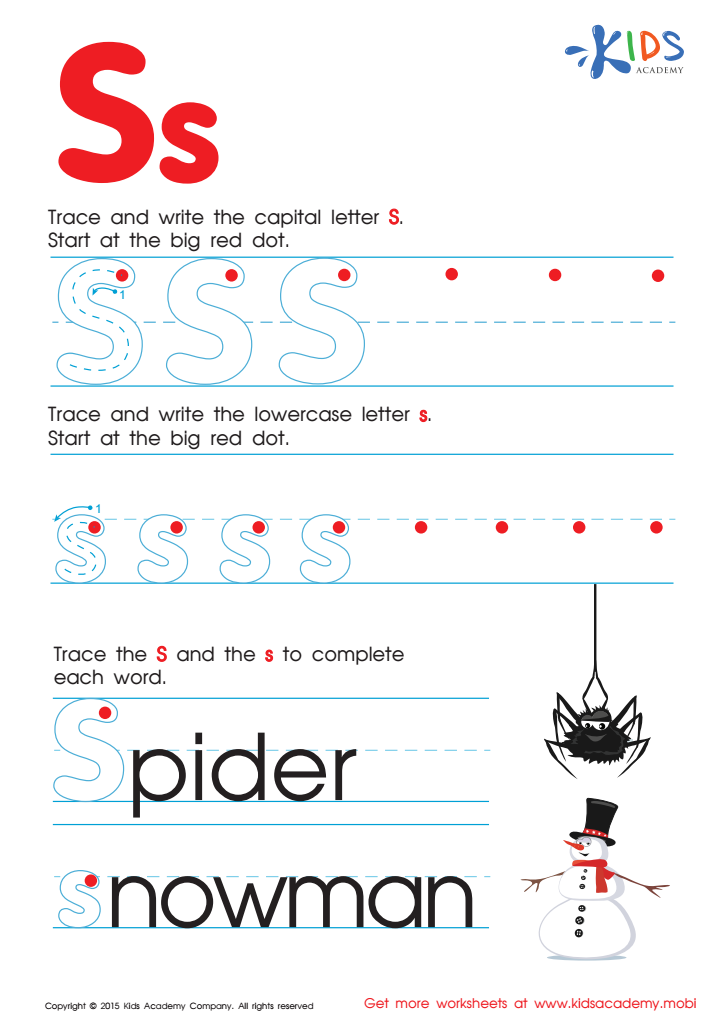
Letter S Tracing Page
Trace and write the capital and lowercase "S" on this ABC worksheet for kindergarten. Start with the big red dot and be careful. When you finish, help the spider and snowman in the pictures restore their words with the capital and lowercase letters. Continue learning the alphabet with Kids Academy.
Letter S Tracing Page
Worksheet
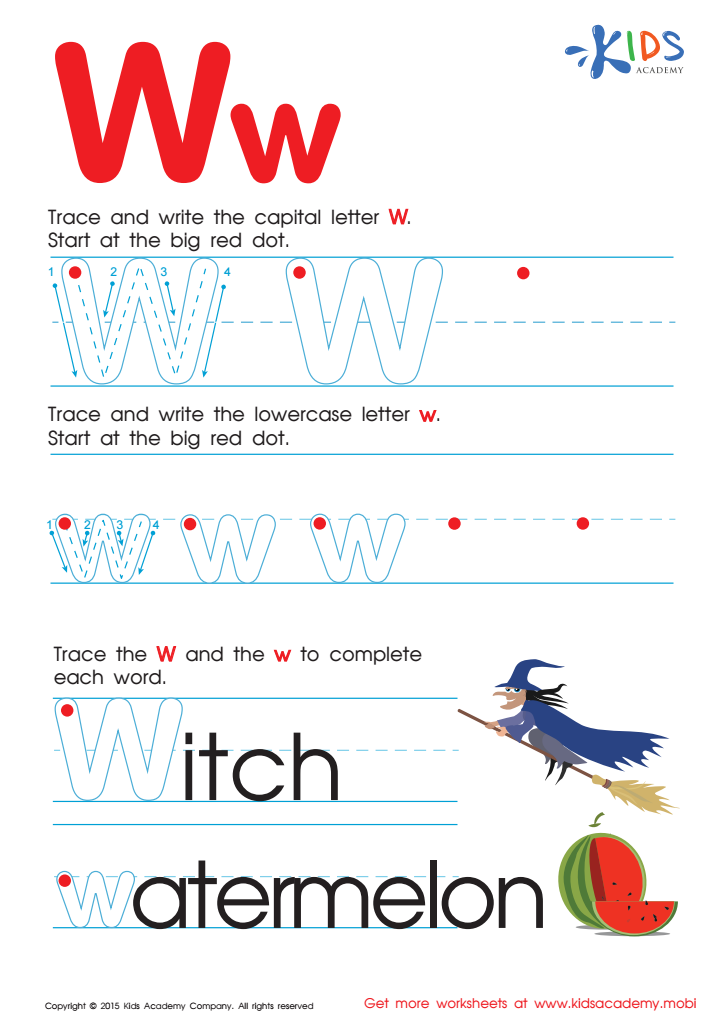
Letter W Tracing Page
Trace and write the capital and lowercase letter W with this free letter tracing worksheet by Kids Academy. Complete the words "Witch" (capital) and "watermelon" (lowercase). Check out our other kindergarten alphabet worksheets!
Letter W Tracing Page
Worksheet
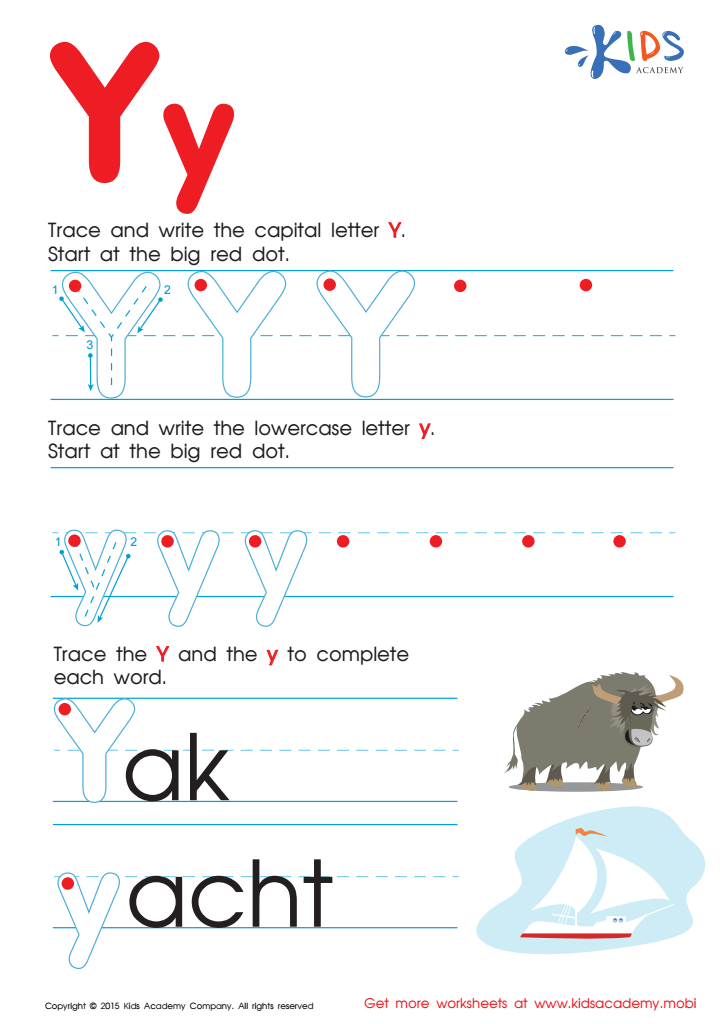
Letter Y Tracing Page
Trace the capital letter "Y" on the red dot, then trace and write the lowercase letter. Complete the words to help the Yak walk and the yacht swim. More worksheets at Kids Academy.
Letter Y Tracing Page
Worksheet
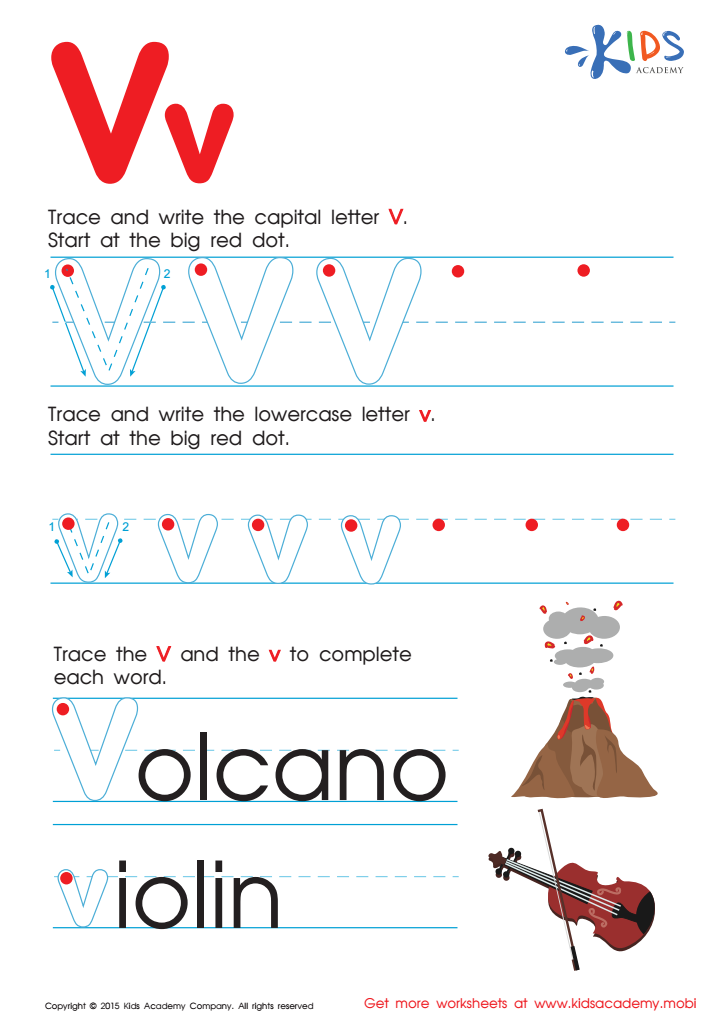
Letter V Tracing Page
Trace the uppercase and lowercase letter "V" with our kindergarten tracing worksheet. Begin at the red dot and follow the lines. Write it several times. Complete the words "Volcano" and "violin". Get more alphabet activities at Kids Academy.
Letter V Tracing Page
Worksheet
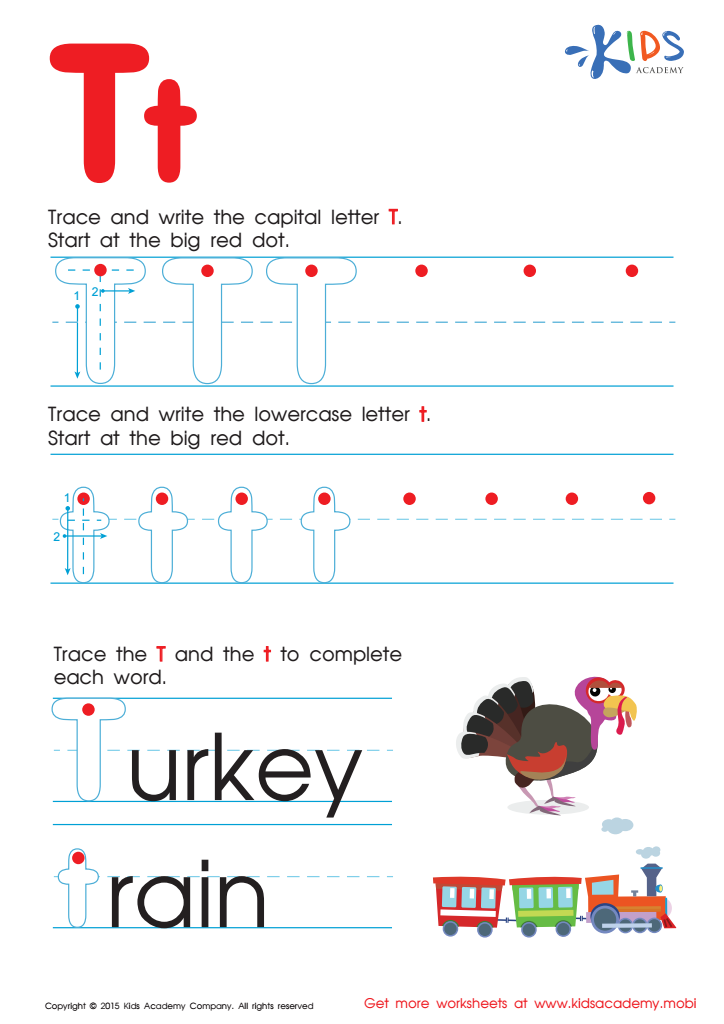
Letter T Tracing Page
Trace letters, complete words, draw pictures and see your kids having fun!
Kids Academy offers alphabet tracing worksheets to learn to write letters. Start with the big red dot, trace the letter, then write it. Practice uppercase and lowercase. Have fun completing words with a Turkey or a rain-train and draw pictures. Get more printable worksheets to make learning enjoyable.
Letter T Tracing Page
Worksheet
Join Kids Academy for Free
Who is primarily going to use this learning content?








Extra Challenge Tracing Letters for ages 4-8 is a fundamental tool that both parents and teachers should deeply care about. At this critical stage of early childhood development, young learners are establishing the foundational skills necessary for reading and writing. Tracing letters aids in fine motor skill development, especially hand-eye coordination and pencil grip, which are essential for efficient, legible handwriting.
Additionally, tracing letters can significantly boost cognitive development. It helps children recognize letter shapes, understand proper letter formation, and learn the correspondence between sounds and symbols. This acts as the building blocks for literacy, fostering early reading skills and enhancing letter recognition which is crucial for later reading success.
Moreover, activities like these promote concentration, patience, and focus as children meticulously follow the lines to form letters. It instills a sense of accomplishment and builds confidence as children see tangible progress in their skills.
On an emotional level, shared tracing activities become a bonding opportunity for parents, children, and teachers, contributing to a supportive learning environment. In sum, Extra Challenge Tracing Letters is a multidimensional educational tool that not only teaches writing but also supports holistic childhood development, making it indispensable in early education.