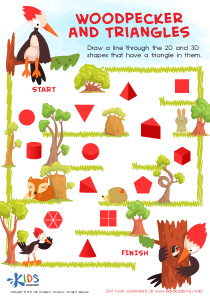
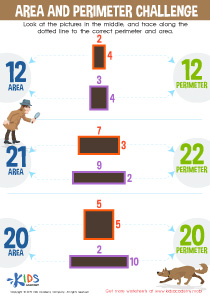
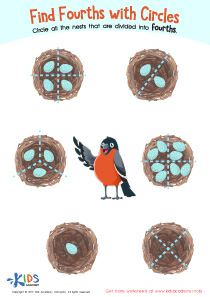
Extra Challenge Tracing Shapes Worksheets for Ages 6-8
4 filtered results
Difficulty Level
Grade
Age
-
From - To
Subject
Activity
Standards
Our "Extra Challenge Tracing Shapes Worksheets for Ages 6-8" are designed to enhance young learners' geometry skills by tracing and identifying various shapes. Perfect for children eager to tackle more advanced tasks, these fun and educational worksheets boost fine motor skills, hand-eye coordination, and shape recognition. Each worksheet presents exciting challenges and unique designs that turn learning into a delightful game. Ideal for teachers and parents alike, these engaging activities keep kids focused and entertained, making math practice both stimulating and rewarding. Visit Kids Academy to unlock a world of learning fun with our premium tracing shapes worksheets!
Favorites
With answer key
Interactive
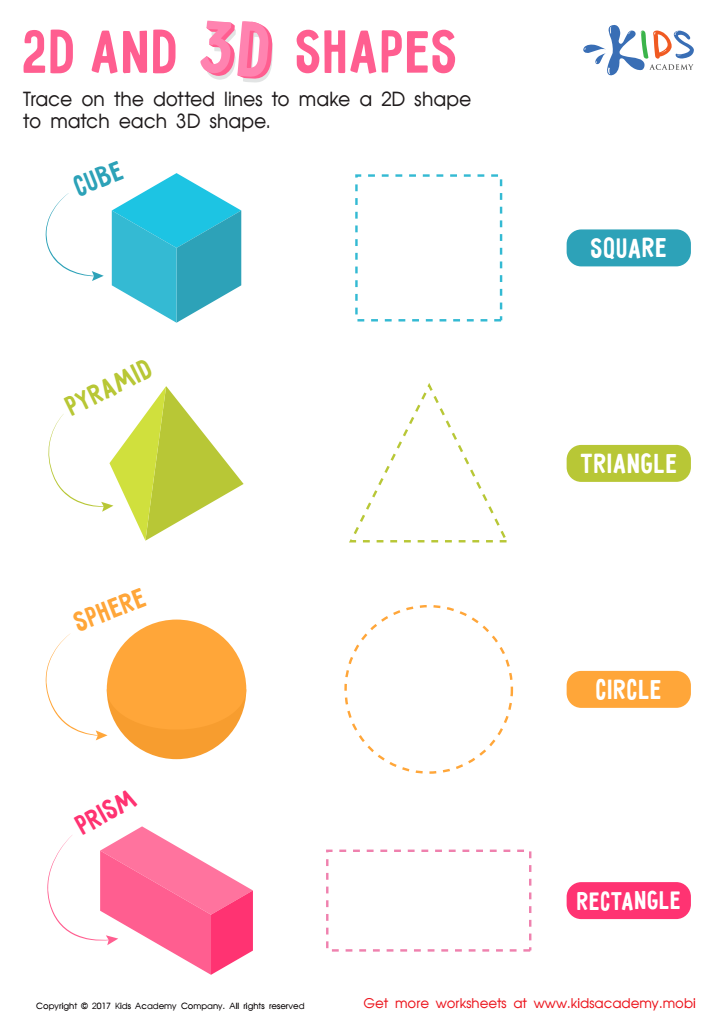
2D and 3D Shapes Worksheet
Introduce your child to 3D and 2D with this traceable worksheet. With dotted lines, help them trace and make a 2D shape for each 3D shape: square, triangle, rectangle, and circle. Show them there's more than one way to draw! You may have taken them to a 3D movie, or they've seen some fantastic 3D art. Now they can wonder no more.
 Assign to My Students
2D and 3D Shapes Worksheet
Worksheet
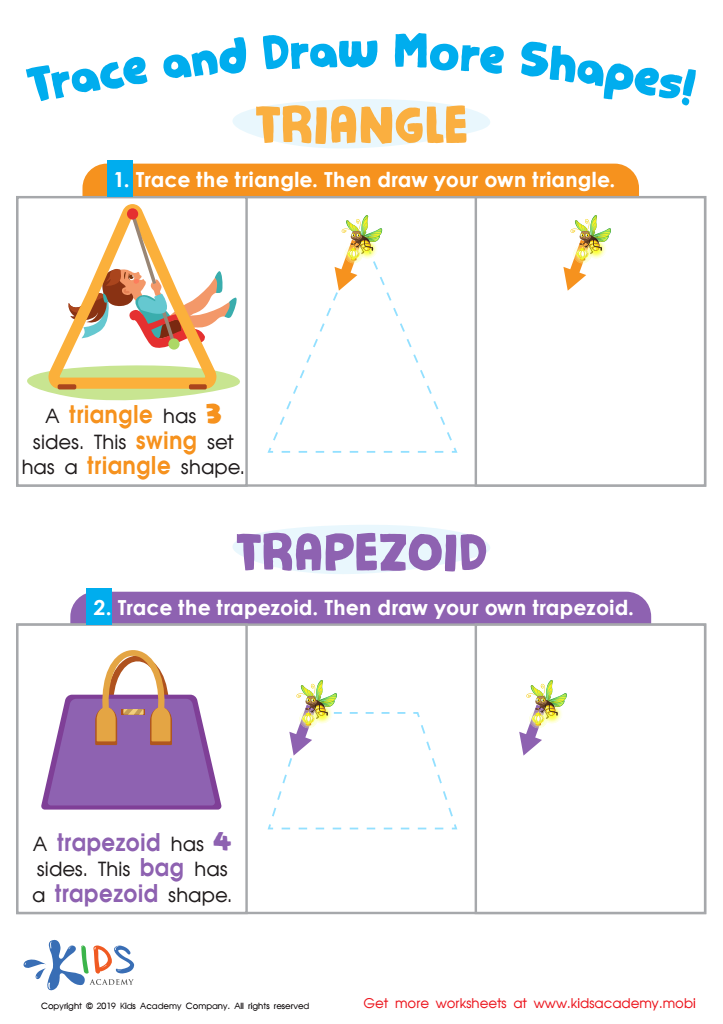
Trace and Draw More Shapes Worksheet
Help your kids with more learning! Look at images in the worksheet, read facts about the shapes, then help your kids trace and draw. This reinforces that learning is never done; use this simple worksheet to help your kids with school homework and more!
Trace and Draw More Shapes Worksheet
Worksheet
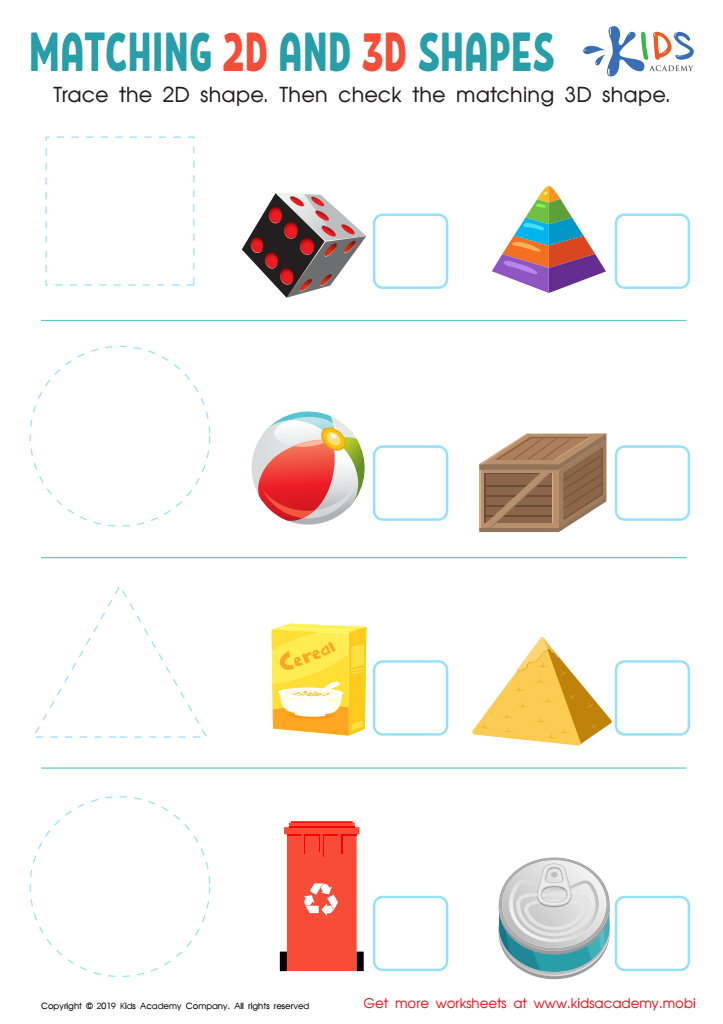
Matching 2D and 3D Shapes Worksheet
Before starting this worksheet, ask your kids what shapes they know and point out the 2D and 3D shapes on it. Help your kids trace the 2D shapes and then match them to the 3D versions. It'll be a fun new world for your kids to explore!
Matching 2D and 3D Shapes Worksheet
Worksheet
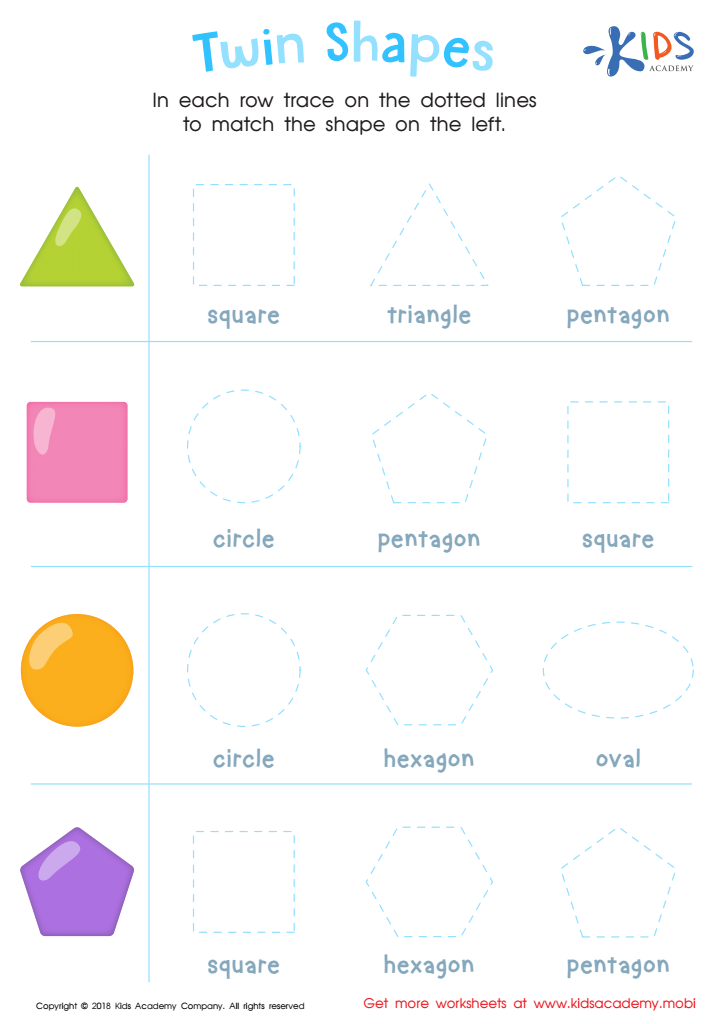
Twin Shapes Dot-to-Dot Worksheet
Test your child's ability to copy with this worksheet. Ask them to find and name the four shapes on the left. Then, they must match each with the dotted lines on the right. Help your child with all four shapes in this fun exercise.
Twin Shapes Dot-to-Dot Worksheet
Worksheet
Join Kids Academy for Free
Who is primarily going to use this learning content?








Extra Challenge Tracing Shapes activities for children ages 6-8 offer significant developmental benefits that both parents and teachers should recognize. Engaging in these exercises helps enhance fine motor skills, which are crucial for writing and daily tasks. By practicing tracing, children learn to control pencil movements confidently and precisely, laying a strong foundation for better handwriting.
Beyond motor skills, tracing activities reinforce cognitive development. Each shape introduces children to fundamental geometric concepts, spatial awareness, and pattern recognition. This exposure supports early math readiness, fostering a quicker and more intuitive understanding of basic principles.
Tracing also has emotional and psychological advantages. Completing such tasks nurtures persistence, patience, and the ability to focus on details. These attributes shape a positive, growth-oriented mindset in young learners. Parental and teacher involvement can further amplify these benefits by offering encouragement and celebrating progress, building a child’s confidence and self-esteem.
Moreover, these activities can be a fun and engaging way for families and classrooms to bond over educational play. By integrating Extra Challenge Tracing Shapes into daily routines, adults contribute to a holistic developmental trajectory, ensuring children are well-prepared academically, socially, and emotionally for future educational ventures.