Normal Consonants Worksheets for Ages 3-8 - Page 2
26 filtered results
-
From - To
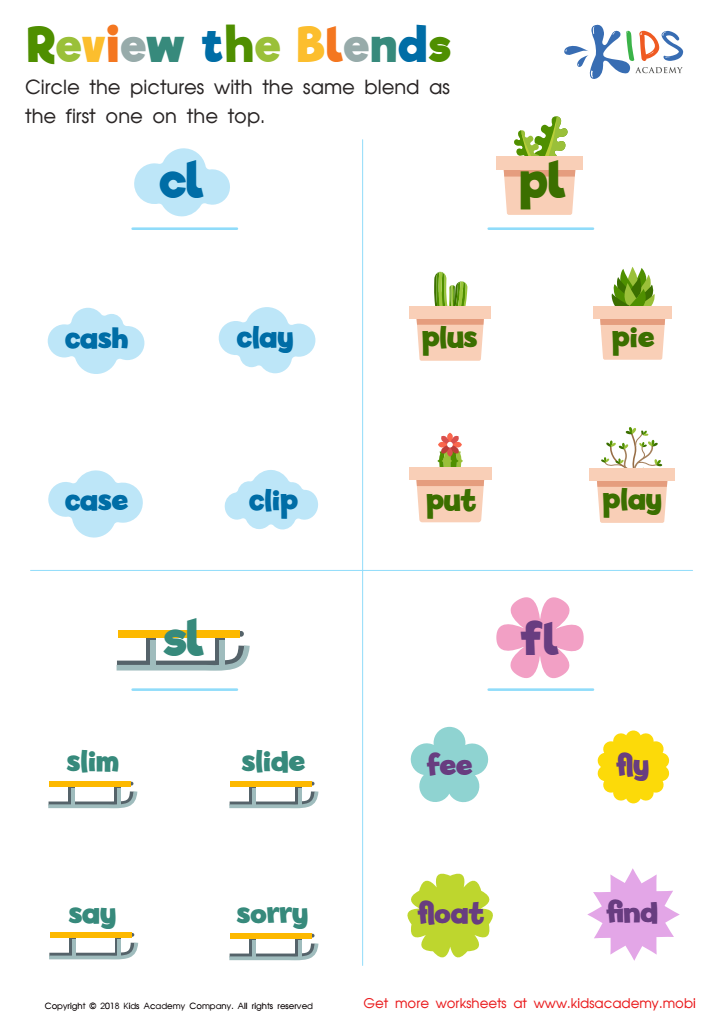
Review the Blends Worksheet
 Assign to My Students
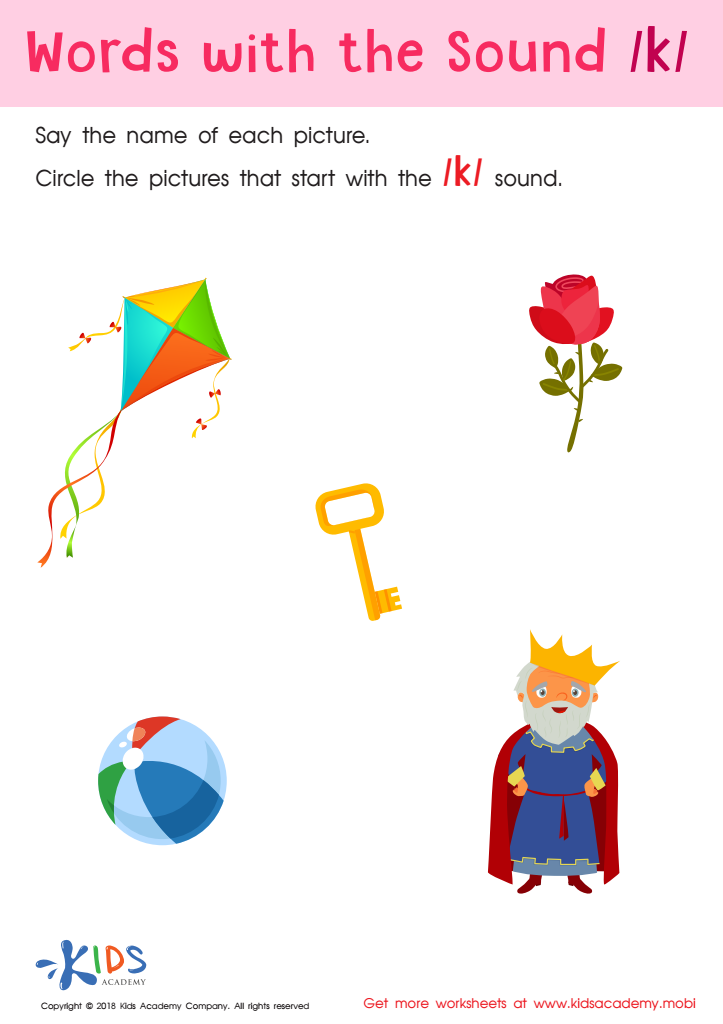
Words with sound k Reading Worksheet



Normal consonants are foundational to early literacy development for children ages 3-8. Understanding and mastering these consonants is crucial because they form the building blocks of language, enabling children to articulate sounds and words necessary for effective communication.
Parents and teachers should be invested in promoting normal consonants to enhance phonemic awareness, which is a key indicator of reading readiness. By familiarizing children with consonants, they can better decode words, improving their reading fluency and comprehension skills. This knowledge helps children progress through their literacy journey, paving the way for successful reading experiences in later grades.
Furthermore, proper consonant recognition supports vocabulary growth and confidence in speaking. Children who can identify and pronounce consonants are more likely to express themselves clearly and engage in conversations, fostering social skills and enhancing their relationships with peers.
Lastly, early exposure to consonant sounds lays the groundwork for more complex phonetic patterns and ultimately supports academic achievement. By nurturing a strong understanding of normal consonants, parents and teachers help cultivate confident, capable learners who are equipped for lifelong success in literacy and beyond. Prioritizing consonant mastery is an investment in a child's present and future.






