Normal Vowels Worksheets for Ages 3-8 - Page 4
73 filtered results
-
From - To
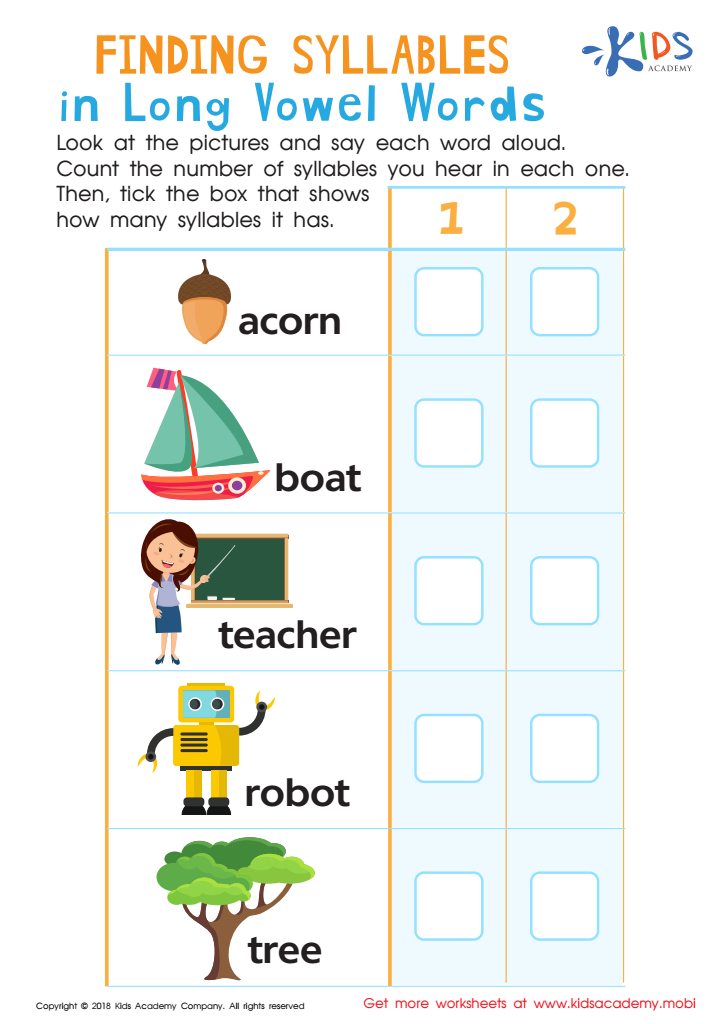
Finding Syllables in Long Vowel Words Worksheet
 Assign to My Students





Parents and teachers should pay close attention to normal vowels when teaching children aged 3-8, as these foundational sounds are critical for language development and literacy skills. Vowels are the building blocks of words, influencing pronunciation and meaning. A strong understanding of vowel sounds helps young learners progress in phonics, enabling them to decode and read new words with confidence.
Mastering normal vowels lays the groundwork for spelling, word formation, and writing skills. As children learn to recognize and produce vowel sounds, they expand their vocabulary, aiding comprehension and expression in both oral and written communication. It also enhances their ability to rhyme, which is deeply tied to phonemic awareness—a crucial predictor of later reading success.
Furthermore, engaging children with normal vowels fosters positive learning habits. By incorporating fun and interactive activities, such as songs, games, and storytelling, teachers and parents can make learning enjoyable and effective. This early exposure not only equips children with essential skills but also nurtures a love for reading, setting the stage for lifelong learning and curiosity. Ultimately, a focus on normal vowels during these formative years significantly contributes to a child's overall academic and cognitive growth.






