Normal Addition and Subtraction Word Problems Worksheets for Ages 3-8 - Page 2
29 filtered results
-
From - To
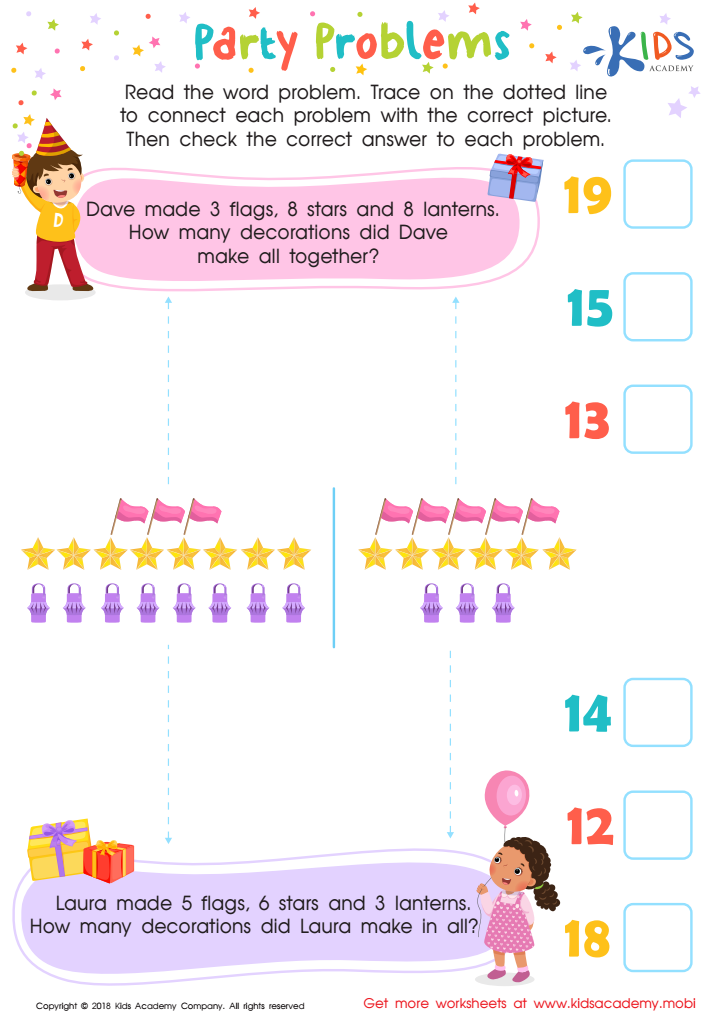
Party Problems Worksheet
 Assign to My Students
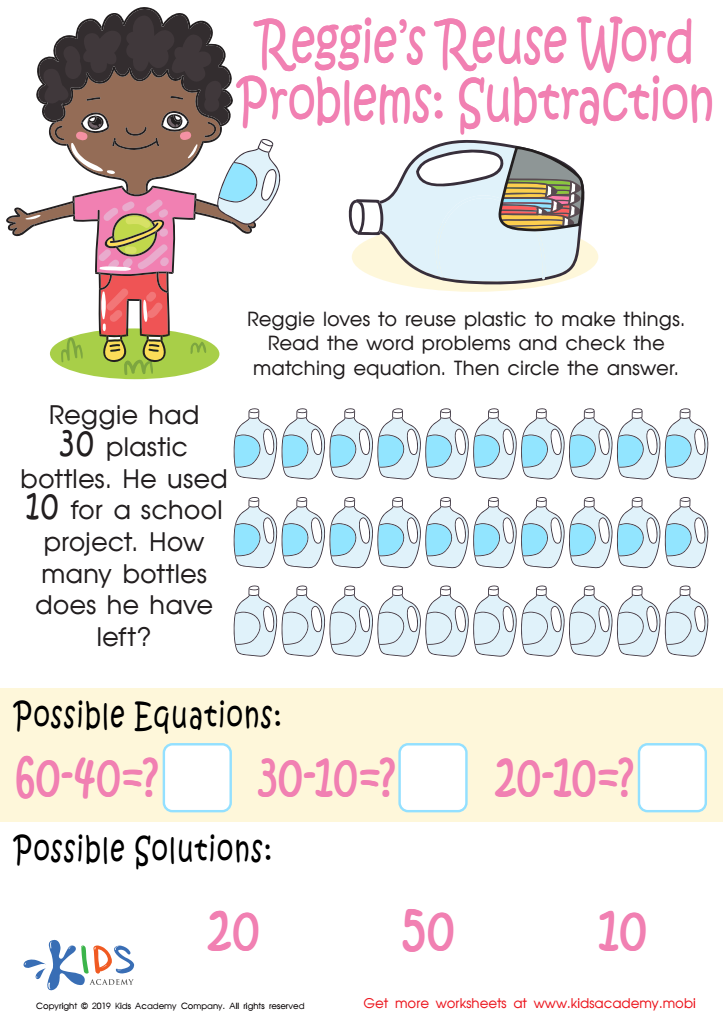
Reggie's Reuse Word Problems: Subtraction Worksheet
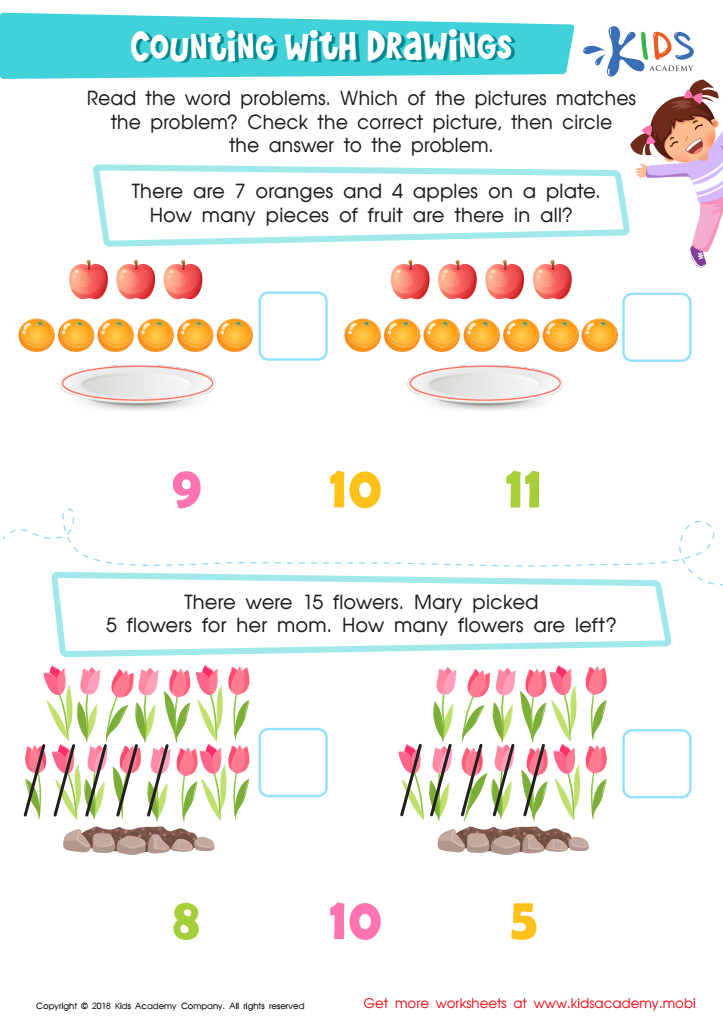
Counting with Drawings:Fruits & Flowers Worksheet
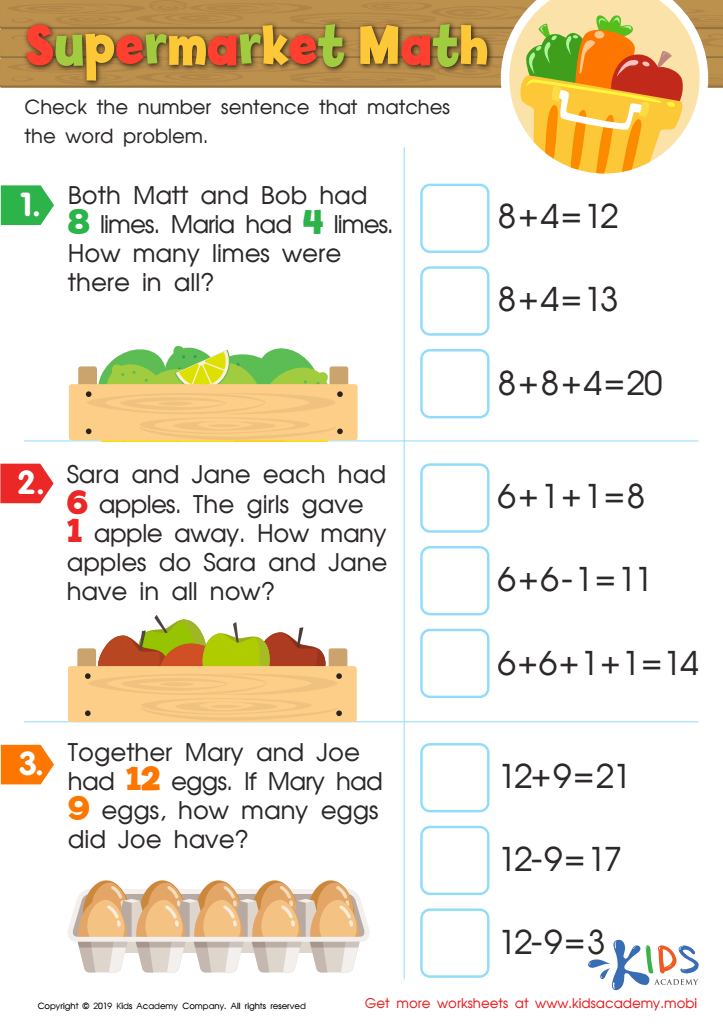
Supermarket Math Worksheet
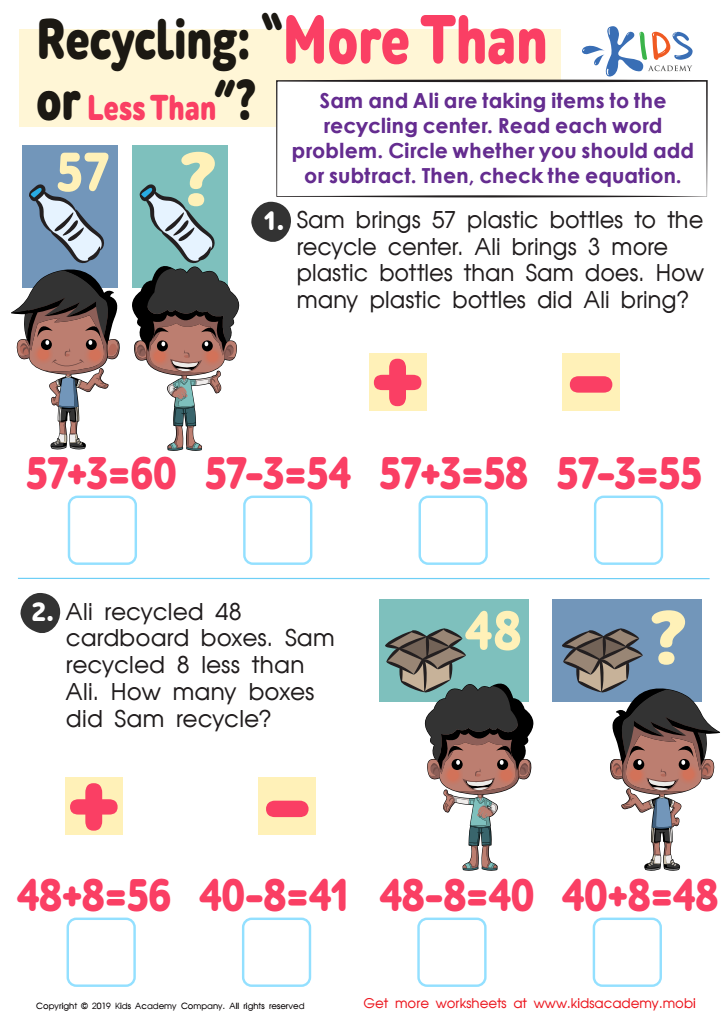
Recycling - More or Less Worksheet







Normal addition and subtraction word problems are essential for the cognitive and emotional development of children aged 3-8. These problems serve as fundamental building blocks for mathematical reasoning and problem-solving skills. By introducing young learners to word problems, parents and teachers help children understand the practical applications of arithmetic in daily life. This nurtures a positive attitude toward math and lays the foundation for more complex mathematical concepts later on.
Moreover, solving word problems enhances critical thinking and comprehension abilities. Children learn to extract relevant information, analyze different situations, and synthesize their understanding to arrive at solutions. This process also cultivates language skills, as they must interpret the wording of problems and communicate their thought processes effectively.
Engaging in word problems fosters a collaborative learning environment where parents and teachers can support and guide children, building trust and encouraging curiosity. Moreover, these problems stimulate reasoning and enhance cognitive flexibility, crucial for broader educational success. When children experience the satisfaction of solving these problems, they gain confidence, which can positively impact their overall academic journey. Thus, supporting children in mastering normal addition and subtraction word problems is crucial for their early development and lifelong learning.