Normal Geometry Worksheets for Ages 3-8 - Page 4
75 filtered results
-
From - To
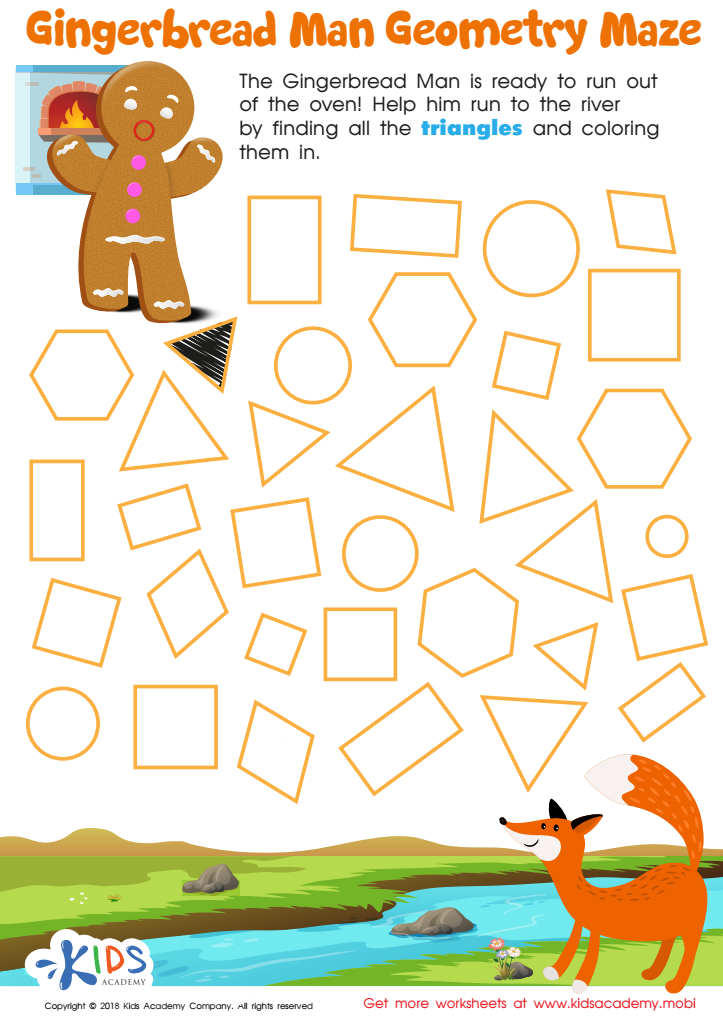
Gingerbread Man Geometry Maze Worksheet
 Assign to My Students











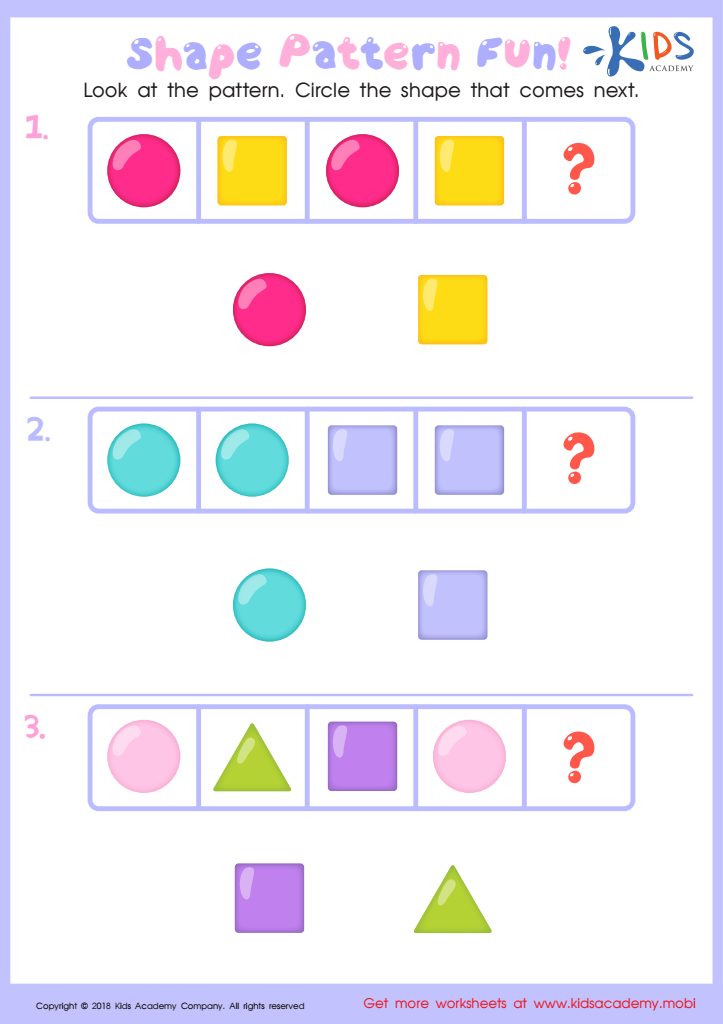
Shape Pattern Fun Worksheet
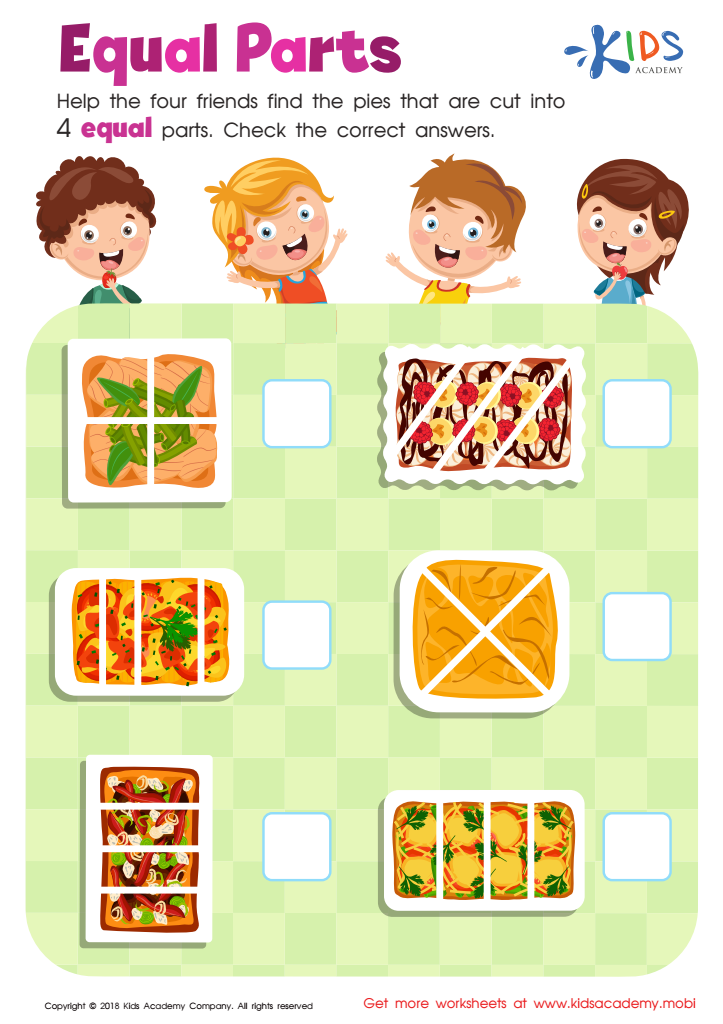
Equal Parts: Food Worksheet








Parents and teachers should care about Normal Geometry for children ages 3-8 because these early years are crucial for cognitive development and laying a strong foundation for future mathematical understanding. At this age, children are naturally curious and eager to explore their environment, making it an ideal time to introduce them to spatial concepts through geometry.
Engaging with Normal Geometry helps children recognize shapes, understand spatial relationships, and appreciate patterns in their surroundings. By introducing these concepts in a playful manner, educators and parents can help boost children's confidence in mathematical reasoning, fostering a love for learning. Geometry also enhances problem-solving skills, critical thinking, and creativity, as kids learn to visualize and manipulate shapes.
Moreover, geometry is not only about formal mathematics; it enriches everyday experiences, such as art, architecture, and nature. By integrating geometry into daily activities like building blocks, cooking, or drawing, children see its practical value, reinforcing their learning.
In summary, prioritizing Normal Geometry during ages 3-8 cultivates essential skills that contribute to children's overall development, setting them on a path for academic success while nurturing an enduring interest in mathematics.








