Normal Patterns Worksheets for Ages 4-5
5 filtered results
-
From - To
Introducing our Normal Patterns worksheets, meticulously crafted for children ages 4-5. These engaging and colorful worksheets are designed to introduce young learners to the fascinating world of patterns, helping them recognize, create, and extend simple sequences in a fun and interactive way. Ideal for both classroom and home use, our Normal Patterns worksheets are filled with a variety of activities tailored to develop the foundational skills necessary for early mathematical understanding. Watch your child's confidence and abilities grow as they explore the world of patterns with our must-have collection for Ages 4-5. Perfect for nurturing young minds and fostering a love for learning from an early age.
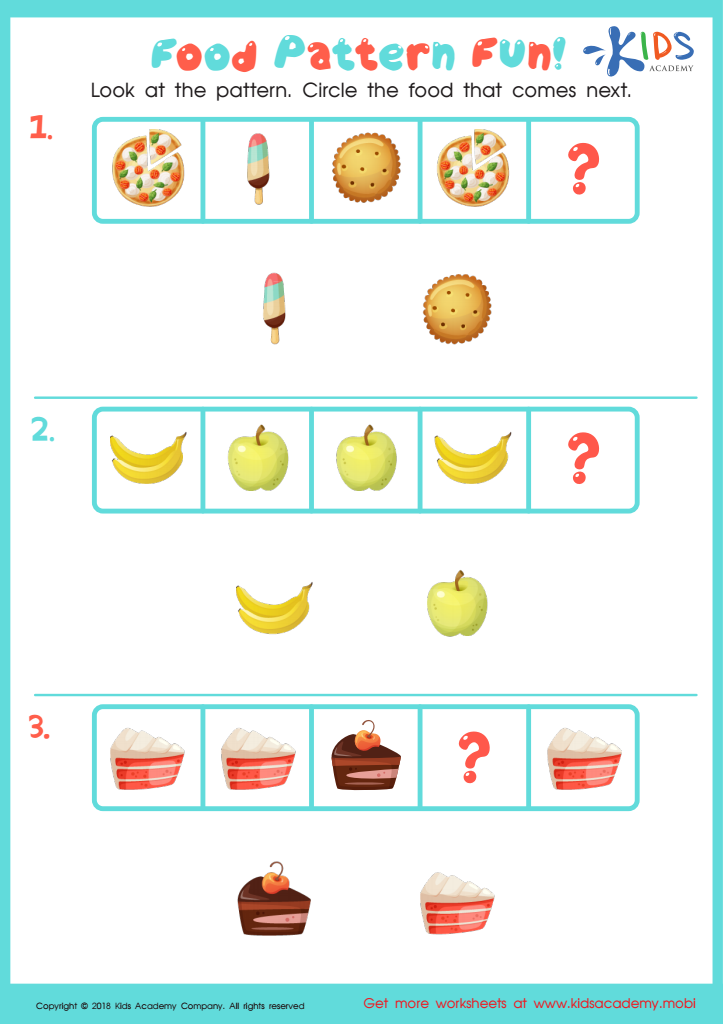
Food Pattern Fun Worksheet
 Assign to My Students
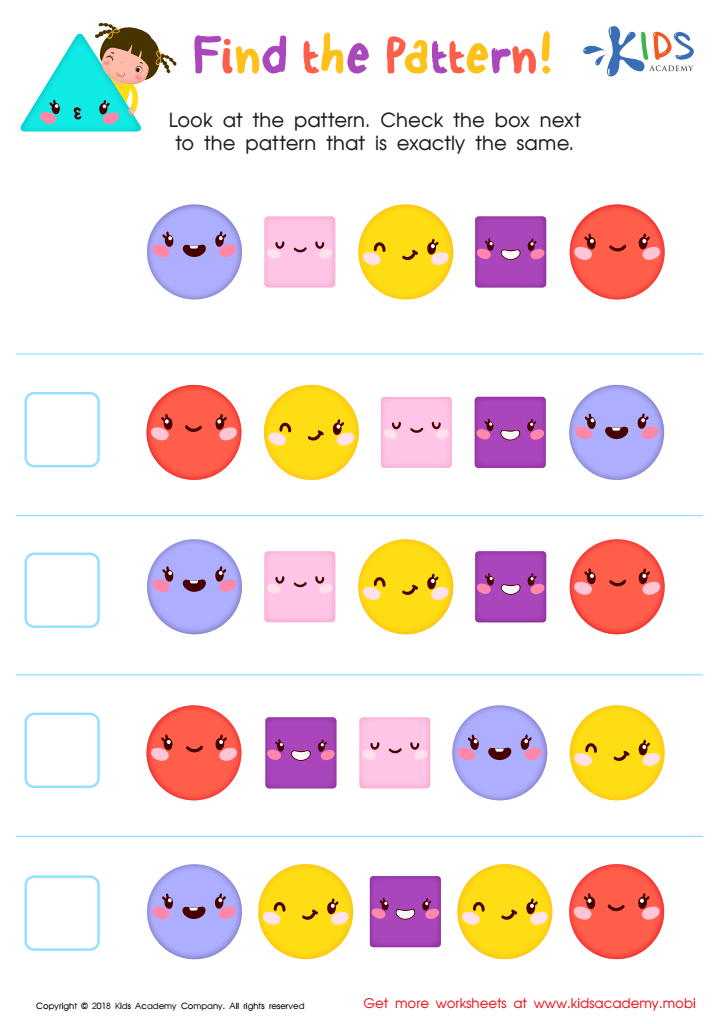
Find the Pattern Worksheet
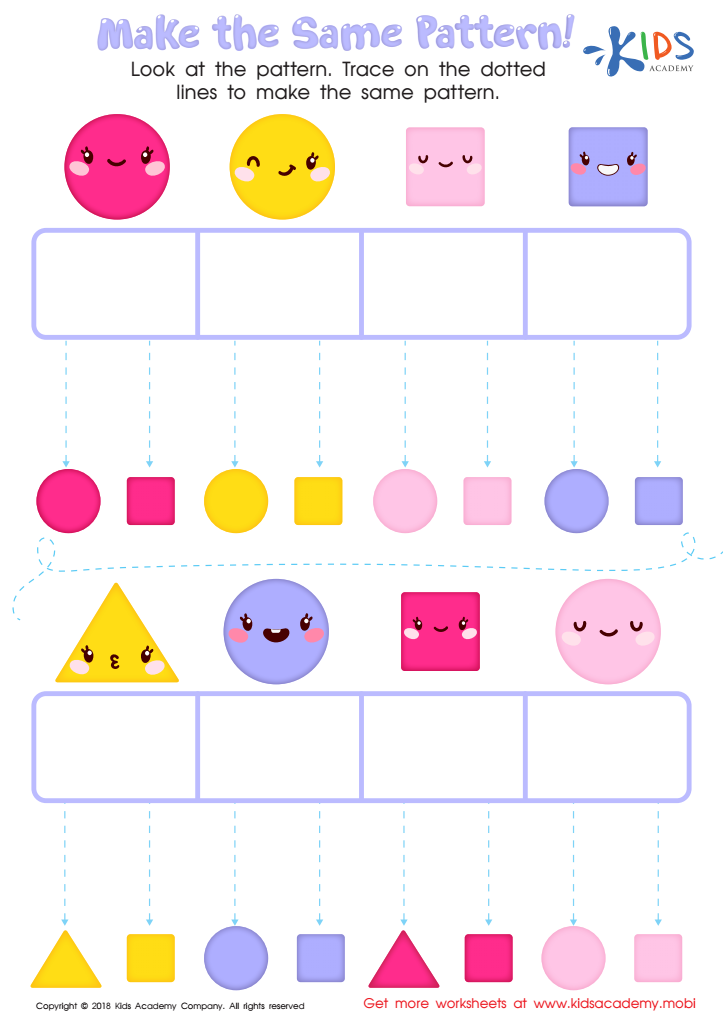
Make the Same Pattern Worksheet
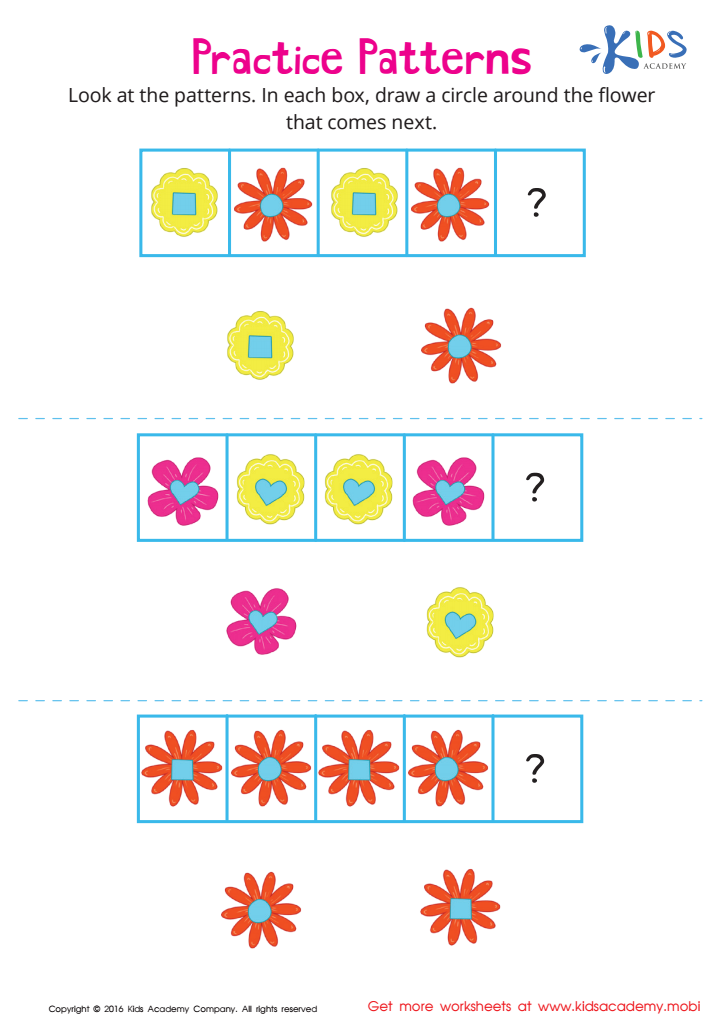
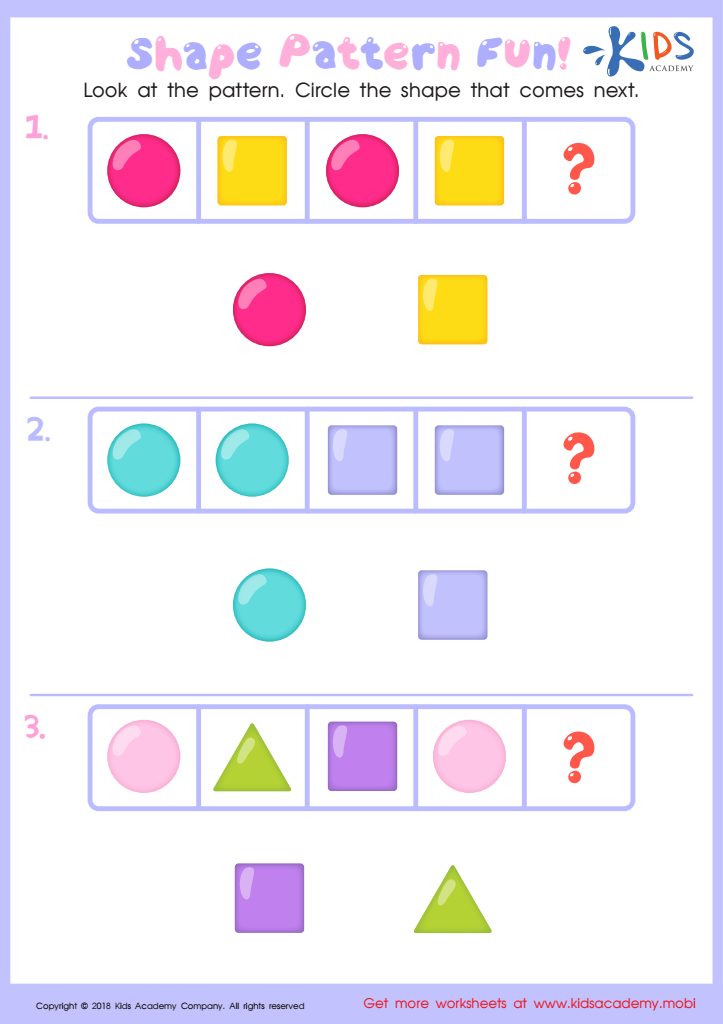
Shape Pattern Fun Worksheet








Normal Patterns worksheets for Ages 4-5 are an incredibly effective tool for the early development of young learners. At this tender age, children are just beginning to recognize patterns and sequences in their environment, which is a fundamental skill that forms the basis for more complex reasoning and problem-solving abilities. Utilizing Normal Patterns worksheets specifically designed for ages 4-5 is beneficial for several reasons.
Firstly, these worksheets are tailored to meet the cognitive and developmental needs of preschoolers, ensuring that the patterns presented are neither too simple nor too complex for their understanding. By engaging with these patterns, children learn to identify, predict, and extend sequences, which enhances their logical thinking and analytical skills.
Moreover, working on Normal Patterns worksheets encourages the development of fine motor skills as children draw lines to connect patterns or color specific shapes to complete sequences. This practice not only supports their academic growth but also their physical development and hand-eye coordination.
Furthermore, these worksheets serve as a foundational step for mathematical concepts. Recognizing and creating patterns prepare children for learning numbering, counting, and even basic operations, making their transition to formal schooling smoother and more confident.
In conclusion, Normal Patterns worksheets for Ages 4-5 are an invaluable resource for nurturing a child's cognitive, physical, and mathematical abilities, setting a strong foundation for their academic journey.








