Normal Tracing Shapes Worksheets for Ages 4-6
10 filtered results
Difficulty Level
Grade
Age
-
From - To
Subject
Activity
Standards
Introducing our Normal Tracing Shapes worksheets, meticulously designed for children aged 4-6. These engaging worksheets provide a solid foundation in geometry by tracing a variety of basic shapes. Ideal for both classroom and at-home learning, our sheets help develop fine motor skills, shape recognition, and preparation for handwriting. Tailored to captivate young minds, these worksheets offer a mix of simplicity and challenge, appropriate for the developmental stage of 4-6 year olds. Encourage your child's early mathematical understanding and creativity with our Normal Tracing Shapes worksheets. Perfect for budding learners eager to explore the world of shapes through fun and education.
Favorites
With answer key
Interactive
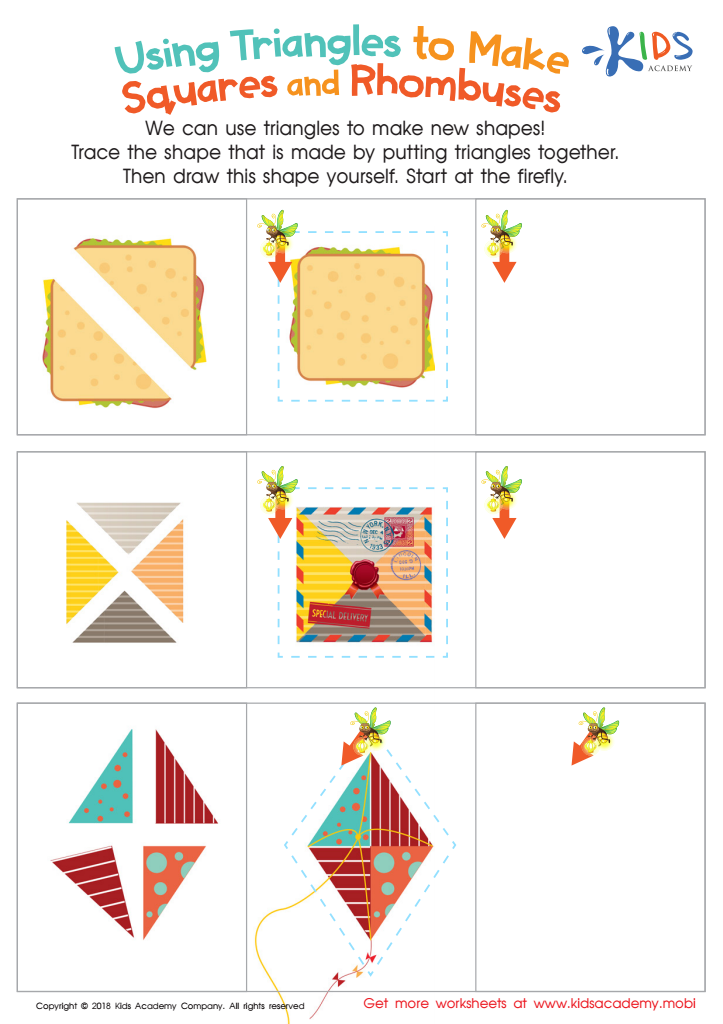
Using Triangles to Make Squares and Rhombuses Worksheet
Learning shapes is a fun way to boost spatial skills and critical thinking. This worksheet shows children how to use triangles to construct squares and rhombuses. Clear illustrations and a printout help children draw the new shape. A great activity for the math classroom! 80 words.
 Assign to My Students
Using Triangles to Make Squares and Rhombuses Worksheet
Worksheet
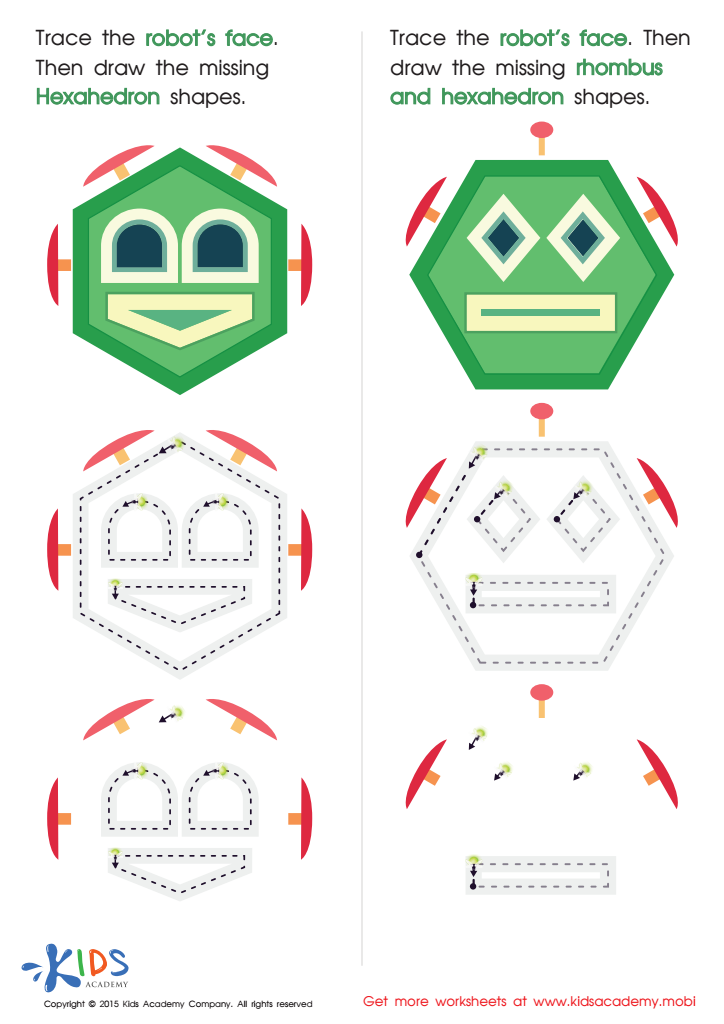
Practice Drawing Hexahedrons And a Rhombus Worksheet
Trace the Robot's face, draw hexahedron and rhombus shapes, then trace again. Our tracing shapes worksheets make it easy for kids to learn geometry. Get more materials from Kids Academy to practice all the shapes.
Practice Drawing Hexahedrons And a Rhombus Worksheet
Worksheet
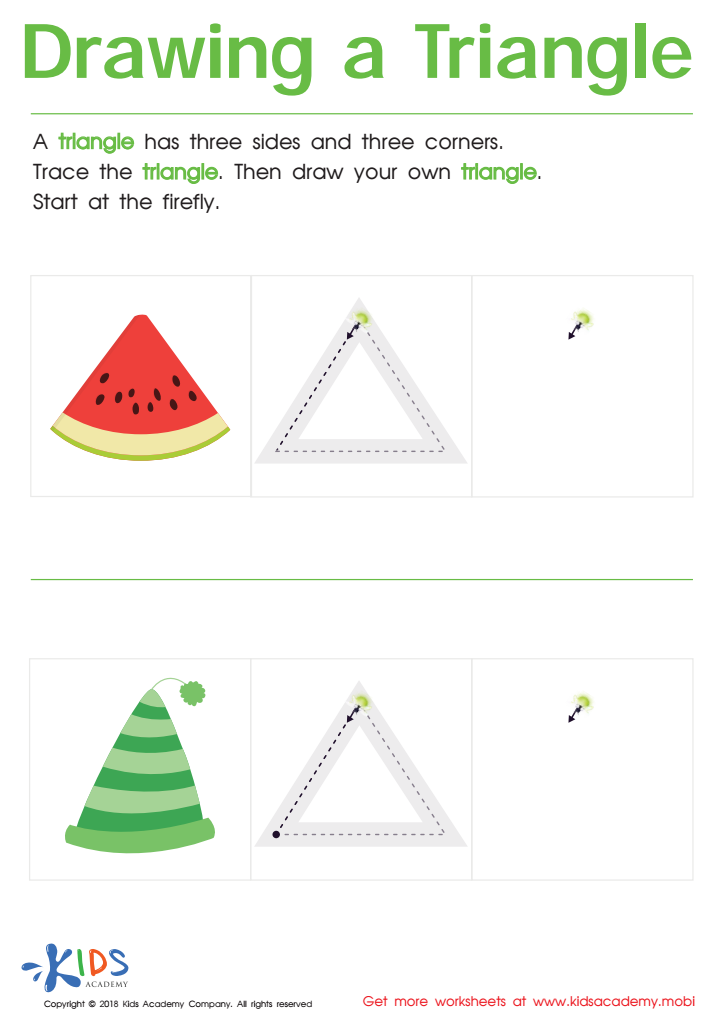
Drawing a Triangle Worksheet
Help your child develop fine motor skills with this fun, traceable printable! It teaches them how to draw a triangle, with easy steps and cute picture motivation. They'll work on pre-writing skills, pencil position, and grip control without even realizing it. With this basic shape, they'll gain a foundation for strong writing and drawing skills.
Drawing a Triangle Worksheet
Worksheet
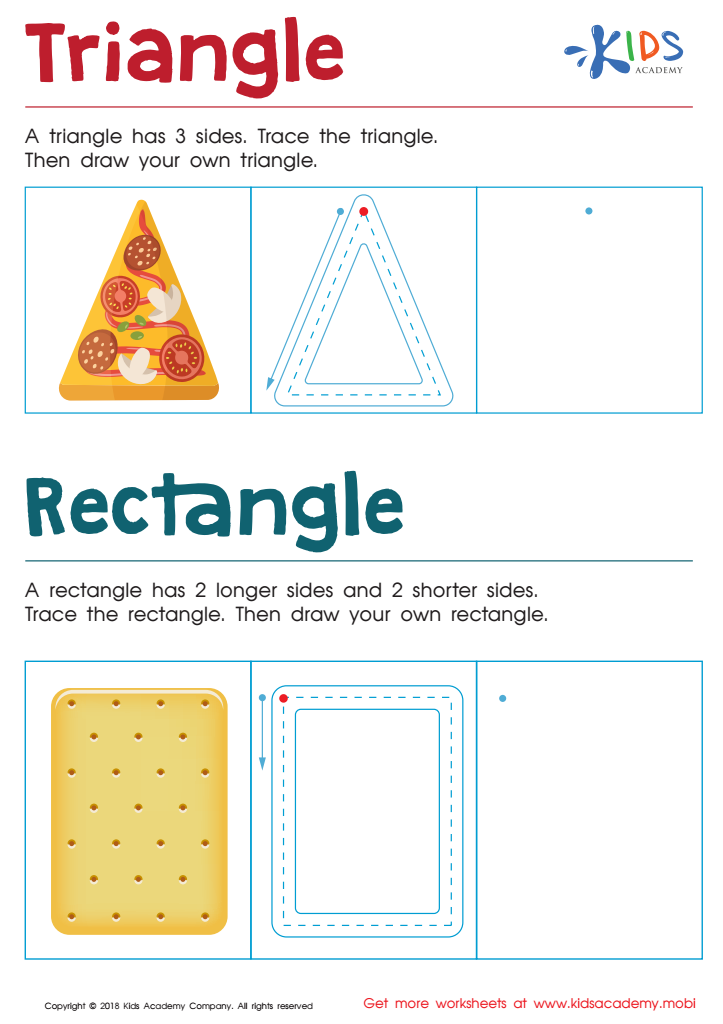
Triangle Rectangle Worksheet
This printable worksheet helps kids draw rectangles and triangles. Have your child trace the pizza and cracker shapes to become familiar, then try their own. Perfect for second graders! Coloring and creativity make this fun and educational.
Triangle Rectangle Worksheet
Worksheet
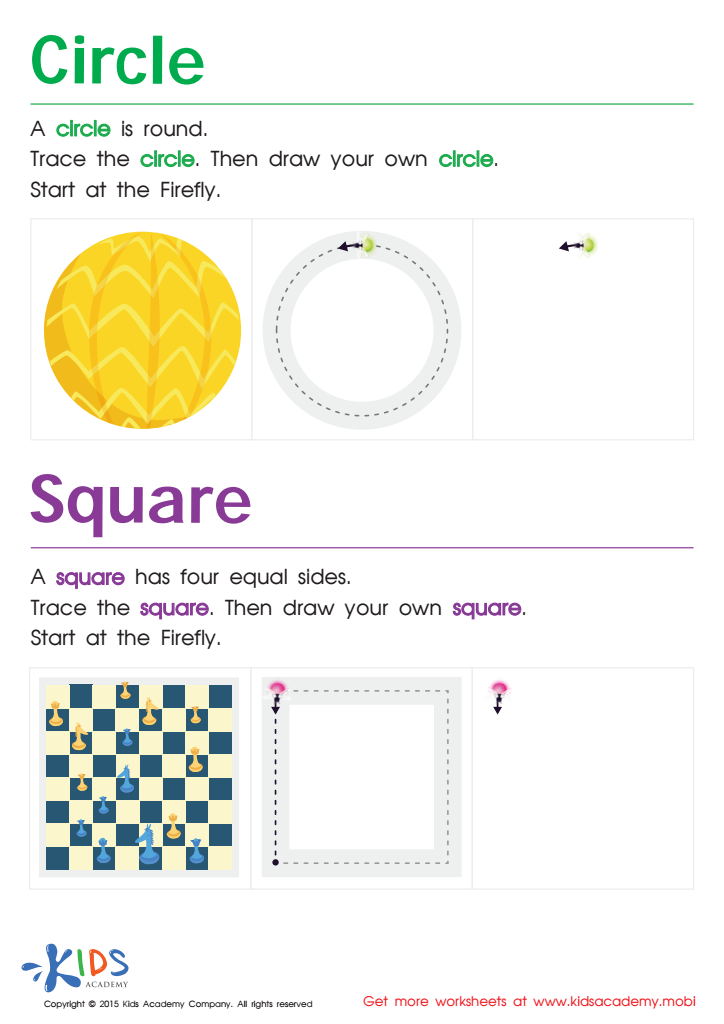
Trace And Draw a Circle And a Square Worksheet
Our new collection will help your preschoolers learn shapes faster: tracing circles and squares and recognizing their properties with the aid of colorful pictures. Get them now at Kids' Academy!
Trace And Draw a Circle And a Square Worksheet
Worksheet
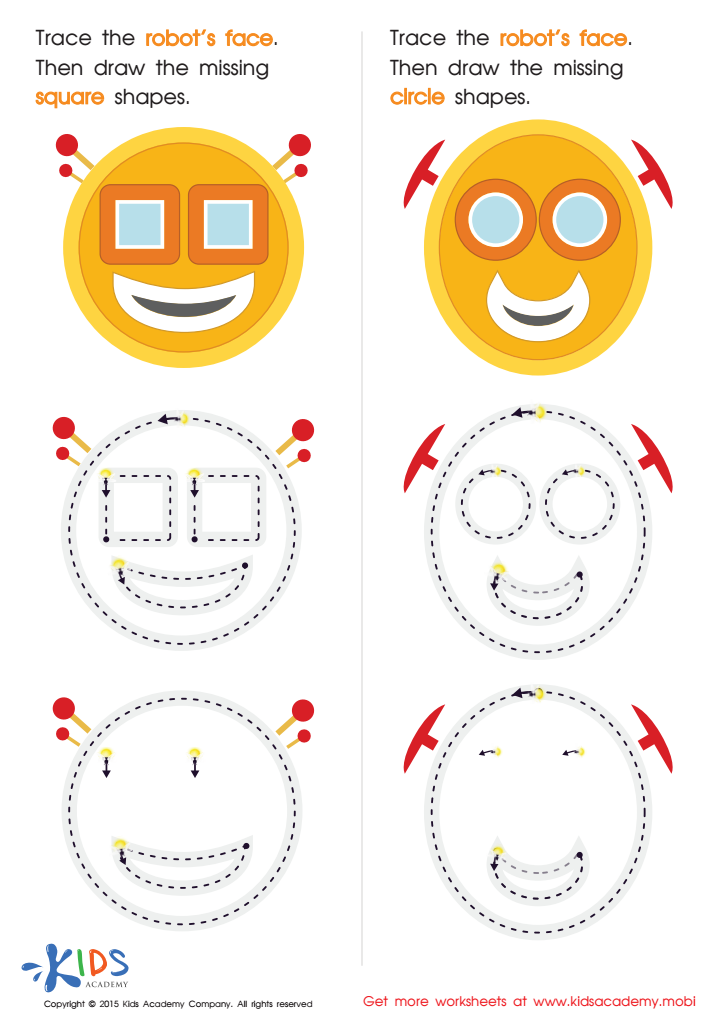
Practicing to Draw Circles And Squares Printable
Download our free printable geometry worksheets to learn shapes with your preschoolers. Trace Robot's face, draw the square parts and round shapes, remember the names for each one. Get more materials for kids at Kids Academy and make learning fun with our free printable geometry worksheets.
Practicing to Draw Circles And Squares Printable
Worksheet
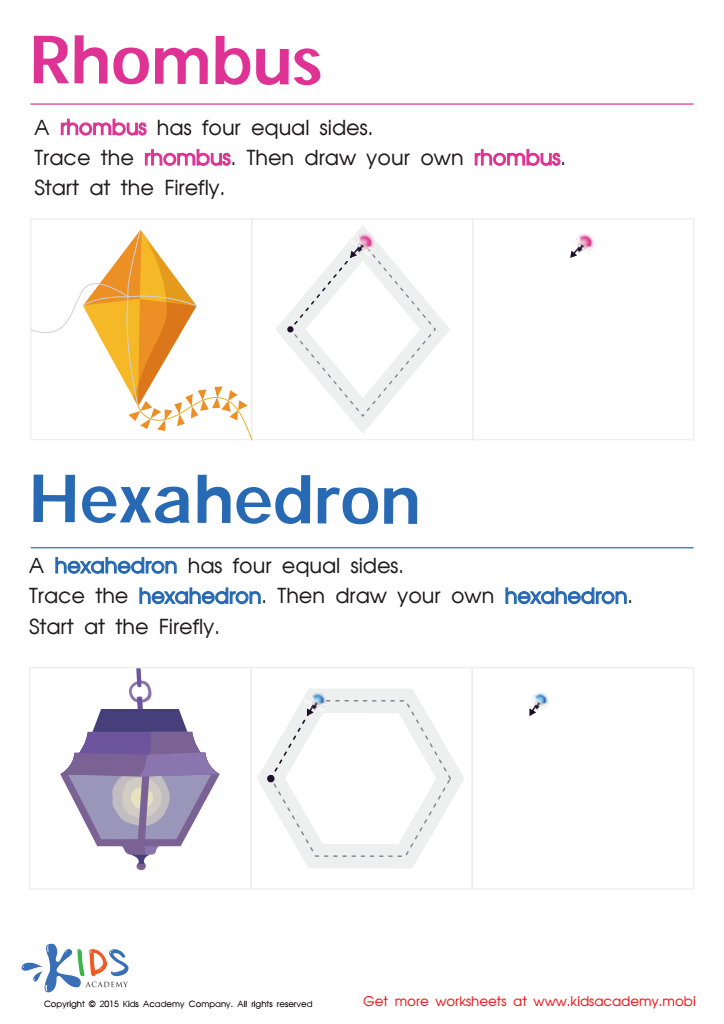
Draw a Rhombus And a Hexahedron Printable
Trace, draw and recognize shapes like rhombus, hexahedron and more! Start with the firefly to trace a rhombus, then use the yellow kite to remember the shape. Use the light to trace and draw a hexahedron. Learn with the best!
Draw a Rhombus And a Hexahedron Printable
Worksheet
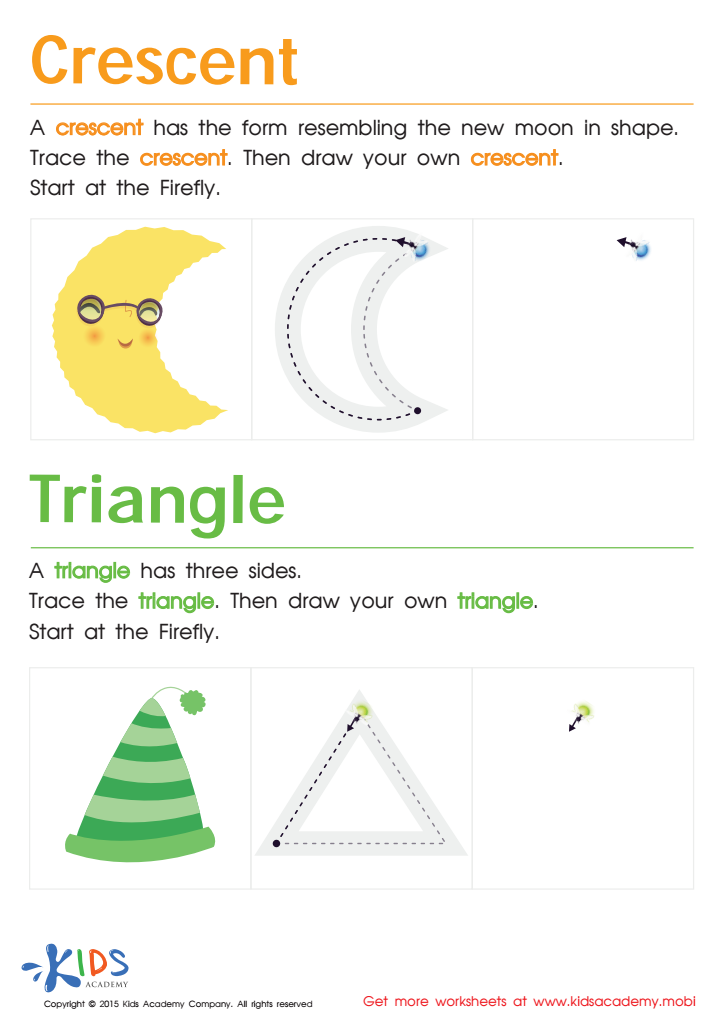
Learning to Draw Crescents And Triangles Worksheet
Help your kids draw a crescent and triangle with this free printable worksheet! Start by tracing a crescent in the form of the new moon, and then teach them that a triangle has three sides and looks like a hat. Find more geometry practice worksheets at Kids Academy!
Learning to Draw Crescents And Triangles Worksheet
Worksheet
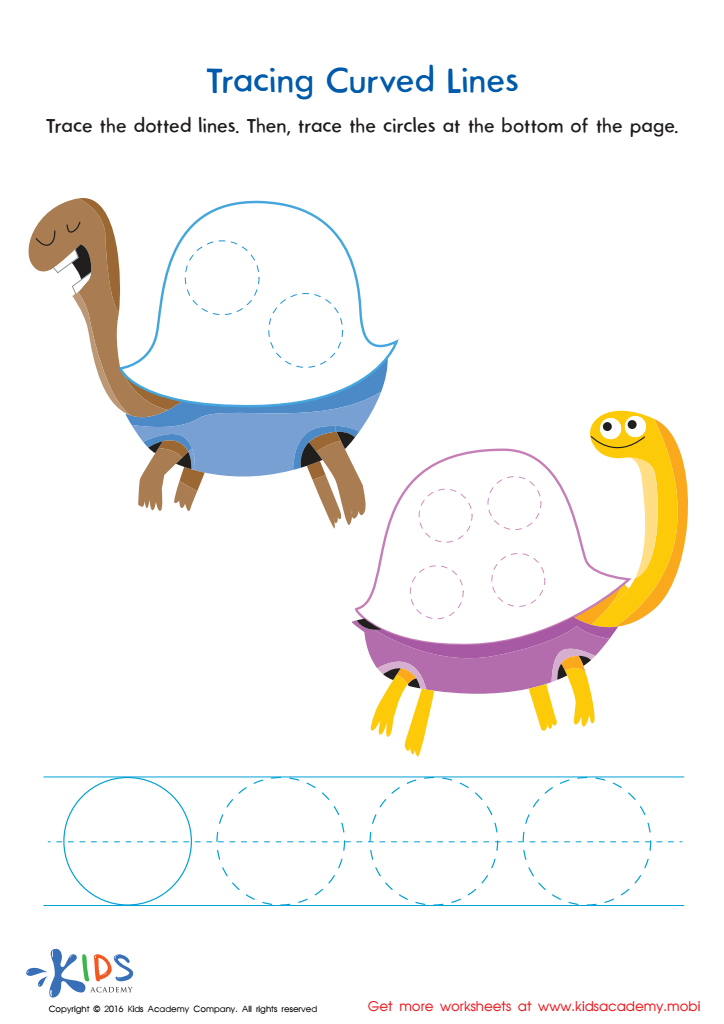
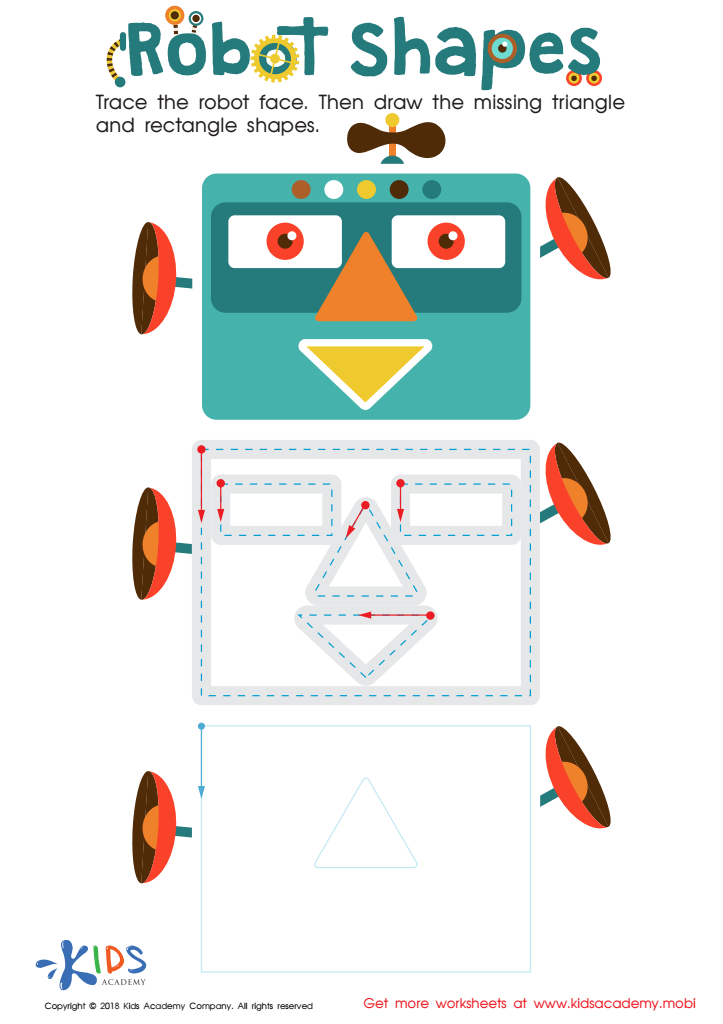
Robot Shapes Worksheet
Help your preschooler get started with math skills while having fun with this shape tracing worksheet featuring a cute robot! Ask them to study the first image, trace the dotted lines to draw the shapes in the second, and color the third. With this activity, they'll learn shapes while enjoying the funny robot pictures!
Robot Shapes Worksheet
Worksheet
Join Kids Academy for Free
Who is primarily going to use this learning content?








Normal Tracing Shapes worksheets for Ages 4-6 are an essential tool in the foundational development of early learners. At this critical age, children are rapidly developing their fine motor skills, which are crucial for tasks such as writing, cutting, and even buttoning their clothes. These worksheets are specifically designed to cater to the developmental needs of young children, providing them with the perfect balance of challenge and engagement.
By practicing with Normal Tracing Shapes worksheets, children in the 4-6 age group not only refine their hand-eye coordination but also enhance their understanding of geometric shapes. This early exposure to geometry sets a strong foundation for future mathematical concepts. The act of tracing shapes also helps in improving pencil grip and control, which is fundamental for developing good handwriting skills.
Moreover, these worksheets are a great way for children to learn the names of different shapes, expanding their vocabulary and cognitive abilities. As they trace, children also learn to follow directions, increase their concentration, and boost their confidence upon completion of each worksheet.
In summary, Normal Tracing Shapes worksheets for Ages 4-6 are more than just a tracing activity. They are a comprehensive learning tool that aids in the holistic development of early learners, preparing them for more advanced educational concepts in a fun and engaging way.