Normal Silent Vowels Worksheets for Ages 4-7
4 filtered results
-
From - To
Discover our engaging "Normal Silent Vowels Worksheets" designed specifically for children aged 4-7. These worksheets help young learners enhance their phonics skills by focusing on silent vowels, essential for developing reading proficiency. Fun activities and colorful visuals make learning enjoyable, while reinforcing the understanding of silent vowels in words. Ideal for teachers and parents seeking to boost their child's literacy, our worksheets promote interactive learning through games and exercises. Encourage your child’s confidence in reading with these thoughtfully crafted resources, perfect for both in-class and home study. Unlock the mystery of silent vowels and watch reading skills soar!
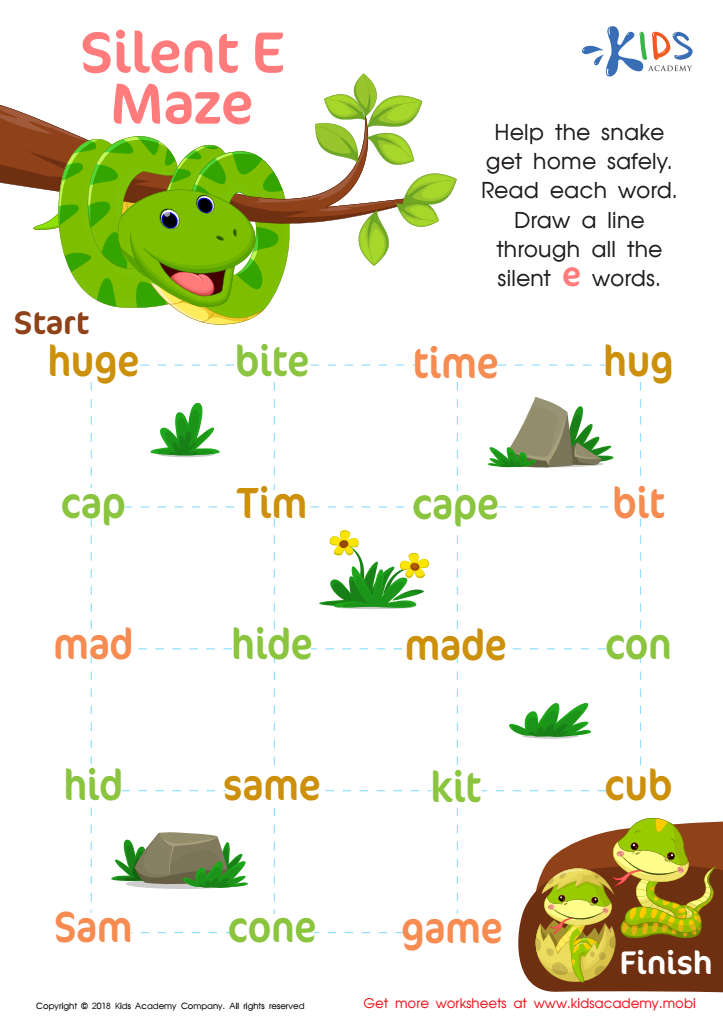
Silent E Maze Worksheet
 Assign to My Students
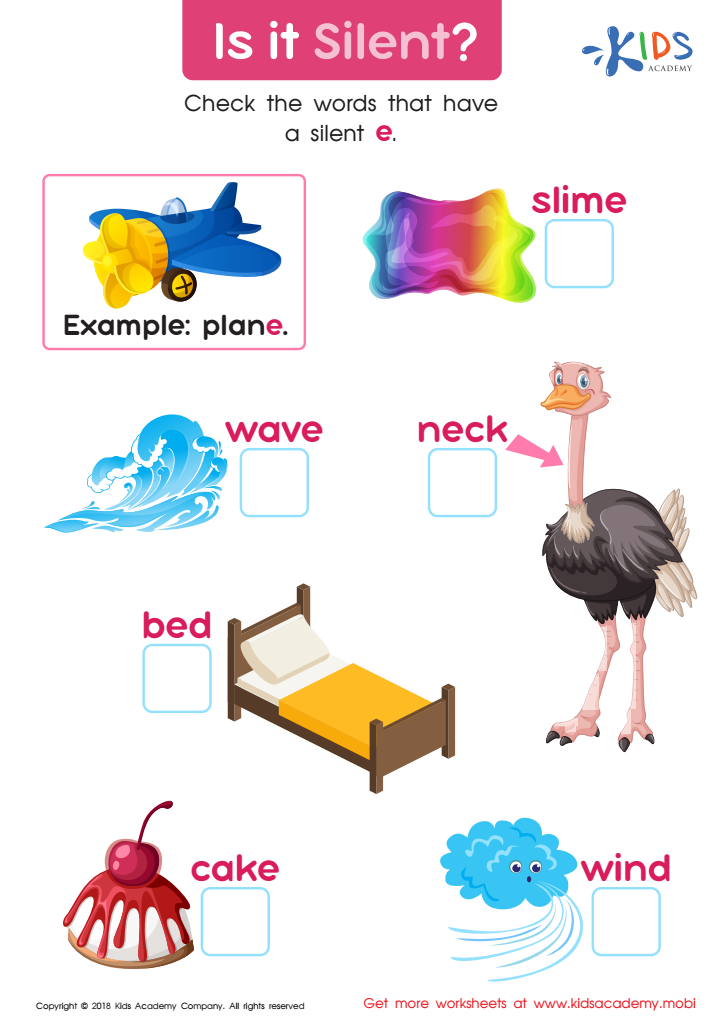
Is It Silent? Worksheet
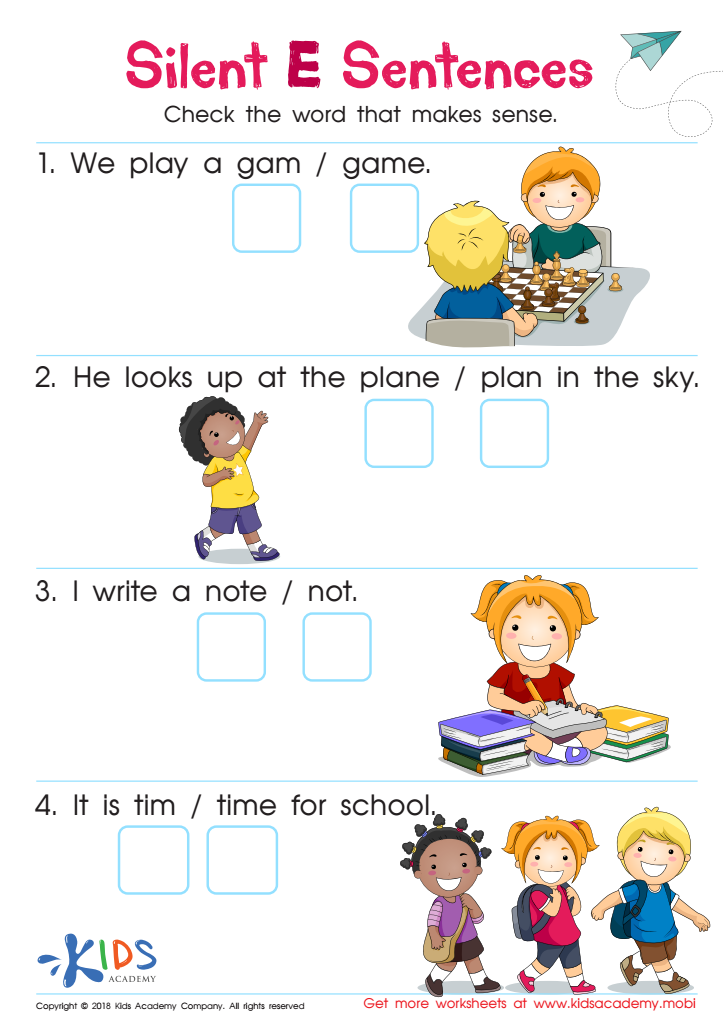
Silent E Sentences Worksheet
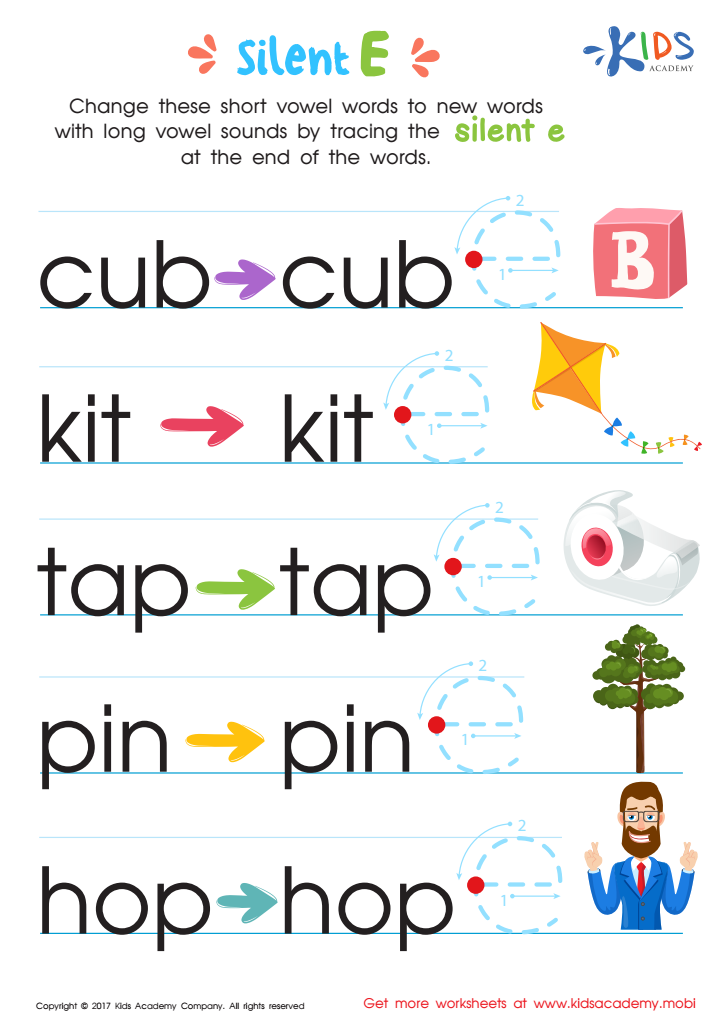
Silent E Words Worksheet


Normal silent vowels, often found in words like "cake," "bike," or "mute," are essential for young children's reading and spelling development. For parents and teachers of children aged 4-7, understanding and emphasizing these vowels is crucial for several reasons.
First, silent vowels often indicate that the vowel sound is pronounced within the word, contributing to phonemic awareness. This awareness is foundational for reading skills, as it helps children recognize and decode words more effectively. When children understand that vowels can sometimes be silent yet still shape how the words are pronounced, they enhance their overall reading fluency.
Additionally, normal silent vowels help children grasp spelling patterns. Recognizing where vowels are silent can support better spelling practices, boosting their confidence in writing.
Engaging with normal silent vowels also nurtures critical thinking skills. Children learn to analyze and decode language more deeply, fostering a love for reading and language play.
Finally, this understanding allows parents and teachers to engage in meaningful discussions about language nuances, promoting richer vocabulary use. Overall, teaching about normal silent vowels lays a solid groundwork for literacy, ensuring children are well-prepared for more complex language skills in the future.