Normal Addition and Subtraction Word Problems Worksheets for Ages 4-7 - Page 2
29 filtered results
-
From - To
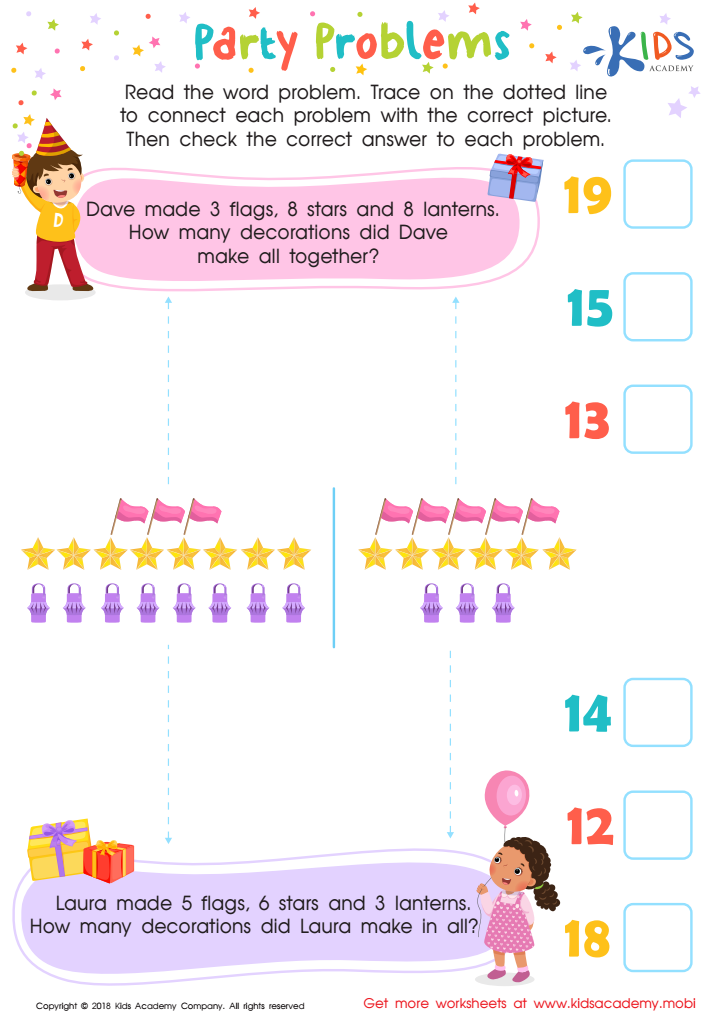
Party Problems Worksheet
 Assign to My Students
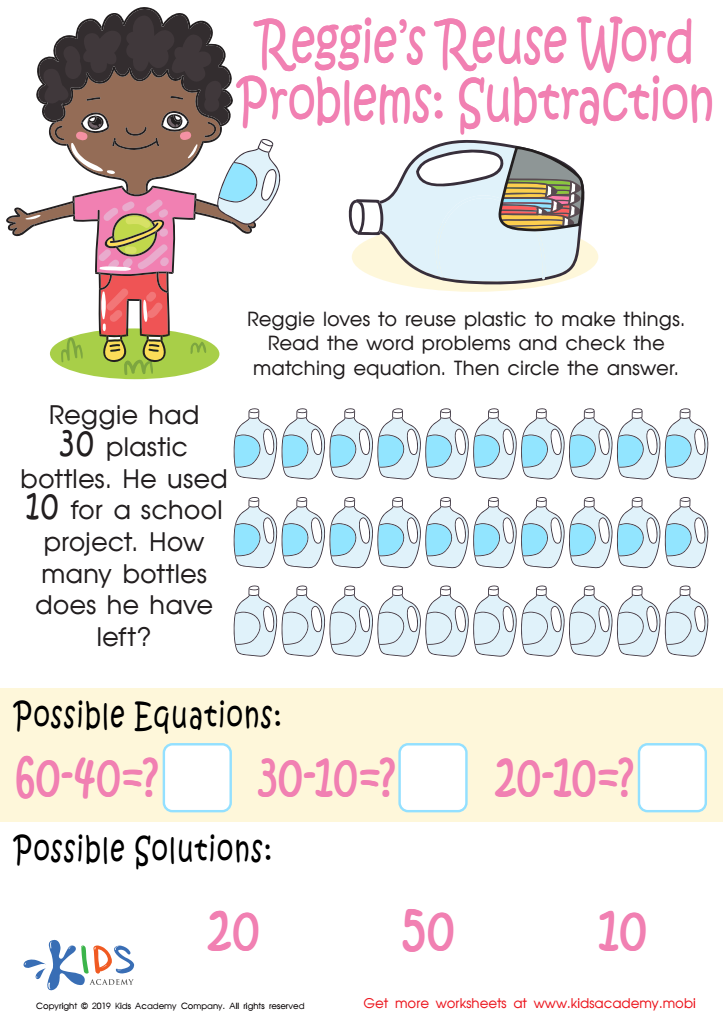
Reggie's Reuse Word Problems: Subtraction Worksheet
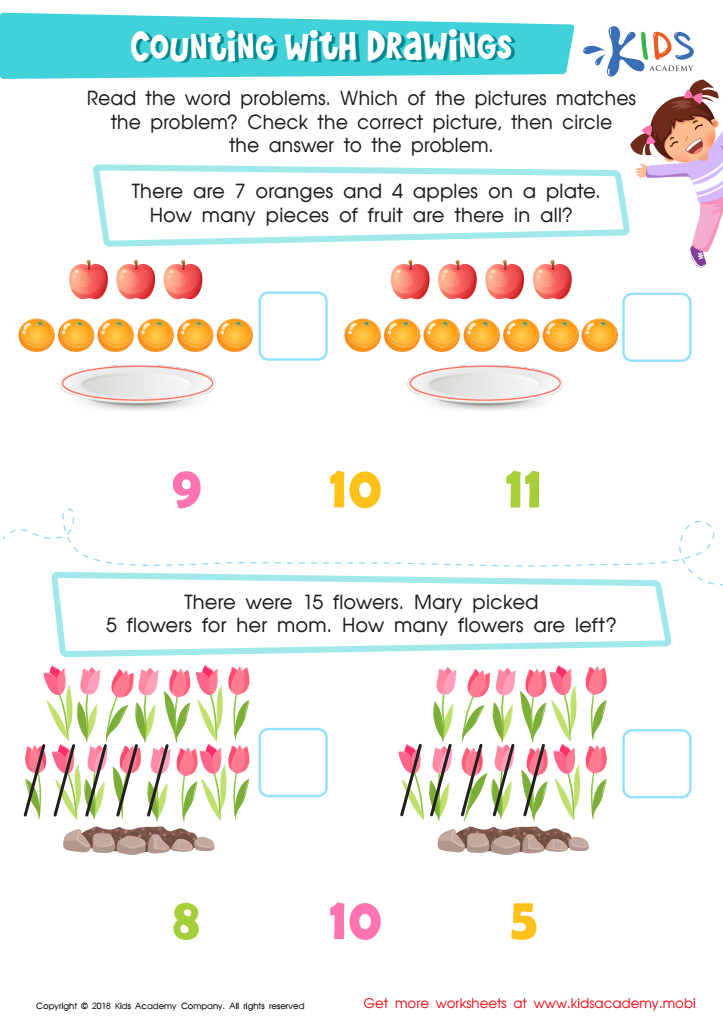
Counting with Drawings:Fruits & Flowers Worksheet
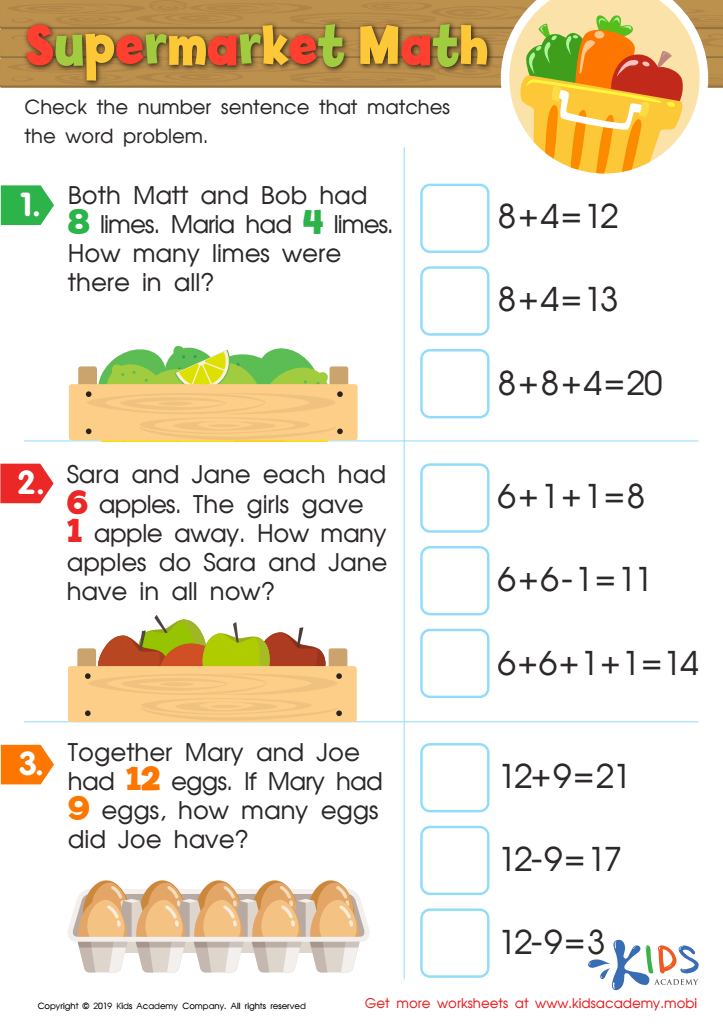
Supermarket Math Worksheet
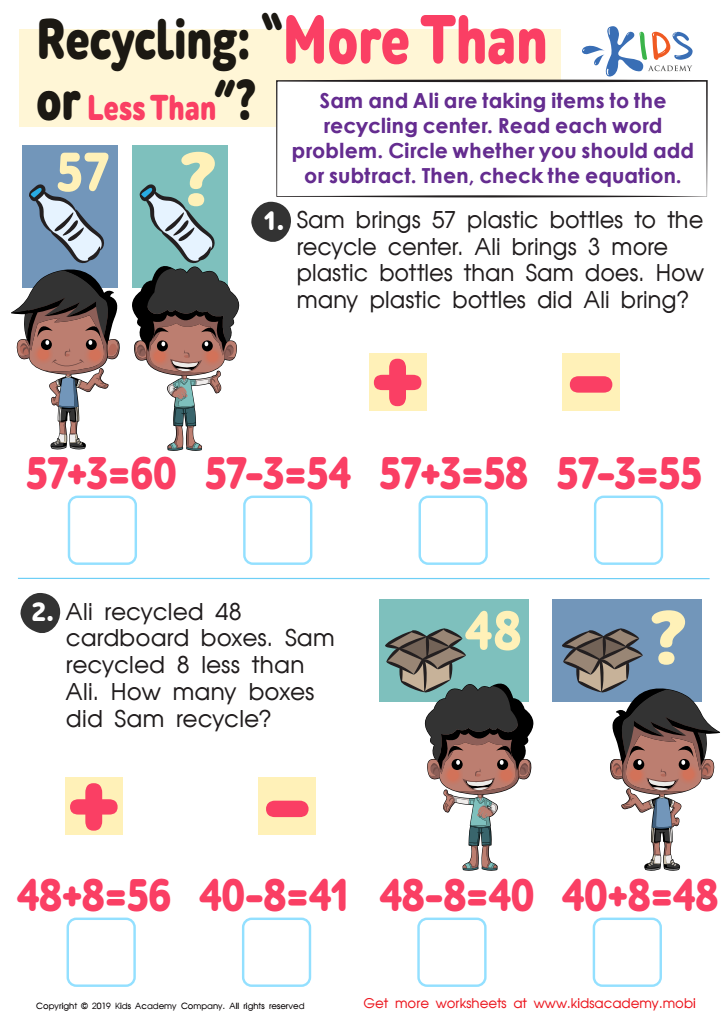
Recycling - More or Less Worksheet








Parents and teachers should prioritize Normal Addition and Subtraction Word Problems for children aged 4-7 because these activities significantly enhance foundational mathematical skills. During these formative years, children's cognitive abilities develop rapidly, and word problems help bridge the gap between abstract mathematical concepts and real-life applications. When children engage with word problems, they learn to interpret language, extract relevant information, and translate that into mathematical operations. This process fosters critical thinking and problem-solving skills that are essential throughout their education.
Furthermore, mastering word problems encourages a deeper understanding of addition and subtraction beyond rote memorization. Children become adept at recognizing keywords and developing strategies to solve problems, which cultivates confidence in their math abilities. Additionally, incorporating word problems in a relatable context strengthens children's comprehension, as they can relate scenarios to their everyday experiences.
Engaging with word problems also lays the groundwork for arithmetic fluency, ensuring that children not only know how to perform calculations but also understand when and how to apply these operations. By nurturing these skills early on, parents and teachers equip children with the tools they need to succeed academically and navigate the complexities of future mathematical concepts.