Normal Numbers Worksheets for Ages 4-7 - Page 9
193 filtered results
-
From - To
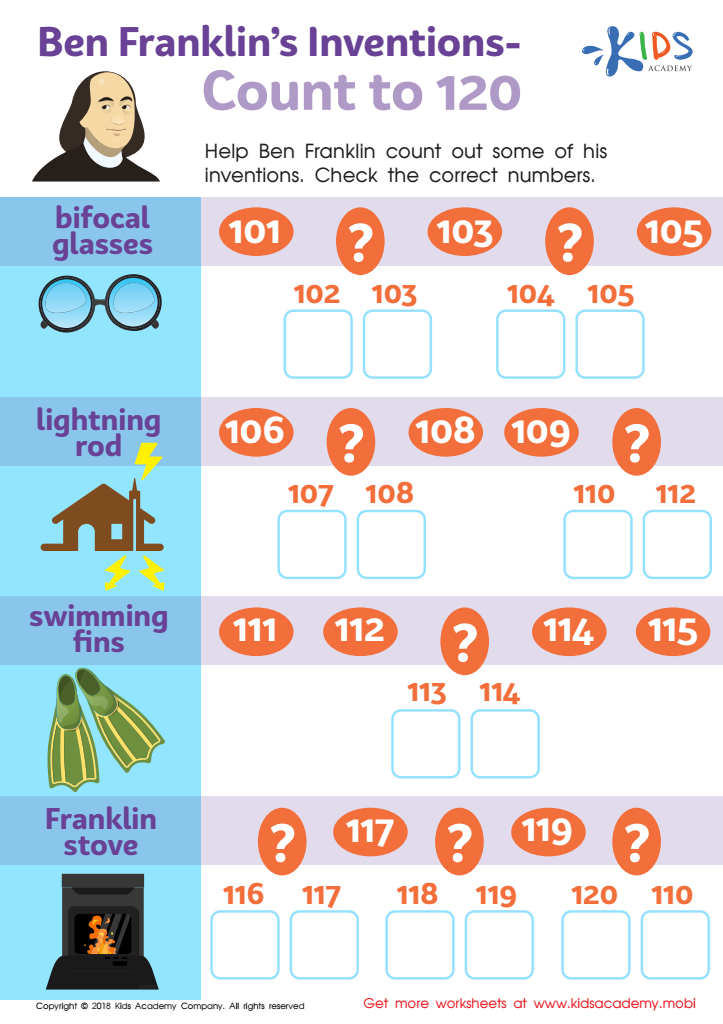
Ben Franklin’s Inventions – Count to 120 Worksheet
 Assign to My Students








Teaching children ages 4-7 about normal numbers is vital for their mathematical development and understanding of the world around them. Normal numbers, typically defined as those whose digits are uniformly distributed in a given base, can introduce young learners to the concepts of patterns, sequences, and randomness. This foundational knowledge enhances their problem-solving skills and critical thinking.
Parents and teachers should recognize that such concepts can be made accessible and fun through games and engaging activities that promote mathematical thinking without overwhelming young minds. By incorporating normal numbers into playful scenarios, children can explore sorting, counting, and comparing differences in numbers, which lays the groundwork for future mathematical studies.
Moreover, understanding normal numbers encourages early numeracy skills, fostering a positive attitude toward mathematics. This helps combat math anxiety later in life. Through discussions around numbers in everyday contexts, such as with dice, card games, or even basic statistics like the weather, children can grasp these ideas interactively and meaningfully.
In fostering this interest and ability in young learners, parents and teachers play a crucial role in preparing them for more complex math concepts in the future, ultimately nurturing a love for learning that can last a lifetime.