Normal Addition and Subtraction Word Problems Worksheets for Ages 4-9 - Page 2
29 filtered results
-
From - To
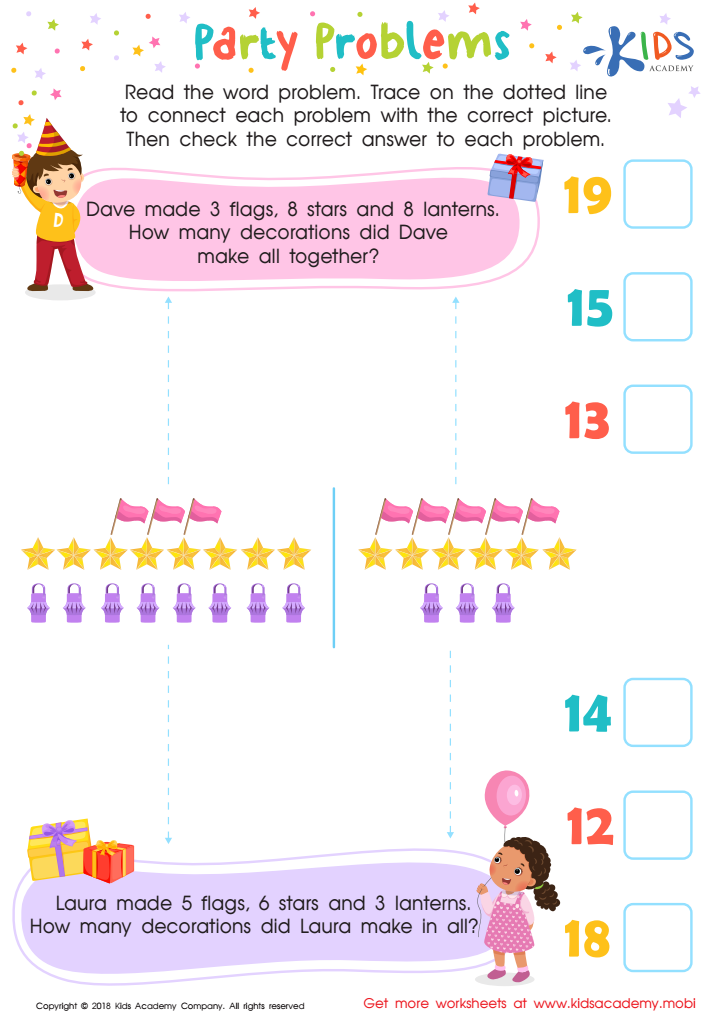
Party Problems Worksheet
 Assign to My Students
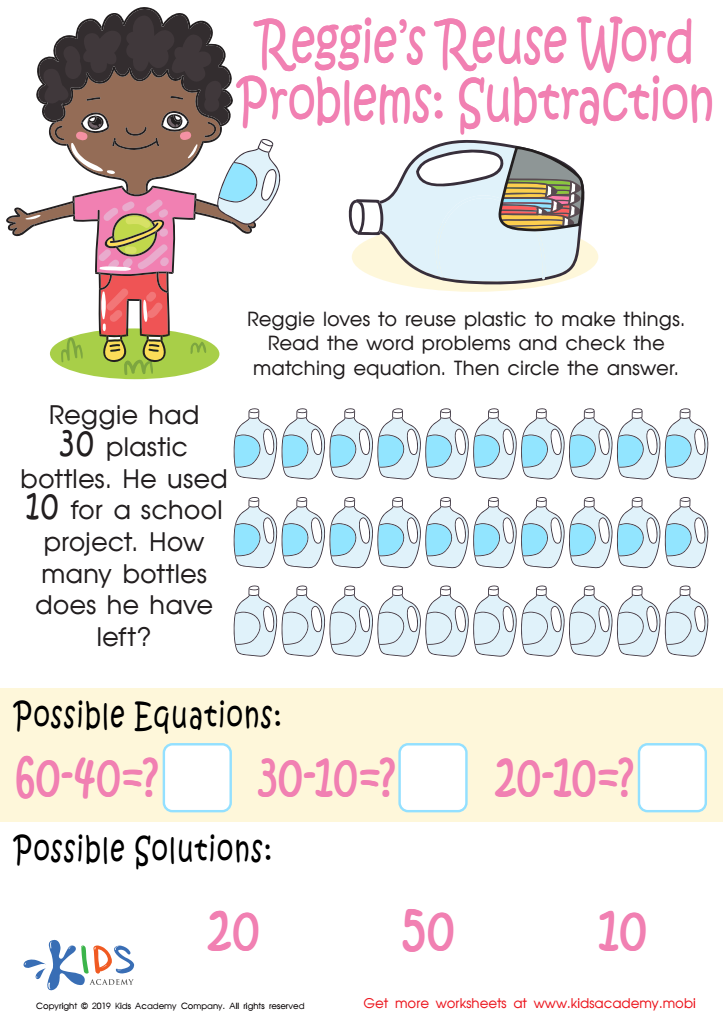
Reggie's Reuse Word Problems: Subtraction Worksheet
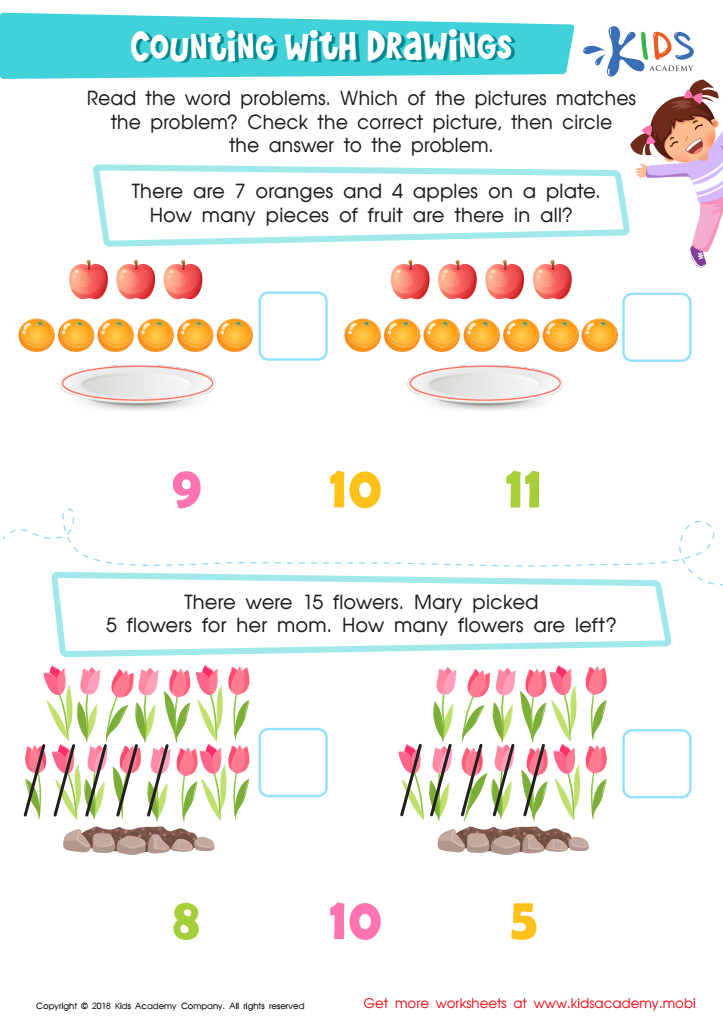
Counting with Drawings:Fruits & Flowers Worksheet
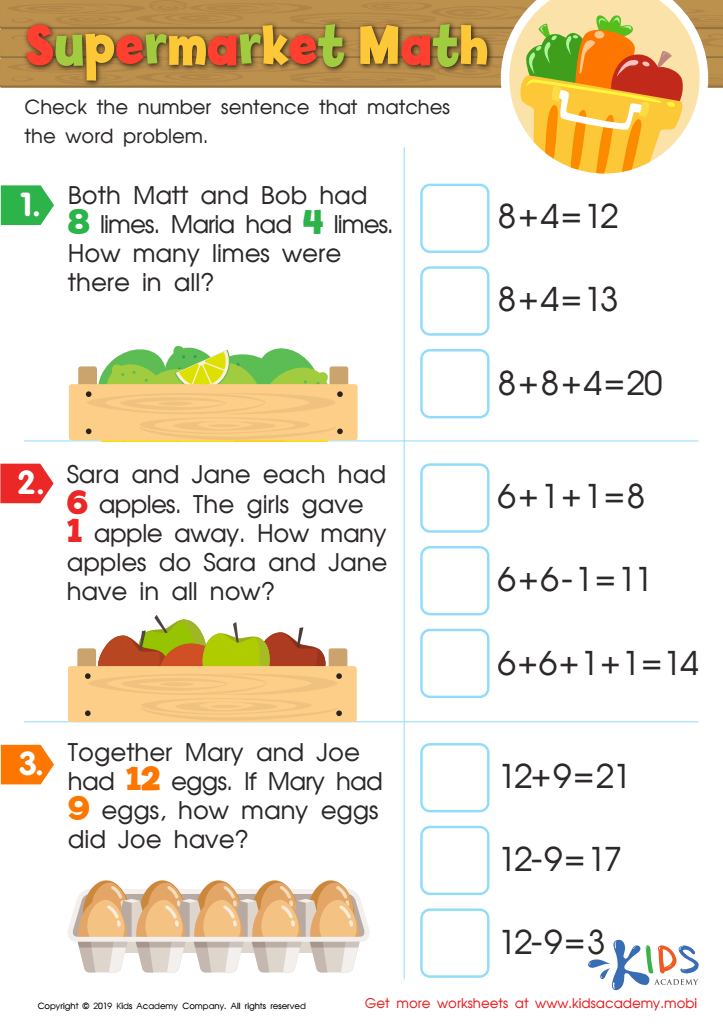
Supermarket Math Worksheet
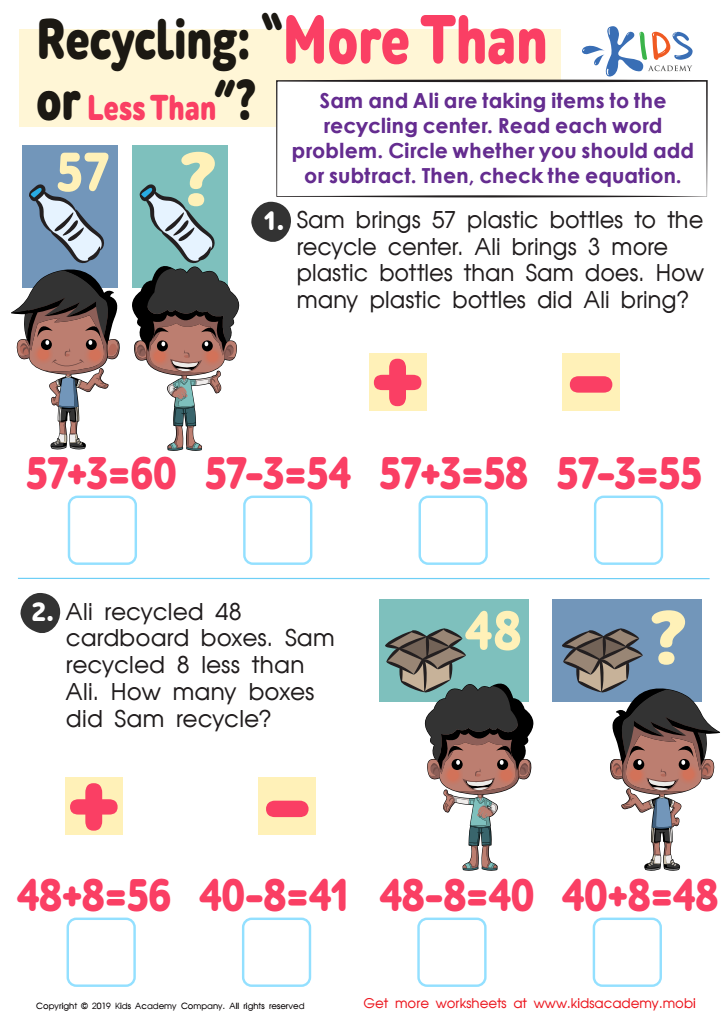
Recycling - More or Less Worksheet








Parents and teachers play a crucial role in the development of mathematical skills in children aged 4-9, particularly in the realm of Normal Addition and Subtraction Word Problems. Engagement with these problems not only enhances computational abilities but also fosters critical thinking. Word problems encourage children to apply their mathematical knowledge in real-world contexts, which helps them understand the relevance of math in everyday life.
Additionally, these challenges support the development of language skills as children learn to interpret questions, identify keywords, and discern what operations to perform. This dual-focus on literacy and numeracy is beneficial for holistic learning.
Furthermore, Normal Addition and Subtraction Word Problems promote problem-solving skills, resilience, and the ability to work through frustrations—an essential competence in academic and life situations. Understanding these concepts at a young age builds a strong foundation for more complex math topics in later grades.
Ultimately, these experiences help children gain confidence in their math abilities, making them more engaged and enthusiastic learners. By investing time in word problems, parents and teachers can nurture a positive attitude toward math and foster important cognitive skills necessary for lifelong learning.