Normal Space Worksheets for Ages 5-7 - Page 2
29 filtered results
-
From - To
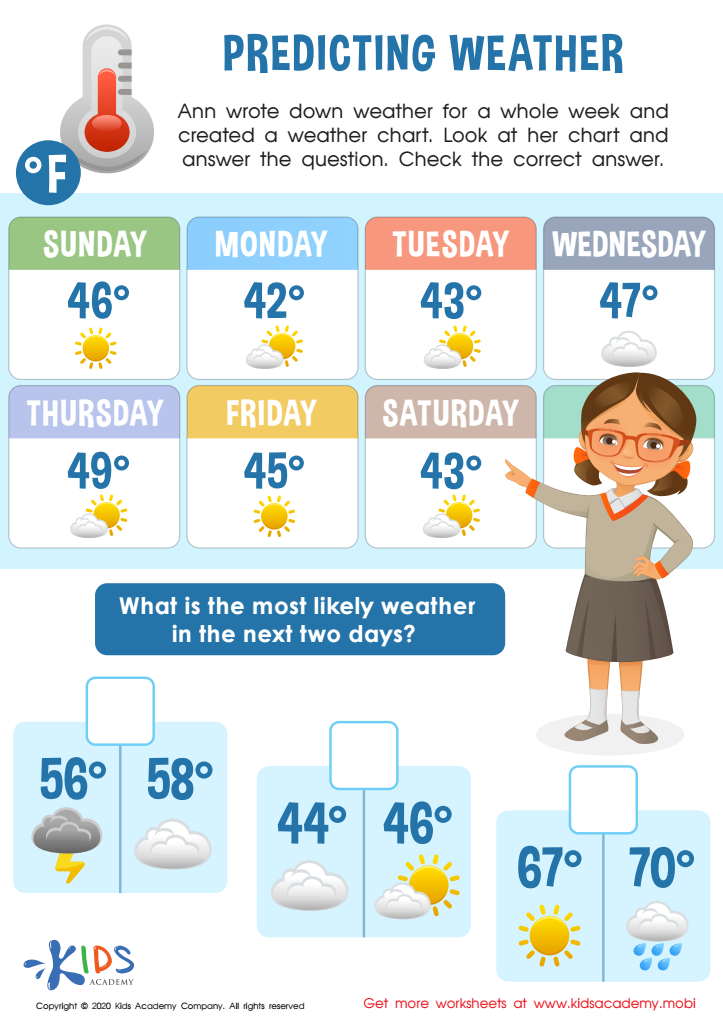
Predicting Weather Worksheet
 Assign to My Students
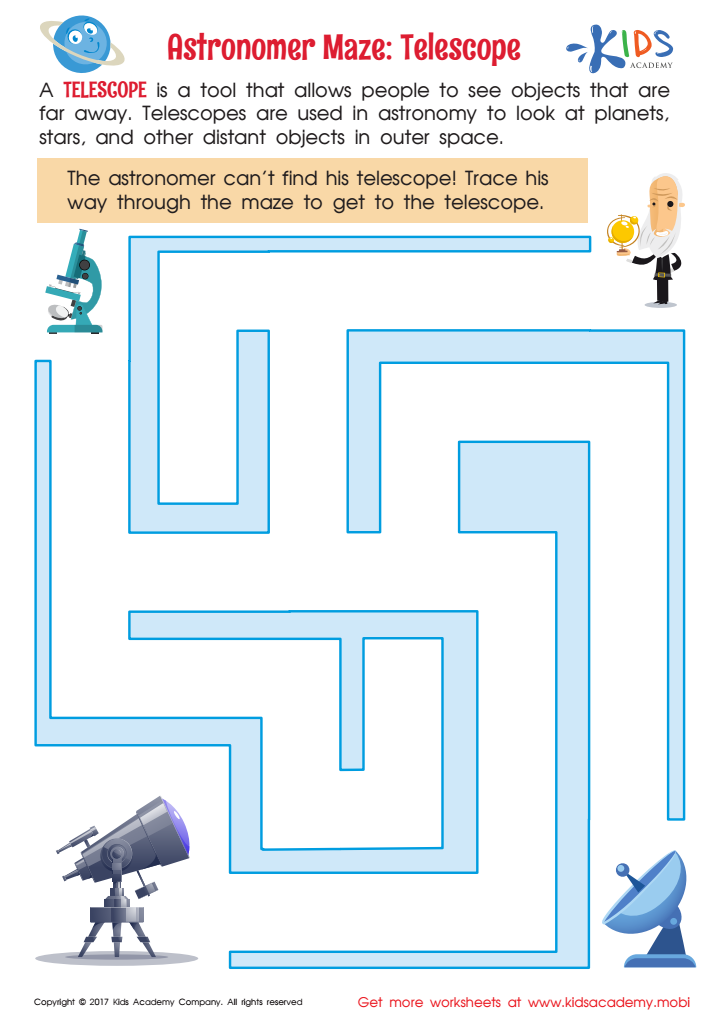
Astronomer Maze: Telescope Worksheet
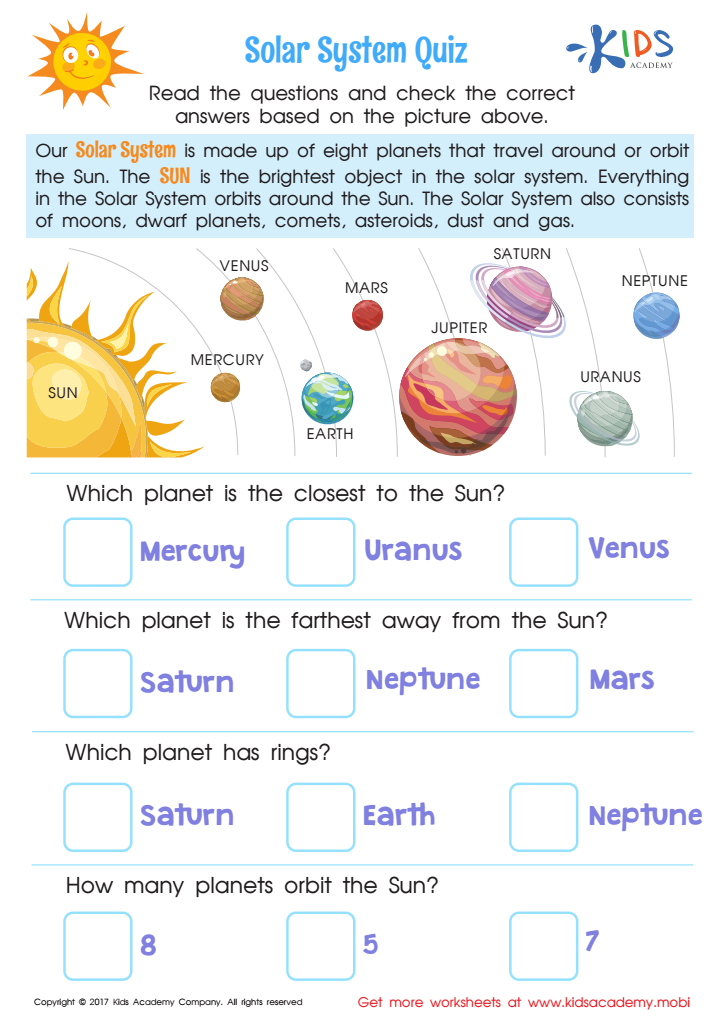
Solar System Quiz Printable
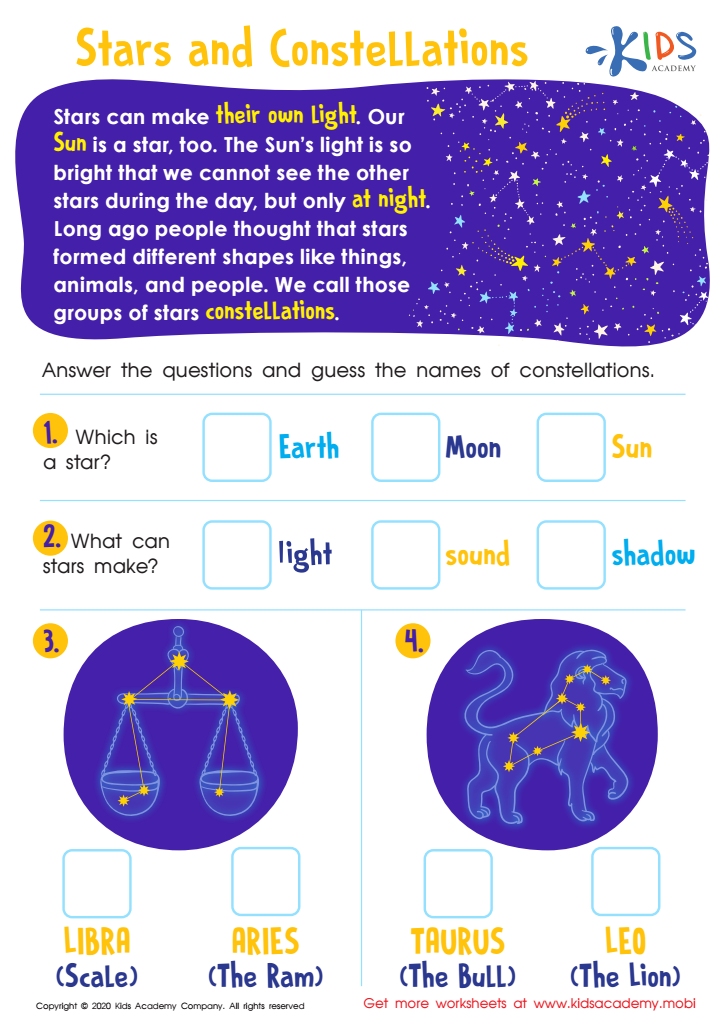
Stars and Constellations Worksheet
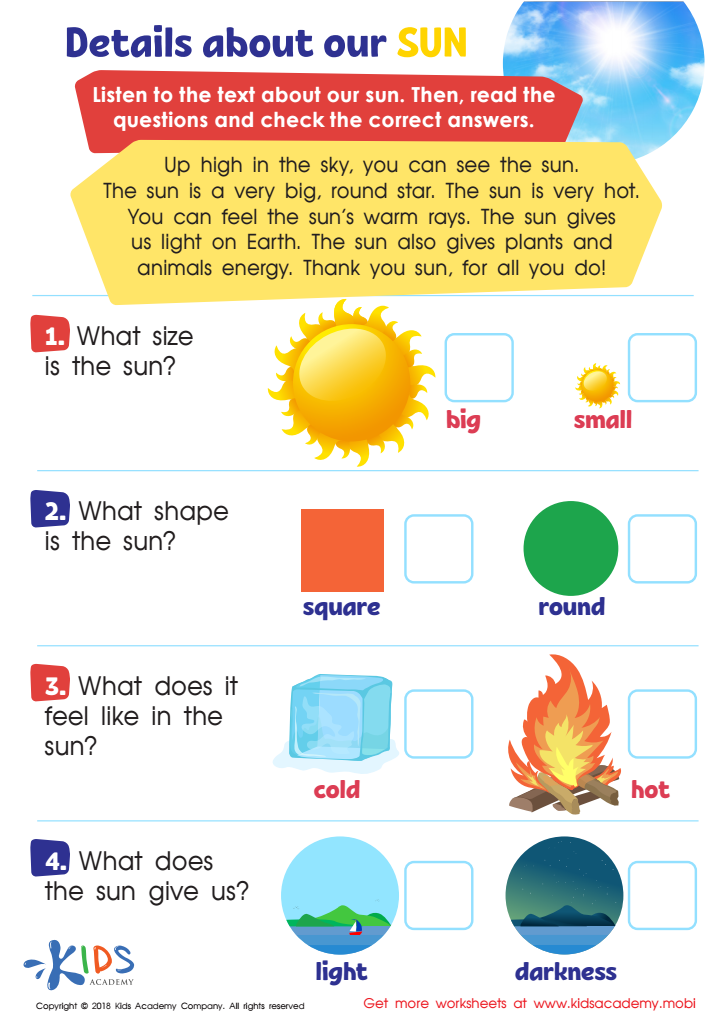
Details About Our Sun Worksheet


.jpg)





Normal Space for Ages 5-7 is an essential concept for parents and teachers, as it underpins the children's development in social, emotional, and cognitive dimensions. At this critical age, children begin forming relationships and understanding their place in the world. A supportive environment fosters their sense of normalcy and belonging, which is fundamental for their overall well-being.
Parents and teachers should care because this stage is where foundational skills are cultivated, including communication, empathy, and cooperation. Normal Space encourages inclusive interactions, helping children navigate social dynamics, resolve conflicts, and develop self-regulation. It prepares them to face challenges, fostering resilience and independence.
Additionally, engaging children in Normal Space promotes creativity and exploration, stimulating their cognitive growth. Educators can create lesson plans that incorporate interactive and physical activities, encouraging learning in a way that resonates with young minds.
Moreover, providing a Normal Space helps alleviate anxiety and stress, which can negatively impact learning and socialization. Parents and teachers who prioritize this environment create pathways for children to express themselves, ask questions, and feel secure in their learning journey, ultimately guiding them toward becoming confident, socially aware individuals. In summary, nurturing Normal Space is vital for holistic childhood development.







