Normal History Worksheets for Ages 5-7 - Page 2
25 filtered results
-
From - To
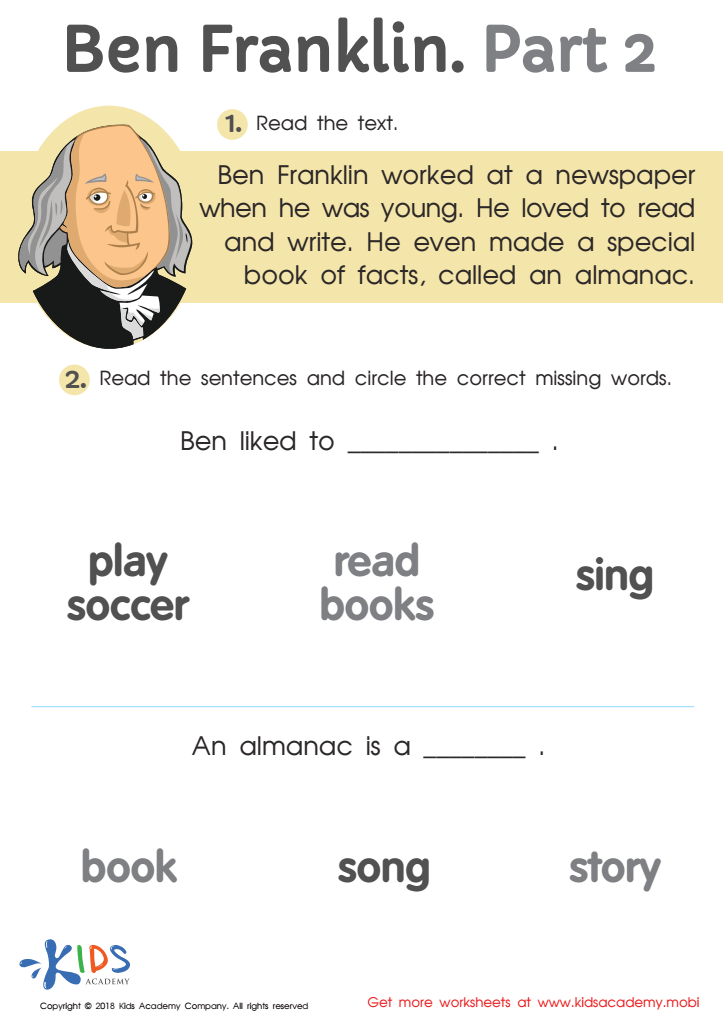
Ben Franklin Part 2 Worksheet
 Assign to My Students


.jpg)





Understanding Normal History for children aged 5-7 is significant for parents and teachers for several reasons. At this age, children are naturally curious and begin to develop their worldviews. Normal History provides a foundational understanding of their environment and helps them make sense of their daily experiences. It fosters an appreciation for past events, traditions, and cultures, promoting empathy and social awareness.
Moreover, engaging with normal history helps develop critical thinking skills. It encourages children to ask questions about 'why' and 'how,' and nurtures their ability to analyze and connect different narratives. This early exposure lays the groundwork for literacy and language development as they learn to articulate thoughts and discuss historical events.
Additionally, parents and teachers play a vital role in modeling values, such as respect and responsibility, which can be reinforced through stories from Normal History. By creating meaningful connections to history, adults motivate children and inspire them to become active participants in their communities. In essence, Normal History enriches children's education and personal development, shaping them into informed, compassionate individuals who appreciate their own history and the diverse stories around them.